2 Sources
[1]
Inside Meta's Push to Put Robots to Work in Data Centers
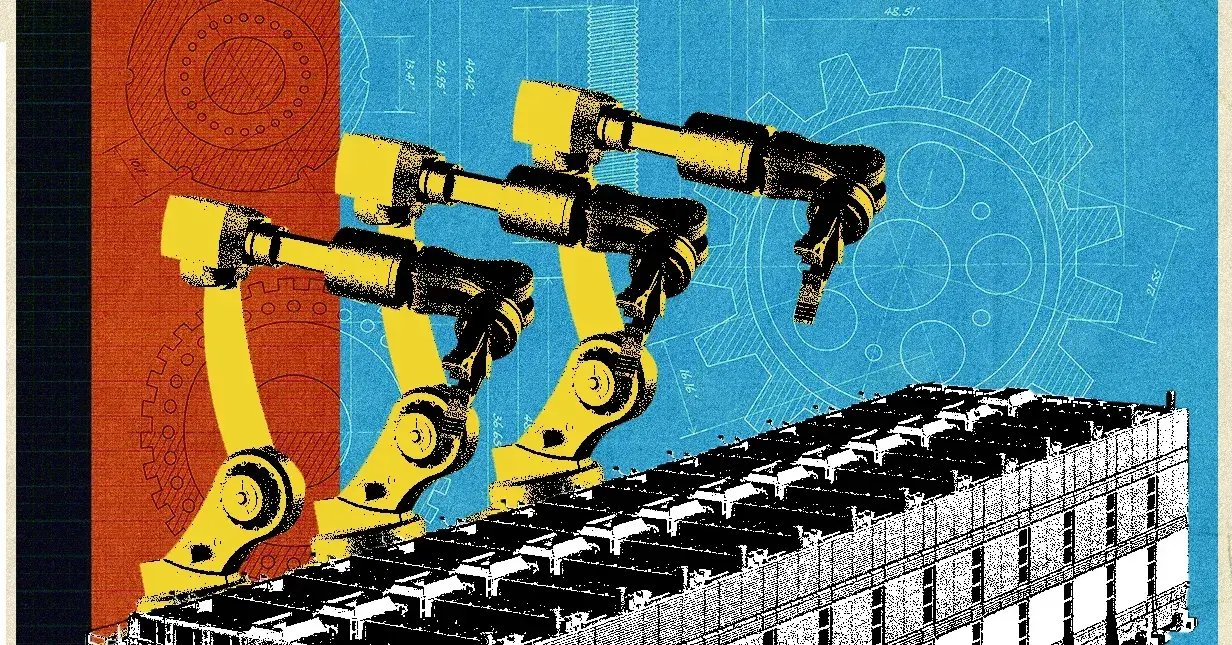
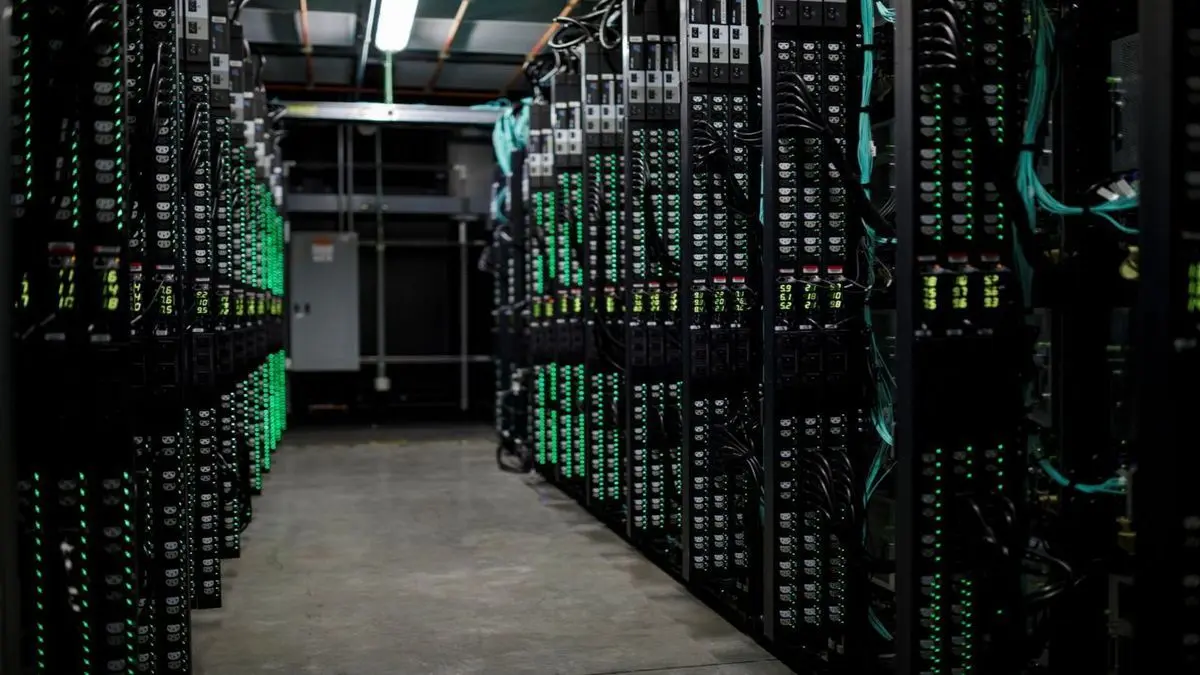
Meta is testing robots that can plug in cables, reset servers, and handle other tasks inside its data centers, according to several current and former workers familiar with the projects. The ongoing effort, which has not been previously reported, may eventually allow Meta to operate its rapidly expanding data center footprint with fewer humans, keeping labor costs in check as its spending on AI infrastructure soars. Meta is using robots and related hardware from several different vendors, including Watney Robotics, Kinova, and ABB, according to the same workers, who asked to remain anonymous because they weren't authorized to speak to the media. Kinova and ABB declined to comment. Watney didn't respond to requests for comment. In one experiment, Meta is evaluating whether a Kinova Gen3 robotic arm could be used for power cycling, or cutting off electricity to servers. The company is also testing a different robot to swap networking cables. One Meta data center worker estimates that if it's successful, the bot could replace up to 80 percent of some people's workloads. "We thought those of us performing the physical tasks were safe for a while, but not anymore," says the worker. "It's coming for us all, unfortunately." At some facilities, Meta quietly adopted another, relatively simple robot. It looks like a finger -- or perhaps a pointy stick -- that can press the power button on a Mac Mini or other device to restart it when remotely prompted by a human. Meta declined to comment on the testing described in this story. Company spokesperson Francis Brennan said in a statement that Meta is investing heavily in training and hiring workers to build and operate its data centers. "America is in the middle of its biggest infrastructure boom since World War II and there's a major shortage of skilled workers to fill the roles; we need more workers, not fewer," he said. But at a conference last year, Eric Xu, senior manager for robotics at Meta, said the company's "long-term goals" are to put robots in data centers, arguing they could speed up incident response, monitor the environment, and handle preventative maintenance. "We believe more collaboration and research will be needed, but we have to start otherwise we don't have a chance to do this," he said. Until recently, robots largely weren't well suited for the delicate work happening in data centers. They were expensive, and in earlier trials in the industry, sometimes crushed servers while attempting simple tasks, a person briefed on the experimentation says. But the hardware has gotten cheaper, and the AI models powering robots are now far more capable than they were a few years ago. Several startups are currently working to build commercial robots capable of assembling servers, swapping parts, and replacing wires. Got a Tip?Do you currently work at a data center or have previously and want to talk about what's happening in the industry? We'd like to hear from you. Using a nonwork phone or computer, contact the reporter securely on Signal at peard33.24 Robots could offer more consistent output at a lower cost than human labor, especially in less populous regions where data centers are plentiful but qualified workers are scarce. Proponents also rally behind a pro-worker message: Like AI agents promise to do for knowledge workers, they argue robots could take on data center technicians' most repetitive and dangerous tasks while freeing them to focus on more complex challenges. Longer term, getting workers out of the picture could make it more feasible to run data centers underwater, in space, or in other environments potentially inhospitable to living, breathing species. "More and more of our customers are telling us 'we want to run our data centers using humanoid [robots]' because you can run them at higher temperatures, in the dark, and all these things," says Paul Golding, who oversees so-called physical intelligence at the chipmaker Analog Devices. The growing use of robots has received little attention from the activists driving a powerful nationwide movement against data centers. Tech companies often tout jobs for humans as an upside to the developments that can be used to justify tax breaks for them. In Altoona, Iowa, Meta operates what is now its largest data center campus, which employs hundreds of workers. The company opened the facility in 2014 and has several years left of a property tax break that allows it to save tens of millions of dollars annually, which the city has viewed as a worthwhile tradeoff for having its cachet upped by having Meta jobs. In Altoona, Meta worker group chats have taken on a demoralized tone, "saying we're all going to be gone in a few years anyway because of the robots," a person familiar with the discussions says. Even if adoption of robots proves slower than anticipated, some worry the quality of jobs available is trending downward. Two of the workers say that Meta is developing AI software and other technologies that they believe will allow it to hire lower-skilled -- and thus, lower-paid -- workers and centralize some roles in areas such as Denver, Colorado that are more financially advantageous to the company. "They no longer want people who can think independently, come up with creative solutions, or perform complex troubleshooting," one Meta data center worker says. "They want 'smart hands,' people who are just capable enough to follow AI instructions and not mess anything up." Meta contends its need for skilled workers remains robust. This year, the company launched a long-term program to train thousands of people annually from any background in electrical, mechanical, and plumbing work at no cost to them. Meta is even guaranteeing employment in states such as Louisiana, Ohio, Indiana, and Texas for those who complete the training. It also partnered with building trade unions to fund apprenticeship programs. But as communities rethink data center tax breaks and weigh putting new rules on the industry, the prospect of robots replacing at least some jobs may need to become a bigger concern. Altoona Mayor Dean O'Connor tells WIRED he hasn't given much thought to robots taking jobs at Meta's data center, though he frames automation as inevitable. "We will deal with it as it comes," he says. Tripping Cables In a 2023 YouTube video, Meta touted that it was using a self-driving tugger robot to transport heavy server racks within its data centers as well as a wheeled, barcode-reading robot developed in-house to track inventory. The next year, Microsoft and Google unveiled separate investments in robots for their data center operations, and Amazon last year discussed using robots to help recycle parts at its facilities. Pursuing robotics for "economically valuable tasks," like "replacing a faulty server rack" is "absolutely something we're looking into at Microsoft," Ashley Llorens, a managing director for the company's research accelerator, tells WIRED. Meta's tugger and inventory robots are now operating in a number of the company's data centers, including in Iowa and Virginia, according to the people familiar with the projects. They say the robots generally work well, though there are limitations. The inventory bot is now also being used for failure inspections, but it can't differentiate between green and red indicator lights on equipment because its camera only detects grayscale, meaning human checks are still required to assess some breakdowns. The device also struggles with corners and traversing the cables that are often in the paths of its wheels. Because there aren't that many of them, the robots need to be moved between buildings, which requires a door-opening human who maneuvers the robot with a remote control. Two sources also describe the inventory bot as too slow. One says Meta previously explored using drones as a faster alternative, but ultimately didn't pursue the idea. Inside the Testbed The Altoona data center campus is often where Meta prototypes new technologies. "What they do here in Altoona, they take to their other sites and put that in place there," says O'Connor. Since last June, Meta has been trying out a pair of dual-armed Watney robots for some cabling work at one of its Altoona buildings, according to one of the people familiar with the company's efforts. The robots are supervised by humans and can't work as fast as people yet, but show promise. After Watney launched in 2023, it put out a demo of a laundry-folding robot that it claimed could also handle janitorial work inside businesses. The San Francisco startup quietly pivoted to data center robots early last year, according to archived copies of its website. Meta is testing additional robots in New Albany, Ohio at the company's newest data center campus known as Prometheus. Four-wheel robots "with a scissor-lift-style riser and a six-axis arm on top" made by the automation giant ABB are being used there to reseat parts and, eventually, they may take on other tasks with diminishing human oversight, a person familiar with the product says. But the idea that robots will prevail over humans isn't guaranteed. "There's been a lot of pilots and demos, but no provable working solution," says Helen Oleynikova, CEO of Exclaim Robotics, which is developing prototypes to replace broken parts and reset cables in data centers. At Meta's data centers, some workers have complained about the amount of downtime the robots need to recharge their batteries, according to the people familiar with the matter. Meta has also acknowledged internally that robots aren't equipped for certain tasks, such as the intense cabling work required to run a NVIDIA GB300 supercomputer. "Things have been designed for human hands forever to make everything a five-minute repair," says one former Meta employee. "Redesigning everything will take time." But the robots are getting prepared. Will Knight contributed to this story.
[2]
Meta Tests Robots to Handle Data Center Work
Some workers fear the machines will reduce staffing or shift technical work to lower-paid roles. Meta is testing robots to maintain the data centers powering its artificial intelligence systems, including machines that can replace networking cables, restart servers, and inspect equipment. According to a Friday WIRED report, Meta is testing robots from San Francisco-based Watney Robotics, Quebec-based Kinova, and Zurich-based ABB that could reduce labor costs -- and potentially staffing -- as its AI infrastructure expands. One unnamed employee estimated that a successful cable-swapping robot could replace as much as 80% of the work performed in certain roles. The figure was the worker's estimate, not a Meta projection, and the machine cannot yet match a person's speed. Robots enter the server room Meta is testing robots to move server racks, inspect equipment, replace cables, and restart servers. However, the machines still need human supervision and struggle with obstacles, battery life, visual inspections, and dense cabling. Nvidia and Alibaba are also developing systems to improve robot training. In June, Alibaba unveiled its Qwen-Robot Suite, with models for navigation, object handling, and physical simulation, while Nvidia researchers introduced AI agents that train robot fleets. Limited real-world data, however, remains a barrier to bringing robots to the warehouse floor. ACE Robotics Chairman Wang Xiaogang said embodied AI -- which enables machines to perceive and act in physical environments -- could have a "ChatGPT moment" by the end of 2027. Companies are also testing robots outside data centers. Bedrock Robotics has deployed autonomous construction equipment, and Mercedes-Benz has tested humanoid robots for repetitive factory work. Their developers cite labor shortages and worker safety, while critics warn that automation could eliminate jobs. Jobs and the AI boom Meta's robotics push is fueling concern that the data centers built to power AI could eventually employ fewer people. Workers told WIRED that automation may reduce demand for experienced technicians and shift remaining tasks to lower-paid employees following AI-generated instructions. A Meta spokesperson said the company continues to hire and train workers amid a skilled-labor shortage. "America is in the middle of its biggest infrastructure boom since World War II, and there's a major shortage of skilled workers to fill the roles; we need more workers, not fewer," the spokesperson reportedly said. That fear conflicts with the industry's case for automation. Nvidia CEO Jensen Huang envisions data centers as "AI factories" operated by people, software agents, and robots. Huang and robotics developers argue that machines can fill labor shortages and handle repetitive or dangerous work. On Wednesday, Microsoft co-founder Bill Gates proposed taxing robots and AI tokens, arguing that current tax rules can make machines cheaper than employees. Meta's robots still need people to supervise them and perform difficult repairs, but their development could determine whether the company's expanding data center footprint creates jobs or replaces them. Meta did not immediately respond to a request for comment by Decrypt.
Share
Copy Link
Meta is quietly testing robots from Watney Robotics, Kinova, and ABB to handle critical data center maintenance tasks like resetting servers and swapping networking cables. Workers estimate successful deployment could replace up to 80% of certain workloads as the company seeks to control costs amid soaring AI infrastructure spending.
Meta is testing robots to handle data center maintenance tasks across its facilities, marking a significant shift in how the tech giant manages its rapidly expanding infrastructure footprint. The company is evaluating hardware from Watney Robotics, Kinova, and ABB to perform critical operations including resetting servers, swapping networking cables, and conducting preventative maintenance
1
. This automation effort comes as Meta's AI infrastructure spending continues to surge, prompting the company to explore ways to control costs and address staffing shortages in less populous regions where data centers are concentrated but qualified workers remain scarce.
Source: Wired
Meta's robotics experiments span multiple use cases designed to reduce human labor in physically demanding and repetitive roles. The company is testing a Kinova Gen3 robotic arm specifically for power cycling operations, which involve cutting off electricity to servers when maintenance is required
1
. A separate robot is being evaluated for swapping networking cables, a task that one Meta data center worker estimates could replace up to 80% of some people's workloads if successfully deployed1
2
. The figure represents the worker's assessment rather than an official Meta projection, and current prototypes still cannot match human speed.At certain facilities, Meta has already adopted a simpler automation solution: a device resembling a finger or pointy stick that can press power buttons on Mac Minis and other equipment to restart them when remotely prompted by human operators
1
. These machines are also being tested for environmental monitoring and incident response, tasks that require consistent output across facilities operating around the clock.The robotics push has sparked anxiety among Meta's data center workforce, with internal group chats taking on a demoralized tone as workers discuss fears that "we're all going to be gone in a few years anyway because of the robots," according to a person familiar with the discussions
1
. One worker expressed the growing unease: "We thought those of us performing the physical tasks were safe for a while, but not anymore. It's coming for us all, unfortunately"1
.Beyond outright job displacement, workers worry that automation could shift technical work to lower-paid roles following AI-generated instructions, reducing demand for experienced technicians
2
. This concern conflicts with Meta's public stance. Company spokesperson Francis Brennan stated that Meta continues investing heavily in training and hiring workers, emphasizing that "America is in the middle of its biggest infrastructure boom since World War II and there's a major shortage of skilled workers to fill the roles; we need more workers, not fewer"1
2
.Related Stories
Meta's robotics experiments reflect broader industry momentum toward automation in data centers and manufacturing. Nvidia CEO Jensen Huang envisions data centers as "AI factories" operated by people, software agents, and robots working in tandem
2
. Nvidia researchers have introduced AI agents designed to train robot fleets, while Alibaba unveiled its Qwen-Robot Suite in June, featuring models for navigation, object handling, and physical simulation2
.Paul Golding, who oversees physical intelligence at chipmaker Analog Devices, notes growing customer demand: "More and more of our customers are telling us 'we want to run our data centers using humanoid [robots]' because you can run them at higher temperatures, in the dark, and all these things"
1
. This capability could enable data centers in extreme environments potentially inhospitable to humans, including underwater or space-based facilities.ACE Robotics Chairman Wang Xiaogang predicts embodied AI—which enables machines to perceive and act in physical environments—could have a "ChatGPT moment" by the end of 2027
2
. However, limited real-world data remains a barrier to widespread deployment, and current robots still struggle with obstacles, battery life, visual inspections, and dense cabling2
.The automation push raises questions about the economic promises tech companies make to communities hosting their facilities. In Altoona, Iowa, Meta operates its largest data center campus, which opened in 2014 with property tax breaks saving the company tens of millions of dollars annually
1
. Cities have viewed these arrangements as worthwhile tradeoffs for the prestige and employment that Meta jobs bring to the region.On Wednesday, Microsoft co-founder Bill Gates proposed taxing robots and AI tokens, arguing that current tax rules can make machines cheaper than employees
2
. Eric Xu, senior manager for robotics at Meta, acknowledged at a conference last year that the company's "long-term goals" include deploying robots in data centers for faster incident response and preventative maintenance, stating: "We believe more collaboration and research will be needed, but we have to start otherwise we don't have a chance to do this"1
.
Source: Decrypt
Summarized by
Navi
[2]
22 Oct 2025•Business and Economy

15 Feb 2025•Technology

17 Mar 2026•Technology
1
Technology

2
Policy and Regulation

3
Technology