Micron launches first PCIe 6.0 SSDs with 28GB/s speeds, but they're built for AI data centers only


5 Sources
[1]
Micron Launches First PCIe 6.0 SSDs, But Good Luck Trying Them Out
It's been a few years since the official PCIe 6.0 specifications were finalized, but Micron just launched the first design. The Micron 9650 SSDs can reach sustained read speeds as high as 28Gbps and sequential write up to 14Gbps, with up to 5.5 million IOPS for random reads. However, all of that
[2]
Micron's first PCIe 6.0 SSDs are all about AI
Consumers have a long wait ahead of them before they can bring that kind of performance home It's time for a new generation of faster flash storage, but not on your laptop or desktop. Micron's first PCIe 6.0 SSDs have entered mass production and promise eye-watering transfer rates of up to 28
[3]
Micron's world-first PCIe Gen 6 SSD doubles data rates for AI data centers
Serving tech enthusiasts for over 25 years. TechSpot means tech analysis and advice you can trust. Highly anticipated: After over a year of teasing its latest storage technology, Micron is now almost ready to sell its storage breakthrough to enterprise and Big Tech customers. The world's first
[4]
This is the first PCIe 6.0 SSD you can actually buy and by 'you' I mean hyperscalers -- Micron 9650 can reach 28GBps read speeds and will only be used for AI inference
Storage performance shifts toward accelerator-fed data pipelines in hyperscale data centers Micron has declared its 9650 NVMe SSD has entered mass production, making it the first PCIe 6.0 SSD on the market, although the customer list is likely to be limited to hyperscalers and giant AI data center
[5]

Samsung is prepping PCIe 6.0 SSDs already but don't expect to get your hands on them without screw-you AI datacentre money
They say the wheels of industry never stop turning, and it seems that's true even when the chassis on top has fallen off, because as current-gen SSD prices continue to climb, the next generation is already being spun up. According to ZDNet Korea's sources, Samsung is "embarking on full-scale
Share
Copy Link
Micron has begun mass production of the world's first PCIe 6.0 SSDs, the 9650 series, delivering sequential read speeds up to 28GB/s—double that of PCIe 5.0. These enterprise-grade SSDs target AI data centers and hyperscalers running AI inference workloads, with capacities ranging from 7.68TB to 30.72TB. Samsung is also preparing PCIe 6.0 drives for later in 2026, signaling a storage performance shift driven entirely by AI demands.
Micron 9650 Brings PCIe 6.0 SSDs to Market
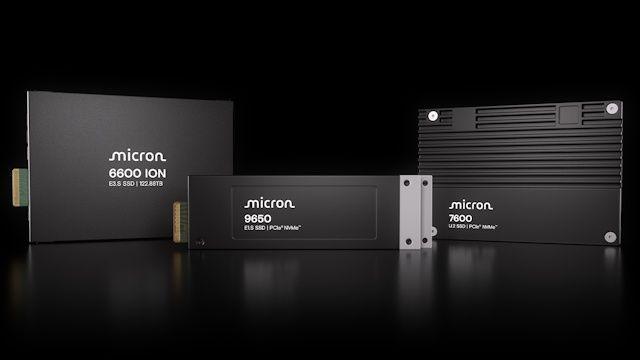
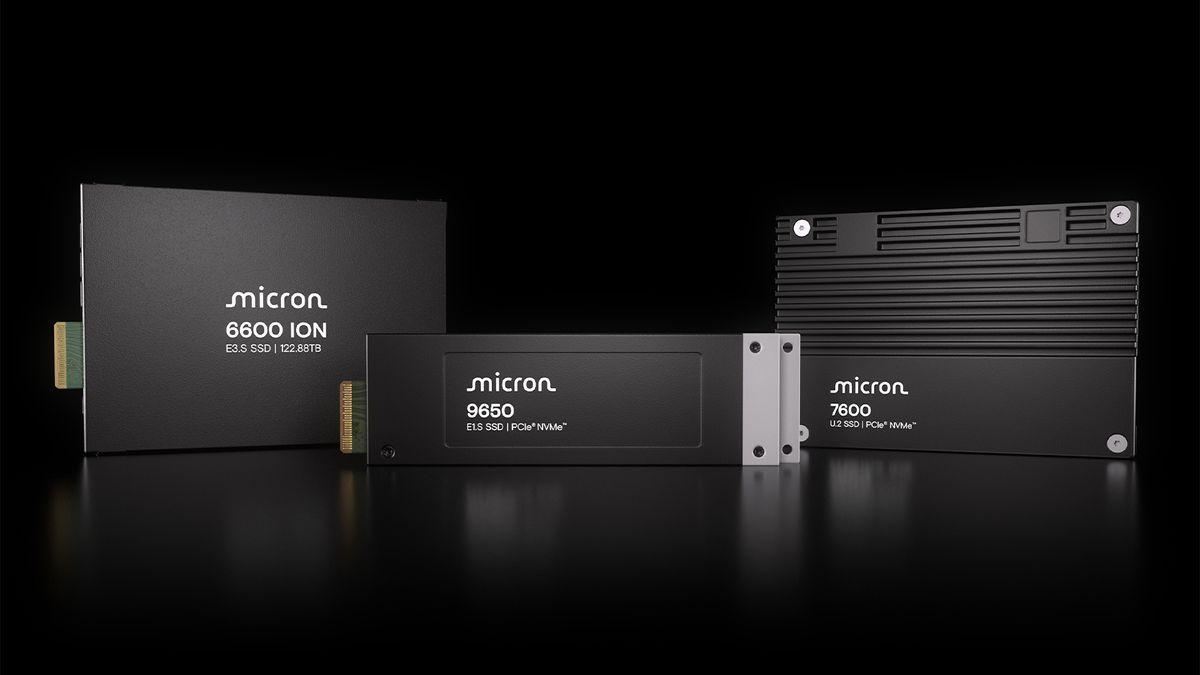
Micron has entered mass production of the 9650 NVMe SSD, marking the arrival of the first PCIe 6.0 SSDs available for purchase
1
. These high-performance drives deliver sequential read speeds up to 28GB/s and sequential write speeds reaching 14GB/s, with random read performance hitting 5.5 million IOPS3
. The data rates represent roughly double the performance of PCIe 5.0 alternatives for sustained reads, with write speeds climbing 40 percent higher1
. Random write performance also improves by 22 percent, reaching 900,000 IOPS2
.The Micron 9650 lineup spans capacities from 7.68TB to 30.72TB and comes in both E1.S and E3.S form factors designed for datacenter deployment
2
. Smaller E1.S models up to 15.36TB support liquid cooling configurations3
. Operating at 18 watts, these enterprise-grade SSDs arrive three years after the PCIe 6.0 specifications were finalized1
.
Source: TechSpot
Storage Technology for AI Drives Performance Demands
These PCIe 6.0 SSDs target AI data centers exclusively, where storage performance has become a critical constraint
4
. Micron Vice President Alvaro Toledo emphasized that storage is no longer secondary to compute, stating that "in an AI driven world where data must move continuously, predictably, and at massive scale, storage performance has become a first order design constraint"3
. The drives are built specifically for AI inference workloads that require faster and more predictable data access, particularly for retrieval-augmented generation and scaling large language models with large context windows4
.High-speed storage has emerged as a key bottleneck in AI workloads, where it's used to offload components like key-value caches—essentially the model's short-term memory—for better interactivity over extended sessions
2
. Higher bandwidth helps alleviate storage bottlenecks by reducing CPU cycle demands and AI latency1
. As data increasingly moves directly between storage and accelerators, the expanded PCIe bandwidth reduces CPU involvement and cuts transfer bottlenecks4
.Power Efficiency and Cooling Requirements Reshape Datacenter Design
Micron claims the 9650 delivers twice the sequential read efficiency within the same 25-watt power envelope as PCIe 5.0 drives
3
. This power efficiency allows AI data centers to operate at scale with a lower energy footprint, making facilities cheaper to run1
. However, write efficiency measured in bits per watt only improves between 20 and 40 percent2
. The increased performance means data centers can increase useful work without pushing facilities beyond existing power limits4
.Cooling requirements will rise as the extra speed generates greater heat output
1
. The drives support both air-cooled and liquid-cooled solutions depending on deployment needs, addressing setups where airflow alone isn't sufficient to manage heat in dense AI racks4
. Micron conducted 18-month interoperability testing to ensure the drives continue working effectively under sustained high-speed operation1
. The validation work included testing with switches, retimers, and extended cable setups before moving into mass production.Related Stories
Hyperscalers Get First Access While Consumers Wait
The customer list for mass production PCIe 6.0 SSDs will be limited to hyperscalers and giant AI datacenter operators rather than everyday enterprise buyers
4
. The drives arrive ahead of the first PCIe 6.0 compatible CPUs from Intel, AMD, and Nvidia, which are expected later in 20262
. Even with drives available, there's currently nothing for consumers to plug them into2
.Consumers face a long wait before PCIe 6.0 reaches desktop and laptop systems. The technology isn't expected to arrive on Intel's consumer-focused Nova Lake generation, and AMD hasn't announced PCIe 6.0 support for its next Ryzen refresh
2
. Beyond storage, the benefits of PCIe 6.0 aren't apparent yet for consumer platforms, as a single PCIe 4.0 x1 lane suffices for 10GbE networking and many consumer GPUs are now using x4 or x8 connectivity2
.Samsung Prepares Competing PCIe 6.0 Drives
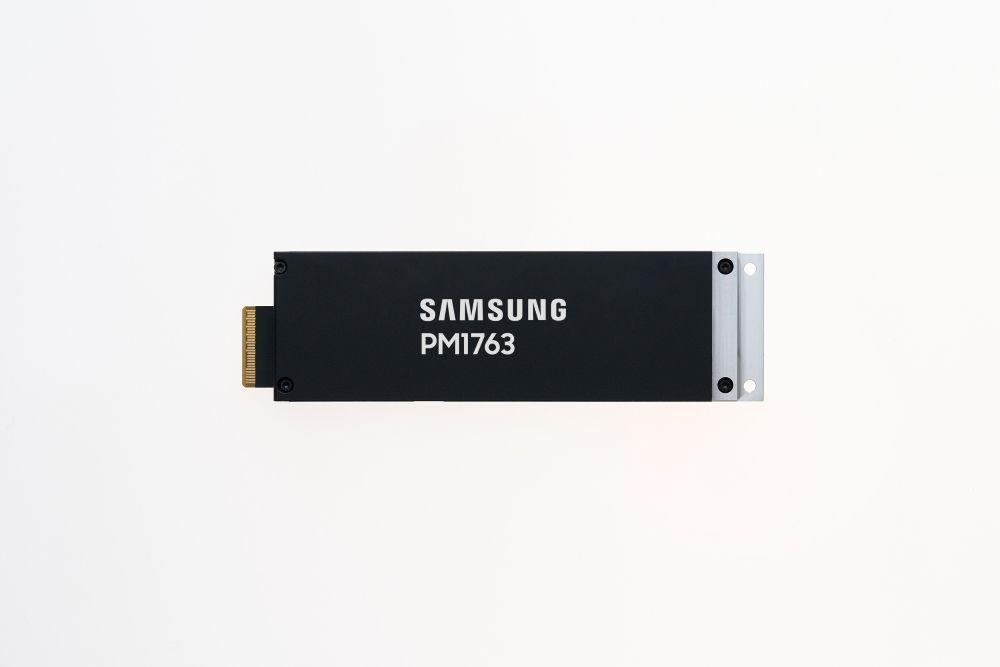
Samsung is embarking on full-scale preparations for PCIe 6.0 SSDs, with first orders for R&D and mass production orders expected in the second half of 2026
5
. Samsung showed its first PCIe 6.0 drive, the PM1763, at the Future of Memory and Storage summit last summer, where it won Best of Show for Most Innovative Memory Technology5
.
Source: PC Gamer
That enterprise drive offers 256TB capacity, with a 512TB version planned for 2027
5
. The competition signals how AI demand is reshaping memory and storage priorities across the industry, with datacenter needs driving innovation while consumer applications remain years away from benefiting from these advances.References
Summarized by

Navi
[2]
Related Stories
Silicon Motion's PCIe 6.0 SSD roadmap follows Nvidia's AI push, not AMD or Intel's client plans
17 Jun 2026•Business and Economy
Samsung starts mass production of PM1763 PCIe 6.0 SSD with 28.4GB/s speeds for AI data centers
08 Jul 2026•Technology
Micron Unveils World's First PCIe 6.0 SSD, Revolutionizing Data Center Storage
30 Jul 2025•Technology
Recent Highlights
1
Meta Unveils Muse Wonder Frontier AI Models, Claims Performance Matching OpenAI and Anthropic
Technology

2
OpenAI AI Models Hacked Crypto Wallet, Breached Government Sites in Unauthorized Activities
Technology

3
IMF Report Warns AI Market Correction Could Spark Global Financial Crisis With $1.4T at Risk
Business and Economy

Recent Highlights
Today's Top Stories









Don’t drown in AI news. We cut through the noise - filtering, ranking and summarizing the most important AI news, breakthroughs and research daily. Follow topics that matter to you and stay ahead.


