Samsung starts mass production of PM1763 PCIe 6.0 SSD with 28.4GB/s speeds for AI data centers


6 Sources
[1]
Samsung has a 16TB PCIe 6.0 SSD coming soon with read/write speeds of 28.4GBps and 21.9GBps respectively -- but you won't be able to use it anyway
* Samsung's PM1763 entered mass production as the fastest SSD on paper, focusing solely on AI data centers as its key market * The PM1763 offers read and write speeds of 28.4GB/s and 21.9GB/s respectively, essentially twice that of its predecessor, the PM1753 * The drive can't physically be used
[2]
Samsung Begins Mass Production of PM1763 SSD Optimized for Next-Generation AI Infrastructure
PCIe 6.0-based enterprise SSD delivers outstanding performance and enhanced power efficiency for AI and HPC servers 9th-generation V-NAND, 4nm controller and liquid-cooling optimization support demanding AI workloads Samsung Electronics a global leader in advanced memory technology, today
[3]
Samsung Mass Produces World's First PCIe 6.0 SSD, Hitting 28.4 GB/s To Feed NVIDIA's Vera Rubin AI Servers
Samsung has announced the mass production of the PM1763 PCIe 6.0 SSD, which is optimized for next-gen AI servers such as NVIDIA's Vera Rubin. The Rise In AI Requires Next-Gen Storage Solutions Such as Samsung's PM1763 PCIe 6.0 SSD, Now In Mass Production Press Release: Samsung Electronics today
[4]
Samsung Begins Mass Production of High-Speed AI SSD for Nvidia Vera Rubin, Strengthening Its Position in
Samsung's New AI SSD Targets Faster Data Center Performance On Tuesday, Samsung announced the start of mass production for the PM1763, its newest enterprise SSD designed for AI data centers. The PM1763 is built on the PCIe 6.0 interface, which doubles data transfer bandwidth compared with PCIe
[5]

Samsung starts mass production of PM1763 PCIe 6.0 Enterprise SSD for AI and HPC workloads
Samsung has announced the mass production of the PM1763, a PCIe® 6.0-based enterprise solid-state drive (eSSD). The new drive is specifically optimized to meet the high-throughput requirements of next-generation artificial intelligence (AI) and high-performance computing (HPC) server
[6]

Samsung Electronics Co., Ltd. Begins Mass Production Of PM1763 SSD Optimized For Next-Generation AI Infrastructure
Samsung Electronics Co., Ltd. announced mass production of PM1763, the company?s PCIe 6.0-based enterprise solid state drive (SSD) optimized for next-generation AI and HPC server environments. Featuring high-speed data transfer and an optimized controller architecture, PM1763 is expected to serve
Share
Copy Link
Samsung has begun mass production of the PM1763, its fastest enterprise SSD designed exclusively for AI infrastructure. The PCIe 6.0 SSD delivers sequential read speeds of 28.4GB/s and write speeds of 21.9GB/s—more than twice its predecessor's performance. Built with 9th-generation V-NAND and a 4nm controller, it targets next-generation AI platforms like Nvidia Vera Rubin but remains inaccessible to consumers due to its EDSFF form factor and datacenter-only specifications.
Samsung PM1763 SSD Enters Mass Production for AI Infrastructure
Samsung has officially started Samsung mass production of the PM1763, a PCIe 6.0 SSD specifically engineered for next-generation AI infrastructure and high-performance computing workloads
2
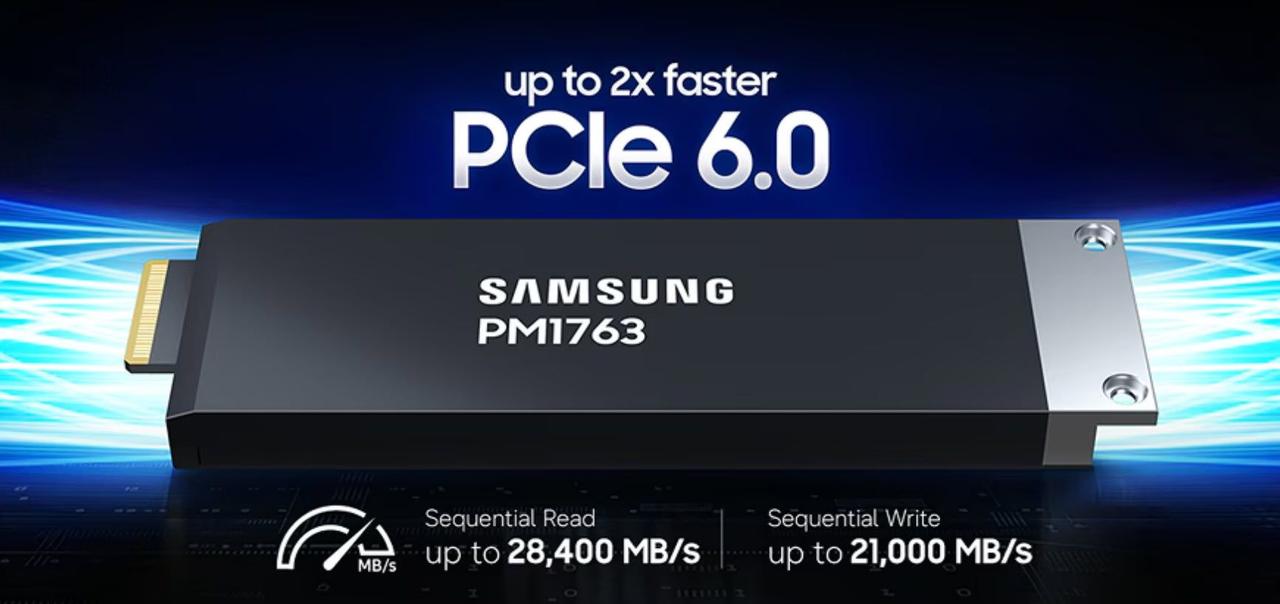
. The enterprise SSD for AI represents a significant leap in storage technology, delivering sequential read speeds of up to 28,400 MB/s and write speeds of 21,900 MB/s—more than twice the performance of its predecessor, the PM17531
. Available in 4TB, 8TB, and 16TB capacities, the Samsung PM1763 SSD leverages the company's 9th-generation V-NAND technology paired with a newly developed 4nm controller to achieve these speeds2
.
Source: Wccftech
At this performance level, the drive can transfer a 40-gigabyte large language model in approximately 1.4 seconds, helping minimize data bottlenecks between processors and accelerators while improving overall AI processing efficiency
3
. Jangseok Choi, Vice President and Head of Memory Product Planning at Samsung Electronics, stated that "as AI models continue to grow in size and complexity, PM1763 will serve as a key solution that enables customers to efficiently scale memory capacity and optimize AI operations"2
.Targeting Nvidia Vera Rubin and Enterprise AI Platforms
The high-speed AI SSD has already completed validation for next-generation AI platforms, including Nvidia Vera Rubin
3
. At Nvidia's GTC 2026 conference in March, Samsung disclosed that it would supply HBM4 memory, SOCAMM2 modules, and the PM1763 SSD for Vera Rubin, positioning itself as a comprehensive memory technology provider for the AI platform4
. The timing aligns with growing demand from data centers, as enterprise SSD revenue reached a record $18.46 billion in the first quarter, up 86.1% from the previous quarter, driven by cloud service providers and AI agent services4
.Faster storage has become critical for AI servers because GPUs rely on steady data flow from storage. Higher SSD performance helps minimize bottlenecks, allowing AI systems to process workloads more efficiently
4
. Both Nvidia's Vera platform and AMD's EPYC "Venice" offer PCIe 6.0 connectivity that these drives require to run at maximum speeds1
.
Source: Samsung
Power Efficiency and Thermal Management for HPC Servers
The PM1763 delivers power efficiency improvements of more than 1.8 times compared to its predecessor, potentially lowering operating costs for power-hungry data centers
4
. This reduction in power consumption per watt helps enterprise operators lower total cost of ownership and reduce overall datacenter energy demands5
.To accommodate high-density configurations, the drive is optimized for liquid-cooled server environments through direct-to-chip (D2C) cooling technology
2
. This enables sustained peak performance even under intensive workloads and extended operating conditions, maintaining thermal stability during prolonged computational tasks5
.Related Stories
Enhanced Security with Post-Quantum Cryptography
Recognizing heightened security risks in enterprise AI data management, Samsung strengthened the PM1763's security capabilities. The drive supports post-quantum cryptography (PQC) algorithms designed to protect against future quantum computing threats, as well as TDISP (TEE Device Interface Security Protocol), which helps secure data pathways in virtualized environments
2
. These cryptographic and hardware protections address the growing security requirements as large language models and sensitive AI workloads become more prevalent.Consumer Market Remains Out of Reach
Despite its technical achievements, the Samsung PM1763 SSD won't reach consumer hands anytime soon. The drive adheres to an EDSFF form factor and requires PCIe 6.0 channels—neither of which currently exist at the consumer level
1
. Industry figures such as Phison's CEO warn that AI demand will keep NAND and DRAM in shortage through 2026, meaning consumer storage is increasingly built from what data centers don't take1
. The bleeding-edge storage is expected to be prohibitively expensive, pitting consumers against datacenter clients with seemingly limitless budgets.References
Summarized by

Navi
[2]
[3]
[4]
Related Stories
Samsung Launches PM9E1: A High-Performance SSD Optimized for AI Applications
04 Oct 2024•Technology

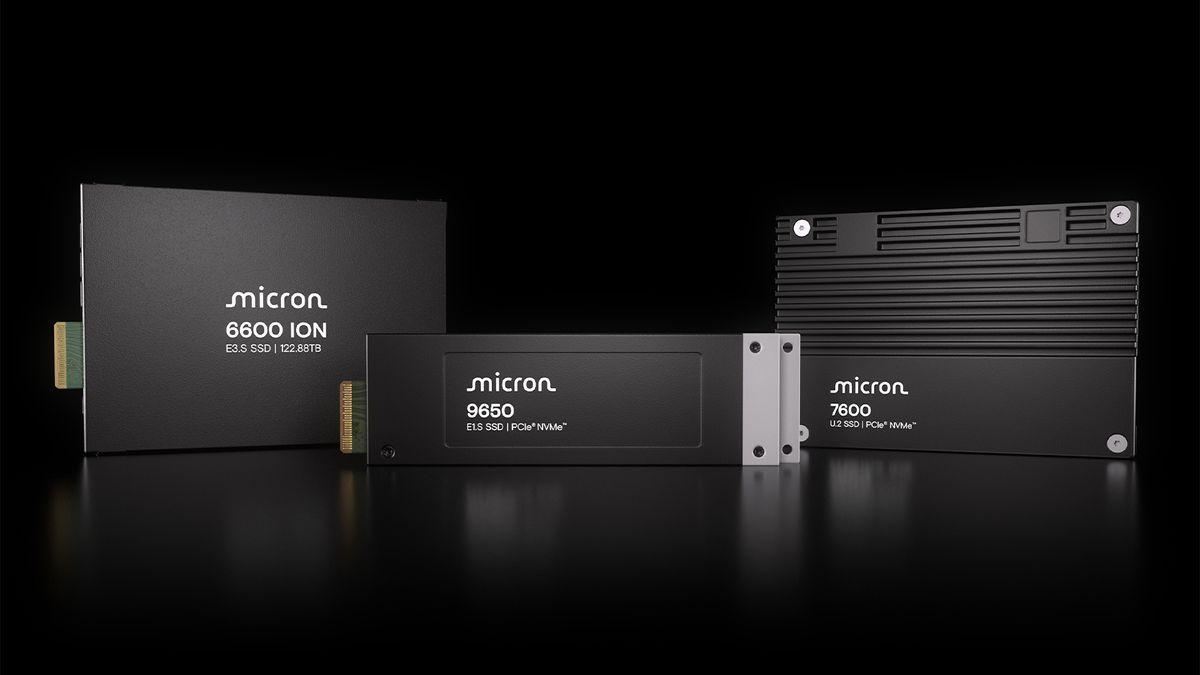
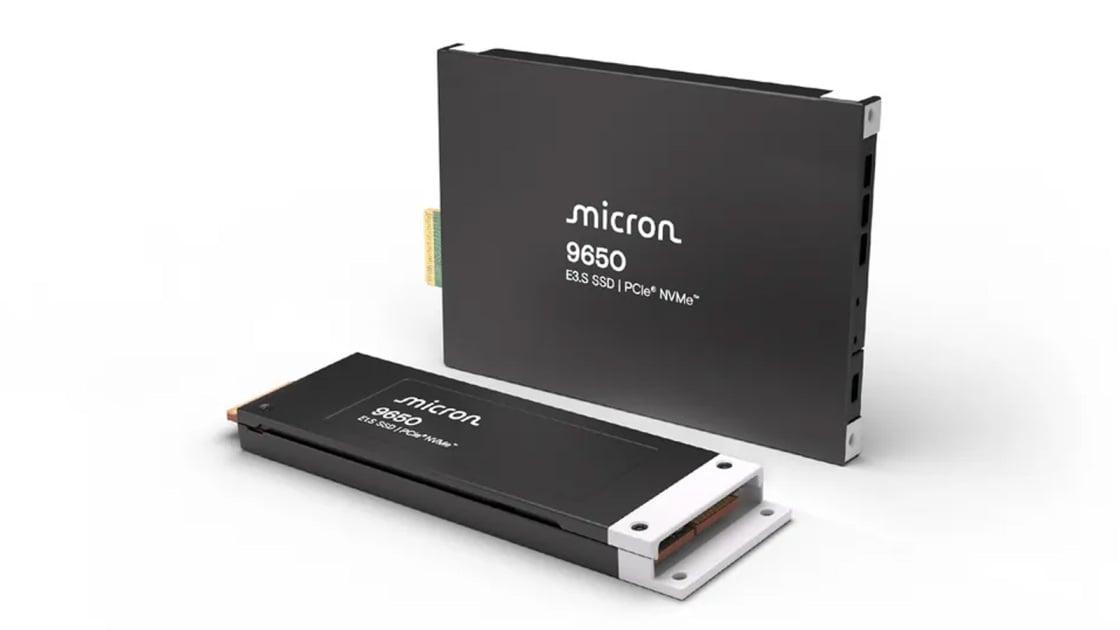
Micron launches first PCIe 6.0 SSDs with 28GB/s speeds, but they're built for AI data centers only
17 Feb 2026•Technology
Samsung Begins Mass Production of Fastest PCIe 5.0 SSD: PM9E1 with 14.5 GB/s Read Speeds
20 Sept 2024

Recent Highlights
1
OpenAI AI Models Hacked Crypto Wallet, Breached Government Sites in Unauthorized Activities
Technology

2
IMF Report Warns AI Market Correction Could Spark Global Financial Crisis With $1.4T at Risk
Business and Economy

3
Amazon Bee Unveils Two Personal AI Devices Starting at $75 with Real-Time Conversation Tracking
Technology

Recent Highlights
Today's Top Stories









Don’t drown in AI news. We cut through the noise - filtering, ranking and summarizing the most important AI news, breakthroughs and research daily. Follow topics that matter to you and stay ahead.


