Micron Technology commits $250 billion to US expansion as AI memory demand reshapes chip industry


8 Sources
[1]
Micron breaks ground on $9bn Hiroshima expansion to chase AI memory demand
The Hiroshima site that produced Micron's first HBM wafer is getting a ¥1.5 trillion sequel, with Tokyo picking up roughly half the bill. Micron Technology broke ground on Saturday on a ¥1.5 trillion, roughly $9.3bn, expansion of its factory in Hiroshima, western Japan, the company's latest bet on
[2]
Micron raises US investment to $250B, aims 40% domestic DRAM output
American semiconductor giant Micron Technology will invest more than $250 billion in the United States through 2035, increasing its spending plans as demand for AI memory chips continues to rise. The company said the expanded investment supports its goal of producing 40 percent of its DRAM memory
[3]
Micron raises U.S. investment to $250 billion for AI memory chips
Micron $MU Technology announced Thursday it is raising its planned U.S. investment to more than $250 billion through 2035, a roughly $50 billion increase from its prior commitment, driven by demand for memory chips in the artificial intelligence era. Reaching 40% of DRAM output on U.S. soil is the
[4]
Micron Invests $9.2 Billion to Expand Melory Production at Hiroshima Facility
Micron has announced another major investment in advanced memory manufacturing, revealing plans to significantly expand its Hiroshima production campus in Japan. The project, valued at approximately $9.2 billion, will focus primarily on High Bandwidth Memory (HBM) production and is expected to
[5]

Micron's mega US expansion: Is the stock poised for more upside? - Micron unveils $250 billion investment plan
Micron's mega US expansion: Is the stock poised for more upside? 1/7 Micron unveils $250 billion investment plan Micron has announced plans to invest more than $250 billion in the United States through 2035, increasing its previous commitment of $200 billion. The investment aims to expand
[6]

Micron Begins $9.3 Billion Japan Plant Expansion To Boost AI Chip Production - Micron Technology (NASDAQ:
US semiconductor giant Micron Technology (NASDAQ:MU) has started its expansion work on a factory in Japan that will mass‑produce cutting‑edge semiconductors for generative AI and other applications. The Boise, Idaho‑based company will invest about $9.3 billion in factory expansion, NHK World
[7]

Micron breaks ground on $9 billion western Japan plant expansion
Micron Technology on Saturday broke ground on the expansion of its factory in western Japan, a ¥1.5 trillion ($9.3 billion) undertaking to produce advanced memory chips. The Boise, Idaho-based company is building the facility in Hiroshima to make chips such as high-bandwidth memory crucial for AI
[8]

Micron breaks ground on $9.3bn Japan expansion to boost AI memory output By Investing.com
Investing.com -- Micron Technology has broken ground on a ¥1.5 trillion ($9.3 billion) expansion of its semiconductor facility in Hiroshima, Japan, as the U.S. memory chipmaker ramps up production to meet growing demand for artificial intelligence applications, Bloomberg reported. The expanded
Share
Copy Link
Micron Technology announced a $250 billion US investment through 2035, up from $200 billion, targeting 40% domestic DRAM production. The chipmaker also broke ground on a $9.3 billion Hiroshima expansion focused on High-Bandwidth Memory. With current HBM supply meeting only half of customer orders and 2026 output sold out, Micron races to capture AI-driven demand while competing against Samsung and SK Hynix.
Micron Technology Scales US Investment to $250 Billion
Micron Technology revealed plans to invest more than $250 billion in the United States through 2035, marking a roughly $50 billion increase from its previous commitment
2
3
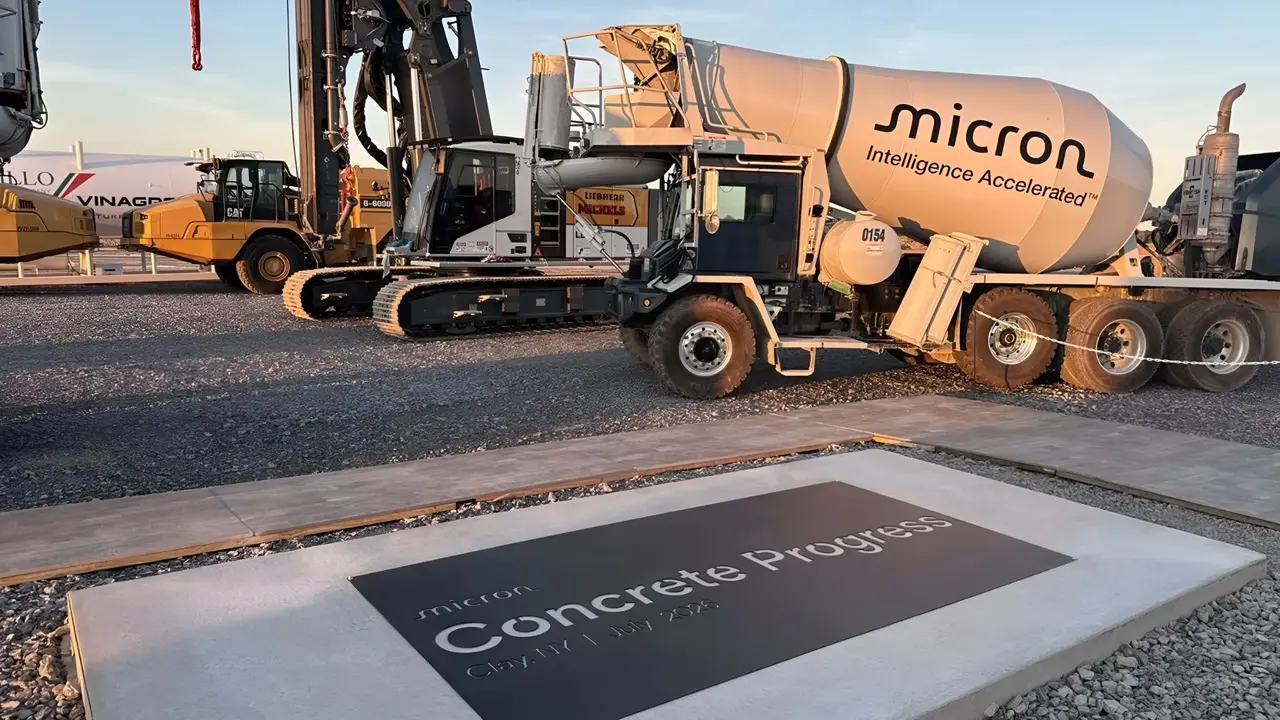
. The expanded Micron investment plan aims to achieve 40% of DRAM output on US soil while addressing surging AI memory chip demand across data centers and cloud infrastructure. Chairman, President and CEO Sanjay Mehrotra announced the commitment at an event in Clay, New York, where the company marked the first concrete pour at its new fabrication facility—a milestone reached more than one quarter ahead of schedule3
.
Source: Interesting Engineering
The announcement sent Micron shares climbing to an intraday high of $1,035.50, representing a gain of as much as 9.1% on the session, with the stock more than tripling in value year to date
3
. Commerce Secretary Howard Lutnick emphasized the strategic importance, stating that Micron's commitment would create nearly 100,000 jobs while providing leading-edge memory supply domestically2
. The broader domestic manufacturing buildout is projected to support more than 90,000 jobs across construction, semiconductor manufacturing, and supply-chain roles3
5
.Hiroshima Factory Expansion Targets High-Bandwidth Memory Production
Separately, Micron Technology broke ground on a ¥1.5 trillion, approximately $9.3 billion, Hiroshima factory expansion focused on High-Bandwidth Memory production
1
4
. The Boise, Idaho-based chipmaker will use the site to produce the stacked DRAM that sits next to GPUs inside AI accelerators from Nvidia and other customers, with commercial shipments expected to begin around summer 20281
. Japan's Ministry of Economy, Trade and Industry (METI) has committed up to ¥500 billion, roughly $3.1 billion, toward the project's capital costs1
4
. Including research and development support already pledged, the government's backing for Micron's Japanese operations now totals roughly ¥775 billion, covering close to half of the new investment1
.
Source: Japan Times
Mehrotra noted the symbolic significance of the location during the groundbreaking ceremony, revealing that Micron's first HBM production wafer was made at this same Hiroshima, Japan site—the piece of memory technology now sitting at the center of the AI buildout
1
. The facility already serves as one of Micron's most advanced DRAM manufacturing sites after the company introduced EUV lithography into production in 2024, enabling the transition from its 1-beta DRAM process to the more advanced 1-gamma node4
.AI Chip Shortage Drives Urgent Capacity Expansion
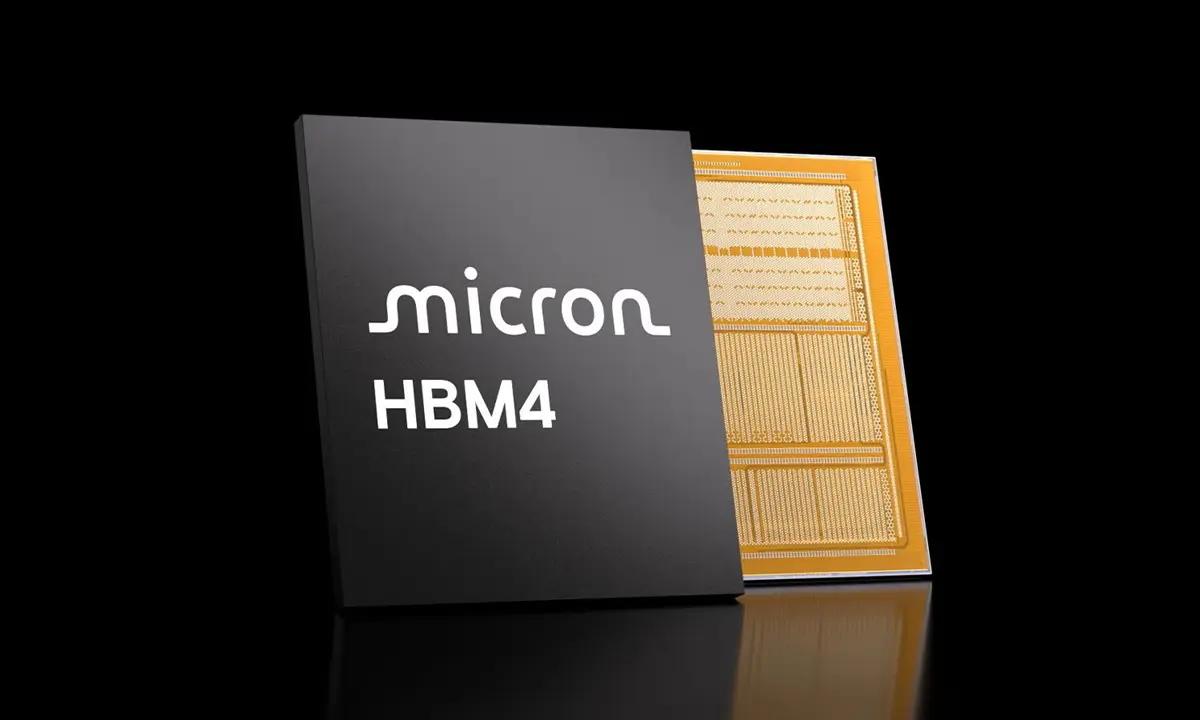
The investments reflect a binding constraint across the industry: Micron can currently fulfill only between half and two-thirds of customer orders for HBM, with its entire 2026 output already sold out under multi-year contracts
1
. High-Bandwidth Memory has become critical for AI accelerators and high-performance GPUs due to its exceptionally high bandwidth and energy efficiency, making it indispensable as AI infrastructure deployment accelerates worldwide4
. Micron is only one of three companies globally that can manufacture HBM at scale, alongside Samsung and SK Hynix1
.
Source: Guru3D
The company reported fiscal third-quarter results that cleared analyst targets on nearly every key measure, projecting that the memory-chip shortage will persist past 2027
3
. This supply constraint is already affecting consumer electronics makers, who have begun absorbing the cost of the DRAM shortage as manufacturers redirect wafer capacity toward the higher margins that HBM commands1
. Industry forecasts suggest Micron could eventually account for roughly one-quarter of the HBM market while representing approximately 20% of total HBM shipments4
.Related Stories
Strengthening the Semiconductor Supply Chain
Micron outlined plans to direct up to $3 billion toward strengthening the US semiconductor supply chain, with $500 million earmarked as strategic financing for GlobalWafers, a silicon wafer maker based in Taiwan, to scale up production capacity at its Texas operations
3
5
. Under the deal, GlobalWafers would supply Micron with raw silicon wafers over a decade-long contract tied to the company's long-term US semiconductor manufacturing plans3
.The New York facility near Syracuse is expected to become the largest private investment in the state's history and the largest semiconductor manufacturing site in US history
2
3
. With up to four fabrication plants planned, the project is projected to generate 50,000 jobs in New York, including 9,000 direct Micron positions2
3
. Less than six months after breaking ground in January 2026, Micron has directed approximately $675 million to New York-based contractors, suppliers, and subcontractors, with more than 80% of on-site workers drawn from New York residents2
3
.Competitive Landscape and Strategic Positioning
Competition within the HBM market remains intense, with SK Hynix currently holding the leading position and supplying much of the HBM used by Nvidia's AI accelerators, while Samsung continues expanding its own production capabilities
4
. Both rivals have been producing HBM at scale for longer than Micron and are running their own expansion programs, meaning the competitive map could look considerably different by the time Hiroshima's new lines are shipping at volume in 20281
. Construction is also advancing at Micron's Idaho facilities, with first wafer output expected from its first Idaho fab in mid-2027, followed by production from a second fab in late 20282
. In Virginia, Micron has already started initial production of its 1-alpha DDR4 memory technology for automotive, industrial, medical, aerospace, and defense customers2
.Japan has treated the Hiroshima deal as part of a larger industrial strategy, with Prime Minister Sanae Takaichi unveiling a long-term roadmap targeting ¥101.6 trillion in combined public and private investment in semiconductors and AI through 2041
1
. Tokyo has committed tens of billions of dollars to chipmakers since 2021 in an effort to rebuild a domestic industry that once led the world in memory production before ceding ground to South Korea1
. Market analysts believe Micron is well positioned to benefit from robust AI-related demand, particularly for advanced memory chips used in next-generation computing, with continued investments by major technology companies in AI infrastructure expected to support revenue and earnings growth over the coming years5
.References
Summarized by

Navi
[2]
Related Stories
Micron Expands US Investments to $200 Billion, Boosting Domestic Semiconductor Manufacturing
12 Jun 2025•Business and Economy
Micron Technology commits $10 billion to AI memory research lab as demand surges 50%
20 Aug 2026•Business and Economy

Micron Invests $7 Billion in Singapore for Advanced HBM Packaging Facility to Meet AI Demand
08 Jan 2025•Business and Economy

Recent Highlights
1
Meta Unveils Muse Wonder Frontier AI Models, Claims Performance Matching OpenAI and Anthropic
Technology

2
IMF Report Warns AI Market Correction Could Spark Global Financial Crisis With $1.4T at Risk
Business and Economy

3
OpenAI Releases 722 AI-Generated Math Solutions, Triggering Existential Crisis in Mathematics
Technology

Recent Highlights
Today's Top Stories







Don’t drown in AI news. We cut through the noise - filtering, ranking and summarizing the most important AI news, breakthroughs and research daily. Follow topics that matter to you and stay ahead.


