Micron commits $24 billion to Singapore plant as AI demand strains global memory supply


8 Sources
[1]
Micron plans $24-billion memory chipmaking plant in Singapore
SINGAPORE, Jan 27 (Reuters) - U.S. memory chipmaker Micron Technology (MU.O), opens new tab said on Tuesday it plans to build a $24-billion chip manufacturing plant in Singapore, as it races to boost output in the face of an acute global shortage. The news, reported earlier by Reuters, comes amid
[2]
Micron to invest $24 billion in Singapore plant as AI boom strains global memory supply
Micron Technology on Tuesday committed approximately $24 billion to expand its wafer manufacturing operations in Singapore, as the American memory chipmaker moves to expand production amid global shortages. In a press release, Micron said the investment would add 700,000 square feet of cleanroom
[3]
Micron's Singapore expansion shows how far memory makers must go
AI infrastructure demand continues to strain global memory supply chains Micron has announced a $24 billion investment to expand memory manufacturing in Singapore, adding a large wafer fabrication facility intended to increase global NAND supply. The project comes as the global chip crisis
[4]
Micron starts building new Singapore NAND fab, production planned for 2028
Micron has kicked off construction of a new semiconductor manufacturing facility in Singapore that will expand the company's NAND flash memory output. NAND is the core storage technology behind SSDs and many embedded storage devices, and Micron is positioning the new site as a capacity increase
[5]

Micron Plans Nearly $24 Billion Singapore Investment To Address AI-Driven Demand - Micron Technology (NASDAQ:MU)
Micron Technology Inc. (NASDAQ:MU) has begun building a state-of-the-art wafer fabrication plant in Singapore, with plans to invest about $24 billion (SG$31 billion) over the next ten years amid strong AI-driven demand for its memory chips. Expanding the NAND Center Of Excellence The new plant,
[6]

Micron builds $24 billion facility
Micron builds $24 billion facility New dedicated NAND factory set to expand existing facility Shortly after having closed its consumer memory division Micron announced via a press release that it is building a new wafer fabrication facility in Singapore to expand its existing fabrication plant
[7]

Micron Doubles Down on Singapore as AI Memory Demand Rewrites Capacity Math
Micron Technology's (NASDAQ:MU) decision to commit roughly US$24.41 billion to expand its Singapore manufacturing footprint over the next 10 years is a direct response to one of the tightest constraints emerging in the AI supply chain, memory availability. By breaking ground on an advanced wafer
[8]

Micron plans $24-billion memory chipmaking plant in Singapore
SINGAPORE, Jan 27 (Reuters) - U.S. memory chipmaker Micron Technology announced on Tuesday a $24-billion investment plan to build a new memory chip making facility in Singapore, as it races to boost output in the face of an acute global shortage. The news, reported earlier by Reuters, comes amid
Share
Copy Link
U.S. chipmaker Micron Technology announced a $24-billion wafer fabrication plant in Singapore to address acute memory chip shortages driven by AI infrastructure demand. The facility will add 700,000 square feet of cleanroom space with production starting in 2028, but analysts warn supply constraints may persist through late 2027.
Micron Singapore Plant Gets $24 Billion Boost Amid Industry Crisis
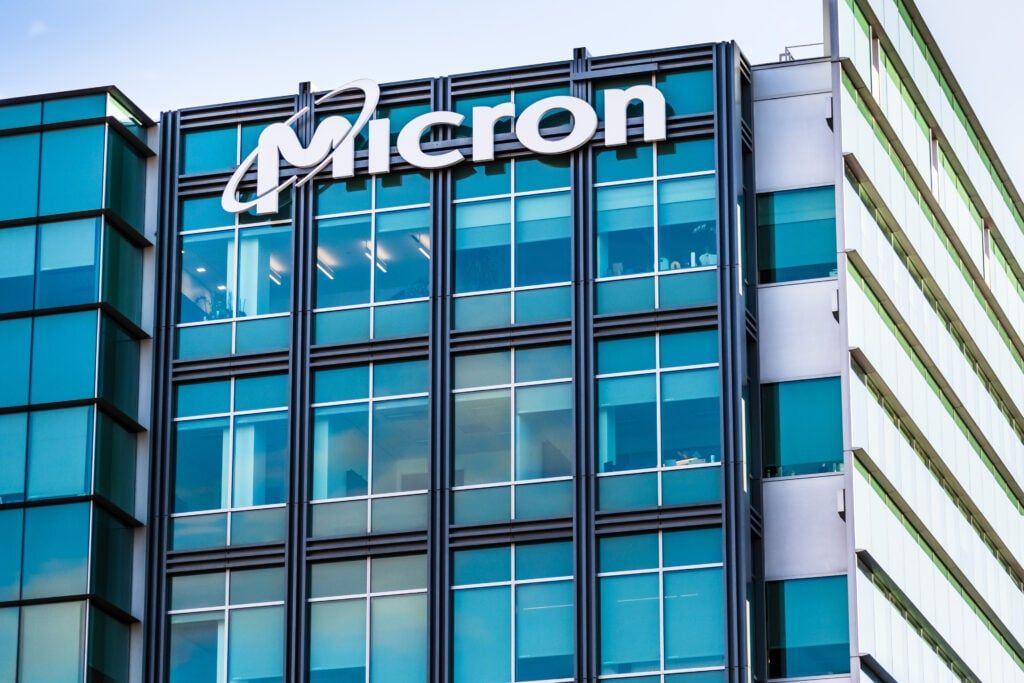
U.S. chipmaker Micron Technology has committed approximately $24 billion to build an advanced wafer fabrication plant in Singapore, marking one of the semiconductor industry's largest capacity expansion efforts as memory chips face unprecedented demand
1
. The $24 billion investment will unfold over the next decade at Micron's existing manufacturing campus, adding roughly 700,000 square feet of cleanroom space dedicated to NAND flash memory production2
. Wafer output is scheduled to begin in the second half of 2028, though this timeline places the facility firmly in the category of long-term supply solutions rather than immediate relief4
.
Source: Benzinga
AI Demand Drives Acute Memory Chip Shortage
The expansion comes as AI infrastructure demand continues to strain global memory supply chains across multiple sectors. Industries from consumer electronics to cloud service providers are battling severe scarcity of all types of memory chips, with AI data center spending significantly increasing requirements for both NAND storage and high-bandwidth memory (HBM) used in AI accelerators
3
. TrendForce analyst Bryan Ao noted that as demand outstrips supply, contract prices for enterprise solid-state drives are expected to rise by 55% to 60%, driven by robust order pulls from major North American cloud service providers seizing opportunities in the AI agent market1
. The shift toward high-bandwidth memory has absorbed manufacturing resources that might otherwise support conventional NAND and DRAM output, contributing to shortages across several memory categories3
.
Source: GameReactor
Singapore Becomes Central Hub for Memory Production
Micron already produces 98% of its flash memory chips in Singapore, making the country a central pillar of its global manufacturing strategy
1
. The company is simultaneously building a $7-billion advanced packaging plant for high-bandwidth memory (HBM) at the same site, which is on track to contribute to supply in 20271
. The capacity expansion is expected to generate approximately 1,600 new jobs related to NAND fabrication, adding to the 1,400 roles announced earlier for the HBM facility, bringing total planned job creation to around 3,000 positions5
. The facility will incorporate automation, robotics, and smart manufacturing systems as Micron concentrates growth around memory segments most closely tied to AI infrastructure3
.
Source: TechRadar
Related Stories

Industry-Wide Race to Expand Capacity
Micron's competitors Samsung and SK Hynix are also accelerating their capacity plans in response to the semiconductor supply chain crisis. SK Hynix told Reuters it plans to hasten the opening of a new factory by three months and begin operating another new plant in February
1
. Micron itself is exploring additional expansion options, including talks to acquire a fabrication site from Powerchip in Taiwan for $1.8 billion, which would boost its DRAM wafer output1
. TrendForce data shows Micron held a 13% market share as the fourth largest flash memory chip supplier in the third quarter of 20251
.Supply Constraints Expected Through 2027
Despite industry-wide announcements of new capacity, analysts expect tight memory supply conditions and the shortage to persist through late 2027
3
. The delayed production start at Micron's new facility raises questions about how much relief it can provide in the near term, with the scale of industry-wide shortages suggesting that no single facility, even one of this size, is likely to resolve supply constraints on its own3
. Micron CEO Sanjay Mehrotra emphasized the company's long-term investment approach, noting that meeting growing demand for memory chips requires significant lead time for construction5
. In December, Micron reported strong Q1 results with revenue of $8.27 billion, surpassing the $8.23 billion consensus estimate, and provided an upbeat outlook for Q2 with expected revenue of $8.2 billion compared to the $7.58 billion consensus5
.References
Summarized by

Navi
Related Stories
Micron Invests $7 Billion in Singapore for Advanced HBM Packaging Facility to Meet AI Demand
08 Jan 2025•Business and Economy

Micron Technology commits $250 billion to US expansion as AI memory demand reshapes chip industry
04 Jul 2026•Technology

Micron Technology plans second Taiwan facility to meet surging AI demand for advanced chips
16 Mar 2026•Business and Economy

Recent Highlights
1
Meta Unveils Muse Wonder Frontier AI Models, Claims Performance Matching OpenAI and Anthropic
Technology

2
IMF Report Warns AI Market Correction Could Spark Global Financial Crisis With $1.4T at Risk
Business and Economy

3
OpenAI Releases 722 AI-Generated Math Solutions, Triggering Existential Crisis in Mathematics
Technology

Recent Highlights
Today's Top Stories









Don’t drown in AI news. We cut through the noise - filtering, ranking and summarizing the most important AI news, breakthroughs and research daily. Follow topics that matter to you and stay ahead.


