Micron Technology commits $10 billion to AI memory research lab as demand surges 50%


8 Sources
[1]
Micron unveils $10 billion AI memory research lab in Boise
Aug 20 (Reuters) - Micron Technology (MU.O), opens new tab said on Thursday it plans to spend $10 billion on its newly established research lab at Boise, Idaho, over the next decade to advance memory technologies, develop compute systems and support future chip manufacturing. Large memory
[2]
Micron is spending $10bn on a memory research lab
Micron has announced a $10bn research lab in Boise on a ten-year horizon, and its chief executive spent the same day arguing that AI has made memory demand durable. Its shares fell 29% in July, their worst month since 2002. Micron is putting $10bn into a research lab built on the premise that AI
[3]
Micron's new $10 billion lab targets memory beyond today's chips
Micron Technology plans to invest $10 billion over the next decade to establish a new US research hub focused on developing memory and computing technologies beyond today's semiconductor roadmaps. The Micron Research Labs will be headquartered in Boise, Idaho, with a flagship campus designed to
[4]
Micron CEO Sanjay Mehrotra says AI has changed memory demand
Micron $MU Technology Chairman, President, and CEO Sanjay Mehrotra said Thursday that artificial intelligence has upended the economics of the memory business, a sector that has historically lurched between periods of shortage and oversupply. "Today there is no AI without memory. AI systems need
[5]
Micron launches $10 billion AI memory research lab in Boise
The planned decade-long investment will fund a flagship Boise campus, university partnerships, and satellite labs worldwide Micron $MU Technology unveiled Micron Research Labs on Thursday, a U.S.-based research institution headquartered in Boise backed by a planned $10 billion investment over the
[6]

Micron Unveils $10 Billion Research Labs To Advance Memory and AI - Micron Technology (NASDAQ:MU)
Micron Technology, Inc. (NASDAQ:MU) on Thursday disclosed the launch of Micron Research Labs, a U.S.-based long-horizon research institution aimed at advancing memory and AI technologies. Launches Micron Research Labs For Memory And AI This is supported by a planned $10 billion investment over
[7]

Micron CEO Details $10 Billion AI Memory Research Bet
Micron Technologies (MU) CEO Sanjay Mehrotra has already given investors plenty to think about in 2026. Now he's asking investors to look beyond the current memory boom, backing a sprawling $10 billion investment to push the envelope on technologies that go well beyond anything on its existing
[8]

Micron unveils $10 billion AI memory research lab in Boise
Aug 20 (Reuters) - Micron Technology said on Thursday it plans to spend $10 billion on its newly established research lab at Boise, Idaho, over the next decade to advance memory technologies, develop compute systems and support future chip manufacturing. Large memory chipmakers such as Micron,
Share
Copy Link
Micron Technology unveiled a $10 billion investment in Micron Research Labs, a dedicated AI memory research hub in Boise, Idaho. CEO Sanjay Mehrotra argues AI has fundamentally changed memory economics, with data center customers demanding 50% more supply than the company can deliver.
Micron Technology announces flagship AI memory research hub
Micron Technology unveiled Micron Research Labs on Thursday, committing a $10 billion investment over the next decade to establish what the company calls the first dedicated memory research hub of its kind in the United States
1
2
. Headquartered in Boise, Idaho, the research lab will focus on memory technologies, memory and compute architectures, chip packaging, and future semiconductor manufacturing3
. The company expects to break ground on a flagship Boise campus in 2027, designed to host hundreds of researchers5
.
Source: Benzinga
This $10 billion investment is separate from Micron's previously announced commitment to spend more than $250 billion on American manufacturing and research, a plan expected to create more than 90,000 American jobs
3
. The research lab will connect to Micron research sites across the United States, Europe, Japan, India, Singapore, and Taiwan, funding university collaborations, satellite labs, and partnerships across the semiconductor industry2
.CEO argues AI has permanently altered memory demand
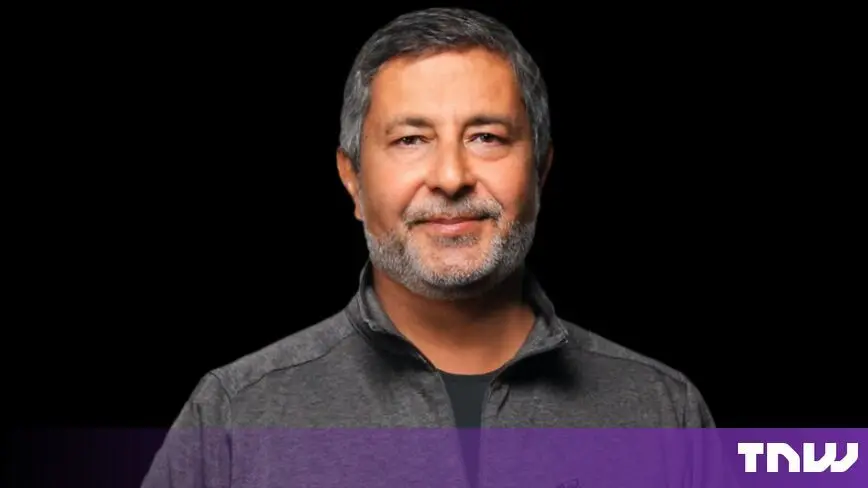
Sanjay Mehrotra, Micron's chairman, president, and CEO, made a direct case on CNBC the same day that AI has fundamentally changed the economics of the memory business. "Today there is no AI without memory. AI systems need more memory. They need higher performance memory. They need lower power memory," Mehrotra told Jim Cramer
4
. He described memory as no longer just a component but "the strategic infrastructure for AI"2
.
Source: The Next Web
Mehrotra argued that AI is creating a more durable source of demand than the memory industry has seen before, pointing to autonomous vehicles, robots, and consumer devices with embedded AI as categories that will consume substantially more memory over coming years
4
. This represents a shift from the historically cyclical nature of memory demand, where strong demand pulled in new capacity, which then arrived late, overshooting supply and collapsing prices2
.Supply shortages and 50% demand gap
Mehrotra revealed that Micron cannot produce enough to satisfy current demand. "All our customers across our end markets will buy everything that we make," he said, adding that data center customers want roughly 50% more supply than the company can commit to
2
4
. The company is locking down this AI-driven demand through strategic agreements. At its late-June earnings call, Micron said it had signed five-year strategic agreements with 16 customers, and Mehrotra said more have been signed since2
. "They have committed to taking the supply. So, this gives us assurance of demand," he stated4
.The nature of customer relationships is also shifting. Customers are no longer treating memory as a commodity to be purchased from whoever bids lowest. Instead, they are bringing Micron Technology into product planning far earlier, because memory choices now shape what the finished system can do
4
. Memory is now designed alongside the processors it will sit next to, which brings Micron into the customer's development cycle earlier2
.Related Stories
Industry endorsements and government support
The announcement arrived with endorsements from Jensen Huang and Tim Cook, as well as the chief executives of Applied Materials and Lam Research
2
. Commerce Secretary Howard Lutnick and Michael Kratsios, who directs the White House Office of Science and Technology Policy, both supplied statements framing the lab as an achievement of the current administration2
. Kratsios described it as accelerating "the AI-driven Golden Age of American Innovation"2
. Micron has been granted up to $6.2 billion in CHIPS Act funding2
.NVIDIA CEO Jensen Huang described the challenge as "reinventing memory technologies and architectures to fuel the next generation of increasingly powerful AI systems"
3
. Applied Materials CEO Gary Dickerson pointed to advances in "new materials, equipment, process technology and chip packaging" as important to turning research breakthroughs into practical technology3
.Long-term research focus and U.S. leadership
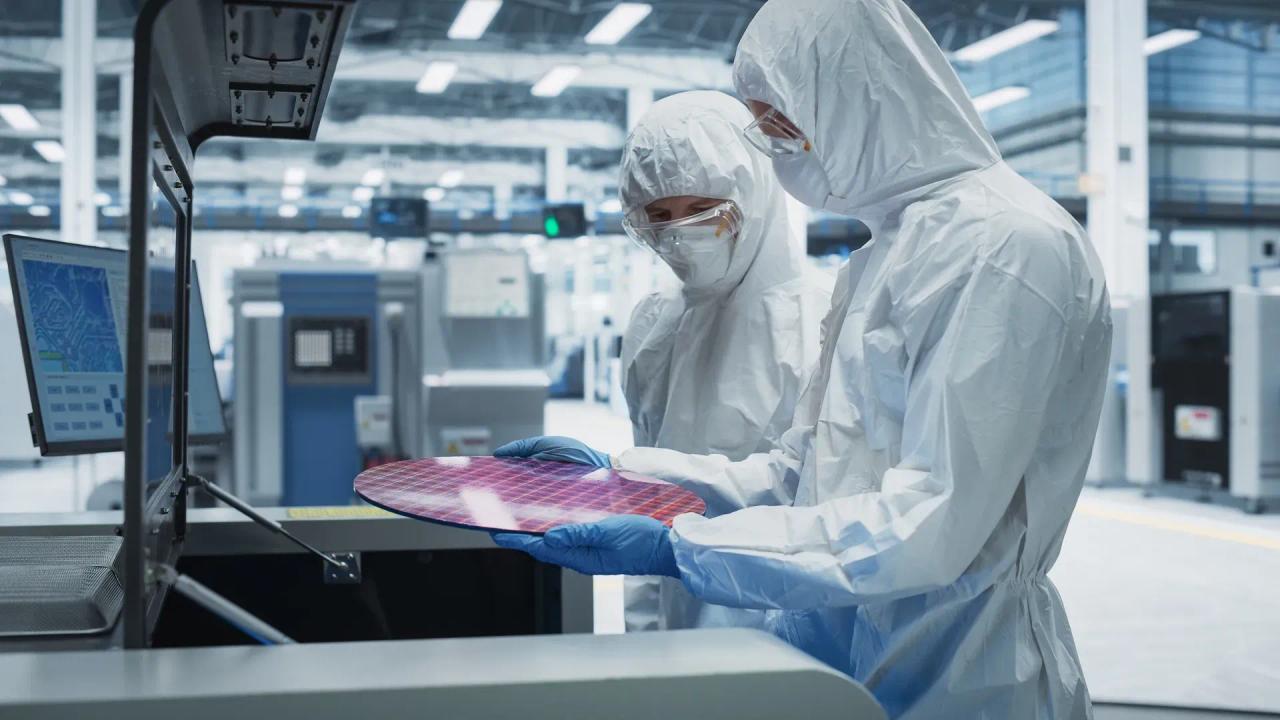
The research will focus on technologies that could shape computing decades from now, looking beyond the next generation of chips
3
. Scott DeBoer, Micron's chief technology and products officer, said "Micron Research Labs gives that legacy a dedicated home for long-horizon innovation, the kind of research that sits upstream of every product we build"2
. The company holds 62,000 lifetime patents2
.
Source: Interesting Engineering
AI workloads are placing growing demands on memory because processors need to move huge amounts of data quickly, making improvements in memory technologies potentially as important as making computing hardware faster
3
. High-bandwidth memory, built by stacking DRAM, has surged in strategic importance as AI infrastructure spending accelerates5
. DRAM was 76% of Micron's revenue last quarter, and as AI absorbs that supply, prices have risen across everything else that uses it2
. The shortage reached DDR2, a standard from 2003, which saw 60% price rises2
.References
Summarized by

Navi
[2]
[3]
Related Stories
Micron Technology commits $250 billion to US expansion as AI memory demand reshapes chip industry
04 Jul 2026•Technology

Micron Invests $7 Billion in Singapore for Advanced HBM Packaging Facility to Meet AI Demand
08 Jan 2025•Business and Economy

Micron Technology Projects $61.5 Billion Revenue as AI and Robotics Drive Global Memory Shortage
28 Sept 2026•Business and Economy

Recent Highlights



Recent Highlights
Today's Top Stories










Don’t drown in AI news. We cut through the noise - filtering, ranking and summarizing the most important AI news, breakthroughs and research daily. Follow topics that matter to you and stay ahead.


