Microsoft shifts thousands of Office prompts to in-house AI models to slash soaring costs


6 Sources
[1]
Microsoft joins AI cost-cutting trend by relying more on its own models
As AI costs continue to rise, companies are looking for ways to cut back. The most recent example is Microsoft, which has reportedly begun to deploy a cost-savings strategy by relying less on software from OpenAI and Anthropic and instead deploying its own in-house models. Indeed, when it comes to
[2]
Microsoft 365 Apps Favoring Company's AI Models Over ChatGPT, Claude
To cut costs, Microsoft is pushing to have Microsoft 365 AI prompts answered by its internal MAI models rather than by Anthropic and OpenAI models, according to Bloomberg. Although Microsoft has historically championed the use of Claude and ChatGPT in its Microsoft 365 Office applications like
[3]
Microsoft swaps in its own AI over OpenAI in some apps
Microsoft has begun swapping OpenAI and Anthropic models out for its own in-house MAI models in some app features where cost or data residency favours them, per Bloomberg. The shift is incremental, OpenAI and Anthropic still handle most Copilot traffic, but it marks Microsoft steadily reducing a
[4]
Claude and ChatGPT Are Getting Too Expensive, Even for Microsoft
Using the most advanced AI models at a corporate scale isn't cheap, even for a company as massive as Microsoft. The cost of AI tokens, the unit used to measure how much computing work a model is doing, is getting so expensive that Microsoft is reportedly turning to its own models to save some
[5]

Microsoft Quietly Shifts Thousands of Office Prompts to In-House AI | PYMNTS.com
While there have been previous reports that Microsoft plans to transition to its own AI models, the fact that the company's MAI is now handling tens of thousands of prompts in those applications each week was not previously known, according to the report. Microsoft did not immediately reply to
[6]

Microsoft edges higher as in-house AI push takes aim at copilot costs By Investing.com
Investing.com -- Microsoft (NASDAQ:MSFT) shares ticked up 1.75% on Tuesday, outperforming a sluggish Nasdaq following reports that the tech giant is beginning to ditch pricey third-party AI models in favor of its own homegrown technology. According to Bloomberg, Microsoft has quietly deployed its
Share
Copy Link
Microsoft has begun routing tens of thousands of weekly AI prompts in Excel and Outlook through its own MAI models instead of relying on OpenAI and Anthropic. The shift marks a strategic pivot as AI token costs spiral across the industry, with Microsoft AI CEO Mustafa Suleyman stating the goal is to 'reduce and ultimately eliminate' payments to Anthropic.
Microsoft Deploys In-House AI to Cut Dependency on External Partners
Microsoft has quietly started replacing OpenAI and Anthropic models with its own in-house AI across some of its most widely used applications. According to Bloomberg, tens of thousands of AI prompts each week in Microsoft 365 applications like Excel and Outlook are now being handled by the company's proprietary Microsoft AI models, known as MAI models
1
4
. While this represents only a small fraction of Microsoft's overall AI usage—with Copilot and other services still heavily reliant on third-party AI models—it signals a deliberate shift to in-house AI models where cost efficiency and data residency favor them3
.
Source: PYMNTS
The move comes as Microsoft reducing reliance on OpenAI and Anthropic becomes a strategic priority. Microsoft AI CEO Mustafa Suleyman made the company's intentions clear at the Microsoft Build conference last month, stating that "Anthropic is extremely expensive and I think many people are urgently looking for alternatives." He added that Microsoft's goal is to "reduce and ultimately eliminate" the substantial payments it makes to Anthropic
4
. Suleyman also revealed that "many, many people in our organization are spending millions of dollars" on AI tokens, underscoring the financial pressure driving this AI cost-cutting strategy.Seven New Microsoft MAI Models Target Cost Efficiency
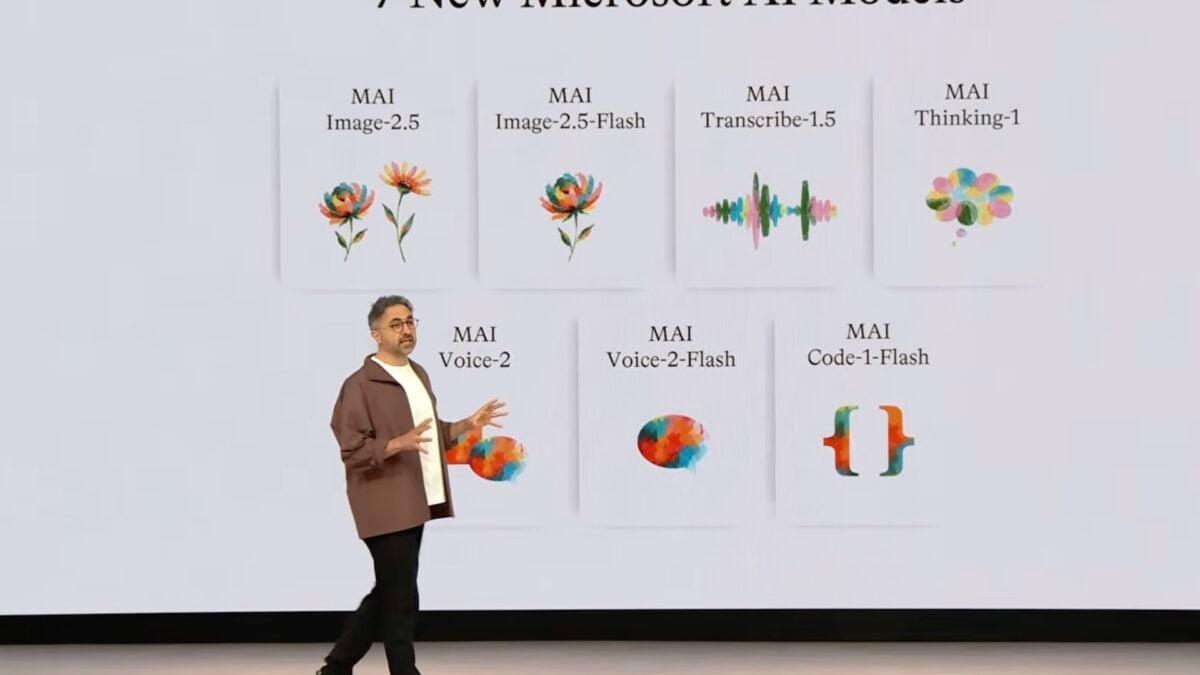
At its annual Build conference, Microsoft unveiled seven new MAI models designed to compete directly with offerings from ChatGPT and Claude
1
. Among these is MAI-Thinking-1, Microsoft AI's first reasoning model, which the company describes as a mid-sized, 35 billion active-parameter model with a 256K context window. According to blind testing, it matched the coding abilities of Anthropic's popular Claude Opus 4.64
. The company also introduced MAI-Code-1-Flash, a coding assistant designed to compete with Claude Code and OpenAI's Codex, along with new image, transcription, and voice models2
.
Source: Gizmodo
Microsoft has been testing MAI-Transcribe-1 across Teams and Copilot, with plans to roll it out for transcription services within months, further replacing third-party AI models
5
. The company has also deployed MAI-Image-2 into Bing and PowerPoint3
. In one notable case, a MAI model customized for consulting firm McKinsey reportedly beat OpenAI's GPT-5.5 on cost efficiency by a factor of ten, demonstrating the potential for AI spending reduction through this shift to in-house AI models3
.Token Costs Drive Industry-Wide AI Spending Reduction
The escalating cost of AI tokens has become a pressing concern across the technology sector. Microsoft's pivot reflects a broader industry trend toward AI cost-cutting as companies grapple with spiraling expenses. Anthropic charges $10 per million input tokens and $50 per million output tokens for its most advanced Fable 5 model, while OpenAI's pricing stands at $5 per million input tokens and $30 per million output tokens for GPT-5.5
4
. By contrast, running Microsoft AI models on its own Azure infrastructure allows the company to bypass these third-party fees entirely3
.Other major tech companies have implemented similar measures. Amazon, Uber, Meta, and Accenture have all reportedly taken steps to curb AI spending
1
. Uber reportedly exhausted its entire annual AI budget within the first three months of this year, while an undisclosed company spent half a billion dollars on AI tokens in a single month due to uncapped engineer access2
. The phenomenon of "tokenmaxxing" that dominated early 2026 has quickly fallen out of favor as companies recognize the unsustainable nature of unchecked AI expenditures.Related Stories

Strategic Independence After Renegotiated OpenAI Partnership
Microsoft's ability to pursue replacing OpenAI and Anthropic models stems from a 2025 renegotiation that fundamentally altered its relationship with OpenAI. The original contract had barred Microsoft from independently pursuing frontier AI, but the revised agreement ended Microsoft's exclusivity while maintaining a license to OpenAI's technology through 2032
3
. This deal also freed OpenAI to sell through competitors, enabling AWS to offer OpenAI models as well.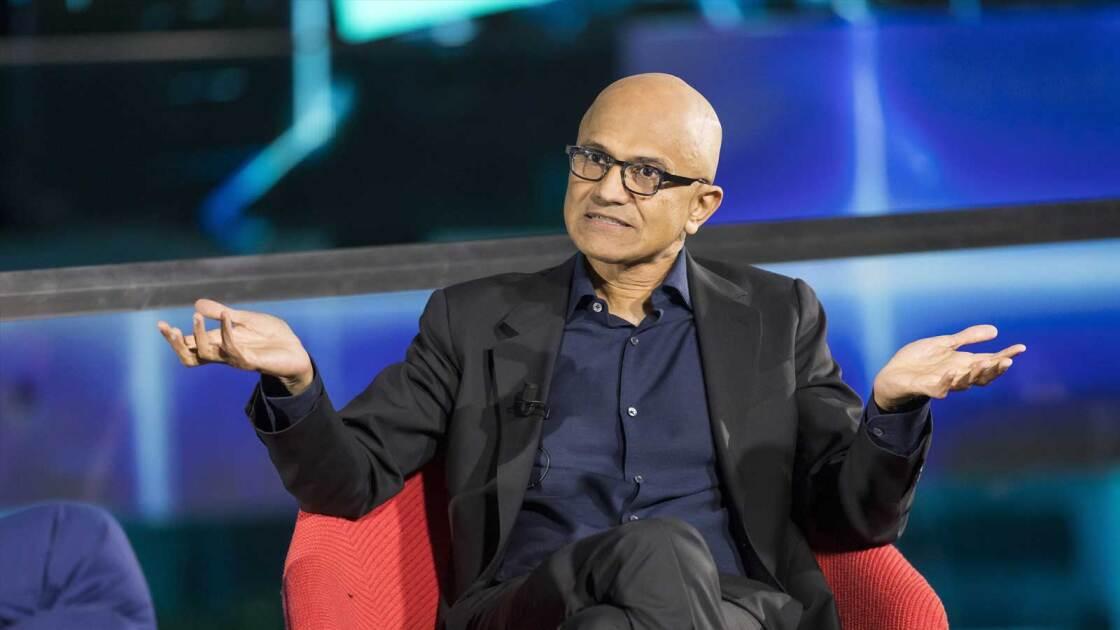
Source: PC Magazine
The renegotiation appears to have been driven by concerns at the highest levels of Microsoft leadership. CEO Satya Nadella reportedly feared Microsoft becoming "the next IBM" if it leaned too heavily on a single AI partner
3
. The company's current three-way strategy—maintaining a large OpenAI stake, embedding Claude in Copilot, and developing its own Microsoft MAI models—represents a calculated hedge against over-dependence on any single provider.It was reported in January that Microsoft had become one of Anthropic's top customers, on track to spend around $500 million per year on Anthropic's AI models
5
. Earlier this year, Microsoft also reduced employee access to external tools like Claude Code after costs skyrocketed, and later moved GitHub Copilot users to token-based billing2
.Distribution Advantage Over Benchmark Performance
Microsoft's competitive advantage lies not in topping AI leaderboards but in its massive distribution reach. With hundreds of millions of Office and Teams seats, even shifting a small percentage of traffic to first-party models represents significant capital spending savings
3
. This distribution network allows Microsoft to monetize its in-house AI regardless of whether individual models outperform competitors on technical benchmarks.The shift also addresses investor concerns about elevated AI infrastructure costs. During its most recent quarter, Microsoft delivered double-digit growth across core segments driven by demand for AI and cloud services, but faced questions about sustained capital spending levels
5
. By bringing more AI workloads in-house, Microsoft can improve margins whether or not enterprise customers ultimately pay premium prices for AI-enhanced features.As token costs continue pressuring budgets across the industry, Microsoft's gradual transition to Microsoft 365 AI models built internally may serve as a template for other major technology companies seeking to balance innovation with financial sustainability. The partnership that once defined Microsoft's AI strategy is being quietly rebalanced, one swapped-in model at a time.
References
Summarized by

Navi
[3]
Related Stories
Microsoft Imposes AI Token Budgets After $24.1 Billion OpenAI Spend Reveals Cost Crisis
05 Aug 2026•Business and Economy
Microsoft replaces OpenAI with its own AI models in PowerPoint and Bing, signals shift
23 Jul 2026•Technology
Microsoft Diversifies AI Partnerships: Anthropic's Models to Join OpenAI in Office 365
09 Sept 2025•Technology

Recent Highlights



Recent Highlights
Today's Top Stories









Don’t drown in AI news. We cut through the noise - filtering, ranking and summarizing the most important AI news, breakthroughs and research daily. Follow topics that matter to you and stay ahead.


