Power Crisis Becomes Critical Bottleneck in Global AI Infrastructure Race


13 Sources
[1]
Altman and Nadella need more power for AI, but they're not sure how much
How much power is enough for AI? Nobody knows, not even OpenAI CEO Sam Altman or Microsoft CEO Satya Nadella. That has put software-first businesses like OpenAI and Microsoft in a bind. Much of the tech world has been focused on compute as a major barrier to AI deployment. And while tech companies
[2]
China and America's AI war isn't just about compute, it's about energy -- energy subsidies promote homegrown chip push, amid data center energy squeeze
Banning Nvidia's more efficient GPUs comes at the price of power Local Chinese governments have begun issuing attractive power incentives and subsidies to Chinese tech companies, including ByteDance, Alibaba, and Tencent, according to a new report. Designed to cut energy bills for affected
[3]
Power crunch threatens to derail AI datacenter construction
A survey of datacenter professionals reveals that supply chain constraints and power availability are hampering the industry's efforts to scale datacenter capacity. Turner & Townsend's 2025-2026 Datacenter Construction Cost Index report, based on 300+ projects across 20+ countries and input from
[4]
How many 'bragawatts' have the hyperscalers announced so far?
The financing package stitched together for Meta's humongous Hyperion data centre campus in Louisiana made Alphaville curious about just how much energy the new AI infrastructure will consume if it all comes online. After all, massive new projects are being announced almost every week, in what
[5]

China's key weapons in its AI battle with the U.S. -- massive Huawei chip clusters and cheap energy
China is focusing on large language models in the artificial intelligence space. It's well known that Chinese semiconductors designed for artificial intelligence cannot compete with the American firm Nvidia. Yet, China has managed to continue developing highly advanced AI models, with many being
[6]
Microsoft CEO says the company doesn't have enough electricity to install all the AI GPUs in its inventory - 'you may actually have a bunch of chips sitting in inventory that I can't plug in'
Microsoft CEO Satya Nadella said during an interview alongside OpenAI CEO Sam Altman that the problem in the AI industry is not an excess supply of compute, but rather a lack of power to accommodate all those GPUs. He said this on YouTube in response to Brad Gerstner, the host of Bg2 Pod, when
[7]

China's half-price electricity deal tempts its tech titans to replace foreign chips
Major tech firms face tough trade-offs between efficiency and political loyalty China is reportedly offering major home-grown cloud and internet companies including Alibaba, ByteDance, and Tencent electricity subsidies which could reduce energy costs by as much as half. Reports from the Financial
[8]

If Microsoft can't source enough electricity to power all the AI GPUs it has, you have to wonder how Amazon is going to cope in its new $38 billion deal with OpenAI
To keep the AI juggernaut rolling ever forward, you might think that the biggest companies in artificial intelligence desperately need ridiculous numbers of AI GPUs. According to Microsoft, though, the issue isn't a compute or hardware limit, it's that there's not enough electrical power to run it
[9]
Microsoft faces power shortages despite holding vast inventories of idle GPUs
OpenAI urges the government to massively expand national energy generation capacity Microsoft CEO Satya Nadella has drawn attention to a less discussed obstacle in the AI race - a shortage not of processors but of power. Speaking on a podcast alongside OpenAI CEO Sam Altman, Nadella said
[10]

China Offers Cheaper Power to Local AI Firms Ditching NVIDIA Chips | AIM
The move follows complaints from Alibaba, ByteDance and Tencent, which have faced higher costs after Beijing restricted access to NVIDIA chips. China has introduced new subsidies that halve energy bills for primary data centres using domestic chips, aiming to strengthen its semiconductor industry
[11]

Microsoft CEO Doesn't Want to Buy NVIDIA's AI GPUs "Beyond One Generation," Hints at a Compute Glut Driven by Energy Constraints
Microsoft's Satya Nadella has revealed the situation regarding the firm's AI GPU arsenal, claiming that there isn't enough space or energy available to bring additional compute power onboard. Recently, a thesis has emerged suggesting that NVIDIA and the AI industry will ultimately reach a point
[12]

China going to win AI race thanks to cheaper electricity, warns NVIDIA CEO
The true AI bottleneck isn't chips or data but electricity access We've finally reached that stage of the AI arms race where securing compute isn't the primary concern for the world's leading (tech) powers. Access to gigawatt scale electricity has emerged as the single biggest bottleneck to
[13]
Satya Nadella says Microsoft has GPUs, but no electricity for AI datacenters
The AI revolution faces its most human constraint: the power grid Satya Nadella didn't mince his words. "I've got GPUs sitting in inventory that I can't plug in," he said - calmly, matter-of-factly - in a recent podcast. Let that sink in for a moment. This is the world's second-largest cloud
Share
Copy Link
Tech giants face unprecedented energy challenges as AI data centers demand massive power capacity, with Microsoft reporting unused GPU inventory due to power shortages while China leverages energy subsidies to compete with U.S. AI infrastructure.
The Power Predicament
The artificial intelligence revolution has hit an unexpected roadblock: electricity. Major tech companies are discovering that their ambitious AI expansion plans are being constrained not by chip availability or computational capacity, but by the fundamental challenge of securing adequate power infrastructure
1
.
Source: Digit
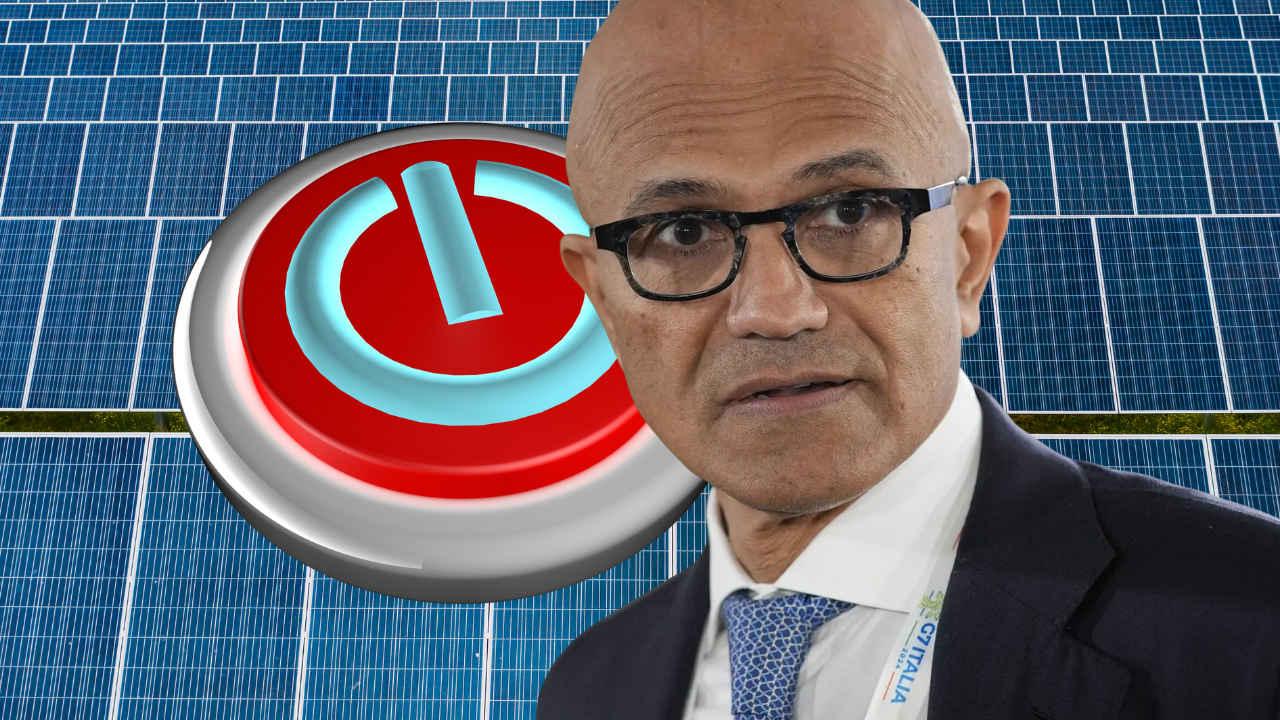
Microsoft CEO Satya Nadella revealed a striking paradox during a recent podcast appearance: "It's not a supply issue of chips, it's the fact that I don't have warm shells to plug into." The company has reportedly ordered more GPUs than it can power, leaving expensive hardware sitting unused in inventory
1
. This represents a fundamental shift from the traditional bottlenecks that have historically constrained technology deployment.Unprecedented Scale of Demand
The magnitude of power requirements for AI infrastructure has reached staggering proportions. According to recent analysis, announced data center projects now total 46 gigawatts of computing power, requiring an estimated 55.2 gigawatts of electricity to function at full capacity
4
. To put this in perspective, this amount of energy could power 44.2 million American households—nearly three times California's entire housing stock.
Source: The Register
OpenAI's recently announced Michigan data center hub alone will consume over 1 gigawatt, adding to the company's growing portfolio of "Stargate" projects that collectively target 10 gigawatts of capacity
4
. The total cost for these facilities is projected at $2.5 trillion, serving an industry that has yet to demonstrate consistent profitability.Grid Infrastructure Challenges
The power crisis extends beyond simple capacity issues to fundamental grid infrastructure limitations. A survey of datacenter professionals found that 48% cite power access as the biggest scheduling constraint, with grid connection wait times stretching years
3
. In the United States, some power requests face seven-year queues, while British developers report delays requiring substation upgrades worth hundreds of millions of dollars.The nature of AI workloads compounds these challenges. Unlike traditional data centers running diverse, uncorrelated tasks, AI facilities operate as synchronized systems where thousands of GPUs execute intense computation cycles in unison
4
. This creates massive power swings that can oscillate from 30% to 100% utilization in milliseconds, forcing engineers to oversize components and threatening grid stability.Related Stories
China's Strategic Energy Advantage
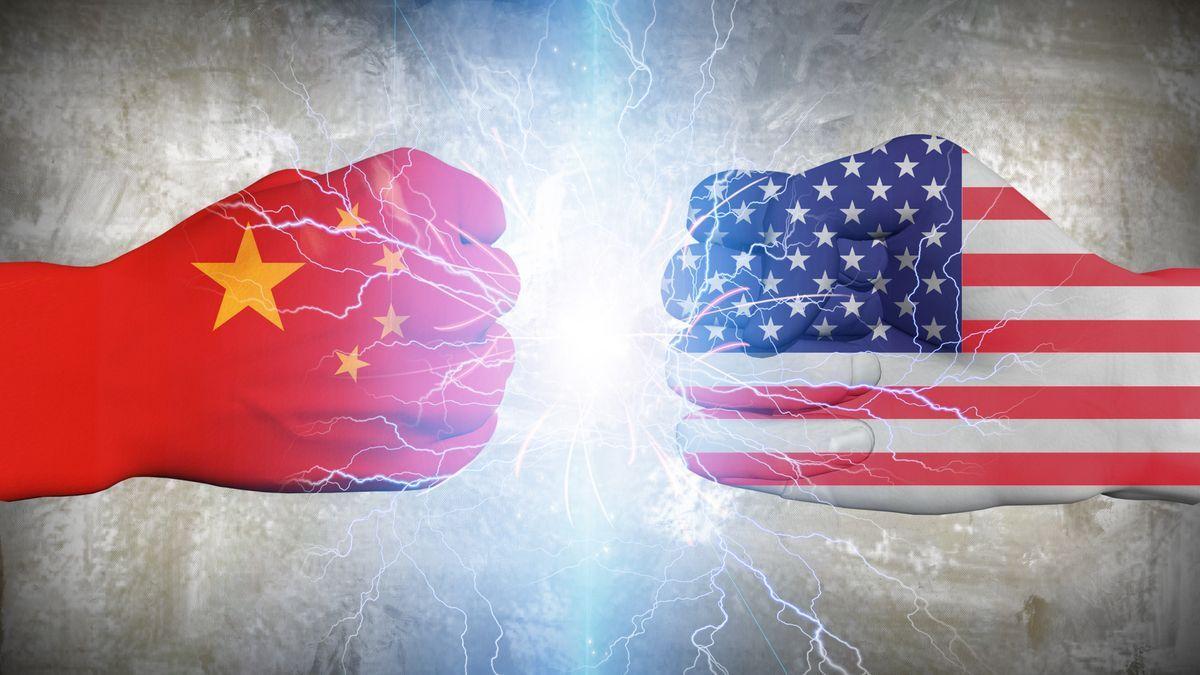
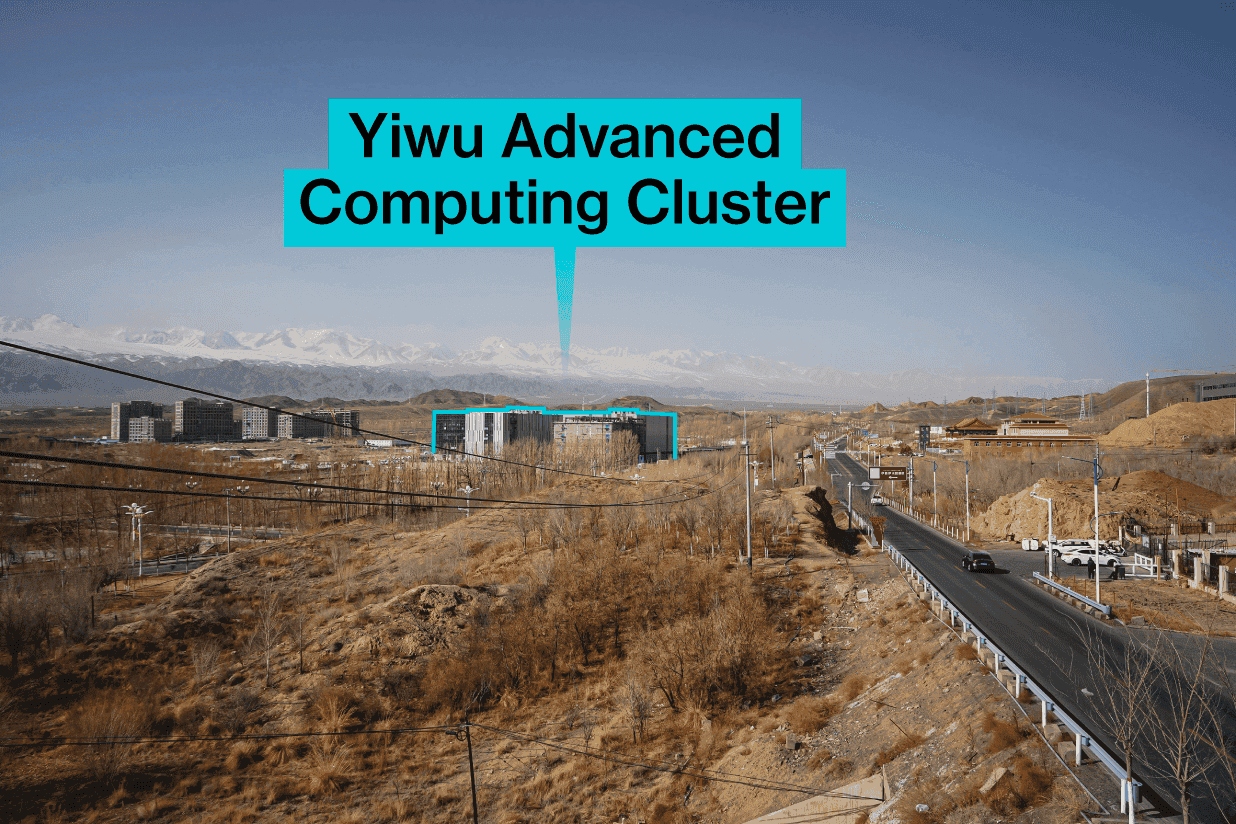
While American companies struggle with power constraints, China has identified energy as a strategic weapon in the global AI competition. Local Chinese governments have begun offering substantial energy subsidies—cutting bills by up to 50% in regions like Gansu, Guizhou, and Inner Mongolia—but only for companies using domestically produced chips
2
.
Source: TechRadar
This policy serves dual purposes: encouraging adoption of Chinese-made AI hardware while reducing dependence on foreign technology. Despite Chinese chips being less efficient than Nvidia's offerings—requiring more power for equivalent performance—the government subsidies effectively offset the energy penalty
5
. The subsidies are funded through China's $50 billion Big Fund III, part of nearly $100 billion in government investment aimed at accelerating domestic chip development.Industry Response and Future Outlook
Tech leaders are pursuing various strategies to address the power shortage. OpenAI's Sam Altman has invested in nuclear energy startups including Oklo and Helion, as well as solar concentration company Exowatt
1
. However, these technologies remain years from widespread deployment, forcing companies to rely on faster-deploying solutions like solar panels and natural gas turbines.The industry faces a fundamental uncertainty about future power requirements. Altman acknowledges that if AI becomes significantly more efficient or demand growth slows, companies could find themselves with stranded power assets. Conversely, he believes in Jevons Paradox—that efficiency improvements will drive even greater overall demand, potentially requiring the 100 gigawatts annually that OpenAI has requested from the Trump administration
4
.References
Summarized by

Navi
[2]
[3]
Related Stories
Nvidia CEO Jensen Huang Warns China Could Win AI Race Amid Trade War Tensions
06 Nov 2025•Policy and Regulation

Nvidia CEO warns China's AI infrastructure advantage could reshape the global AI race
07 Dec 2025•Business and Economy
China's Ambitious AI Data Center Plans Raise Questions About Chip Acquisition
10 Jul 2025•Technology
Recent Highlights
1
Meta Unveils Muse Wonder Frontier AI Models, Claims Performance Matching OpenAI and Anthropic
Technology

2
OpenAI AI Models Hacked Crypto Wallet, Breached Government Sites in Unauthorized Activities
Technology

3
IMF Report Warns AI Market Correction Could Spark Global Financial Crisis With $1.4T at Risk
Business and Economy

Recent Highlights
Today's Top Stories




Don’t drown in AI news. We cut through the noise - filtering, ranking and summarizing the most important AI news, breakthroughs and research daily. Follow topics that matter to you and stay ahead.


