Nvidia CEO warns China's AI infrastructure advantage could reshape the global AI race


3 Sources
[1]
'They can build a hospital in a weekend': Nvidia CEO warns about China's big AI advantages -- as report reveals it now has 30% of global AI usage
Meanwhile, a new study has found that China's open source LLMs have secured almost a third of global AI usage Nvidia's chief executive, Jensen Huang, has again warned about the swift progress that China is making with AI, and the advantages the country has in terms of the infrastructure for
[2]
Nvidia CEO says data centers take about 3 years to construct in the U.S., while in China 'they can build a hospital in a weekend' | Fortune
Nvidia CEO Jensen Huang said China has an AI infrastructure advantage over the U.S., namely in construction and energy. While the U.S. retains an edge on AI chips, he warned China can build large projects at staggering speeds. "If you want to build a data center here in the United States from
[3]
Nvidia CEO Jensen Huang Warns China Could Beat America In AI: 'They Can Build A Hospital In A Weekend' While US Takes Years - NVIDIA (NASDAQ:NVDA)
Nvidia Corp. (NASDAQ:NVDA) CEO Jensen Huang cautioned that while the U.S. remains ahead in AI chip technology, China's unmatched speed in building infrastructure and growing energy resources could give it a strategic edge in the global AI race. China's Fast Construction Speaking to the Center for
Share
Copy Link
Nvidia CEO Jensen Huang highlights China's striking advantages in the AI race, from building data centers at unprecedented speeds to commanding twice the energy capacity of the US. Meanwhile, China AI models have surged from 1% to 30% of global AI usage in just one year, signaling a competitive battle for AI dominance.
Nvidia CEO Sounds Alarm on China's Rapid Advancements in AI
Jensen Huang, Nvidia's chief executive, has issued a stark warning about China AI capabilities and the significant infrastructure advantages that could reshape the global competition for AI dominance. Speaking to John Hamre, president of the Center for Strategic and International Studies, in late November, Huang drew attention to the speed of data center construction that separates the two superpowers. "If you want to build a data center here in the United States from breaking ground to standing up a AI supercomputer is probably about three years," Huang noted, adding that in contrast, "they can build a hospital in a weekend"
1
2
. This dramatic difference in infrastructure development capabilities represents a critical factor as nations compete to build the AI supercomputing resources needed to power next-generation artificial intelligence.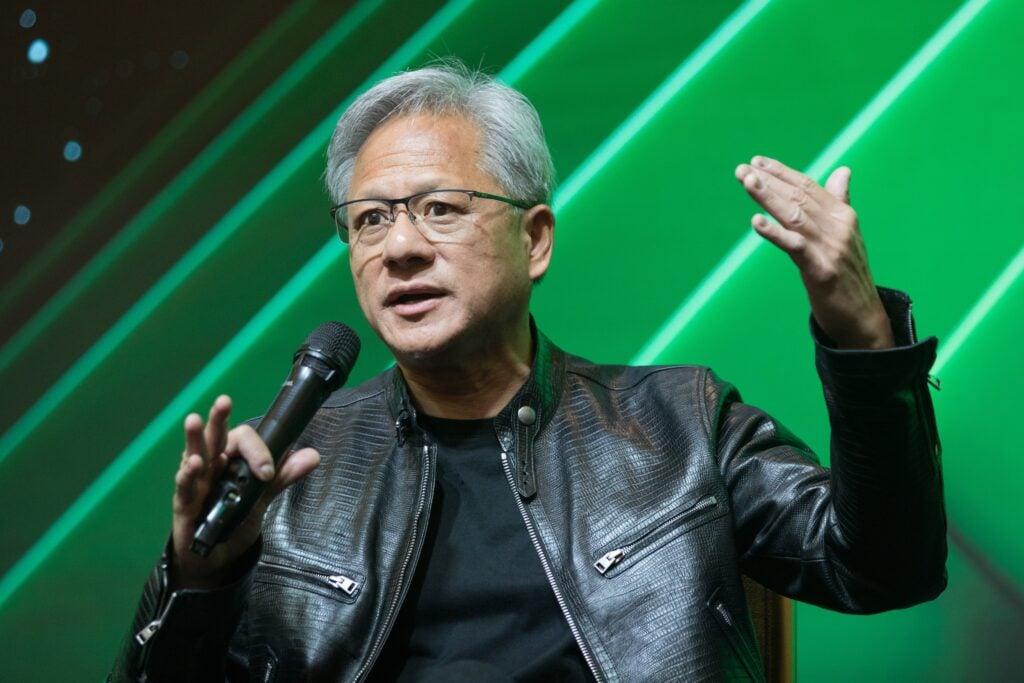
Source: Benzinga
China Commands Significant Energy Infrastructure for AI Expansion
Beyond construction speed, Huang emphasized China's commanding lead in energy capacity, a resource essential for powering massive data centers. China has "twice as much energy as we have as a nation, and our economy is larger than theirs. Makes no sense to me," the Nvidia CEO observed
2
. More concerning for US competitiveness, China's growing energy supply continues to climb "straight up" while American capacity remains relatively flat3
. This AI infrastructure advantage positions China to rapidly scale its artificial intelligence operations without the energy constraints that could hamper US development. Tech leaders and investors have echoed these concerns, with investor Kevin O'Leary stating that energy security, not funding, represents the critical driver of AI data center expansion3
.China Captures 30% of Global AI Usage Through Open-Source Models
The infrastructure advantages translate into measurable market gains. A report compiled by OpenRouter and venture capital firm Andreessen Horowitz reveals that China now commands nearly 30% of global AI usage through its open-source Large Language Models (LLMs). This figure emerges from analysis of 100 trillion tokens processed by AI systems
1
. Just one year ago, Chinese open-source models represented barely 1% of token usage, making this growth trajectory particularly striking. Within the open-source category specifically, Chinese models now average about 13% of weekly token usage, nearly matching the 13.7% from the rest of the world combined1
. The AI race has intensified as DeepSeek, Alibaba Qwen, and Moonshot AI emerge as major players, diversifying China's AI ecosystem beyond any single model.Related Stories

US Maintains Lead in AI Chip Technology But Faces Challenges
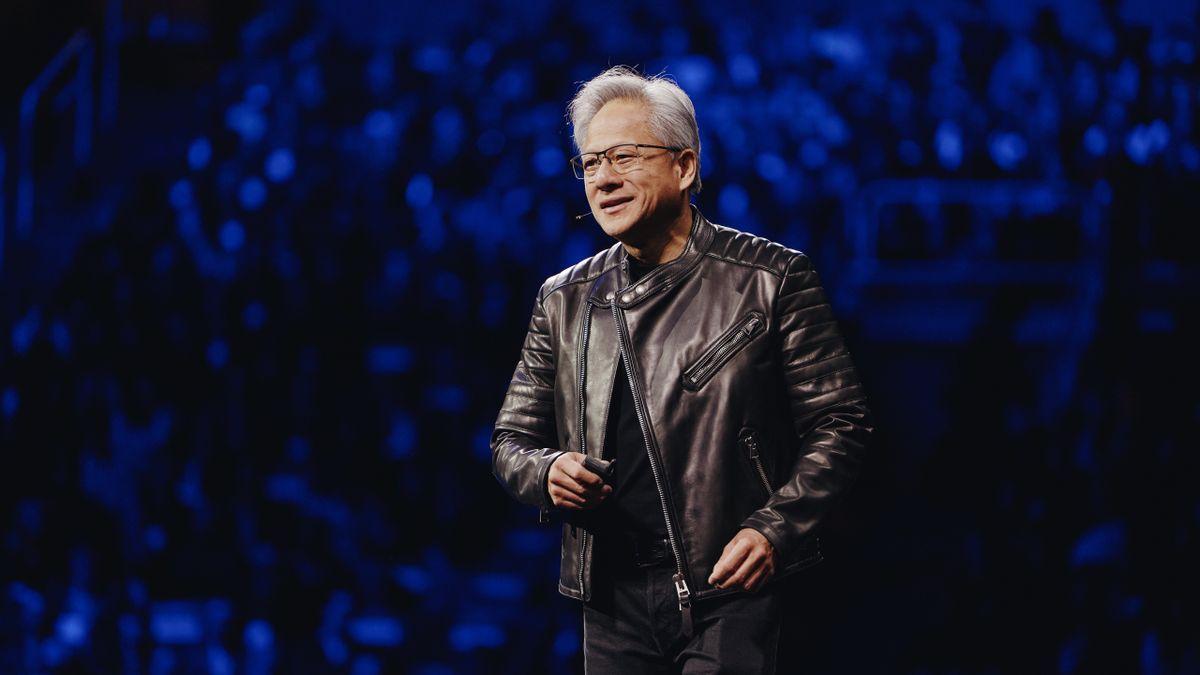
Despite these concerns, Huang maintained that Nvidia remains "generations ahead" of China on AI chip technology and semiconductor manufacturing processes
2
. However, he cautioned against complacency, warning that "anybody who thinks China can't manufacture is missing a big idea"2
. The Nvidia CEO has previously stated China is "nanoseconds behind America" in the AI race . Meanwhile, fragmented U.S. regulations pose additional obstacles. Alphabet CEO Sundar Pichai recently urged national AI rules to avoid a confusing patchwork of state laws that could slow American progress3
.
Source: TechRadar
Massive Investment Pours Into US Data Center Construction
American tech companies are responding with substantial investment. Nvidia and other tech giants plan to pour over $100 billion into data center buildout in the US over the next year alone
2
. Raul Martynek, CEO of DataBank, estimates the average data center costs $10 million to $15 million per megawatt, with typical facilities requiring 40 MW. Industry experts project 5 to 7 gigawatts of capacity will come online in the coming year, translating to $50 billion on the low end and $105 billion on the high end2
. Huang expressed optimism about President Donald Trump's push to reshore manufacturing jobs and spur AI investments2
. Yet the three-year timeline for US data centers versus China's accelerated construction schedules highlights the scale of the challenge ahead in this intensifying global competition for AI dominance.References
Summarized by

Navi
Related Stories
Nvidia CEO Jensen Huang Warns China Could Win AI Race Amid Trade War Tensions
06 Nov 2025•Policy and Regulation

Power Grid Crisis Threatens U.S. AI Dominance as China Builds Energy Infrastructure Advantage
13 Nov 2025•Policy and Regulation
Power Crisis Becomes Critical Bottleneck in Global AI Infrastructure Race
02 Nov 2025•Technology

Recent Highlights
1
Microsoft and Nvidia Launch Surface Laptop Ultra: A $2,599 AI-Ready PC With RTX Spark Chip
Technology

2
Meta Muse AI Agent Surges to 6.6M Downloads Despite Privacy and Security Controversies
Technology

3
Scientists Build AI Model That Reconstructs Images From Brain Scans in Record Time
Science and Research

Recent Highlights
Today's Top Stories











Don’t drown in AI news. We cut through the noise - filtering, ranking and summarizing the most important AI news, breakthroughs and research daily. Follow topics that matter to you and stay ahead.


