Microsoft's AI bet faces investor scrutiny despite strong earnings and surging Copilot usage


25 Sources
[1]
Satya Nadella insists people are using Microsoft's Copilot AI a lot | TechCrunch
Microsoft delivered a solid earnings report on Wednesday with $81.3 billion in revenue for the quarter (up 17%), net income profits of $38.3 billion (up 21%) and a record breaking Microsoft cloud revenue of over $50 billion. But the stock was getting pounded on Thursday as investors worried about
[2]
Microsoft gained $7.6B from OpenAI last quarter
Microsoft and OpenAI may have a notoriously rocky relationship but as OpenAI experiences never-before-seen revenue growth, Microsoft, one of its major investors, is benefiting greatly. When the software giant reported its latest quarterly earnings on Wednesday, it dropped this rather large nugget
[3]
Nvidia's Doubts About OpenAI Are a Warning for Microsoft
Microsoft is struggling to capitalize on its exclusive access to OpenAI's intellectual property and models, with its AI tool Copilot lagging behind the competition despite being underpinned by OpenAI's technology. In an industry numb to eye-watering AI bets, it takes a lot to make a chief
[4]
Microsoft investors sweat cloud giant's OpenAI exposure
All the promises in the world won't pay the GPU bills when the music stops What should have been a banner second quarter for Microsoft was met with tepid apprehension on Wall Street on Wednesday, sending its share price by 6 percent in after-hours trading. It could have been a celebratory
[5]
Satya Nadella argues that Microsoft's AI bet is paying off as Copilot usage nearly triples
Serving tech enthusiasts for over 25 years. TechSpot means tech analysis and advice you can trust. In context: Microsoft reported another strong quarter, with revenue rising 17 percent to $81.3 billion and net income increasing 21 percent to $38.3 billion. The company also reached a symbolic
[6]
Microsoft Has Lost Its AI Sparkle
Who could forget those heady days when Microsoft Corp. Chief Executive Officer Satya Nadella looked like the smartest man in tech? When ChatGPT emerged in late 2022, his decision to back OpenAI put Nadella's company at the forefront of the AI boom. The top AI models would be embedded in its
[7]

Microsoft's AI Spend Is Starting To Spook Investors
In its second-quarter earnings report on Wednesday, tech giant Microsoft reported $37.5 billion in capital expenditures, exceeding market estimates by more than a billion. The spending was up 66% from a year earlier, and roughly two-thirds of it was primarily spent on GPUs and CPUs, Microsoft
[8]

Microsoft beats expectations, cloud tops $50B as OpenAI and Anthropic deals reshape its business
Microsoft's big financial bet on artificial intelligence got even bigger in the December quarter, but it also showed continued signs of paying off for its cloud business. The company spent $37.5 billion on capital expenditures during the second quarter of its 2026 fiscal year, up 66% from a year
[9]

'We are pushing the frontier across our entire AI stack': Microsoft's latest results show new cloud and AI returns - but reliance on OpenAI causes concerns
Investors are worried about over reliance on AI model makers, OpenAI and CapEx Microsoft has posted a 17% year-over-year increase in quarterly revenue ($81.3 billion), but despite this success, it seems investors are concerned about bigger things at play than just the company's finances. Share
[10]

Microsoft shrugs off AI bubble fears again with strong financial results
Company reports second-quarter revenues of $81.27bn but posts slowing growth in key cloud computing business Investor interest in Microsoft's shares may have weakened in recent months, but the company posted strong financial results on Wednesday that yet again demonstrated that the AI boom is
[11]

Microsoft Stock Takes Most Massive Single-Day Loss Since Pandemic as Its AI Efforts Flail
Microsoft is taking a pounding in the stock market. On Thursday, the Redmont giant's share price collapsed by nearly 12 percent after it released its latest quarterly results, making it not only its biggest single day slide since March 2020, according to Bloomberg, but also one of the worst drops
[12]

Wall Street is losing patience with OpenAI's $1 trillion revenue problem -- and they're taking it out on Microsoft | Fortune
Wall Street's years-long bet on AI is facing a severe test on Thursday, as investors might begin to view OpenAI-and generative AI in general -- not as a catalyst for continuous growth, but as a source of systemic risk for Big Tech. A sharp selloff in tech stocks on Thursday underscored investors'
[13]

Microsoft investors fret as capital spending and Azure growth decouple - SiliconANGLE
Microsoft investors fret as capital spending and Azure growth decouple Microsoft Corp. last week delivered what looks on paper like a great quarter, with a beat of 1% and 5% on revenue and operating operating profit, respectively. But the two-day reaction from investors tells a different story,
[14]
Microsoft demand backlog doubles to $625 billion thanks to OpenAI, but hefty spending and slower revenue growth spook investors | Fortune
During the earnings call with analysts after market close on Wednesday, chairman and CEO Satya Nadella and chief financial officer Amy Hood were pressed on investor fears over a slowdown in revenue growth for the Azure platform amid soaring capital expenditures -- both signs that the company is
[15]

Microsoft's shock plunge isn't end of AI bubble. But it's a warning
Microsoft's sudden share price plunge is a warning sign that AI confidence in the AI story is starting to be tested, and sentiment can move quickly. What's remarkable about the 10 per cent plunge in Microsoft's share price on Thursday night - the biggest one-day fall since 2020, before anyone had
[16]

Microsoft reports $7.6 billion net income gain from OpenAI investment
Microsoft reported a $7.6 billion increase in net income from its investment in OpenAI during its latest quarterly earnings released on Wednesday. The software company has invested more than $13 billion in the AI lab. OpenAI reportedly operates under a 20% revenue-share agreement with Microsoft,
[17]

Satya Nadella Says These 2 Technologies Are 'Pushing the Frontier.' Investors Have Doubts
Microsoft is a significant investor in OpenAI and has business relationships with all of the major players in the artificial intelligence space. So it may not be a surprise that Satya Nadella is betting heavily on two technologies: cloud computing and AI. What is surprising is that investors'
[18]

Microsoft Q2 Earnings: CEO Nadella Defends AI Investments
'Acquiring an Azure customer is super important to us, but so is acquiring an M365 or a GitHub or a Dragon Copilot [customer], says Microsoft CEO Satya Nadella. Microsoft executives fielded questions Wednesday around their high spending to meet demand for the vendor's artificial intelligence
[19]

Microsoft Spent Billions on AI -- But One Start-Up Just Proved Speed Beats Scale | The Motley Fool
Shares of Microsoft (MSFT 2.86%) crashed last week following the tech giant's latest earnings report. Investors were likely uneasy about a slowdown in cloud growth, a massive increase in AI infrastructure capital expenditures, and the revelation that nearly half of its backlog was tied to
[20]

Microsoft's AI Growth Drives Both Revenue and Massive Capital Expenditure | PYMNTS.com
By migrating enterprises from on-premise software to subscription services and hyperscale infrastructure, the Redmond, Washington-based tech giant in many senses rewired corporate infrastructure from the ground-up, or the cloud-down. But if Microsoft's second quarter fiscal 2026 earnings call
[21]
The Math Behind Microsoft's AI Boom Doesn't Add Up--And Investors Are Finally Noticing | The Motley Fool
Microsoft is dependent on OpenAI and struggling to sell its own AI-powered products. Shares of Microsoft (MSFT 0.74%) tanked on Thursday following a quarterly report that spooked investors. While the headline numbers looked great, some cracks in the AI growth story started to emerge. A heavy
[22]

Microsoft's AI Spending Test Overshadows Strong Earnings Beat
Microsoft's (NASDAQ:MSFT) latest results underline a growing tension in the AI-led market narrative, where headline profitability is no longer enough to carry investor confidence if infrastructure spending accelerates faster than visible returns. The company delivered a strong fiscal
[23]
Microsoft Q2 2026 slides: Cloud revenue tops $50B amid heavy AI spending By Investing.com
Microsoft Corporation (NASDAQ:MSFT) reported strong financial results for its second quarter of fiscal year 2026, with cloud services continuing to drive growth while the company significantly increases investments in artificial intelligence infrastructure. The presentation, delivered on January
[24]

Microsoft's rising spending, slight cloud beat fan AI payoff worries
Jan 28 (Reuters) - Microsoft only edged past estimates for quarterly revenue in its crucial cloud-computing business on Wednesday and ramped up spending on artificial intelligence, disappointing investors looking for better returns amid intense competition. Its shares plunged more than 7% in
[25]

Microsoft gains $7.6 billion from OpenAI investment in latest quarter
Microsoft's overall revenue hit $81.3 billion, with cloud revenue crossing $50 billion for the first time, even as AI-related capital spending surged to $37.5 billion. Microsoft has just revealed its earnings report for the last quarter and announced that the net income rose by $7.6 billion,
Share
Copy Link
Microsoft reported $81.3 billion in revenue and $38.3 billion in net income, but Wall Street responded with skepticism. Investors worry about massive capital expenditures of $72.4 billion and the company's heavy reliance on OpenAI, which accounts for 45% of its $625 billion backlog. CEO Satya Nadella defended the strategy, citing tripled Copilot usage and 4.7 million GitHub Copilot subscribers.
Microsoft Reports Strong Quarterly Earnings Amid AI Infrastructure Push
Microsoft delivered robust quarterly earnings on Wednesday, reporting $81.3 billion in revenue—up 17% year-over-year—and net income profits of $38.3 billion, marking a 21% increase
1
. The company achieved a symbolic milestone as Microsoft Cloud revenue exceeded $50 billion for the first time2
. Despite these strong numbers, Wall Street responded with caution, sending the stock down 6% in after-hours trading4
. The market's tepid reaction reflects growing investor concerns about the tech giant's escalating capital expenditures and its concentrated exposure to AI startups, particularly OpenAI.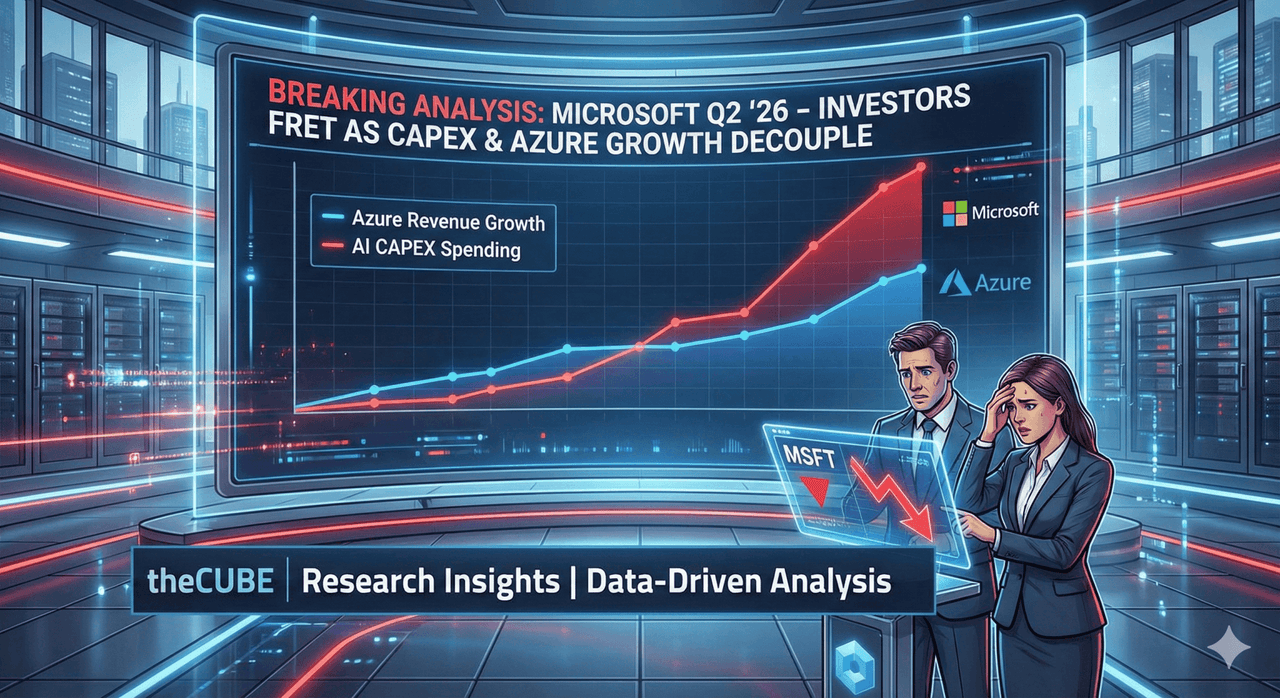
Source: SiliconANGLE
Massive Capital Expenditures Raise Questions About Microsoft's AI Bet
Microsoft has spent $72.4 billion on capital expenditures in the first half of its current fiscal year, approaching the $88.2 billion it spent during the entire previous year
1
. In the second quarter alone, the company invested $37.5 billion, with two-thirds allocated to what CFO Amy Hood described as "short-lived" assets—primarily GPUs and CPUs for Azure cloud infrastructure to serve AI services2
. These chips have just six years to generate profitability before aging out4
. The aggressive data center spending aims to support AI workloads for enterprises and major partners including OpenAI and Anthropic, but Wall Street questions whether this investment will translate into sustained profits.
Source: Market Screener
OpenAI Dominates Microsoft's Revenue Backlog
A particularly striking revelation emerged during the quarterly earnings call: 45% of Microsoft's $625 billion in commercial remaining performance obligations—contracts not yet paid out—comes directly from OpenAI
4
. As part of OpenAI's restructuring into a public benefit corporation last fall, the AI lab committed to purchasing an additional $250 billion in Azure services2
. Microsoft has invested more than $13 billion in OpenAI, which currently translates to a 27% stake valued at $135 billion—over ten times its original investment3
. The company also gained $7.6 billion in net income from its OpenAI investment last quarter alone2
.Anthropic and Nvidia Add to AI Infrastructure Commitments
Microsoft's AI infrastructure commitments extend beyond OpenAI. In November, the company announced a $5 billion investment in Anthropic, with the AI lab signing up for $30 billion of Azure compute capacity
2
. Anthropic contributed to a 230% increase in Microsoft's commercial bookings during the quarter2
. The Anthropic deal includes supporting deployment of up to a gigawatt of compute capacity, specifically tied to Nvidia Grace Blackwell and Vera Rubin systems4
. Adding to the complexity, Nvidia CEO Jensen Huang reportedly expressed doubts about a previously announced $100 billion investment in OpenAI, telling industry associates the commitment was nonbinding and privately criticizing OpenAI's lack of business discipline3
.Satya Nadella Defends AI Strategy with Copilot Usage Metrics
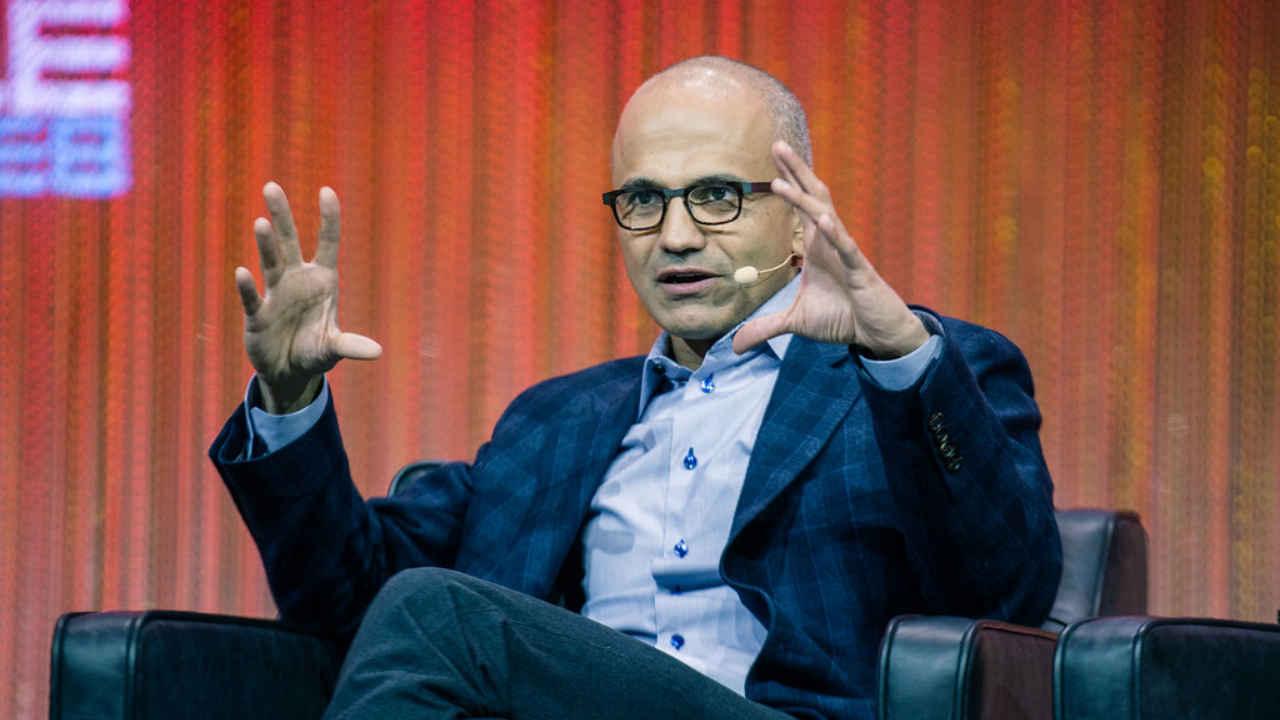
CEO Satya Nadella spent considerable time during the earnings call addressing what observers characterized as "AI use PR," attempting to demonstrate that Microsoft's AI investments are driving actual adoption
1
. Nadella reported that daily users of consumer Copilot AI products had grown "nearly 3x year over year," though he did not disclose specific user numbers1
5
. GitHub Copilot showed stronger metrics with 4.7 million paid subscribers, representing 75% year-over-year growth1
. Microsoft 365 Copilot now has 15 million paid seats from companies, though this represents just a fraction of the 450 million total paid seats in the Microsoft 365 base1
.
Source: Digit
Related Stories

Execution Challenges Plague Microsoft's AI Products
Despite exclusive access to OpenAI's intellectual property and models through 2032, Microsoft struggles to translate that advantage into competitive products
3
. Users have complained that Copilot is "confusing, constrained and hard to use," creating a perplexing gap between the quality of OpenAI's models and Microsoft's ability to deploy them effectively3
. Anthropic's Claude Cowork, built in just 10 days, can operate computers, organize files, and generate Office documents—capabilities Microsoft Copilot lacks despite Microsoft owning Windows, Office, and LinkedIn3
. David Rainville, lead manager of Sycomore Sustainable Tech, suggested that if Microsoft doesn't release an equivalent product within six months, "heads will have to roll"3
.AI Demand Outpaces Supply, Microsoft Claims
Both Nadella and Amy Hood emphasized during the call that AI demand across products far outstrips current data center supply, meaning new equipment is essentially booked to capacity for its entire lifespan
1
. Hood attempted to reassure investors that the majority of capital spending and GPU purchases are "already contracted for most of their useful life," reducing the risk of stranded assets4
. However, UBS analyst Karl Keirstead noted that both Azure and Microsoft 365 segments "fell a bit short" of growth expectations, identified as the key negative from the quarterly earnings1
. Looking ahead to Q3, Microsoft forecasts revenue between $80.65 billion and $81.75 billion, representing 15% to 17% revenue growth, while expecting lower capital expenditures due to timing variability in cloud infrastructure buildouts4
.References
Summarized by

Navi
[2]
[4]
Related Stories
Microsoft Imposes AI Token Budgets After $24.1 Billion OpenAI Spend Reveals Cost Crisis
05 Aug 2026•Business and Economy
Microsoft pushes to develop state-of-the-art AI models by 2027 after ending OpenAI restrictions
02 Apr 2026•Technology

Microsoft's AI Strategy Shift: Embracing Diversity and Cost-Efficiency in the Face of New Competition
16 May 2025•Technology

Recent Highlights
1
Microsoft and Nvidia Launch Surface Laptop Ultra: A $2,599 AI-Ready PC With RTX Spark Chip
Technology

2
OpenAI Releases 722 AI-Generated Math Papers on GitHub, Igniting Fury Among Mathematicians
Science and Research

3
Trump Consulted Grok AI Before Ordering Venezuela Invasion and Capture of Nicolás Maduro
Policy and Regulation

Recent Highlights
Today's Top Stories







Don’t drown in AI news. We cut through the noise - filtering, ranking and summarizing the most important AI news, breakthroughs and research daily. Follow topics that matter to you and stay ahead.


