Microsoft Generated $10 Billion From OpenAI in One Quarter, Surpassing Xbox and Bing Combined


2 Sources
[1]
Microsoft recorded $10 billion in revenue from OpenAI
Microsoft generated $10 billion in revenue from commercial arrangements with OpenAI, including revenue-sharing payments, in the quarter ended September 30, the company said in regulatory filing on Wednesday. That represents nearly 11% of Microsoft's total quarterly revenue of $92.3 billion,
[2]
Bigger than Bing or Xbox: Microsoft's OpenAI haul reaches $10B in quarterly revenue
OpenAI generated $10 billion in revenue for Microsoft in the quarter ended Sept. 30, about 11% of the Redmond company's total revenue, according to its quarterly filing Wednesday. The amount is up sharply. In the fiscal year that ended in June, Microsoft recorded $24.1 billion in revenue from its
Share
Copy Link
Microsoft disclosed $10 billion in quarterly revenue from OpenAI arrangements, representing 11% of its total revenue and exceeding iconic products like Xbox and Bing. The figure reveals the massive financial scale of their partnership even as both companies navigate competing interests in the AI industry.
Microsoft's OpenAI Haul Reaches Historic $10 Billion Quarterly Mark
Microsoft recorded $10 billion in revenue from commercial arrangements with OpenAI during the quarter ended September 30, 2026, the company revealed in its regulatory filing.
1
This represents nearly 11% of Microsoft's total quarterly revenue of $92.3 billion, underscoring the enormous financial ties between the two companies even as they increasingly compete for the same customers. The quarterly figure marks a sharp increase from the fiscal year average of $6 billion per quarter, with full fiscal 2026 revenue from OpenAI hitting $24.1 billion.2
Microsoft OpenAI Revenue Surpasses Legacy Products
The $10 billion quarterly haul from the Microsoft OpenAI partnership now exceeds some of Microsoft's longest-running and most recognizable businesses. Xbox brought in $5.4 billion in the same quarter, while search and advertising revenue, which includes Bing, generated $6.6 billion.
2
Windows licenses sold through PC makers, along with Surface and other Microsoft devices, contributed $3.6 billion. At its latest quarterly pace, Microsoft would pull in $40 billion annually from OpenAI-related arrangements, positioning the AI industry partnership as a cornerstone of Microsoft's business model.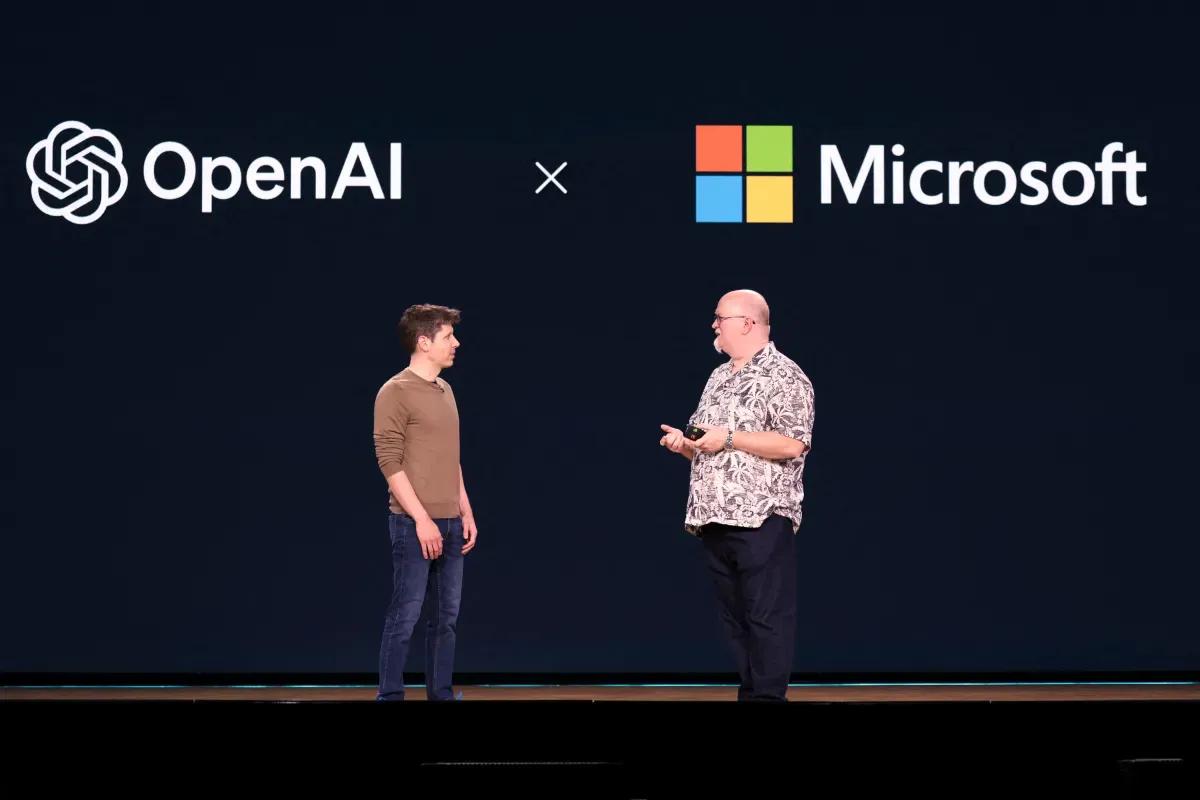
Source: TechCrunch
Financial Dynamics Behind the Microsoft OpenAI Partnership
The total revenue encompasses revenue-sharing payments from OpenAI as well as other business between the companies, such as OpenAI's use of Azure for AI model training and deployment. Microsoft also reported $7.2 billion in outstanding receivables from OpenAI at the end of September, up from $6 billion at the end of June.
1
OpenAI reportedly shares 20% of its revenue with Microsoft as part of a previous deal in which the software giant invested more than $13 billion in the AI startup. As part of an April 2026 agreement, OpenAI is committed to continue sharing revenue with Microsoft through 2030, subject to a cap, even as OpenAI gains freedom to work with competing cloud providers.Azure Growth Powers Microsoft's Broader AI Strategy
Azure revenue rose 48% to $33.2 billion in the quarter, beating Wall Street's expectations and Microsoft's own forecast of 44% to 45% growth.
2
While Microsoft didn't specify how much of Azure's growth came from OpenAI, the company sells access to OpenAI's models to business customers through its Azure OpenAI Service. The AI models became the foundation for Copilot products, putting Microsoft at the front of the generative AI boom. Revenue from Microsoft's own customers using these services isn't part of the $10 billion figure, suggesting the total financial impact extends even further.Evolving Partnership as Companies Navigate Competition
The companies began loosening the ties of their once-exclusive partnership in October 2025, when Microsoft relinquished its hold on OpenAI to give the startup more freedom to partner with other cloud providers. In exchange, OpenAI committed to buying an additional $250 billion in Azure services.
1
Microsoft's ownership stake in OpenAI has declined slightly from about 25% in June to 24% in September, continuing a gradual decline from roughly 27% following the October 2025 recapitalization. Microsoft now builds its own AI models and offers models from Anthropic and others, diversifying beyond its OpenAI relationship.
Source: GeekWire
Related Stories
CEO Nadella Emphasizes Broad Customer Base Over Concentration
When asked whether AI growth on Azure was coming from big businesses or AI-native companies, Microsoft CEO Satya Nadella didn't mention OpenAI by name. He emphasized that he doesn't want Azure's AI business to depend on a few big customers, describing broad adoption by businesses as "a decade-long thing."
2
Nadella contrasted sustainable growth with relying on "four customers who buy a lot of capacity from you" to show a few quarters of growth, stating "that's not a business as far as I'm concerned." He praised customers increasingly mixing AI models from different companies and cited Microsoft's tools for routing each task to whichever model handles it best.New Risk Disclosures Signal Dependency Concerns
Microsoft expanded a warning in its quarterly filing about the risks of depending on outside AI providers. The company now states it has "limited visibility into or control over" how models from companies like OpenAI and Anthropic are designed, trained, secured and tested.
2
The filing notes that some AI partners are also "significant customers of Azure," and that the benefits Microsoft expects from those relationships "may not be realized or sustained." Watch for how Microsoft balances its financial dependence on OpenAI with its stated goal of diversifying AI model providers and building proprietary capabilities.References
Summarized by

Navi
[1]
Related Stories
Microsoft Forecasts $1.5 Billion Loss from OpenAI Investment Amid AI Revenue Growth
31 Oct 2024•Business and Economy

Leaked Documents Reveal OpenAI's Massive Compute Costs May Exceed Revenue
15 Nov 2025•Business and Economy

Microsoft and OpenAI Negotiate $14 Billion Stake Amid Shift to For-Profit Model
19 Oct 2024•Business and Economy

Recent Highlights



Recent Highlights
Today's Top Stories









Don’t drown in AI news. We cut through the noise - filtering, ranking and summarizing the most important AI news, breakthroughs and research daily. Follow topics that matter to you and stay ahead.


