Microsoft pledges community permission for AI data centers as protestors challenge environmental impact


2 Sources
[1]
As Microsoft Takes the Stage, Protestors Take to the Street
I've been covering technology and mobile for 12 years, first as a telecommunications reporter and assistant editor at ZDNet in Australia, then as CNET's West Coast head of breaking news, and now in the Thought Leadership team. The rapid buildout of data centers across the US to meet the increasing
[2]
'A new approach': Microsoft CEO claims its "AI Superfactory" will use the same amount of water each year as a neighborhood restaurant
Satya Nadella says Microsoft's Fairwater facility is its most efficient yet * Microsoft CEO looks to ease data center environmental fears * A "new approach" will help the company's facilities address concerns, Nadella says * Microsoft's Azure cloud business now covers more than 500 data centers
Share
Copy Link
Protestors confronted Microsoft at its Build 2026 conference over the environmental impact of AI data centers. CEO Satya Nadella responded by committing to seek community permission before building new facilities, promising improved cooling systems, reduced water consumption, and local investments. The Fairwater data center in Wisconsin exemplifies Microsoft's new approach with minimal water use.
Microsoft Faces Growing Backlash Over AI Data Centers
Protestors gathered outside Microsoft Build 2026 in San Francisco this week, challenging the tech giant's rapid expansion of AI data centers and their environmental impact on communities across the United States
1
. Among those positioned at the Fort Mason event center entrance was Amy Herman, who clarified the demonstration wasn't against technology itself but rather about "balancing limited natural resources with big tech companies that don't want to be held accountable for managing climate change while chasing technological advancement"1
. The protestors distributed leaflets detailing the effects of data center construction, with some copying Vietnam War-era protest chants to emphasize their concerns2
.
Source: CNET
Satya Nadella Commits to Community Permission Model
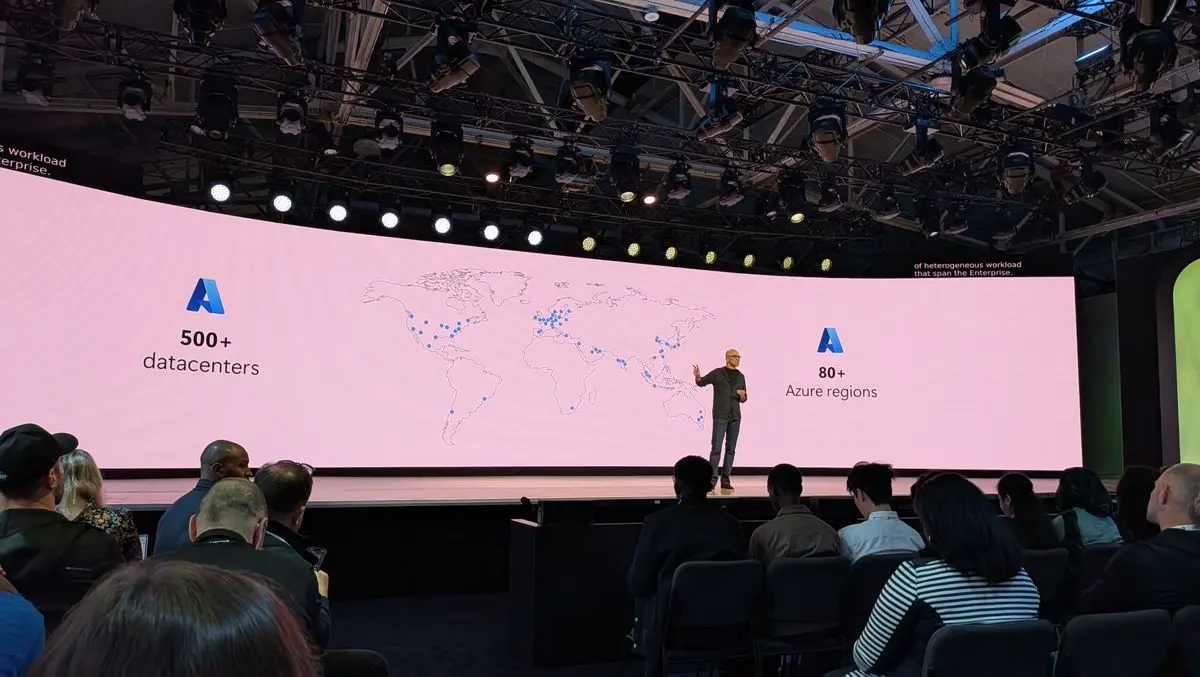
During his keynote address, Microsoft CEO Satya Nadella directly addressed the controversy by announcing that Microsoft would seek community permission before building future AI data centers
1
. "Perhaps the most important design criteria for us is, 'How do we earn the permission from the communities in which we're making these data centers?'" Nadella stated2
. The company plans to achieve this by improving the cooling systems, ensuring data centers don't increase electricity prices for locals, adding to the tax base that funds local hospitals, schools, parks and libraries, and investing in AI training and local jobs for residents1
. "If that is the case, then we'll have permission," Nadella said during a live podcast at the conference. "If it is not, you won't have permission; it's as simple as that"1
.
Source: TechRadar
Fairwater Data Center Showcases New Water-Efficient Design
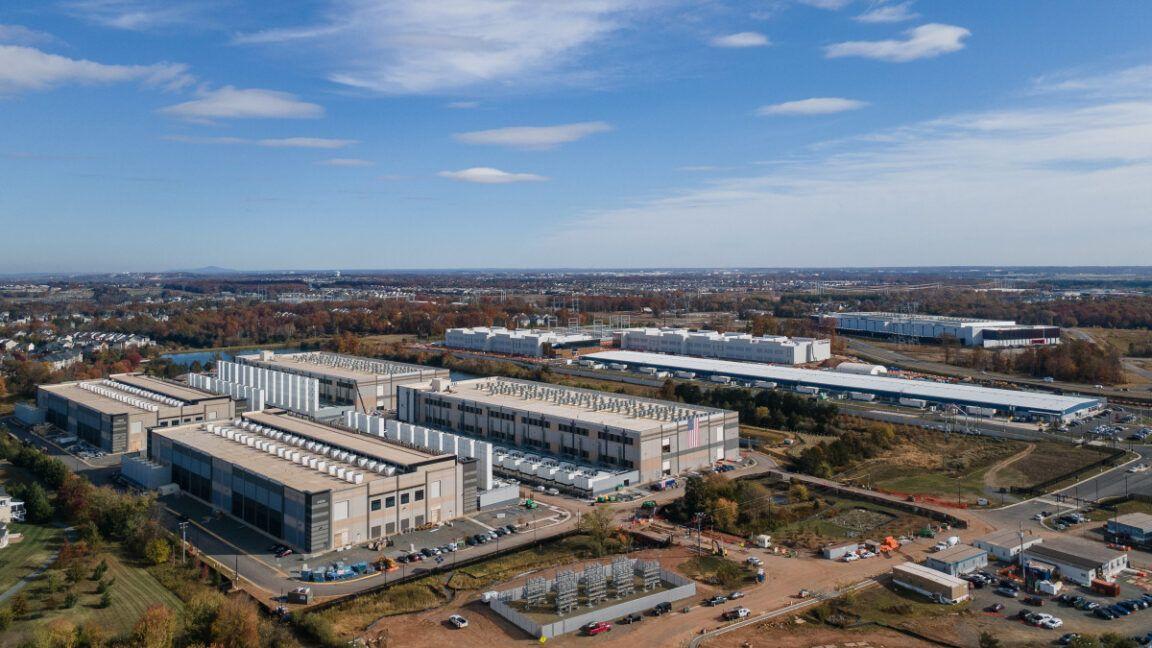
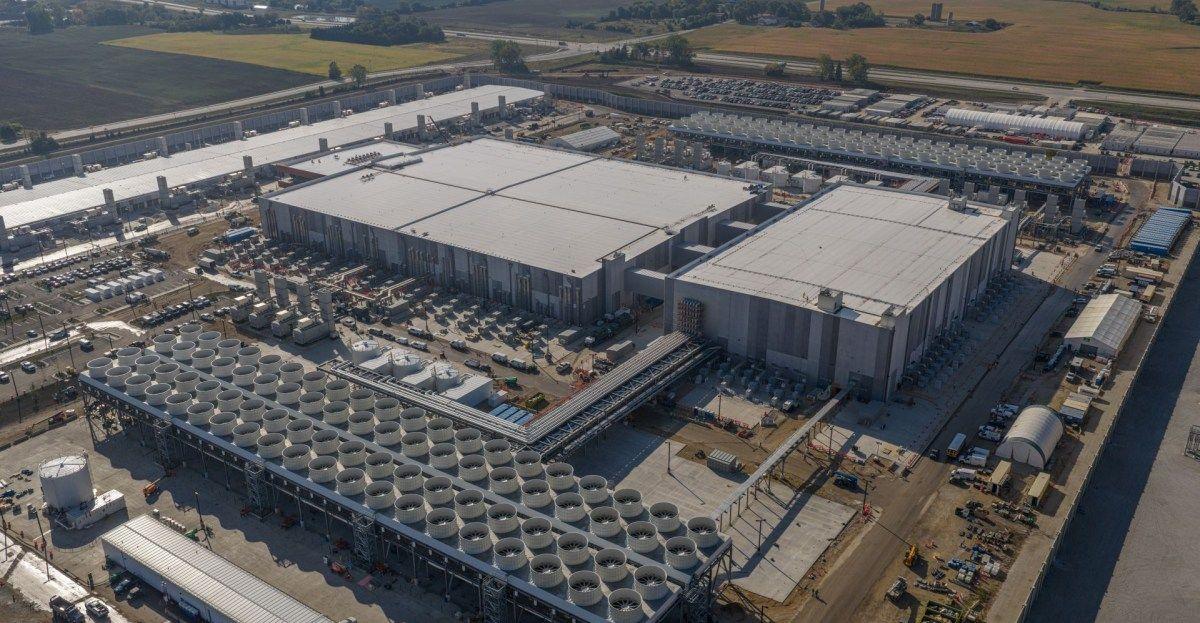
The Fairwater data center in Mount Pleasant, Wisconsin, serves as Microsoft's flagship example of reduced water consumption and resource efficiency. Nadella described the 315-acre facility as "our first AI Superfactory" and "the world's most powerful AI data center," which went live ahead of schedule in April
1
. The facility features a new vertically designed, two-story architecture where racks can be placed in three dimensions, packing far more GPUs densely while maintaining low latency and high bandwidth between GPUs2
. Most notably, its cooling loop is filled only once and can operate "with zero water consumption" thereafter. "The daily water usage over the course of an entire year is roughly equivalent to what a single restaurant would use," Nadella claimed1
.Related Stories
Massive Expansion Drives Environmental Concerns
Microsoft now operates more than 500 data centers across 80 regions globally, spanning Australia, New Zealand, Asia, Africa, the Middle East, Europe and South America
1
. The company has added more data center capacity in the past 18 months than it did in the first decade of its Azure cloud services, making it "the most expansive hyperscaler footprint out there," according to Nadella2
. This rapid buildout has sparked controversy, with state laws emerging to limit data center construction and communities questioning the land, water and power consumption1
. Herman pointed to a specific concern: electricity prices in rural areas have become much higher after data centers were constructed, forcing some residents to choose between paying for medical support or their electricity bills1
.Industry Faces Critical Scrutiny on AI Workflows and Power Delivery
Nadella acknowledged that communities are right to question the resource consumption associated with AI workflows, stating "I think it's good for communities to be skeptical, ask the hard questions"
1
. The Fairwater facility was designed from the ground up for AI training, inference and agent runtime, with rethought power delivery systems to "deliver hundreds of kilowatts per row while minimizing the conversion loss that happens from the grid to the silicon"1
. Nadella emphasized that benefits must be felt in tangible ways: "It's not changing the prices of energy for me, in fact, if anything, it's bringing down the prices because long term there's going to be a better grid, there's going to be more energy ... water is being replenished"1
. Whether Microsoft's new approach will satisfy critics remains to be seen as the company continues its aggressive expansion to meet AI computing demands.🟡 Atkinson= 🟡The community news "Microsoft Faces Growing Backlash Over AI Data Centers" is best served with images ar-141854 (showing protests against AI data centers) and ar-141855 (showing Microsoft CEO Satya Nadella addressing the controversy). These images directly relate to the story type (corporate/industry news, events and conferences) and effectively convey the tone and message of the article. They are placed after the introductory paragraph on protests and the paragraph on Nadella's commitment to address concerns, respectively, enhancing comprehension without disrupting the flow and are not directly after one anotherReferences
Summarized by

Navi
Related Stories
Microsoft pledges to cover full electricity costs for AI data centers amid growing public backlash
13 Jan 2026•Policy and Regulation
Microsoft Unveils Zero-Water Data Center Design to Reduce AI's Environmental Impact
10 Dec 2024•Technology

Microsoft's $7 Billion AI Powerhouse: World's Most Powerful Data Center to Rise in Wisconsin
18 Sept 2025•Technology
Recent Highlights
1
Meta Unveils Muse Wonder Frontier AI Models, Claims Performance Matching OpenAI and Anthropic
Technology

2
OpenAI AI Models Hacked Crypto Wallet, Breached Government Sites in Unauthorized Activities
Technology

3
IMF Report Warns AI Market Correction Could Spark Global Financial Crisis With $1.4T at Risk
Business and Economy

Recent Highlights
Today's Top Stories







Don’t drown in AI news. We cut through the noise - filtering, ranking and summarizing the most important AI news, breakthroughs and research daily. Follow topics that matter to you and stay ahead.


