Microsoft's glass data storage could preserve information for over 10,000 years


2 Sources
[1]
Data centres could store information in glass for thousands of years
An automated system for storing large amounts of information in glass could change the future of data centres. Our world runs on data, from the internet and readouts of countless industrial sensors to scientific data from particle colliders, and all of it must be stored safely and efficiently. In
[2]
Laser-etched glass can store data for millennia, Microsoft says
Paris (France) (AFP) - Thousands of years from now, what will remain of our digital era? The ever-growing vastness of human knowledge is no longer stored in libraries, but on hard drives that struggle to last decades, let alone millennia. However, information written into glass by lasers could
Share
Copy Link
Microsoft's Project Silica has demonstrated a breakthrough in glass data storage technology that could preserve information for more than 10,000 years. Using femtosecond lasers to etch data into silica glass plates, the system offers a sustainable alternative to traditional data centres while withstanding extreme temperatures and environmental conditions.
Microsoft Develops Glass Data Storage That Could Last Millennia
Microsoft has announced a significant advancement in long-term data storage through its Project Silica initiative, demonstrating that laser-etched silica glass can reliably store information for more than 10,000 years
2
. Published in the journal Nature, the research marks the first glass storage technology proven reliable for writing, reading, and decoding data in an automated, scalable process2
. The breakthrough addresses a critical challenge facing digital data storage: humanity's knowledge now doubles roughly every three years, yet traditional storage media struggle to last decades2
.How Femtosecond Lasers Write Data Into Glass
The technology employs femtosecond lasers that emit light pulses lasting quadrillionths of a second to convert data into tiny nanostructures etched into thin glass layers
1
. Bits of data are first transformed into symbols corresponding to three-dimensional pixels called voxels, which are then inscribed layer by layer into square glass plates roughly the size of a CD2
. Microsoft's team successfully stored 4.8 terabytes of data in a glass piece measuring 120 millimeters wide and 2 millimeters thick—equivalent to roughly 37 iPhones' worth of storage in about a third of the volume of one1
. To read the stored information, a special AI-powered microscope captures images of each layer, which are then processed by a neural network algorithm that converts the structures back into bits1
.Resistance to Environmental Factors Makes Glass Superior
"Glass can withstand extreme temperatures, humidity, particulates and electromagnetic fields," explains Richard Black from Microsoft's Project Silica team
1
. Based on accelerated aging experiments including heating glass in a furnace, researchers estimated data could remain stable and readable for more than 10,000 years at 290°C and even longer at room temperature1
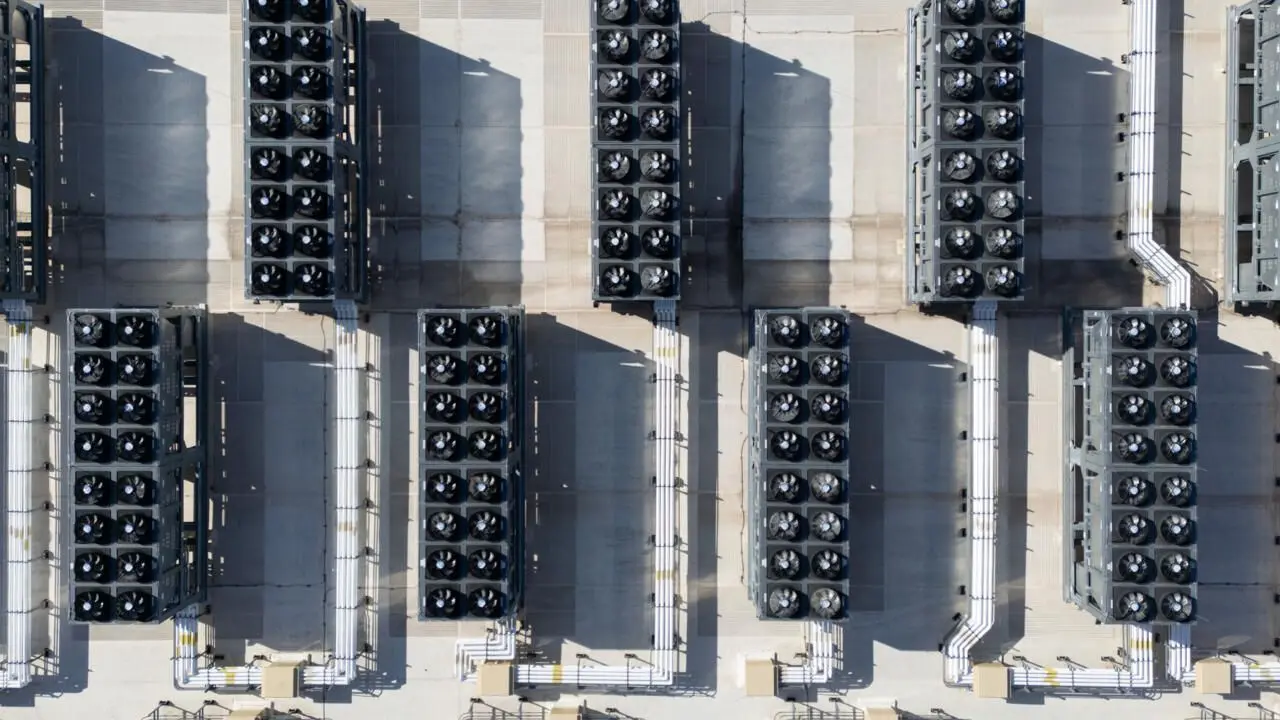
. This durability stands in stark contrast to energy-hungry data centres that rely on fast-degrading hard drives and magnetic tapes requiring backup every few years2
. The glass plates cannot be hacked or altered, and unlike conventional data centres, they don't require climate-controlled environments, offering substantial energy savings2
.
Source: France 24
Related Stories
From Research to Industrial Reality: Scalable for Industrial Use
Peter Kazansky at the University of Southampton, whose team first demonstrated in 2014 that lasers could encode hundreds of terabytes into glass nanostructures, says the main breakthrough of Project Silica is offering an end-to-end system scalable for industrial use
1
. The entire process is easily repeatable and automated, making a strong case for robotically operated data facilities1
. Microsoft isn't alone in pursuing this technology. Kazansky co-founded SPhotonix, which has stored the human genome in glass, while Austrian start-up Cerabyte offers storage in ultra-thin layers of ceramic and glass1
.Applications and Future Challenges for Data Preservation
Black identifies the clearest applications for store information in glass for thousands of years technology as national libraries, scientific repositories, and cultural records where data must survive for centuries
1
. Working with Warner Bros. and the Global Music Vault, Microsoft has begun exploring storage for data meant to be kept indefinitely1
. One glass plate holds the equivalent of about two million printed books or 5,000 ultra-high-definition 4K films2
. However, challenges remain around writing speed, mass production capabilities, integration costs with existing data centres, and increasing capacity toward the theoretical 360 terabytes demonstrated by earlier research1
. Researchers at Shandong University note that ensuring easy access and readability will be critical, but praise the technology as potentially representing "a milestone in the history of knowledge storage, akin to oracle bones, medieval parchment or the modern hard drive"2
. The sustainability benefits are clear: glass requires minimal energy to produce and is easy to recycle, offering a more environmentally responsible alternative as digital data continues its exponential growth1
.References
Summarized by

Navi
[1]
Related Stories
Scientists Develop Ultrafast Magnetic-Field Pulses to Slash Computer Memory Energy Use by 100x
07 Sept 2026•Science and Research

AI Breakthrough Accelerates DNA Data Retrieval by 3,200x, Advancing Biological Data Storage
24 Mar 2025•Science and Research
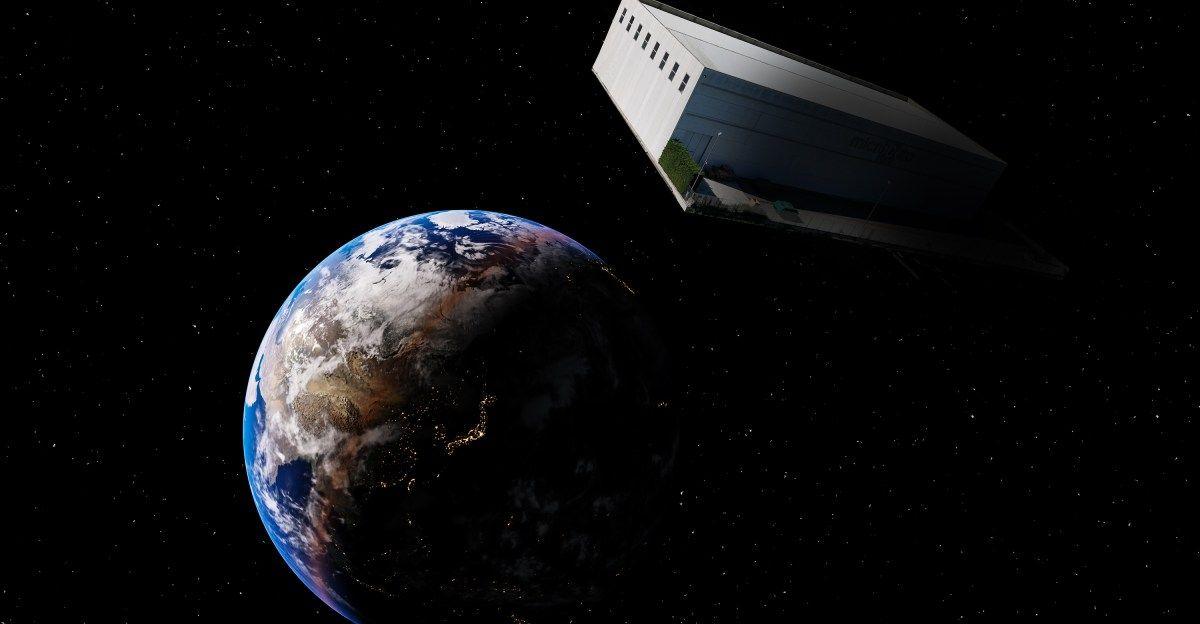
AI Trained in Space as Tech Giants Race to Build Orbiting Data Centers Powered by Solar Energy
11 Dec 2025•Technology
Recent Highlights



Recent Highlights
Today's Top Stories











Don’t drown in AI news. We cut through the noise - filtering, ranking and summarizing the most important AI news, breakthroughs and research daily. Follow topics that matter to you and stay ahead.


