13 Sources
[1]
Microsoft lays off nearly 5,000 employees across Xbox, commercial sales
Microsoft cut around 4,800 roles, or 2.1% of its global workforce, on Monday -- the latest in a series of layoffs that's stoking fears that AI will replace people at companies. The layoffs will hit Xbox and commercial sales the hardest, according to a memo shared with Microsoft's staff. Here's a snippet from the memo, attributed to Amy Coleman, EVP and chief people officer: "Our business is changing because the world around it is changing. The way technology is built, deployed, and used is transforming faster than at any point in my time here. Our customers' needs are shifting, the business models that serve them are shifting, and that means the work itself - what we do, where we focus, and how we're organized - has to transform too. Companies don't get to choose whether their industry changes; they only get to choose whether they change with it. That means we will need to adjust resources and roles and shift how we operate so we can have the greatest impact for our customers." Coleman stressed that the roles being eliminated today "are not being replaced by AI," but noted, "what is true is that AI is changing how work gets done." "Some of the tasks we do every day can now be automated, and that means we all need to keep learning, keep building new skills, and keep adapting as the work evolves," Coleman wrote. To many feeling the sting of unemployment, that's a distinction without a difference. The layoffs build on Microsoft's recent launch of its Frontier Company business unit, which is focused on delivering enterprise AI deployments with the firm's existing AI tools and an army of forward deployed engineers. That move is backed by a $2.5 billion investment, mirroring a common theme we're seeing among layoffs this year -- job cuts are correlating with increased AI spending. Speaking about the Xbox layoffs, Coleman said little: "We are restructuring to position the business for long-term success. Engineering teams across the company will also evolve their structure and priorities to meet customer needs and innovate for the future." As part of the shift, Microsoft will transition four of its gaming studios to operate under new management, ensuring preservation of intellectual property and ongoing projects, Coleman wrote. The Xbox layoffs come as the gaming industry shrinks amid new generative AI opportunities. Companies building world models -- like Google DeepMind, World Labs, General Intuition, Luma AI, and Runway -- have received millions in funding over the past year and garnered plenty of hype for their playable world model demos. All of those companies see gaming as a near-term opportunity for commercialization. In April, Microsoft offered buyouts structured as voluntary separations to an undisclosed number of employees -- some estimates put the number at around 5,500 -- with the goal of building high-performing teams. Last year, Microsoft laid off about 15,000 employees across two rounds. The eliminations are part of a series of layoffs in the tech industry that's seen close to 154,000 people lose their jobs just in the first half of 2026, with Big Tech firms like Meta, Oracle, Amazon, and Cognizant cutting thousands of workers. Microsoft said that along with Monday's cuts, it's working on ways to keep staff on by re-skilling workers or placing people in new roles. "Over the past year, we have redeployed more than 4,000 employees into new roles, including another 500 this month," Coleman said. Microsoft did not immediately return a request for comment and more information.
[2]
Microsoft is laying off 4,800 employees
A year after cutting around 9,100 employees, Microsoft is making further layoffs today as it begins its new financial year. The software maker is laying off around 4,800 employees today, approximately 2.1 percent of its workforce. Most of the employees affected by today's cuts are in Microsoft's commercial sales business or the company's Xbox division. In an internal memo to employees, Amy Coleman, executive vice president and Microsoft's chief people officer, blamed the job losses on a changing technology industry and the "need to adjust resources and roles and shift how we operate" to respond to how AI is impacting companies like Microsoft. "I also want to be direct that the roles eliminated today are not being replaced by AI," says Coleman. "At the same time, what is true is that AI is changing how work gets done." The layoffs will impact around 1,600 Xbox employees today, with plans to eliminate a total of around 20 percent of Xbox jobs by the end of the financial year. Microsoft is also selling off four Xbox studios and weighing up selling another studio as it looks to "reset" its Xbox business after years of struggles. You can read more about the Xbox layoffs and impacted studios here. "Decisions like these are never easy, and you have my commitment that we are constantly looking for ways to reduce the need for job eliminations," says Coleman. "Whenever possible, our priority is to place people into new roles aligned to the company's highest priorities and greatest areas of opportunity. Over the past year, we have redeployed more than 4,000 employees into new roles, including another 500 this month." Microsoft had also been trying to avoid layoffs with its voluntary retirement program. US employees whose combined years of service added to their age totals 70 or more were eligible for voluntary retirement, and the package will include five years of access to Microsoft's healthcare coverage, a lump sum cash severance payment, and six months of vesting for unvested stock options. "More than 30 percent of eligible employees chose to participate in our recent voluntary retirement program, and we will continue exploring similar approaches in the future," says Coleman. "While this doesn't change the difficulty of today's news, we will continue to do everything we can to create opportunities for our people, reduce the need for job eliminations where possible, and responsibly support those affected with care and respect."
[3]
Microsoft cuts 4,800 jobs, about 2% globally, revamps salesforce and launches massive Xbox overhaul
Microsoft is cutting 4,800 jobs, just over 2% of its global workforce, citing a need to revamp its sales and consulting division to keep pace with a rapidly changing tech industry, while overhauling its Xbox business in a push for long-term growth and profitability from gaming. The cuts include about 600 jobs in Washington state, home to Microsoft's Redmond headquarters. That's down from 3,200 job reductions locally a year ago. Combined with ongoing hiring, Microsoft's workforce in the state is expected to remain stable at around 52,000 people. About 1,600 of the 4,800 job cuts being announced Monday are in the Xbox division. Additional Xbox layoffs in the months ahead are expected to bring total job reductions in the gaming division to roughly 3,200, or about 20% of the global Xbox workforce, this fiscal year. Microsoft is also spinning off four Xbox game studios to operate independently. In an internal memo, Xbox CEO Asha Sharma called it the biggest restructuring in Xbox history, saying the division has been "operating at margins that are 3-10x lower than comparable platform and publishing businesses" and that studios have been losing 64 cents for every dollar invested. Overall, top executives sought to distinguish Microsoft from other tech giants, saying the cuts were minimized by the redeployment of more than 4,000 employees into new roles over the past year and a voluntary retirement program that let thousands more exit by their own choice. By comparison, the company last year cut more than 15,000 jobs globally in two rounds of layoffs in spring and summer 2025 -- the largest reductions in more than a decade. The latest cuts come amid record capital spending on the company's AI infrastructure, pressure from Wall Street to keep operating expenses in check, and a 30% stock slide that has wiped out roughly $1.2 trillion in Microsoft's market value over the past nine months. "Microsoft can only be a strong employer if it has a successful business," said Brad Smith, its president and vice chair, in an interview with GeekWire. "We have to adapt to change." Before the latest cuts, the company's total workforce was about 220,000 people. Across the company, Microsoft expects worldwide headcount to decline year-over-year, CFO Amy Hood said on an April earnings call. Amy Coleman, Microsoft's chief people officer, said in a memo to employees Monday morning that the roles the company is eliminating today are not being directly replaced by AI. At the same time, she acknowledged, "AI is changing how work gets done." She added, "Some of the tasks we do every day can now be automated, and that means we all need to keep learning, keep building new skills, and keep adapting as the work evolves." However, the line from Coleman's memo that may get the most attention internally is this: "We are still early on this journey, and there will be more changes ahead; other parts of our business will need to make similar changes." In an interview, Coleman stopped short of signaling further layoffs across the company. Instead, she described a larger shift in how Microsoft manages its workforce. That includes reskilling engineers for customer-facing and AI-focused positions, and exploring how to make voluntary exit programs a regular part of the company's operations -- not just a one-time offer, but potentially something employees could opt into annually or on an ongoing basis. Coleman confirmed that about 30% of roughly 8,750 eligible U.S. employees accepted Microsoft's first-ever voluntary retirement program in recent weeks, in line with the company's expectations, which reduced the size of the reduction in force announced Monday. The cutbacks and changes in the company's sales and consulting teams build on last week's launch of the Microsoft Frontier Company, a $2.5 billion initiative to embed 6,000 engineers inside customers to deploy AI. The shift is reducing some traditional sales and consulting roles and resulting in more technical positions working directly with customers. "We're seeing that we need more engineering excellence in the customer space," she said. Smith said software development is undergoing its biggest shift in the more than 50 years since Microsoft's founding. The widespread use of AI is making code cheaper and faster to produce, but he said that's also creating demand for new kinds of roles and work. "Some things like coding require less time of software developers," he said. "At the same time, there's new parts that are growing, whether it's the product management or software design, or perhaps most importantly, working directly with customers."
[4]
Microsoft set to cut thousands of jobs next week, spanning Xbox, sales and consulting
Microsoft is preparing to cut thousands of jobs next week, continuing to rein in operating costs as the company pours unprecedented sums into AI infrastructure. Business Insider broke the news Tuesday afternoon, saying that the cuts will impact less than 2.5% of the company's global workforce of about 220,000 people. It includes not just Xbox, where cuts have been signaled for weeks, but also layoffs in sales and consulting. GeekWire confirmed the details of the report with a person familiar with the company's plan. Microsoft isn't commenting on the report. The timing follows a familiar pattern. Microsoft often restructures its operations around the close of its fiscal year on June 30, and the cuts would come just as the new year begins. The reductions were bigger last year. Microsoft laid off more than 15,000 people in two rounds of cuts a few weeks apart: about 6,000 in May 2025, then around 9,000 (roughly 4% of the company at the time) in early July 2025. One difference this year: Microsoft's first-ever voluntary retirement program. About a third of the approximately 8,750 eligible U.S. employees took the buyout, reportedly allowing the company to cut a smaller share of its workforce through layoffs than a year ago. The company is on pace to spend more than $100 billion building AI and cloud infrastructure in the fiscal year that just ended -- up from $88.7 billion the year before -- with about two-thirds going to the chips that power AI. Microsoft shares closed Tuesday at $373.02, down 19% over the past month and near a 52-week low, as Wall Street questions whether its heavy AI spending will pay off. The layoffs come amid a broader wave of restructuring across the tech industry, which has shed more jobs than any other sector this year. U.S. tech companies have announced 123,653 cuts so far in 2026, up 66% from the same stretch of 2025, according to a report from outplacement firm Challenger, Gray & Christmas. Across all sectors, not just tech, AI was the most commonly cited reason for job cuts in May -- the third straight month it has led the list. The 38,579 cuts attributed to AI were the most in any month since Challenger began tracking the cause in 2023. For the year, AI has been linked to 87,714 cuts, already surpassing the 54,836 attributed to it in all of 2025.
[5]
Microsoft cuts 4,800 jobs as it revamps Xbox in latest wave of mass layoffs
Thousands of gaming jobs will be shed over the coming fiscal year as Microsoft continues to invest heavily in AI Microsoft said Monday it was eliminating about 4,800 jobs - roughly 2% of its global workforce - in a cost-cutting move that will deliver a sweeping restructuring of its struggling Xbox gaming division. The cuts include the deepest overhaul in Xbox's history, with approximately 3,200 gaming jobs to be shed over the coming fiscal year, four game studios being spun off or sold, and a fifth entering a review process that could lead to closure, the company said. The announcement is the latest in a string of mass layoffs by the tech company as it spends large sums of money to stay in the artificial intelligence race, with companies investing tens of billions of dollars in AI-ready datacenters and computing power. "Our business is changing because the world around it is changing," Amy Coleman, Microsoft's executive vice-president and chief people officer, wrote in a memo to all employees. "Companies don't get to choose whether their industry changes; they only get to choose whether they change with it." Coleman said the layoffs fell mostly within Microsoft's commercial business and Xbox. She said the eliminated roles were "not being replaced by AI", but acknowledged that automation is reshaping how work is done across the company. On the commercial side, she said the cuts would build on Microsoft's $2.5bn push, announced last week, to embed 6,000 engineers inside enterprise clients to accelerate AI adoption by often reluctant customers. At Xbox, CEO Asha Sharma told employees in a separate memo that 1,600 positions were being cut immediately, with the rest to follow through fiscal year 2027. Xbox has been through successive rounds of cuts since Microsoft's $68.7bn acquisition of Activision Blizzard closed in 2024 after a long review process by regulators over competition concerns. Sharma described Xbox's business as "not healthy", with profit margins "3-10 times lower" than rivals. She succeeded longtime Xbox chief Phil Spencer, who retired in February, and has pledged to return the division to growth by 2027. "History is full of companies that mistake longevity for inevitability," she wrote. "We will not be one of them." Four studios will leave Xbox as part of the restructuring. Compulsion Games and Double Fine Productions will become independent, retaining their intellectual property and game catalogs. Ninja Theory and Undead Labs have entered terms to join new owners with funding to continue their current projects. In France, Arkane's management is beginning a required consultation with its works council to review what Sharma called "potential strategic options" - a process that could result in further closures or a sale.
[6]
At Microsoft, thousands of layoffs and 'redeployments' as AI push continues
Microsoft is laying off about 600 Washington-based employees, part of companywide cuts, as it continues to cull its workforce amid a yearslong artificial-intelligence spending boom. The Redmond-based tech giant told employees Monday morning that it would cut roles across the Xbox gaming division as well as sales teams, resulting in about 4,800 layoffs. After a summer of cuts last year, during which the company let go of 15,000 employees globally and 3,200 in Redmond, Microsoft had held off on sweeping layoffs this year. In a bid to manage its head count more creatively, the company opted for an unprecedented voluntary retirement program last month. Microsoft offered the buyouts to 8,750 eligible employees, about 30% of whom took the offer. Microsoft's total workforce number isn't cratering, despite multiple rounds of layoffs over the last 14 months, suggesting that AI isn't causing a job apocalypse in the tech industry yet. Over the past year, Microsoft has hired about 3,600 employees in Redmond. "Despite these changes, our overall presence in Washington state remains stable at 52,000 employees," Microsoft President Brad Smith told The Seattle Times. While Microsoft conducts layoffs and buyouts in an effort to keep a ceiling on its head count more nimble amid the AI race, it's also doing so to cut down on costs as AI-related investments balloon. The company said it likely spent more than $140 billion on capital expenditures during its 2026 fiscal year, which ended on June 30. But it's not all AI-related costs that are driving cuts at the company. Xbox was hit particularly hard Monday as the ailing gaming division went through a major restructuring. Smith said the company is working to redeploy its workforce, a strategy that Microsoft Chief People Officer Amy Coleman has been focused on since she took over the role about a year ago. As Microsoft and the rest of the industry goes through what it calls a platform shift with the development of AI, the company is moving employees that may have been at risk of losing their jobs into new ones. Coleman said the company learned from last summer, when employees felt blindsided by mass layoffs and the changing culture of Microsoft amid the AI race. Redeployments or not, Smith and Coleman framed some job cuts conducted by the company as inevitable. But the number of projected cuts over the past week ticked down as employees were redeployed elsewhere at Microsoft. Smith said the company has redeployed about 600 Redmond-based employees into new jobs over the past year. "We'll continue to focus on redeployments," Smith said. "We're acutely sensitive to the important role that Microsoft plays in the region." Monday's cuts affected about 2.1% of Microsoft's 220,000-person workforce. This is a developing story and will be updated.
[7]
Microsoft Announces New AI Company Days Before Mass Layoffs
I was cruising my feeds today, minding my own business as I cooked in my sweltering 90-degree home office amid another global warming heat dome, when I was stopped dead in my digital tracks upon seeing what I can only describe as 17 words strung together into one of the worst sentences ever to appear in the English language. "The future of the firm is a learning loop in which human capital and token capital compound," Microsoft CEO Satya Nadella wrote on X. He was sharing the announcement for the tech giant's latest AI venture, another wild swing at infinitely scalable growth and profits. It's called Microsoft Frontier Company and it arrives just days ahead of the company's latest mass layoffs. "It will provide a unique combination of skills inclusive of deep industry knowledge, change management and continuous improvement experience, and enterprise-grade AI engineering expertise," reads the blog post by Microsoft commercial business boss Judson Althoff. "This goes beyond what has been labeled as Forward Deployed Engineering (FDE) and will be the largest, most capable, outcome-driven engineering organization in the industry. We are making a $2.5B investment in Microsoft Frontier Company, embedding 6,000 industry and engineering experts at customers to co-design, co-innovate, deploy and continuously improve AI systems at scale based on measurable business outcomes." I don't know what most of that means, and I'm not entirely sure Althoff does either, but what I can tell you is that Amazon, Anthropic, and OpenAI all launched similar programs recently, with the idea being that simply having companies subscribe to LLMs and spend outrageous amounts of money on monthly token allotments has proven financially ruinous for everyone involved. 404 Media recently reported that everyone from Amazon to Citi Bank has started throttling internal AI usage after a wave of tokenmaxxing caused firms to overspend on non-productive work. Now AI companies like Microsoft are working directly with other businesses to adapt AI tech into stuff that's actually useful for those businesses. Palantir CEO Alex Karp, whose business is named after an evil artifact from The Lord of the Rings, had a viral crash-out on CNBC this week about this very subject. He blamed tech companies for overpromising on the power of LLMs to magically make companies more productive, dunked on his rivals as his company's stock price ticked down in real time, and eventually veered into a weird rant about billionaire taxes and the backlash against AI. "You can't do a blue-red debate," he said. "This is a massive revolution and there's opportunities only America has, and there are dangers in this revolution." Speaking of danger, Palantir primarily provides services for surveillance and military operations. In fact, the whole "Forward Deployed Engineering" jargon adopted by Microsoft and others is borrowed from the terminology for war. Grim, though not as acutely grim as the fact that Microsoft's latest AI Hail Mary arrives ahead of its latest planned mass layoffs. Business Insider reported that the company could shed 2.5 percent of its workforce, or roughly 5,500 employees. Rumors are that some 1,000 staff across the Xbox gaming division could be impacted by the cuts. Another $2.5 billion to gamble on "enterprise-grade AI engineering expertise" won't come cheap, though Microsoft maintains that it is not cutting its overall investment in gaming, just re-deploying it across different priorities and projects. Maybe everyone laid off can finally start exploring ways to make their "human capital and token capital compound." Microsoft's stock has lost 20 percent of its value since a year ago, the last time Xbox faced mass layoffs. The company was investing billions in building out its AI research, expertise, and infrastructure capabilities then as well. The only thing that's different is an Xbox Series X now costs $150 more than it did last summer.
[8]
Microsoft is Cutting 4,800 Jobs: Is AI To Blame? Yes And No - Microsoft (NASDAQ:MSFT)
On Monday, Microsoft confirmed recent reports that the technology giant is cutting jobs. Microsoft's Chief People Officer Amy Coleman announced the elimination of 4,800 jobs, or around 2.1% of the company's global workforce. "When I stepped into this role, I promised to communicate more openly with you and share the 'why' behind our decisions," Coleman said in the letter to employees. About 3,200 cuts will come from Xbox, including 1,600 immediately and another 1,600 over the next year, according to The Financial Times. Coleman said Microsoft is working to transition four gaming studios to new management to help preserve intellectual property and ongoing projects. The Microsoft executive says the job cuts are due to a shift in customer needs and other changes in work. "I also want to be direct that the roles eliminated today are not being replaced by AI. At the same time, what is true is that AI is changing how work gets done. Some of the tasks we do every day can now be automated." Coleman also adds that the company will invest in equipping employees with new skills, including AI. The letter to employees specifically calls out AI as an item not to blame for the job cuts, but also says that automation from AI is changing how tasks get done and that employees are getting more introduced to AI skills to keep their jobs. The wording here might be why the Microsoft job cuts are sparking new concerns of AI replacing jobs. Cutting Jobs Due to AI? Many job cuts have been made at big companies over the last year. Some of those companies have been reluctant to say that AI is the reason for the cuts, while others have been more upfront about the reasons for the cuts. Recall that Ford Motor Company recently announced it had rehired 350 veteran engineers it had let go due to AI, but later learned that AI failed to deliver the results the company wanted. "None of the above points are trying to hit a specific financial target, replacing folks with AI, or changing our headcount cap. They are specific to our needs around strategy, raising the bar and acting faster on performance, and flattening our org so we can move faster with less abstraction," Dorsey said at the time. The rise of AI, automation and robotics has led to companies cutting jobs. In many cases, companies are quick to make sure that AI is not listed as a reason. Similar to Microsoft's announcement Monday, job cuts are often blamed on having too many people, customer needs or automation gains. Microsoft Stock Price Action Microsoft stock was down 0.96% to $386.74 on Monday versus a 52-week trading range of $349.20 to $555.45. Microsoft stock is down 18.2% year-to-date in 2026. Photo Courtesy: Tada Images on Shutterstock.com Market News and Data brought to you by Benzinga APIs To add Benzinga News as your preferred source on Google, click here.
[9]
Microsoft to Announce Fresh Layoffs Impacting Thousands as AI Investment Surge Reshapes Workforce: Report
Microsoft Reportedly Preparing Smaller Layoffs Than Last Year The layoffs are likely to affect less than 2.5% of Microsoft's roughly 220,000-person global workforce. The company could announce the reductions as early as next week, though the timing may change. Some employees whose roles are eliminated could be offered other positions within the company immediately, according to one of the people cited in the report. The expected layoffs are said to primarily target sales, consulting and Microsoft's Xbox gaming division. Microsoft did not immediately respond to Benzinga's request for comments. AI Investment And Cost Controls Drive Workforce Changes The latest workforce reduction comes as Microsoft continues to increase spending on AI infrastructure and services while looking for ways to control operating costs. Earlier this year, Microsoft introduced a voluntary retirement program for eligible U.S. employees with long service histories. Approximately 9,000 employees qualified for the program, representing about 7% of the company's U.S. workforce, the report said. Roughly one-third of eligible employees accepted the buyout offer, reducing the need for deeper layoffs compared with last year, according to one person familiar with the matter. Layoffs Surge As AI Infrastructure Investments Accelerate The tech industry has seen a sharp rise in layoffs as companies ramp up spending on AI infrastructure, with more than 81,000 jobs eliminated during the first quarter of 2026. Several technology companies have linked recent workforce reductions to their growing adoption of AI. However, not everyone believes AI is already the primary driver of widespread job cuts. In May, Nvidia Corp. (NASDAQ:NVDA) CEO Jensen Huang criticized executives who attribute layoffs to AI. Huang described such explanations as "lazy" and argued that companies have not yet deployed AI at a scale that would justify replacing large segments of their workforce. Price Action: Microsoft Corp. shares closed 1.21% higher at $373.02 on Tuesday and gained an additional 0.68% to $375.55 in after-hours trading, according to Benzinga Pro. According to Benzinga Edge Rankings, Microsoft ranks in the 90th percentile for Quality, although its shares have delivered negative returns across the short, medium and long-term time frames. Disclaimer: This content was partially produced with the help of AI tools and was reviewed and published by Benzinga editors. Market News and Data brought to you by Benzinga APIs To add Benzinga News as your preferred source on Google, click here.
[10]
Microsoft lays off nearly 5K workers, most of them at Xbox: 'Our business today is not healthy'
Microsoft is axing 4,800 employees, most of them from its Xbox division, as it and the rest of the tech industry seek to adapt to the AI era. The cuts come as the software giant has heavily invested in artificial intelligence after years of pouring cash into gaming. "Our business is changing because the world around it is changing. The way technology is built, deployed, and used is transforming faster than at any point in my time here," Amy Coleman, Microsoft's chief people officer, wrote in a Monday memo to employees. The layoffs included 1,600 Xbox employees who were immediately let go, with another 1,600 set to be axed over the rest of Microsoft's fiscal year, according to Xbox Chief Executive Asha Sharma. "Our business today is not healthy," she wrote employees, going on to list challenges like slow growth. "We are operating at margins that are 3-10x lower than comparable platform and publishing businesses," Sharma added. "We must reset Xbox." Microsoft - which became a dominant force in the video game arena with the landmark launch of the Xbox in 2001 - is also selling or spinning off four game development studios and weighing strategic options for a fifth, according to Sharma. The cuts account for 2.1% of Microsoft's global workforce -- and one-fifth of Xbox staffers. AI has been blamed for layoffs throughout the tech sector, which saw its worst start to the year in terms of employment since 2023. The first three months of 2026 brought 52,050 tech layoffs -- a 40% jump from the same period last year, according to executive coaching firm Challenger, Gray & Christmas - with AI increasingly being blamed for the cuts. The soon-to-be axed Microsoft employees won't actually be replaced by AI, Coleman said. "At the same time, what is true is that AI is changing how work gets done. Some of the tasks we do every day can now be automated, and that means we all need to keep learning, keep building new skills, and keep adapting as the work evolves," she said. Microsoft stock was down about 1.5% as of midday Monday. Microsoft - along with rivals Sony and Nintendo - has jacked up prices for its Xbox consoles amid a global memory chip shortage caused by seemingly bottomless demand for powerful chips from the AI sector. The video game industry has faced waves of layoffs over the past two years after companies including Microsoft ramped up hiring during the COVID pandemic. That growth slowed once pandemic restrictions ended. Microsoft bought game makers such as Activision Blizzard to strengthen Game Pass, its Netflix-style subscription service. Sharma acknowledged in the memo that Game Pass "did not grow at the pace we expected." Xbox revenue fell 5% in the quarter ended in March compared with a year earlier. The division's profit margin for the fiscal year ended in June was 3%, down from the previous year. Microsoft CEO Satya Nadella tapped Sharma, the former chief operating officer of Instacart, to helm Xbox in February despite her lack of experience in the video game industry. Since taking over, she has hustled to reshape the business. Sharma is reducing the number of games Microsoft publishes while putting more resources behind its biggest franchises, including Minecraft, Candy Crush and Fallout. She also lowered the price of Game Pass after the service lost subscribers following a price increase last year, and stopped adding new "Call of Duty" titles to the subscription service, requiring players to purchase them separately. Beyond gaming hardware and subscriptions, Xbox operates Microsoft's digital game store for Windows PCs. As the company scales back its own game development, Sharma is working to make Microsoft a more attractive distribution platform for the growing number of independent game developers.
[11]
Microsoft's Next Layoffs Could Reshape Xbox Gaming Division as 5,700 Jobs on the Line
Microsoft is reportedly preparing another round of job cuts that could affect nearly 2.5% of its workforce. The move may once again impact Xbox as the company shifts more attention toward artificial intelligence. . Multiple reports indicate that the company is again planning to reduce around 2.5% of its global workforce, affecting sales, consulting, and the Xbox gaming division. Interestingly, the current global employee count of the company is around 228,000. Therefore, even a 2.5% reduction will make a significant number of people lose their jobs. It will be one of the major workforce reductions at Microsoft after the . While Microsoft has not officially confirmed which teams will be affected, the gaming division is suspected to become the most impacted one. Xbox has already gone through major changes since Microsoft completed its Activision Blizzard deal. Some studios have closed, projects have been canceled, and several teams have been reorganized. Recent reports even indicate that the company is about to close Arkane Studios, putting a full stop to Marvel's Blade development. These reports have arrived at a time when Microsoft is investing heavily in artificial intelligence. The company has committed billions of dollars to AI infrastructure, cloud services, and new software. So, many industry experts believe AI has become Microsoft's biggest priority. Also Read: If Xbox teams are included in the , it could point to a broader change in Microsoft's gaming strategy. Instead of growing through more acquisitions or larger development teams, the company may focus on making existing studios more efficient. Services such as Game Pass are still expected to remain at the center of Xbox's plans. Microsoft is unlikely to move away from gaming altogether. It still owns some of the industry's biggest franchises. However, the latest reports suggest the company's biggest investments are now going toward AI. For Xbox, that could mean a stronger focus on careful spending instead of rapid growth.
[12]
Why is Microsoft stock sliding today? By Investing.com
Investing.com -- Microsoft stock fell 1.5% in morning trading after the company confirmed it is eliminating approximately 4,800 positions -- about 2.1% of its global workforce -- as part of a strategic restructuring tied to its recently unveiled "Frontier Company" AI initiative, with cuts concentrated in its Commercial and Xbox organizations. The announcement, communicated internally by Executive Vice President and Chief People Officer Amy Coleman, signals a significant reallocation of resources toward high-priority AI growth areas, though markets interpreted the scale of the cuts as a sign of deeper organizational strain. Adding to the pressure, Wolfe Research trimmed its Microsoft price target to $525 from $570 -- while keeping an Outperform rating -- after raising its fiscal 2027 capital expenditure estimate to $270 billion due to surging memory prices. Critically, the firm's revised FY27 free cash flow projection swung to negative $17.4 billion, compared to a prior positive estimate of roughly $14.7 billion, amplifying existing investor concerns about the return timeline on Microsoft's massive AI infrastructure buildout. The stock's decline stands in contrast to a broadly constructive session: the Nasdaq Composite advanced 0.9% and the S&P 500 gained 0.4%, underscoring that today's weakness is driven by company-specific headwinds rather than macro forces. Morgan Stanley separately noted a potential rotation from semiconductor stocks toward hyperscale cloud names including Microsoft, though that tailwind has so far failed to offset the negative sentiment surrounding the layoffs and capex outlook. Taken together, the workforce reduction and the Wolfe Research target cut crystallized two persistent investor anxieties -- the human cost of Microsoft's AI pivot and the financial burden of funding it -- pulling shares to a session low of $381.22 and keeping the stock well off its 52-week high of $555.45. This article was generated with the support of AI and reviewed by an editor. For more information see our T&C.
[13]
Microsoft to slash thousands of jobs as AI spending concerns fuel third major layoff round in a year: report
Microsoft is reportedly planning yet another round of layoffs that will slash thousands of roles next week in an effort to cut costs, as concerns about out-of-control AI spending mount. Less than 2.5% of the company's 220,000-person workforce - or fewer than 5,500 workers - will be axed from the sales and consulting divisions, as well as Xbox's gaming unit, according to Business Insider. The Redmond, Wash.-based software giant plans to announce the layoff round next week, just after the start of its new fiscal year on Wednesday, though the timing could change, sources told the outlet. Some impacted employees will be offered new roles within the company immediately. Microsoft declined to comment. It would mark its third major round of layoffs in just over a year, after slashing 6,000 jobs last May and another 9,000 - or 4% of its workforce - last July. Amid the rapid rise of AI, the company has been facing both concerns that it's spending too much on the new tech - with commitments of $190 billion on new infrastructure over the coming years - and fears that bots could render traditional software tools obsolete. Shares in Microsoft tanked 19% in June for the stock's worst month since the dot-com crash of the early 2000s. News of additional layoffs comes as little surprise after Microsoft earlier this year launched a voluntary retirement buyout round for US employees whose years of employment and age are 70 or higher when added together. About a third of the company's 9,000 eligible workers took the offer, allowing Microsoft to cut fewer roles in this year's expected layoff round, a source told Business Insider. Layoffs have also been anticipated in Microsoft's gaming unit, after new Xbox CEO Asha Sharma called for a "resetting" of the company," saying it was "not in a healthy spot" amid declining revenue. Xbox has spent the past two years closing studios, canceling new game releases and raising prices on its consoles as skyrocketing data center demand for chips sends component prices higher. Last week, Apple blamed chip shortages as it hiked prices for its computers, tablets and home devices by as much as $500. Xbox quickly followed suit with its third price hike on hardware since late 2025, raising prices by $150 across its suite of gaming consoles. So far this year, nearly a third of all job cuts have hit the tech sector - and AI came in as the leading reason for announced layoffs in June for the fourth month in a row, according to a Challenger, Gray & Christmas report released Wednesday. "The pace of layoffs cooled considerably in June, similar to plans last June, and as is typical for summer months," Andy Challenger, the firm's workplace expert and chief revenue officer, said in a statement. "That said, the cuts we are seeing remain concentrated in technology, and artificial intelligence continues to reshape how companies think about headcount." Since 2023, when AI first emerged as a driving force in layoffs, the new tech has been cited in 173,568 job cut announcements, according to Challenger.
Share
Copy Link
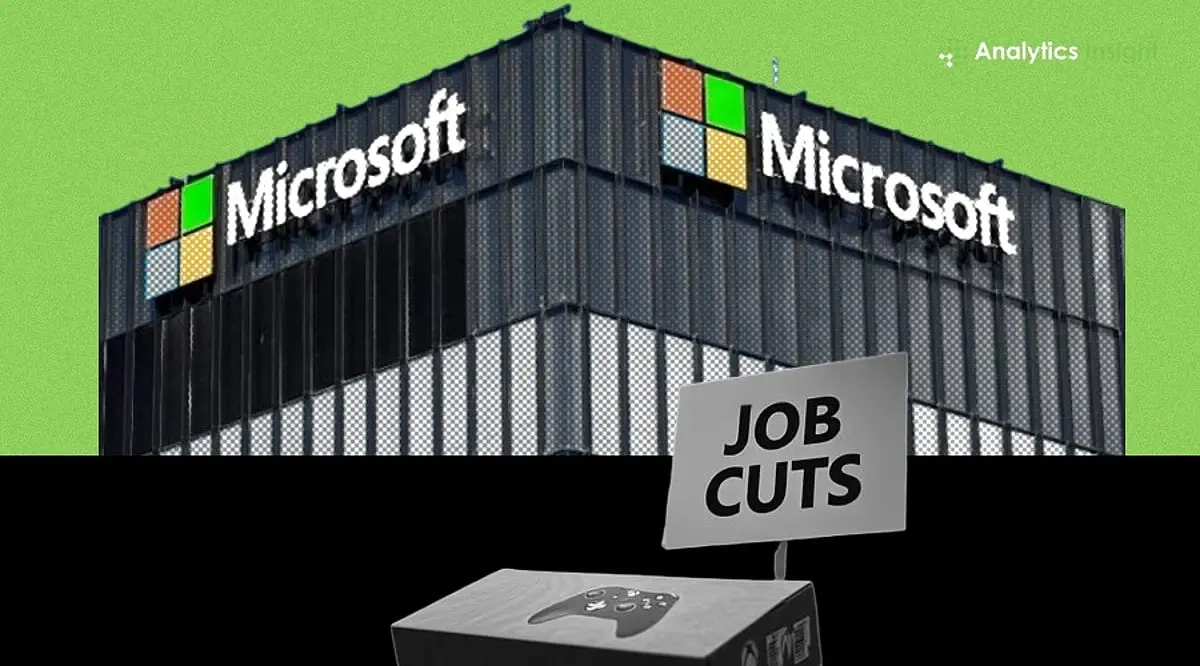
Microsoft eliminated 4,800 roles, representing 2.1% of its global workforce, with the deepest cuts hitting Xbox and commercial sales. The layoffs come as the company invests over $100 billion in AI infrastructure, marking the latest wave of tech industry job cuts that have affected 154,000 workers in the first half of 2026 alone.
Microsoft eliminated approximately 4,800 roles on Monday, representing 2.1% of its global workforce, as the company restructures its operations to align with what executives describe as the fastest technological transformation in the company's history
1
. The Microsoft job cuts primarily affect the Xbox division and commercial sales teams, with Amy Coleman, executive vice president and chief people officer, attributing the reductions to fundamental shifts in how technology is built, deployed, and used2
.
Source: Analytics Insight
The timing of these layoffs coincides with Microsoft's unprecedented AI investment, as the company is on pace to spend more than $100 billion building AI and cloud infrastructure in the fiscal year that just ended
4
. This represents an increase from $88.7 billion the previous year, with about two-thirds dedicated to AI-enabling chips. The cuts come amid a 30% stock slide that has wiped out roughly $1.2 trillion in Microsoft's market value over the past nine months3
.The Xbox restructuring represents the most significant overhaul in the gaming division's history, with approximately 1,600 positions eliminated immediately and plans to cut a total of 3,200 jobs—roughly 20% of the global Xbox workforce—by the end of the fiscal year
2
3
. Xbox CEO Asha Sharma revealed in an internal memo that the division has been "operating at margins that are 3-10x lower than comparable platform and publishing businesses" and that studios have been losing 64 cents for every dollar invested3
.

Source: New York Post
As part of the gaming division restructuring, Microsoft is spinning off four Xbox game studios to operate independently or under new ownership
5
. Compulsion Games and Double Fine Productions will become independent entities while retaining their intellectual property and game catalogs, while Ninja Theory and Undead Labs have entered agreements to join new owners with funding to continue current projects. Additionally, Arkane's management in France has begun consultation with its works council to review "potential strategic options" that could result in closure or sale5
.The commercial sales reductions build directly on Microsoft's recent launch of the Microsoft Frontier Company business unit, backed by a $2.5 billion investment to embed 6,000 engineers inside enterprise clients
1
. This initiative focuses on delivering enterprise AI deployments using the company's existing AI tools and forward-deployed engineers, reflecting a shift from traditional sales roles to more technical, customer-facing positions3
.
Source: Seattle Times
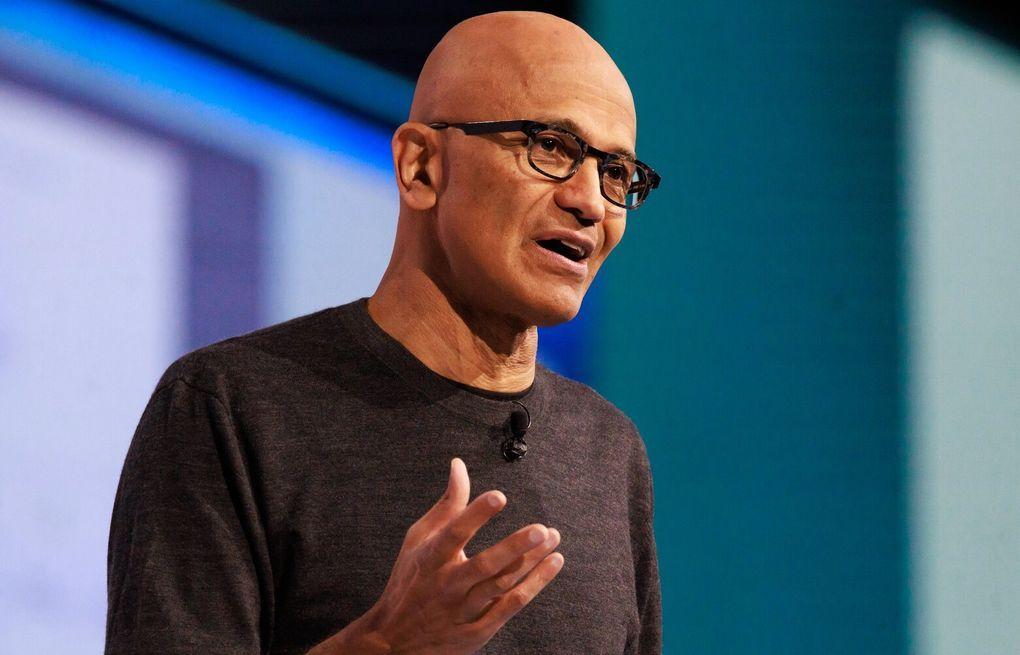
Brad Smith, Microsoft's president and vice chair, emphasized that software development is undergoing its biggest shift in the more than 50 years since Microsoft's founding. "Some things like coding require less time of software developers," Smith noted, while acknowledging that new roles are emerging in product management, software design, and direct customer engagement
3
. Coleman confirmed in her memo that while the eliminated roles "are not being replaced by AI," the technology is fundamentally changing how work gets done, requiring employees to focus on re-skilling and workforce adaptation1
.Related Stories
The Microsoft layoffs contribute to a broader wave of tech industry job cuts that has seen close to 154,000 people lose their jobs in the first half of 2026 alone, with major companies like Meta, Oracle, Amazon, and Cognizant cutting thousands of workers
1
. U.S. tech companies have announced 123,653 cuts so far in 2026, up 66% from the same period in 2025, according to outplacement firm Challenger, Gray & Christmas4
.AI has emerged as the most commonly cited reason for job cuts for three consecutive months, with 38,579 cuts attributed to AI in May alone—the highest monthly total since tracking began in 2023
4
. For the year, AI has been linked to 87,714 cuts, already surpassing the 54,836 attributed to it in all of 2025. This pattern reflects what many see as a correlation between increased AI spending and job reductions across the industry.Microsoft attempted to minimize the scale of forced layoffs through its first-ever voluntary retirement program, which saw approximately 30% of the roughly 8,750 eligible U.S. employees accept buyout offers
2
3
. Eligible employees—those whose combined years of service and age totaled 70 or more—received packages including five years of healthcare coverage access, lump sum cash severance payments, and six months of vesting for unvested stock options2
.Coleman indicated that Microsoft plans to make voluntary exit programs a regular part of operations rather than one-time offers, potentially allowing employees to opt in annually or on an ongoing basis
3
. Over the past year, Microsoft has redeployed more than 4,000 employees into new roles, including another 500 in the month preceding the announcement1
. However, Coleman's memo contained a warning that may concern remaining employees: "We are still early on this journey, and there will be more changes ahead; other parts of our business will need to make similar changes"3
.Summarized by
Navi
[2]
[3]
14 May 2025•Business and Economy

03 Jul 2025•Business and Economy

03 Jun 2025•Business and Economy

1
Technology

2
Technology

3
Science and Research




