11 Sources
[1]
Microsoft's next-gen quantum chip cuts timeline to useful quantum computing
Microsoft claimed last year that it had made a key breakthrough in quantum computing with Majorana 1, the company's first quantum processor. While physicists were immediately skeptical of Microsoft's claims, the software giant is announcing Majorana 2 today, the next generation of its topological quantum chip. Majorana 2 contains qubits, a unit of information in quantum computing much like the binary bits that computers use today, that are 1,000 times more reliable, according to Microsoft. It's a milestone that helps make quantum computing more reliable, thanks to the use of a new material stack and some help from Microsoft Discovery's agentic AI. "To create Majorana 2, the Microsoft Quantum team improved Majorana 1's material stack to create a more stable topological phase," explains Chetan Nayak, Microsoft technical fellow and corporate vice president of quantum hardware. "Majorana 2 replaces Majorana 1's superconductor, aluminum, with lead, and also updates the semiconductor active region to a combination of indium arsenide and indium arsenide antimonide." The improved materials mean better performance of qubits, according to Microsoft. "In the aluminum-based Majorana 1, qubit lifetimes were between one and 12 milliseconds, whereas in Majorana 2, the lifetimes exceed 20 seconds, representing more than 1,000x improvement in stability," says Nayak. Some qubit lifetimes now exceed a minute, enough to convince Microsoft that it has made enough significant progress to promise useful quantum computing much sooner. "Based on this rapid progress, we are accelerating our roadmap to a scalable, practical quantum computer," says Nayak. "We have cut our timeline in half and now aim to reach this target by 2029." Microsoft is working toward building a fault-tolerant prototype quantum computer based on topological qubits, with an aim of quantum computing solving some of the world's most difficult problems. Microsoft is now releasing Discovery, the app that helped improve its Majorana chips, to researchers today. Microsoft Discovery is designed to help apply agentic workflows to research and development programs. It's now available on GitHub and researchers can use a GitHub Copilot account to access it.
[2]
Microsoft announces Majorana 2 quantum computing chip -- claims a practical machine will come in 2029
With new materials, Microsoft is accelerating its quantum roadmap. Microsoft announced its next-generation quantum computing chip, Majorana 2, to an audience of developers at its Build conference in San Francisco. The new chip was designed with its Discovery agentic AI and with material changes to accelerate the company's timeline for a practical, working computer. In a blog post, Chetan Nayak, technical fellow and corporate vice president of quantum hardware, wrote that "To create Majorana 2, the Microsoft Quantum team improved Majorana 1's material stack to create a more stable topological phase. Majorana 2 replaces Majorana 1's superconductor, aluminum, with lead, and also updates the semiconductor active region to a combination of indium arsenide and indium arsenide antimonide. This change in materials results in significant increases in performance[.]" Microsoft explains that this can help "shield fragile qubits from cosmic disturbances that can make them unstable." The company claims that Majorana 2's qubits, units of information used in quantum computing, are 1,000 times more reliable than the previous generation and far more stable, with a mean lifetime of 20 seconds. Though some quibits have lasted as long as a minute, a result that has the company accelerating its roadmap towards relevant, practical quantum computing. "Based on this rapid progress, we are accelerating our roadmap to a scalable, practical quantum computer -- we have cut our timeline in half and now aim to reach this target by 2029. " Nayak wrote. "This achievement will mark a major milestone on the path to a transformative fault-tolerant quantum computer that has the potential to solve problems that affect all of humanity. " The previous chip, Majorana 1, relied on states of matter that existed only in theory and was questioned by scientists. But the company says this chip is a massive step forward. We'll see how the scientific community responds to the new chip in due time. The full technical paper can be found here (PDF). At Build, Microsoft announced that Discovery's agentic AI and the local app the team used to produce the new chips are getting a general release. Discovery is designed to assist with creating AI workflows for science and engineering. Follow Tom's Hardware on Google News, or add us as a preferred source, to get our latest news, analysis, & reviews in your feeds.
[3]
Microsoft reveals new quantum chip made with AI, says it will have systems by 2029
SAN FRANCISCO, June 2 (Reuters) - Microsoft (MSFT.O), opens new tab on Tuesday unveiled a new quantum computing chip that it redesigned with the help of AI, saying it now believes it will have commercially useful quantum machines by 2029. The new target date puts Microsoft on track to have quantum computers the same year as rival IBM (IBM.N), opens new tab, which last month said it plans to spend $10 billion on quantum machines. It also spun out a company to make quantum chips for others, with backing from President Donald Trump's administration. Microsoft had not previously given a target year for the new chip, saying only that it would be a matter of years, not decades. Microsoft and IBM are racing against Alphabet's (GOOGL.O), opens new tab Google, Amazon (AMZN.O), opens new tab and several Chinese efforts to develop quantum systems that could crack problems in medicine, chemistry and cybersecurity that would take conventional computers thousands of years. On Tuesday, Microsoft unveiled a new chip called Majorana 2, a follow-on from its first Majorana chip last year. AI TOOLS DRIVE MATERIALS BREAKTHROUGH The biggest change to Microsoft's internally made chip versus its predecessor is that it uses an entirely new set of materials. While Google, IBM and many others make quantum chips with superconducting wires made out of aluminum, Microsoft's will be made out of lead, a larger atom. Microsoft made the switch with the help of AI tools that it developed for use in materials science, and the result was a 1,000-fold improvement in some aspects of Majorana 2's performance, said Jason Zander, an executive vice president at Microsoft who oversees the firm's quantum efforts. The breakthrough, Zander said, was figuring out how to use lead, which is water soluble, on a chip without the lead washing away during the manufacturing process. "The reason why people don't use it to build chips is it requires an incredibly specialized process to be able to go figure that out. And we figured it out," Zander said. Microsoft's approach to quantum computing relies on quasiparticles known as Majoranas, which had not been proven to exist until Microsoft claimed to have observed them. SCIENTIFIC CRITICISM OVER CLAIMS Its claims have kicked off a flurry of criticism among physicists who say Microsoft has not publicly released enough data to verify its claims. The publication Science last year alerted readers that it was investigating the data used, opens new tab in an earlier Microsoft study from 2020, and some critics of Microsoft's earlier papers say that the problems with its data and protocols still exist in the research released on Tuesday. "Microsoft can use as much lead as they like - it is not going to shield them from the basic scientific principle that your results need to be reproducible," said Henry Legg, a lecturer in quantum physics at the University of St. Andrews in Scotland. Microsoft executives said that trade secrets prevent the company from releasing all of its data but that it has been shared extensively in confidential discussions with the U.S. Defense Advanced Research Projects Agency, which is evaluating the feasibility of several different types of quantum systems. "We've done enough of the physics to really have great data," Zander said of the criticisms of Microsoft's approach. "Believe me, I would not spend the money on the engineering if I felt like we were still off on the physics." Reporting by Stephen Nellis in San Francisco; Editing by Matthew Lewis Our Standards: The Thomson Reuters Trust Principles., opens new tab
[4]
Microsoft unveils Majorana 2, a lead-based quantum chip designed with AI
Serving tech enthusiasts for over 25 years. TechSpot means tech analysis and advice you can trust. First look: Microsoft is taking a different approach in the race to build a practical quantum computer, betting on new materials and AI tools to solve longstanding technical challenges. This week, the company introduced Majorana 2, a next-generation quantum chip that features a redesigned materials stack and device architecture. This week, the company introduced Majorana 2, a redesigned quantum chip that reflects a shift in both its engineering approach and underlying physics. Instead of the superconducting aluminum-based designs used by most rivals, Microsoft has built its latest system around lead. That choice forced the company to overcome manufacturing challenges that have long made lead difficult to use in chip fabrication. That effort appears to be paying off, at least according to Microsoft's internal benchmarks. The company says the qubits in Majorana 2 can hold their quantum state about 1,000 times longer than those in its earlier design. In practical terms, that moves qubit lifetimes from the microsecond range - common across much of the industry - to an average of roughly 20 seconds, with some lasting as long as a minute. The chip also operates at microsecond speeds and uses qubits that are about one-hundredth of a millimeter in size. The materials shift did not come easily. Lead, which Microsoft uses in its topological qubits, presents a fundamental challenge: it dissolves in water, making it difficult to handle during fabrication. "The reason why people don't use it to build chips is it requires an incredibly specialized process to be able to go figure that out. And we figured it out," Jason Zander, Microsoft's executive vice president overseeing quantum efforts, told Reuters. A significant part of that process involved AI. Microsoft says it used internally developed agentic AI tools to speed up materials discovery and testing, helping researchers refine a new materials stack for more stable qubits. The same tools are now being positioned as part of a broader push to accelerate scientific research beyond quantum computing. The improvements in qubit stability and size are central to Microsoft's updated timeline. The company now expects to reach a scalable, commercially useful quantum system by 2029, putting it on roughly the same schedule as competitors such as IBM. The broader field remains crowded, with Alphabet, Amazon, and several Chinese groups all working toward similar goals, each using different technical approaches. Microsoft's path, however, continues to draw scrutiny. Its design relies on Majorana quasiparticles, an exotic state of matter that has been difficult to verify experimentally. While Microsoft maintains that it has observed these particles, some physicists remain unconvinced, citing a lack of publicly available data and unresolved questions from earlier research. "Microsoft can use as much lead as they like - it is not going to shield them from the basic scientific principle that your results need to be reproducible," said Henry Legg, a lecturer in quantum physics at the University of St. Andrews. The company has pushed back on those concerns, saying it has shared detailed findings with select government partners, including the US Defense Advanced Research Projects Agency, even if not all data can be released publicly. "We've done enough of the physics to really have great data," Zander said. "Believe me, I would not spend the money on the engineering if I felt like we were still off on the physics." For Microsoft, the emphasis now is on steady gains rather than a single breakthrough moment. "We need to make improvements each year that will get us closer to delivering a computer that we believe will have massive commercial and societal value," said Chetan Nayak, a Microsoft technical fellow. "We've got to keep marching to that roadmap to accomplish that, but where are we relative to last year? We're 1,000 times better." Whether those gains translate into a scalable system remains an open question. But with a different materials strategy and increased use of AI in its lab work, Microsoft is trying to stand out in a race that is still far from finished.
[5]
Microsoft's Majorana 2 quantum chip is 1,000x more reliable, targets 2029
Microsoft unveiled Majorana 2, a quantum chip with qubits 1,000x more reliable than its predecessor, achieving a mean 20-second lifetime versus microseconds for competitors. Agentic AI via Microsoft Discovery accelerated the development, and Microsoft now targets a scalable quantum computer by 2029, halving its original timeline. Microsoft has unveiled Majorana 2, a next-generation topological quantum chip whose qubits are 1,000 times more reliable than those in the first Majorana chip introduced last year. The improvement is so significant that Microsoft has cut its timeline for achieving a scalable quantum computer from 2033 to 2029, halving the original target. The company credits agentic AI, deployed through its Microsoft Discovery research platform, with accelerating the materials science, fabrication optimisation, and measurement automation that made the leap possible. The numbers are striking. Majorana 2's qubits maintain their quantum state for a mean lifetime of 20 seconds, with some instances lasting as long as one minute. Most competing quantum approaches measure qubit lifetimes in microseconds. Microsoft's analogy: it is roughly comparable to a phone battery that lasts three years on a single charge instead of dying in a day. Combined with one-microsecond operations and a qubit size of 1/100th of a millimetre, the chip puts Microsoft on what it describes as a path to commercially valuable quantum computing by the end of the decade. How agentic AI built a better chip The key materials change was switching from aluminium to lead as the superconductor. Lead naturally shields qubits from cosmic disturbances that cause instability, but working with it introduced tradeoffs that took years to overcome. Quantum computing startups across Europe and the US are pursuing different approaches to the qubit stability problem, but Microsoft's topological approach, which creates an entirely new state of matter, is architecturally distinct from the superconducting circuits used by IBM, Google, and most competitors. Microsoft Discovery's AI agents were deployed across the quantum team's workflow in several ways. Agents automated the measurement process that previously took weeks when done manually, cutting cycle time by orders of magnitude. They analysed nearly two decades of experimental data across multiple formats and silos, finding correlations that no individual researcher could see across that volume. They optimised fabrication processes by running simulations to identify the most promising material compositions before physical experimentation. And they detected an uncalibrated temperature sensor that was introducing noise into the fabrication process, a flaw that had gone unnoticed by human review. "Agentic AI has permeated almost everything we do," said Chetan Nayak, Microsoft technical fellow. The application of AI to quantum hardware development represents a convergence that could accelerate the entire field: better AI helps build better quantum computers, which in turn could eventually run better AI. Microsoft Discovery goes public Alongside the Majorana 2 announcement, Microsoft made its Discovery platform generally available. The platform lets organisations deploy autonomous AI agent teams, guided by human expertise, to speed scientific research and development. It includes a Discovery Engine for research and reasoning workflows, enterprise-grade security and governance, and integration with Azure. Google, Anthropic, and OpenAI are all pursuing AI for science, but Microsoft is the first to ship a commercially available platform specifically designed for frontier R&D with built-in agent orchestration. Microsoft also introduced a free Discovery app in early preview that individuals can download and run locally with a GitHub Copilot account. Customers including chemical company Syensqo are already using the platform to develop next-generation fluids for semiconductor manufacturing. The competitive context The quantum computing sector is experiencing a funding and IPO boom. Quantinuum's massively oversubscribed IPO this week valued the Honeywell-backed company at $14.3 billion. The US government committed $2 billion to quantum firms in May, with IBM receiving $1 billion for its Anderon quantum chip foundry. Focused Energy raised $240 million for laser fusion. The market is pricing in the expectation that quantum will follow AI's trajectory from laboratory curiosity to commercial capability within this decade. Microsoft's topological approach has been the most controversial in the field. The company's 2018 claim to have observed Majorana zero modes was retracted after independent scrutiny. Majorana 1, introduced in 2025, re-established credibility with peer-reviewed results. Majorana 2's 1,000x improvement and the accelerated 2029 timeline will face similar scrutiny, and the peer-reviewed paper accompanying the announcement will be the definitive test of whether the results hold up. The energy and compute demands of AI make quantum computing's potential more commercially relevant than at any point in its history. If Microsoft can deliver a scalable topological quantum computer by 2029, the applications in drug discovery, materials science, cryptography, and optimisation would be transformative. If it cannot, the 2029 target will join a long list of quantum computing timelines that proved optimistic. The difference this time is that AI is accelerating the research itself.
[6]
Microsoft Majorana 2 Quantum Chip Claims 1000x Reliability Improvement
Microsoft has unveiled Majorana 2, its latest topological quantum computing processor, during the company's Build 2026 developer conference. The new chip represents a significant advancement in quantum hardware, with Microsoft claiming a 1,000-fold improvement in reliability compared to previous generations of quantum technologies. The announcement marks another milestone in the company's long-term effort to develop commercially viable quantum computers. One of the most notable improvements involves qubit lifespan. In conventional quantum systems, qubits often remain stable only for microseconds before environmental interference introduces errors. Microsoft says Majorana 2 extends average qubit lifetimes to approximately 20 seconds, with some qubits maintaining stability for as long as one minute. Such improvements could dramatically increase the number of operations a quantum processor can perform before error correction becomes necessary. The company compares the advancement to increasing smartphone battery life from a single day to nearly three years on a single charge, illustrating the scale of the improvement in stability and reliability. Longer coherence times are considered one of the most important requirements for building practical large-scale quantum computers. A major contributor to the breakthrough is a change in the superconducting materials used within the processor. Microsoft has transitioned from aluminum-based superconductors to lead-based superconducting structures. According to the company, the new material provides better resistance to environmental disturbances, including interference caused by cosmic rays and background radiation. By shielding quantum states more effectively, the architecture allows qubits to remain operational for significantly longer periods. The development of Majorana 2 also benefited from Microsoft's growing investments in artificial intelligence. Researchers utilized the Microsoft Discovery platform, an AI-driven scientific research environment that employs agent-based systems to analyze large datasets and identify relationships within decades of accumulated research. Microsoft states that the platform helped accelerate development by uncovering patterns and connections that would have been difficult to identify through traditional research methods alone. As a result of these advances, Microsoft believes its roadmap toward commercial quantum computing has accelerated considerably. The company now expects scalable quantum computing systems to become available by 2029. Such systems could eventually be used to tackle problems in healthcare, pharmaceutical development, food production, energy generation, sustainability, materials science, and industrial optimization. Quantum computing remains one of the most challenging areas of technology development. Unlike conventional processors, quantum systems exploit quantum mechanical effects to process information in fundamentally different ways. While large-scale deployment remains several years away, advances such as Majorana 2 suggest that practical quantum computing is steadily progressing from theoretical research toward commercial implementation.
[7]
Microsoft Made a Bold Quantum Claim -- and Says AI Helped Make it Happen
On Tuesday, Microsoft unveiled the next generation of a quantum computing chip it says is 1000 times more reliable than its predecessor and has the potential to cut the timeline of developing a commercial-scale quantum computer in half. The announcement, in which the tech giant credited agentic AI with helping progress the innovation, came during the Microsoft Build developer conference. "We need to make improvements each year that will get us closer to delivering a computer that we believe will have massive commercial and societal value," Microsoft technical fellow Chetan Nayak said in a statement. "We've got to keep marching to that roadmap to accomplish that, but where are we relative to last year? We're 1,000 times better." Microsoft's groundbreaking chip is called Majorana 2. The tech giant says the chip vastly outperforms its predecessor, thanks to next-gen materials and more reliable quantum bits (commonly known as qubits) which make up the most basic unit of encoding data in quantum computing. In a blog post, Microsoft claimed its qubits have a mean lifetime of 20 seconds. In some cases, they can last up to a minute. The Majorana 2 improvement is akin to inventing a phone battery that survives for three years on a single charge versus just one day, the company said.
[8]
Microsoft Doubles Down On Unproven Quantum Tech, Sets 3-Year Target - Microsoft (NASDAQ:MSFT)
Microsoft replaced the aluminum-based superconducting stack used in its 2025 Majorana 1 prototype with lead, a material better known for its radiation-shielding properties. The company stated that lead helps protect fragile quantum states from cosmic disturbances while strengthening electron pair binding, resulting in significantly more stable qubits. A Helping AI Hand According to the firm, Majorana 2 means qubit lifetime is 20 seconds and, in some instances, as long as one minute. A qubit (quantum bit) is a representation of a simultaneous state of 0 and 1, or any fractional combination of both. It exists in multiple states simultaneously, giving it the property of superposition. Because of that, a quantum computer can evaluate millions of possibilities simultaneously rather than checking them one by one, as a classical computer would. "That improvement is roughly comparable to inventing a phone battery that, instead of dying in a day, could last for nearly three years on a single charge," the launch announcement said. A key factor behind the accelerated roadmap is Microsoft Discovery, the company's agentic AI platform. Microsoft says AI agents are helping researchers analyze nearly two decades of data, identify hidden relationships across disciplines, automate complex experiments, and detect manufacturing flaws that might otherwise go unnoticed. "Agentic AI has permeated almost everything we do -- it's just become kind of a very natural part of our workflow," said Dr. Chetan Nayak, Microsoft's Technical Fellow for Quantum Computing. The Skeptical Community Yet despite the optimism, many physicists remain deeply skeptical. Critics argue that Microsoft has not yet publicly demonstrated a fully functional topological qubit, let alone a prototype quantum computer capable of meeting a 2029 commercialization target. Some researchers question whether the company has actually observed the elusive Majorana states that frame this approach. Others contend that the data presented by Microsoft may have more conventional explanations. Physicist Henry Legg of the University of St. Andrews has suggested that the observed behavior could simply reflect electrons moving on and off unintended quantum dots rather than evidence of topological quantum states. His suggestion is also that a long-lived state does not necessarily imply that a quantum superposition can persist for the same duration. Simply put, just because an electron is balanced, it doesn't mean it is a superposition (simultaneously in both states of 0 and 1) where it can perform calculations. Instead, as Legg notes, it can be stuck, masquerading as balanced. Nayak acknowledges that Microsoft's researchers have been restrained with their data - arguing they have unpublished data showing they can fully control their qubits. Yet the skepticism extends beyond technical details. Frolov says Microsoft's reliance on unpublished data and its past "trust us" messaging has damaged confidence in the project. Achieving a commercial product in 3 years would require a prototype in the lab right now - a scenario he sees as implausible. "You go to a conference, and somebody mentions Microsoft and people are chuckling. It's become a joke, and it's terrible for the field." Image: Shutterstock Market News and Data brought to you by Benzinga APIs To add Benzinga News as your preferred source on Google, click here.
[9]
Microsoft reveals new quantum chip made with AI, says it will have systems by 2029
SAN FRANCISCO -- Microsoft on Tuesday unveiled a new quantum computing chip that it redesigned with the help of AI, saying it now believes it will have commercially useful quantum machines by 2029. The new target date puts Microsoft on track to have quantum computers the same year as rival IBM, which last month said it plans to spend US$10 billion on quantum machines. It also spun out a company to make quantum chips for others, with backing from U.S. President Donald Trump's administration. Microsoft had not previously given a target year for the new chip, saying only that it would be a matter of years, not decades. Microsoft and IBM are racing against Alphabet's Google, Amazon and several Chinese efforts to develop quantum systems that could crack problems in medicine, chemistry and cybersecurity that would take conventional computers thousands of years. On Tuesday, Microsoft unveiled a new chip called Majorana 2, a follow-on from its first Majorana chip last year. AI tools drive materials breakthrough The biggest change to Microsoft's internally made chip versus its predecessor is that it uses an entirely new set of materials. While Google, IBM and many others make quantum chips with superconducting wires made out of aluminum, Microsoft's will be made out of lead, a larger atom. Microsoft made the switch with the help of AI tools that it developed for use in materials science, and the result was a 1,000-fold improvement in some aspects of Majorana 2's performance, said Jason Zander, an executive vice president at Microsoft who oversees the firm's quantum efforts. The breakthrough, Zander said, was figuring out how to use lead, which is water soluble, on a chip without the lead washing away during the manufacturing process. "The reason why people don't use it to build chips is it requires an incredibly specialized process to be able to go figure that out. And we figured it out," Zander said. Microsoft's approach to quantum computing relies on quasiparticles known as Majoranas, which had not been proven to exist until Microsoft claimed to have observed them. Scientific criticism over claims Its claims have kicked off a flurry of criticism among physicists who say Microsoft has not publicly released enough data to verify its claims. The publication Science last year alerted readers that it was investigating the data used in an earlier Microsoft study from 2020, and some critics of Microsoft's earlier papers say that the problems with its data and protocols still exist in the research released on Tuesday. "Microsoft can use as much lead as they like - it is not going to shield them from the basic scientific principle that your results need to be reproducible," said Henry Legg, a lecturer in quantum physics at the University of St. Andrews in Scotland. Microsoft executives said that trade secrets prevent the company from releasing all of its data but that it has been shared extensively in confidential discussions with the U.S. Defense Advanced Research Projects Agency, which is evaluating the feasibility of several different types of quantum systems. "We've done enough of the physics to really have great data," Zander said of the criticisms of Microsoft's approach. "Believe me, I would not spend the money on the engineering if I felt like we were still off on the physics."
[10]
Microsoft unveils AI-designed quantum chip, targets 2029 launch By Investing.com
Investing.com -- Microsoft Corp announced Tuesday a new quantum computing chip developed with artificial intelligence assistance and set a 2029 target for commercially viable quantum machines. The chip, named Majorana 2, uses lead-based materials instead of the aluminum superconducting wires employed by Google, IBM and other competitors. Microsoft selected lead, a larger atom, using AI tools created for materials science applications. Access breaking news faster with institutional-grade feeds on InvestingPro -- get 50% off now. The company achieved a 1,000-fold improvement in certain performance metrics compared to the previous chip version, according to Jason Zander, an executive vice president overseeing Microsoft's quantum division. The technical challenge involved preventing the water-soluble lead from dissolving during chip manufacturing. "The reason why people don't use it to build chips is it requires an incredibly specialized process to be able to go figure that out. And we figured it out," Zander said. The timeline matches rival International Business Machines Corp, which said in May it plans to invest $10 billion in quantum computing. IBM also created a separate company to manufacture quantum chips for external customers, with support from President Donald Trump's administration. Microsoft had not previously specified a target year for the chip, stating only that deployment would take years rather than decades. Microsoft's quantum computing strategy depends on quasiparticles called Majoranas. The company's claim to have observed these particles has drawn criticism from physicists who say Microsoft has not released sufficient public data to verify the findings. Science magazine said in 2025 it was investigating data from a 2020 Microsoft study. Critics maintain that data and protocol issues from earlier research papers persist in Tuesday's release. Microsoft executives said trade secrets prevent full data disclosure but confirmed extensive confidential sharing with the U.S. Defense Advanced Research Projects Agency, which evaluates different quantum system types. "We've done enough of the physics to really have great data," Zander said. "Believe me, I would not spend the money on the engineering if I felt like we were still off on the physics." Microsoft and IBM compete with Alphabet Inc, Amazon.com Inc and Chinese initiatives to develop quantum systems capable of solving complex problems in medicine, chemistry and cybersecurity.
[11]
Microsoft reveals new quantum chip made with AI, says it will have systems by 2029
SAN FRANCISCO, June 2 (Reuters) - Microsoft on Tuesday unveiled a new quantum computing chip that it redesigned with the help of AI, saying it now believes it will have commercially useful quantum machines by 2029. The new target date puts Microsoft on track to have quantum computers the same year as rival IBM, which last month said it plans to spend $10 billion on quantum machines. It also spun out a company to make quantum chips for others, with backing from President Donald Trump's administration. Microsoft had not previously given a target year for the new chip, saying only that it would be a matter of years, not decades. Microsoft and IBM are racing against Alphabet's Google, Amazon and several Chinese efforts to develop quantum systems that could crack problems in medicine, chemistry and cybersecurity that would take conventional computers thousands of years. On Tuesday, Microsoft unveiled a new chip called Majorana 2, a follow-on from its first Majorana chip last year. AI TOOLS DRIVE MATERIALS BREAKTHROUGH The biggest change to Microsoft's internally made chip versus its predecessor is that it uses an entirely new set of materials. While Google, IBM and many others make quantum chips with superconducting wires made out of aluminum, Microsoft's will be made out of lead, a larger atom. Microsoft made the switch with the help of AI tools that it developed for use in materials science, and the result was a 1,000-fold improvement in some aspects of Majorana 2's performance, said Jason Zander, an executive vice president at Microsoft who oversees the firm's quantum efforts. The breakthrough, Zander said, was figuring out how to use lead, which is water soluble, on a chip without the lead washing away during the manufacturing process. "The reason why people don't use it to build chips is it requires an incredibly specialized process to be able to go figure that out. And we figured it out," Zander said. Microsoft's approach to quantum computing relies on quasiparticles known as Majoranas, which had not been proven to exist until Microsoft claimed to have observed them. SCIENTIFIC CRITICISM OVER CLAIMS Its claims have kicked off a flurry of criticism among physicists who say Microsoft has not publicly released enough data to verify its claims. The publication Science last year alerted readers that it was investigating the data used in an earlier Microsoft study from 2020, and some critics of Microsoft's earlier papers say that the problems with its data and protocols still exist in the research released on Tuesday. "Microsoft can use as much lead as they like - it is not going to shield them from the basic scientific principle that your results need to be reproducible," said Henry Legg, a lecturer in quantum physics at the University of St. Andrews in Scotland. Microsoft executives said that trade secrets prevent the company from releasing all of its data but that it has been shared extensively in confidential discussions with the U.S. Defense Advanced Research Projects Agency, which is evaluating the feasibility of several different types of quantum systems. "We've done enough of the physics to really have great data," Zander said of the criticisms of Microsoft's approach. "Believe me, I would not spend the money on the engineering if I felt like we were still off on the physics." (Reporting by Stephen Nellis in San Francisco; Editing by Matthew Lewis)
Share
Copy Link
Microsoft announced Majorana 2, its next-generation quantum chip featuring qubits that are 1,000 times more reliable than its predecessor. The breakthrough, achieved using agentic AI through Microsoft Discovery, has prompted the company to accelerate its roadmap and now target a scalable quantum computer by 2029—cutting the original timeline in half.
Microsoft announced Majorana 2, a next-generation quantum chip that marks a significant advance in the race toward practical quantum computing. Unveiled at the company's Build conference in San Francisco, the topological quantum chip features qubits that are 1,000 times more reliable than those in its predecessor, Majorana 1
1
. The improvement is substantial enough that Microsoft has cut its timeline in half, now targeting a scalable quantum computer by 20292
.
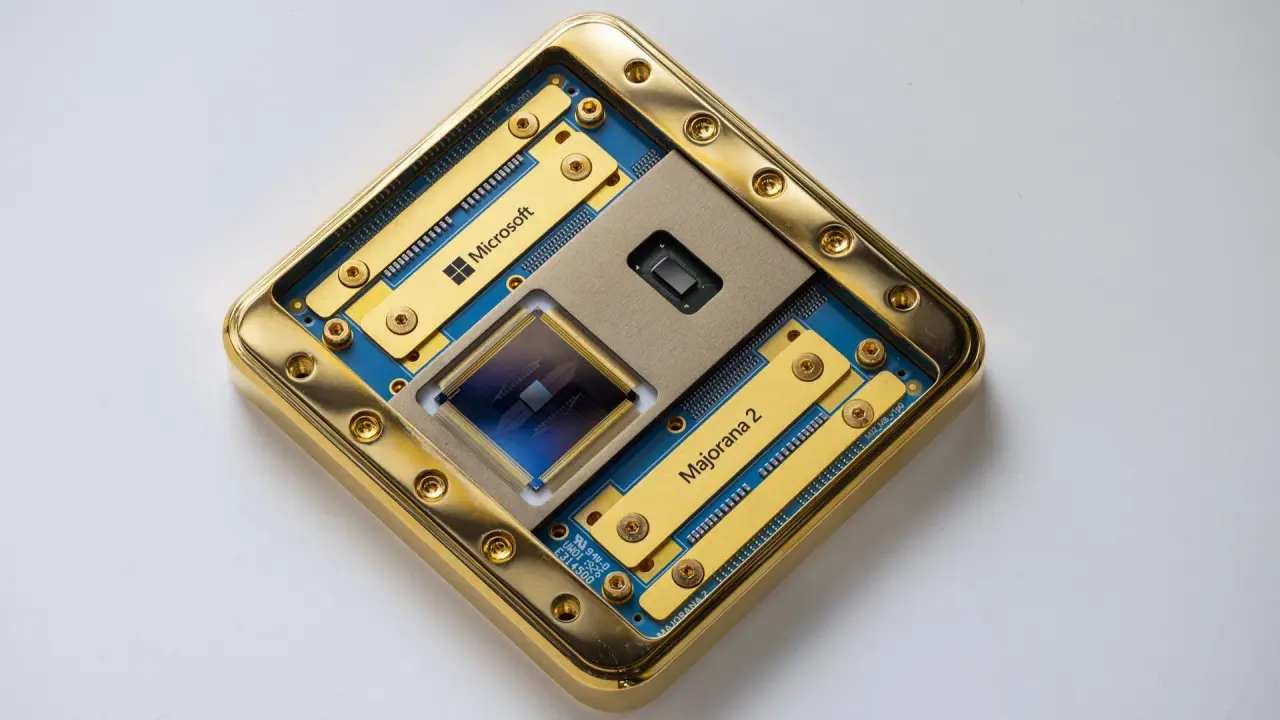
Source: Inc.
This new target date puts Microsoft on track to deliver quantum systems the same year as rival IBM, which plans to spend $10 billion on quantum machines
3
. The company's accelerated roadmap reflects confidence that quantum computing will transition from laboratory curiosity to commercial capability within this decade.The performance leap in Majorana 2 stems from fundamental changes to the chip's material stack. According to Chetan Nayak, Microsoft technical fellow and corporate vice president of quantum hardware, the team replaced Majorana 1's aluminum-based superconductor with lead, while updating the semiconductor active region to a combination of indium arsenide and indium arsenide antimonide
1
. This lead-based design helps shield fragile qubits from cosmic disturbances that can make them unstable2
.The qubit reliability improvements are dramatic. In the aluminum-based Majorana 1, qubit lifetimes ranged between one and 12 milliseconds, whereas in Majorana 2, the lifetimes exceed 20 seconds on average, with some qubits lasting as long as a minute
1
. Most competing quantum approaches measure qubit lifetimes in microseconds, making Microsoft's achievement particularly noteworthy5
.The quantum chip designed with AI represents a convergence of two cutting-edge technologies. Microsoft Discovery, the company's agentic AI platform, played a central role in developing Majorana 2 by automating measurement processes that previously took weeks, analyzing nearly two decades of experimental data across multiple formats, and optimizing fabrication processes through simulations
5
.
Source: Guru3D
Jason Zander, executive vice president at Microsoft overseeing quantum efforts, explained that the breakthrough involved figuring out how to use lead on a chip without it washing away during the manufacturing process. "The reason why people don't use it to build chips is it requires an incredibly specialized process to be able to go figure that out. And we figured it out," Zander said
3
. The AI agents even detected an uncalibrated temperature sensor that was introducing noise into fabrication, a flaw that had gone unnoticed by human review5
.Microsoft is now releasing Discovery to researchers, making it available on GitHub where users can access it with a GitHub Copilot account
1
. The platform lets organizations deploy autonomous AI agent teams to speed scientific research and development, representing the first commercially available platform specifically designed for frontier R&D with built-in agent orchestration5
.Related Stories
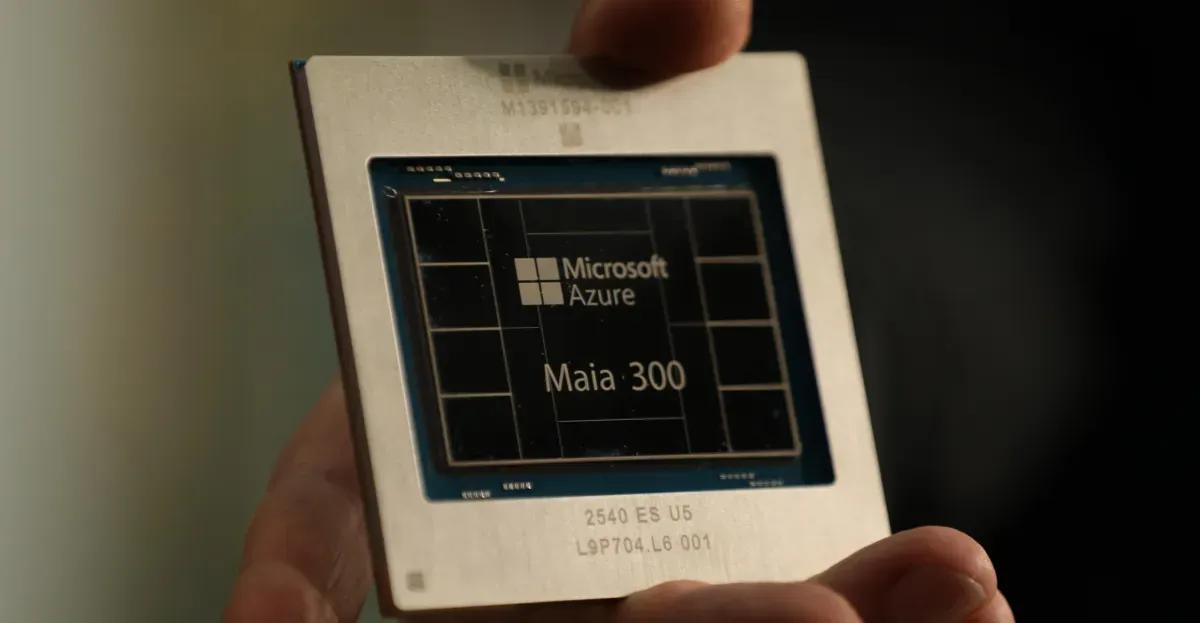
Microsoft's approach to quantum computing relies on quasiparticles known as Majorana particles, which had not been proven to exist until Microsoft claimed to have observed them
3
. These claims have drawn criticism from physicists who say Microsoft has not publicly released enough data to verify its findings. Henry Legg, a lecturer in quantum physics at the University of St. Andrews, stated that "Microsoft can use as much lead as they like - it is not going to shield them from the basic scientific principle that your results need to be reproducible" .

Source: Benzinga
Microsoft executives counter that trade secrets prevent the company from releasing all data, but that findings have been shared extensively in confidential discussions with the U.S. Defense Advanced Research Projects Agency
3
. "We've done enough of the physics to really have great data," Zander said, adding he would not invest in engineering if uncertain about the underlying physics4
.The race toward practical quantum computing remains crowded, with Microsoft, IBM, Alphabet's Google, Amazon, and several Chinese efforts all working to develop quantum systems that could solve problems in medicine, chemistry, and cybersecurity that would take conventional computers thousands of years
3
. The quantum computing sector is experiencing a funding boom, with the U.S. government committing $2 billion to quantum firms in May, including $1 billion for IBM5
.Summarized by
Navi
[2]
20 Feb 2025•Technology

10 Jun 2025•Technology

14 Apr 2026•Technology

1
Policy and Regulation

2
Policy and Regulation

3
Technology

News Categories