Nvidia releases Ising open AI models to solve quantum computing's biggest bottlenecks


18 Sources
[1]
Nvidia releases open AI models for quantum computing tasks -- 'Ising' said to be 2.5x faster and 3x more accurate than existing tools for decoding
Nvidia brings its open model onslaught to quantum computing. Nvidia has released Ising, a family of open-source AI models for quantum processor calibration and real-time error correction decoding. Integrated with Nvidia's CUDA-Q quantum software platform and the NVQLink QPU-GPU interconnect, which
[2]
Nvidia New AI Models Spark Rally in Quantum Computing Stocks
Asian software and information-technology stocks surged after Nvidia Corp. unveiled a suite of new open-source AI models aimed at accelerating progress within quantum computing. In South Korea, shares of several software and cybersecurity firms including Axgate Co. and ICTK Co. briefly hit their
[3]
Quantum stocks on pace for a massive week after Nvidia debuts AI models to boost the tech
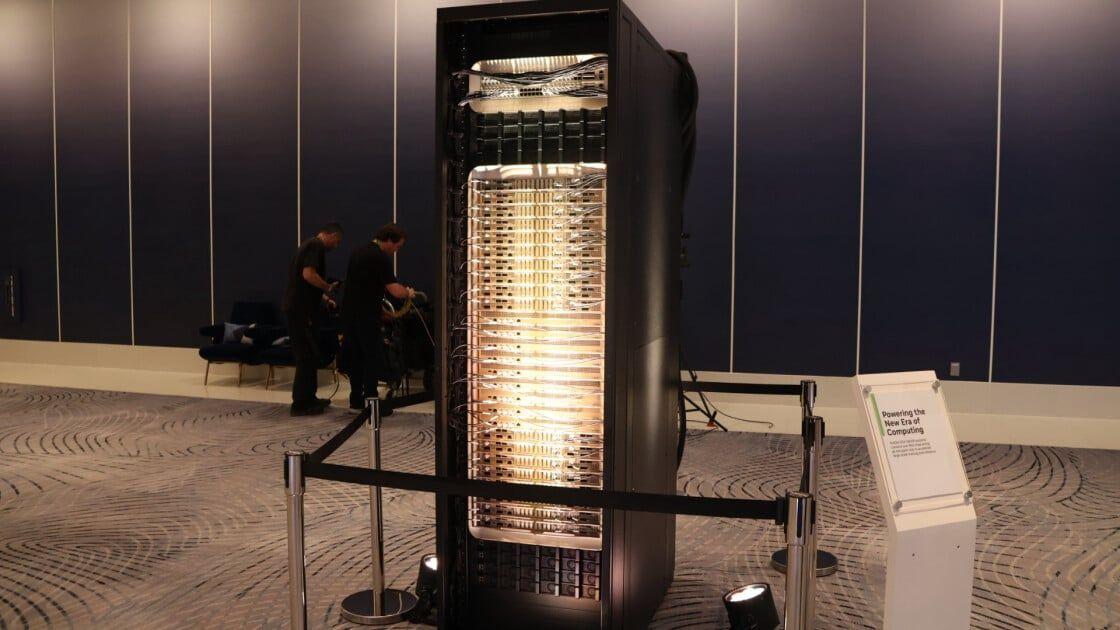
A Rigetti quantum computer displayed at the Nvidia booth during the Nvidia GTC (GPU Technology Conference) in Washington, DC, US, on Wednesday, Oct. 29, 2025. Quantum stocks sank slightly on Thursday, but were still on track for a massive week-to-date rally fueled by enthusiasm for Nvidia's new
[4]
Ising: Nvidia AI tackles quantum computing's biggest bottlenecks
NVIDIA has launched a new family of open AI models aimed at solving two of the biggest challenges in quantum computing: calibration and error correction. Called Ising, the models are designed to help researchers and enterprises build more stable and scalable quantum systems by improving how
[5]

NVIDIA Launches Ising, the World's First Open AI Models to Accelerate the Path to Useful Quantum Computers
NVIDIA Ising Delivers Breakthrough Performance in Quantum Calibration and Error Correction, Empowering Researchers and Enterprises to Build Scalable, High-Performance Quantum Systems * The NVIDIA Ising open model family delivers the world's best AI-based quantum processor calibration capabilities,
[6]

Nvidia launches open-source AI models for quantum computing
Nvidia $NVDA has launched a family of open-source AI models called Ising, designed to help researchers and companies build quantum processors capable of running real-world applications. The announcement coincides with World Quantum Day. The Ising family launches with two model domains. Using a
[7]

Nvidia unveils open source quantum AI model Ising
Ising models are designed to help perform quantum error correction and calibration. Nvidia has announced a new family of open source quantum AI models on World Quantum Day (14 April). 'Ising', the "world's first" models for building quantum processors, joins a growing list of Nvidia open source
[8]

Nvidia unveils Ising AI models for quantum error correction and calibration - SiliconANGLE
Nvidia unveils Ising AI models for quantum error correction and calibration Technology and computing giant Nvidia Corp. today announced the release of Ising, the world's first open artificial intelligence model family aimed at quantum computing calibration and error correction. Nvidia, whose main
[9]

NVIDIA Unveils Ising Open Models for Quantum Computing Control and Correction
NVIDIA has announced Ising, a new family of open AI models aimed at one of the hardest problems in quantum computing: turning fragile experimental hardware into systems that can eventually run useful applications. Rather than focusing on qubit counts alone, the release targets the software and
[10]

NVIDIA's new Ising AI could finally make quantum computing usable
TL;DR: NVIDIA's new open-source Ising AI models aim to enhance quantum computing by improving qubit stability and reducing error rates. Integrated with the CUDA-Q platform, Ising offers 3x accuracy, 2.5x faster performance, and requires 10x less training data, significantly accelerating quantum
[11]

Nvidia launches open-source 'Ising' AI models to tackle quantum computing bottlenecks
Firms such as IBM, Google and Microsoft are building quantum hardware and software stacks, while startups like IonQ are focused on specialised systems. However, all players face a common challenge -- making quantum computers stable enough for real-world use. Chipmaker Nvidia on Tuesday announced a
[12]

These Quantum ETFs Flip As Nvidia's AI Catalyst Triggers Rally - IonQ (NYSE:IONQ), Defiance Daily Target
Nvidia Sparks A Quantum Re-rating The trigger behind this trend reversal was rather obvious. Nvidia's latest push to develop quantum computing software through an AI control layer has reframed the sector's near-term potential. Its new models aim to stabilize quantum processors and accelerate
[13]

NVIDIA Just Made Quantum Computing Practical With Ising, The World's First Open AI Models For Quantum Computers
NVIDIA has introduced Ising, its newest OpenAI models designed to make Quantum Computers useful and faster with brand new capabilities. Quantum Computing has been cited as the next frontier of computing for decades. Several companies have been trying to perfect quantum computing for years now, and
[14]

Nvidia Says AI Can Finally Make Quantum Computing Work | PYMNTS.com
By completing this form, you agree to receive marketing communications from PYMNTS and to the sharing of your information with our sponsor, if applicable, in accordance with our Privacy Policy and Terms and Conditions. Before one can run a useful calculation, a team of specialists has to spend
[15]
Jensen Huang Just Pulled Quantum Computing Into Nvidia's Orbit - IonQ (NYSE:IONQ), NVIDIA (NASDAQ:NVDA),
The company unveiled Ising, a family of open‑source AI models designed to accelerate quantum‑processor calibration and error correction. XNDU stock is soaring. See the chart and price action here. Quantum Stocks React The release immediately set off a chain reaction in the market as traders read
[16]

Quantum Computing Stocks Rally After NVIDIA Launches New Ising AI Models
NVIDIA's new open-source AI models lifted quantum computing shares on Wednesday, as investors reacted to the company's latest push into the sector. The rally spread across Asia and extended to US premarket trading, with software, cybersecurity, and quantum-related firms posting sharp gains. The
[17]

Quantum stocks surge as Nvidia launches new AI models By Investing.com
Investing.com -- Shares in quantum computing companies rose in premarket trading Wednesday after Nvidia unveiled the world's first family of open-source quantum AI models, designed to accelerate progress in the space. D-Wave Quantum jumped more than 8% in the premarket trade by 05:44, and IonQ
[18]

NVIDIA Ising open-source models aim to accelerate quantum scaling with AI
AI-driven calibration and decoding accelerate quantum system scalability If you think about it, AI has gone beyond the hype and is here to stay, and all within just 3-4 years. With quantum computing, despite decades of research, that moment has stubbornly refused to arrive. Despite cutting-edge
Share
Copy Link
Nvidia unveiled Ising, a family of open source AI models designed to tackle quantum computing's critical challenges in calibration and error correction. The models deliver 2.5x faster and 3x more accurate performance than existing tools, while sparking a rally in quantum computing stocks as IonQ surged 50% and major research institutions rushed to adopt the technology.
Nvidia Tackles Quantum Computing Challenges With Open Source AI Models
Nvidia has released Ising, a family of open source AI models specifically designed to address two critical bottlenecks preventing quantum computing from achieving practical, large-scale deployment: quantum processor calibration and quantum error correction
1
. The models are now available on GitHub, Hugging Face, and build.nvidia.com, integrated with Nvidia's CUDA-Q quantum software platform and the NVQLink QPU-GPU interconnect first introduced last October1
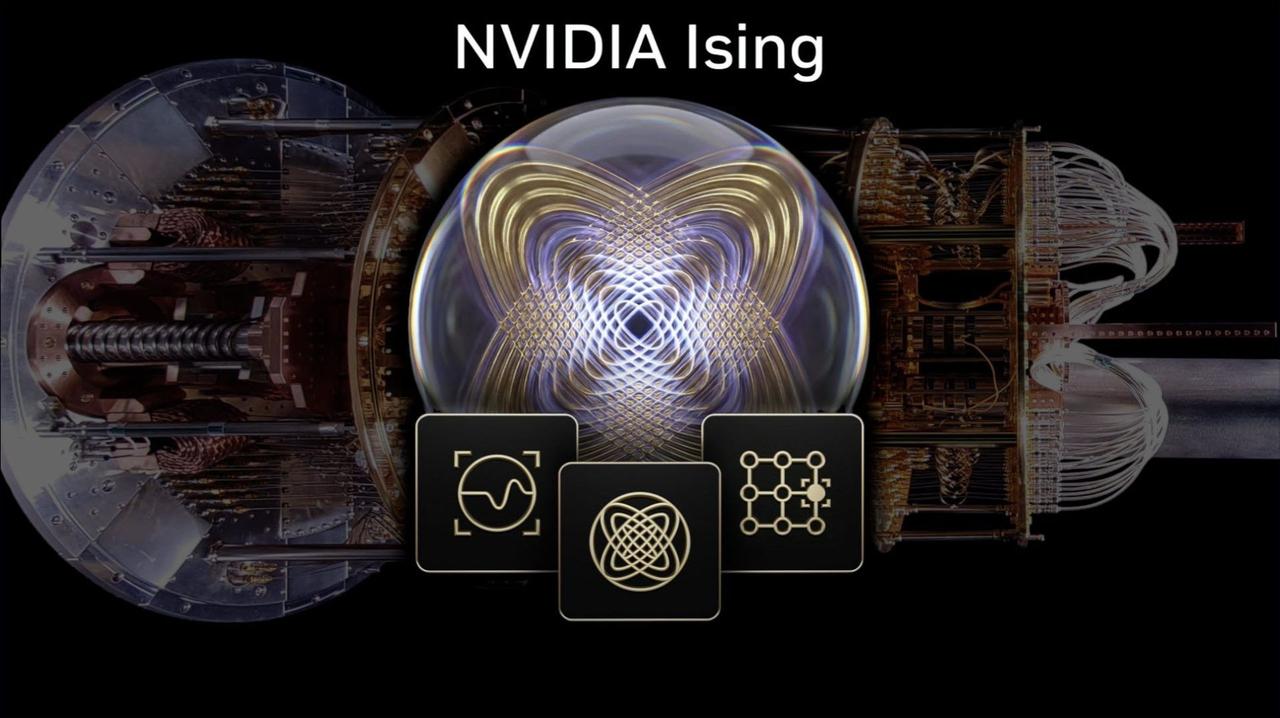
.Named after a landmark mathematical model that simplified understanding of complex physical systems, Ising represents what Nvidia calls "the world's first open AI models" aimed at accelerating the path to useful quantum computers
5
. "AI is essential to making quantum computing practical," said Jensen Huang, founder and CEO of Nvidia. "With Ising, AI becomes the control plane -- the operating system of quantum machines -- transforming fragile qubits to scalable and reliable quantum-GPU systems"3
.
Source: Wccftech
Ising Calibration Cuts Processing Time From Days to Hours
The Ising Calibration component is a 35-billion-parameter vision-language model fine-tuned to read experimental measurements from a quantum processing unit and infer the adjustments needed to tune it
1
. This technology reduces calibration time from days to hours when paired with an AI agent, addressing a manual process that previously required quantum processors to be adjusted so their qubits behave consistently1
.Major adopters of Ising Calibration already include IonQ, Atom Computing, Academia Sinica, Fermi National Accelerator Laboratory, Harvard John A. Paulson School of Engineering and Applied Sciences, Infleqtion, IQM Quantum Computers, Lawrence Berkeley National Laboratory's Advanced Quantum Testbed, and the U.K. National Physical Laboratory
5
.Ising Decoding Delivers 2.5x Speed and 3x Accuracy Boost
The Ising Decoding family comprises two variants of a 3D convolutional neural network with 0.9 million and 1.8 million parameters, optimized for speed and accuracy respectively
1
. These models perform pre-decoding for surface-code quantum error correction and have been benchmarked at 2.5 times faster and three times more accurate than pyMatching, the open-source decoder most quantum research groups currently use, while requiring ten times less training data .Sam Stanwyck, director of quantum product at Nvidia, explained that today's best quantum processors produce an error roughly once every thousand operations, and the logical error rate is directly tied to how quickly decoding runs alongside the hardware
1
. A 2.5 times speedup raises the ceiling on how many gate operations a quantum processor can sustain before its logical qubits break down1
.
Source: SiliconANGLE
Related Stories
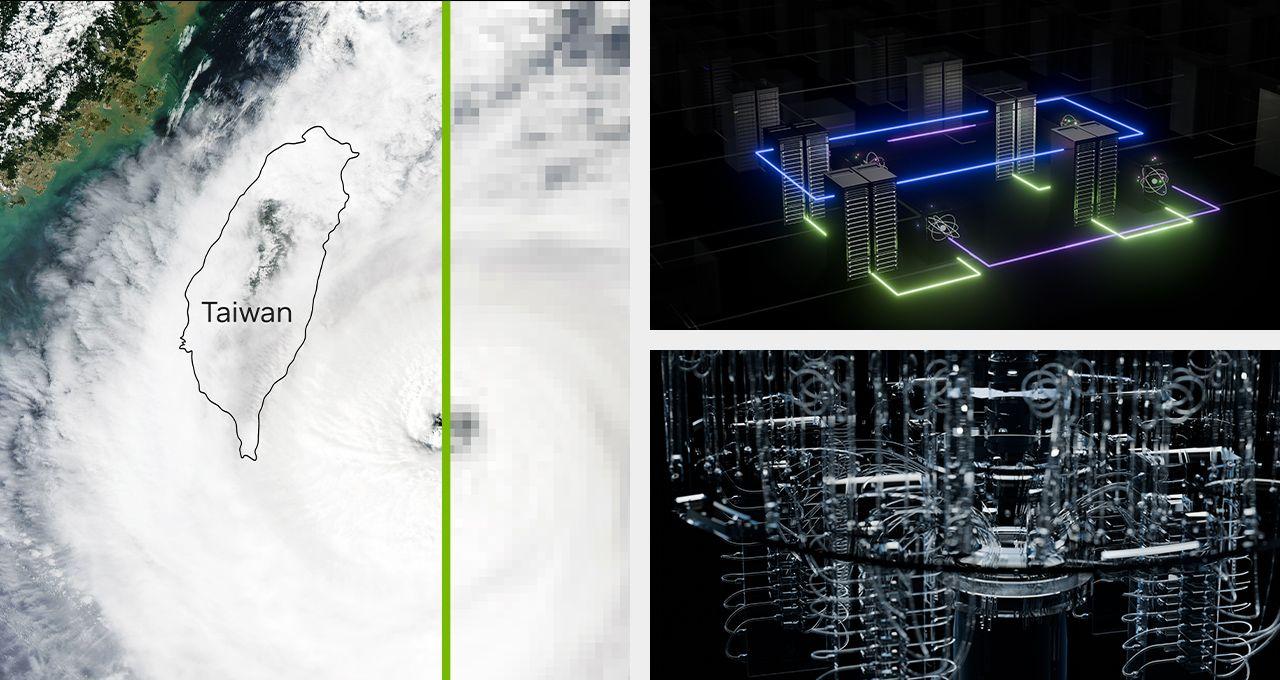
Quantum Computing Stocks Rally on Ising Announcement
The unveiling of Ising on World Quantum Day sparked a significant stock rally across the quantum computing sector
3
. Since the start of the week, quantum computing stocks skyrocketed, with IonQ shares surging 50%, D-Wave Quantum climbing 50%, and Quantum Computing and Rigetti Computing jumping more than 20% each3
.In Asia, the impact was immediate. South Korean software and cybersecurity firms including Axgate Co. and ICTK Co. briefly hit their daily trading limit of 30%
2
. China's GuoChuang Software Co. and QuantumCTek Co., along with Japan's Fixstars Corp., each rose at least 8%2
. The global quantum computing market is projected to jump to more than $11 billion by 2030 from nearly $1.7 billion in 2024, according to market research2
.Strategic Play: Open Models, Proprietary Infrastructure
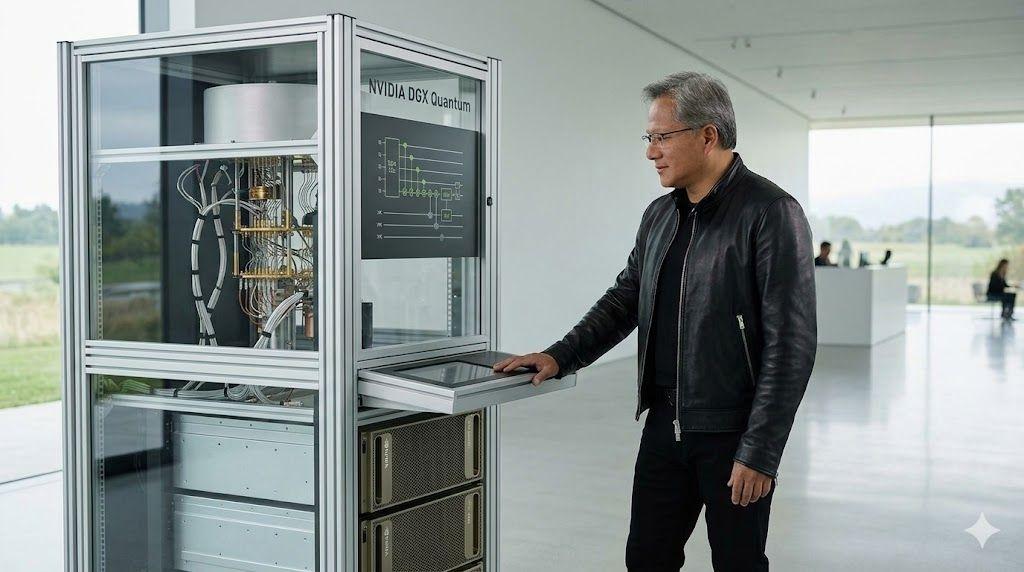
While Ising is open source, the stack it sits on isn't entirely accessible. The decoder needs NVQLink's low-latency interconnect to feed measurement data to a GPU inside the decoding window, calibration workflows run through CUDA-Q, and deployment tooling targets Nvidia hardware exclusively
1
. This pattern mirrors Nvidia's approach with Nemotron, Cosmos, and GR00T, where models are opened but the surrounding platform remains proprietary, driving GPU dependencies through the workflow1
.
Source: Benzinga
This strategy allows Nvidia to remain deeply integrated with the quantum computing industry despite not building quantum hardware itself
1
. Bloomberg Intelligence analyst Robert Lea cautioned that "while these tools can potentially help accelerate developments, the deployment of practical, large-scale quantum computing remains a long way off"2
. However, the immediate market response and rapid adoption by leading research institutions suggest Ising addresses real pain points in achieving scalability for quantum systems4
.References
Summarized by

Navi
[1]
[4]
Related Stories
Nvidia Launches Accelerated Quantum Research Center to Advance AI-Quantum Integration
19 Mar 2025•Technology
Nvidia and Google Quantum AI Collaborate to Accelerate Quantum Computing Development
19 Nov 2024•Technology

Nvidia CEO Jensen Huang Declares Quantum Computing at 'Inflection Point', Unveils New AI Initiatives
11 Jun 2025•Technology

Recent Highlights



Recent Highlights
Today's Top Stories








Don’t drown in AI news. We cut through the noise - filtering, ranking and summarizing the most important AI news, breakthroughs and research daily. Follow topics that matter to you and stay ahead.


