Microsoft unveils Project Solara, an Android-based OS built for AI agents instead of apps


19 Sources
[1]
Microsoft's Project Solara is an Android OS designed for agents instead of apps
Microsoft has been deeply committed to the growth of generative AI technology in recent years through its now-fragmented partnership with OpenAI. At Build 2026, the company remains all-in on AI, and it's looking toward the future with a new software platform. The new Android-based OS is called
[2]
Microsoft's Project Solara is an OS for AI agent gadgets
Microsoft just announced "Project Solara," a new OS designed for gadgets that run AI agents, at Build 2026. The company is calling it "a new platform built from the ground up to power agent-driven experiences." It's built on Android, not Windows. Microsoft demonstrated two concept Project Solara
[3]
Microsoft unveils Project Solara AI, a chip-to-cloud platform built to power a new generation of 'agent-first' enterprise devices -- hardware designed to run AI agents instead of traditional apps
Microsoft has unveiled Project Solara, a chip-to-cloud platform designed to power a new generation of "agent-first" enterprise devices -- hardware designed to run AI agents instead of traditional apps. Announced at the Microsoft Build 2026 Developer Conference on the 2nd of June, the platform,
[4]
Meet Project Solara: Microsoft's Effort to Push AI Agents Into Smart Devices
Ready to hang an AI assistant around your neck? Microsoft is floating the concept as part of Project Solara, an effort to create a wide range of smart devices built for more powerful AI agents. At its Build conference today, Microsoft touted Solara as a way to usher in a new generation of
[5]

Microsoft announces Project Solara, its take on an AI agent platform - Engadget
The company demoed Solara on an Echo Show-style smart display and a smart key badge. Microsoft has announced that it's building a platform for AI agents. It's called Project Solara, and at Build 2026 the company showed it powering two different reference devices, a smart display and a smart key
[6]

Microsoft designed some new Android-based hardware, and it's not at all what you're expecting
Solara is built on a framework that's ultimately based on the AOSP. AI is everywhere these days, but so many times it feels like something that's been tacked on to an existing product: It's a smartphone with AI, or earbuds that are equipped with AI note-taking. And while that usually works well
[7]

Inside Microsoft's Project Solara: A new platform for devices that run AI agents instead of apps
[Editor's Note: Agents of Transformation is an independent GeekWire series, underwritten by Accenture, exploring the adoption and impact of AI and agents. See coverage of our related event.] A team inside Microsoft has been quietly building a platform for devices that run AI agents instead of
[8]

Microsoft's Big New Idea for AI Gadgets Is a Badge With a Camera
AI gadgets weren't on my Build bingo card, but Microsoft had other plans. During the unveiling of "Project Solara," a new platform for AI agents launched by Microsoft during its annual developer conference, the company also unveiled two new concept devices, and one of them is here to revolutionize
[9]

Microsoft unveils Project Solara: an OS for agent-first devices
Microsoft unveiled Project Solara at Build 2026, a chip-to-cloud platform for "agent-first devices" that run AI agents instead of traditional apps. Two concept devices, a wearable badge and desk companion, are being piloted with Best Buy, CVS Health, Levi's, and Target. Microsoft unveiled Project
[10]

Microsoft's new mobile effort ditches Windows for Android, and it's not a phone
Microsoft has revealed it's working on a new mobile-related platform called Project Solara, which it demonstrated on stage during its Build 2026 developer conference. It's closer to Android than Windows Mobile, and not only is one of the first prototypes closely linked to a smartphone, it may come
[11]

Microsoft reboots computing: New Solara OS powers agentic devices
Microsoft is laying the groundwork for what it believes will be the next era of computing, unveiling a new software platform designed specifically for AI-powered devices that rely on intelligent agents rather than traditional applications. At its Build 2026 developer conference, the company
[12]

Microsoft CEO: We're moving from OS and apps to agents instead
Today, Microsoft Build brought the announcement of Project Solara, a new chip-to-cloud platform for AI agents. With the reveal, Microsoft CEO Satya Nadella shared an interesting quote on the company's vision for an agent-first computing future. Microsoft CEO shares vision for very different future
[13]

An AI agent in a security badge? That's Microsoft's Project Solara pitch
This platform aims to streamline AI integration across purpose-specific devices, potentially expanding to smart glasses, watches, and rings for enhanced workplace security and IT management. AI agents will soon be everywhere, we're told, but where exactly? Clearly they're in the cloud, on our
[14]

Is this 'the next computer'? Microsoft's Project Solara looks to break AI out of the PC and into the real world
* Microsoft reveals Project Solara proof of concept for new AI devices * Portable devices allow AI agents to break into new form factors and use cases * Pilots are underway, but wider launches are still some way off Microsoft has unveiled Project Solara, its bid to help free your AI agents from
[15]

Microsoft unveils Project Solara for an agent-first future
Microsoft announced Project Solara, a new software platform and associated hardware solutions aimed at creating agent-first experiences that enhance user interactions with computers. The initiative seeks to develop a diverse ecosystem of agent-first devices, transitioning the focus from traditional
[16]

Microsoft shows off Project Solara smart badge and smart display concepts as AI-first hardware
Microsoft is building an AI agent-first platform called Project Solara, and is showing off some interesting hardware designs. Microsoft has announced Project Solara, which is a new platform built for AI agents rather than applications. During the Build 2026 keynote, Microsoft says it expects the
[17]

Microsoft introduced Project Solara: Operating system for wearable AI devices
Microsoft announced this week at its Build 2026 conference Project Solara - a new operating system built from scratch for devices that run artificial intelligence agents. The platform is built on Android rather than Windows, and its purpose is to power AI agent-centric experiences on small and
[18]

Microsoft unveils Project Solara for mobile AI devices By Investing.com
Investing.com -- Microsoft Corp. announced Project Solara on Tuesday, a new platform designed to power products that users interact with primarily through artificial intelligence agents on mobile devices for businesses. The company revealed the platform at its Build developer conference in San
[19]

What is Microsoft's Project Solara: The platform that wants to end the app era
For decades, the way we've used computers has followed the same basic script: open an app, do a thing, close it. Repeat. Microsoft thinks that script is ready for the bin. Announced at Build 2026, Project Solara is Microsoft's most ambitious swing at redefining what a computer even is. It's not a
Share
Copy Link
Microsoft announced Project Solara at Build 2026, a chip-to-cloud platform designed to run AI agents rather than traditional apps. Built on Android instead of Windows, the platform features two concept devices: a smart display and a wearable badge. Companies including Best Buy, CVS Health, Target, and Levi's are preparing to pilot the agent-first enterprise devices in coming months.
Microsoft Introduces Project Solara at Build 2026
Microsoft announced Project Solara at its Build 2026 developer conference on June 2, marking a significant shift in how the company envisions computing's future
1
. Project Solara is a chip-to-cloud platform designed specifically for AI agents rather than traditional applications, representing Microsoft's bet that the next platform shift moves from apps to agents2
. Developed by Microsoft's Applied Sciences Group, the platform features a lightweight edge operating system called the Microsoft Device Ecosystem Platform, which is built on the Android Open Source Project rather than Windows3
. This Android-based operating system is paired with Azure-hosted agent services, meaning devices act as interfaces to AI agents running across Microsoft's cloud infrastructure rather than as fully self-contained computers3
.Two Concept Devices Showcase Agent-First Vision
Source: Ars Technica
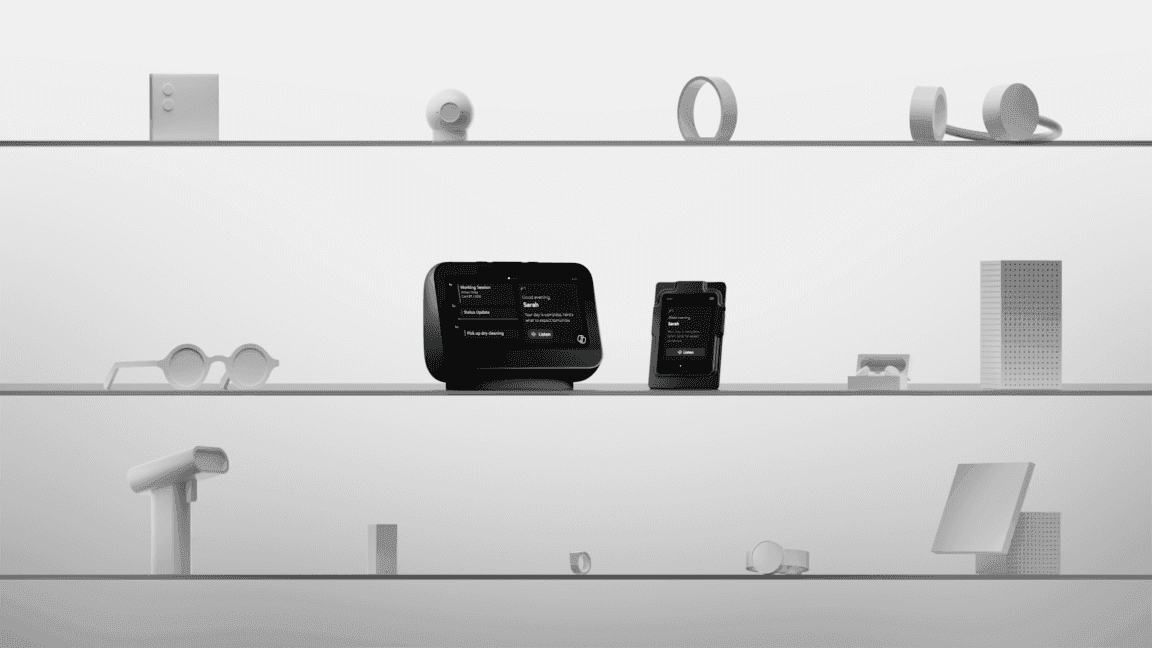
Microsoft demonstrated two reference designs for agent-first enterprise devices at Microsoft Build 2026. The Desk Concept is a smart display similar to an Amazon Echo Show, featuring a touchscreen, microphones, a camera, and UWB presence sensor that handles automatic login and lock
3
. Built around MediaTek IoT chips, it can access information stored in Microsoft 365, display upcoming events from Outlook, or pull data from Excel5
. Connected to an external display, the device can double as a Windows 365 cloud PC client3
. The Badge Concept is a wearable badge powered by Qualcomm hardware, equipped with a touchscreen, fingerprint scanner, far-field microphone array, side-facing camera, and 5G, WiFi, Bluetooth, and GNSS connectivity3
. During demonstrations, the wearable badge was shown recording and transcribing conversations instantly, with the camera allowing AI agents to see what users see2
. Steven Bathiche, Microsoft's Corporate Vice President and Technical Fellow, noted that hundreds of employees inside Microsoft are already using these concept devices to improve their workday4
.Just-in-Time UI Enables Context-Aware Computing

Source: Engadget
Central to the AI agent platform is a capability called just-in-time UI, which leverages AI models to generate user interfaces from computer code
4
. This adaptive interface layer allows a single agent to render appropriately across different screen sizes and input modalities without requiring developers to rebuild the experience for each device3
. According to Bathiche, this represents a path to specialized smart devices without requiring developers to redesign experiences from scratch each time3
. Microsoft positions this approach on a spectrum between conventional responsive design and fully generative UI, targeting the middle ground that prioritizes consistency while avoiding per-device redesign overhead3
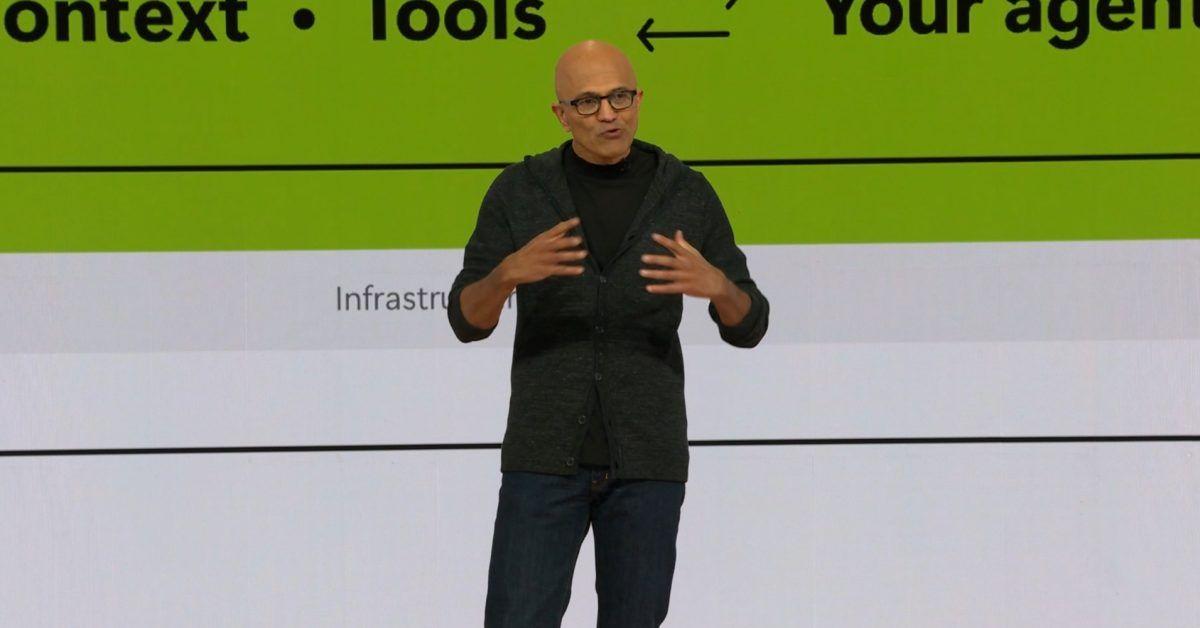
. The vision is for AI agents to flow across an entire ecosystem of devices rather than being constrained to a single screen, with Bathiche stating that "the next computer is not one device; it is all these devices working together as one system, with agents showing up closer to where and when you need them"4
.Related Stories

Enterprise Focus and Partner Ecosystem
Microsoft is not planning to manufacture end products itself but instead is releasing reference designs for OEMs to build from, alongside an approved chipsets requirement that gives Microsoft certification-level control over which hardware qualifies for the platform
3
. The company has partnered with Qualcomm for portable and wearable form factors and MediaTek for stationary devices as its first silicon partners3
. The platform targets enterprise buyers in retail, healthcare, and field service sectors, where dedicated agent hardware makes more sense than repurposing a smartphone3
. Companies including AccuWeather, Best Buy, CVS Health, Levi's, and Target are planning to kick off pilots of the AI agent gadgets in coming months2
. Early agent integrations include Dragon Copilot for healthcare workflows and GitHub Copilot for developer task tracking, exploring how persistent, context-aware agents behave differently on dedicated hardware than inside a browser3
.Strategic Implications for Microsoft's AI Push
Source: 9to5Mac
Microsoft's decision to build the Microsoft Device Ecosystem Platform on Android rather than Windows reflects practical considerations around hardware constraints
3
. The Android Open Source Project scales naturally to lightweight, constrained hardware that wearables and embedded devices run on, something Windows with its memory and processing overhead was never designed to do3
. This move comes as Microsoft has struggled to branch out beyond traditional computing and enterprise solutions, having tried and failed on numerous occasions to gain a foothold in mobile computing1
. With its OpenAI partnership now sputtering, Microsoft is looking to maintain its position at the forefront of AI development through dedicated hardware platforms1
. The company is also working on an agent dispatcher and agent task manager to automatically surface or activate the right agent based on context, though neither component is shipping yet3
. Microsoft is clear that Project Solara remains a concept, with Bathiche describing the operating system as "liminal, transcending the device and the cloud" through Azure integration3
. While much of Microsoft's messaging around the platform is speculative, the company rightly points out that new computing form factors have always required specialization, and Project Solara aims to simplify that traditionally complex and expensive process through AI-generated interfaces1
.References
Summarized by

Navi
Related Stories
Microsoft AI Brings Hybrid Intelligence to Windows 11 Copilot, Targets Developers
08 Oct 2026•Technology

Microsoft Project Aion leak shows experimental Copilot OS that replaces Windows desktop with AI
03 Jul 2026•Technology
Microsoft shifts Windows focus to AI agents as Copilot+ PCs fade into background
03 Jun 2026•Technology

Recent Highlights



Recent Highlights
Today's Top Stories







Don’t drown in AI news. We cut through the noise - filtering, ranking and summarizing the most important AI news, breakthroughs and research daily. Follow topics that matter to you and stay ahead.


