4 Sources
[1]
Windows is back on the Microsoft menu
I can't remember the last time Microsoft kicked off a Build keynote with Windows front and center, but that's exactly what CEO Satya Nadella did this week. Nadella didn't address the issues Microsoft is trying to fix in Windows 11 but chose to woo the audience with Microsoft's slick Surface RTX Spark Dev Kit instead, calling it a "dream machine." Nadella unveiled the new Surface hardware just days after Nvidia officially returned to Windows on Arm with its new RTX Spark chips. Both companies are talking up these chips as some kind of new beginning for PCs, and it's clear that RTX Spark will drive local AI workloads in a way that Microsoft's previous Copilot Plus PCs haven't yet managed. Build really drove home that message this week, with Windows positioned as an all-important part of Microsoft's AI agent efforts. Microsoft's original mission under Bill Gates was a computer on every desk and in every home, and Nadella reframed that as "unmetered intelligence on every desk and in every home" within a few minutes of his keynote beginning. It set the stage for Microsoft and Nvidia to position their new Windows PCs as a potential solution for costly, usage-based pricing of cloud-based AI models. As local compute grows in capability, there's a clear gap that Microsoft and Nvidia can fill with powerful hardware you actually own. "I think we, as Microsoft, have the responsibility for building the best possible AI stack that we can on [Windows], and obviously drive the best AI stack that we can in the cloud," says Windows chief Pavan Davuluri in an interview with Notepad. Davuluri thinks that Microsoft is in a good position to capitalize on hybrid compute, where chips like the RTX Spark will handle a lot of local workloads and intelligently hand off to the cloud when they need something more powerful. Nvidia CEO Jensen Huang is even more bullish about local AI compute. He wants to turn PCs into devices that work for you, eliminating that idle time when PCs are switched off or you're not using them. "In the future, if I need my laptop to do something, I just text it with WhatsApp," said Huang earlier this week. "You don't want to necessarily run everything in the cloud, because if you can run it locally, it's free." Nadella seems to agree. "The amount of compute that there is at the edge is astounding," he said during his Build keynote. "Every PC, if you sort of aggregate that, that's a lot of compute power." That power is really on display with Nvidia's new RTX Spark chips, which will come to a variety of creator-focused laptops and miniature PCs later this year. RTX Spark is capable of running a 120 billion parameter large language model locally, allowing many AI workloads to run without ever touching the cloud. That's an appealing concept during a continued AI money squeeze for developers and consumers. Microsoft is targeting its own Surface Laptop Ultra at developers and creators and pairing it with ongoing improvements to Windows 11 performance and developer-friendly additions. While Microsoft's deeper embrace of Linux utilities inside Windows this week didn't generate the same gleeful audience reaction as the Windows Terminal announcement in 2019, developers I've spoken to are excited by the Coreutils and WSL containers additions. The Surface Laptop Ultra has also been generating some buzz, particularly among developers and power users. Microsoft isn't quite positioning this as a mainstream premium laptop, but there's certainly room for it to appeal far beyond developers. "I think you'll see us do well when it comes to STEM applications, and CAD apps running on the platform, because they take advantage of the same characteristic patterns of high-performance compute," explains Davuluri. All of this renewed focus on Windows at Microsoft seemed impossible only six months ago. Davuluri responded to the pressure on Microsoft to improve Windows 11 by laying out a plan to focus on performance, reliability, and overall experiences in the OS just a couple of months ago. I got to see some of the performance improvements at Build this week, with side-by-side comparisons of the Start menu and taskbar loading faster. Microsoft is putting in a lot of effort to turn Windows 11 around and listen to feedback from a variety of users. But I've been wondering why Microsoft doesn't just jump to Windows 12. It seems easier to just admit defeat on Windows 11 and then position Windows 12 as the remedy. Microsoft has done this many times in the past, particularly with the releases of Windows 7 and Windows 10. "There are a lot of considerations when you think about the versioning of an operating system itself, and I think for us, a lot of the core proposition with Windows 11, or quite frankly, with Windows 12, or any label we use, has to do with end users and how they use the product and the workflow that they're in," says Davuluri. "I think we are more focused on having the product experience be better in the context they're using it, and that I think is the most important thing for us." While we might not be getting a Windows 12 anytime soon, I'm curious how this Windows exists in a world of AI agents. Microsoft has been clear that it sees Windows as a home for AI agents and workloads, but it also unveiled Project Solara this week, a new platform for agent-first devices. Microsoft demonstrated a smart employee key card that could run an agent capable of transcribing and recognizing real world objects, and it also showed a reference design for an Amazon Echo Show-like device with an AI agent. It's clear that Microsoft wants to offer up a platform for dedicated AI devices of the future The big surprise is that Project Solara devices are powered by a version of Android, not Windows. Despite this, Davuluri expects to see Project Solara running on Windows devices too. "We are not hard bound to a device specific operating system," says Davuluri. "You should imagine a world where Solara will be great on a bunch of platforms, including Windows, both Windows 11 locally and Windows 365 instances in the cloud." Whether the future of AI agents runs on Windows, Android, or something else may not ultimately matter right now. For the first time in years, Microsoft seems determined to make Windows central to that conversation either way. Build 2026 wasn't about fixing Windows' past problems, it was about convincing developers that Windows still has a significant role to play in AI's future. I'm always keen to hear from readers, so please drop a comment here, or you can reach me at [email protected] if you want to discuss anything else. If you've heard about any of Microsoft's secret projects, you can reach me via email at [email protected] or speak to me confidentially on the Signal messaging app, where I'm tomwarren.01. I'm also tomwarren on Telegram, if you'd prefer to chat there. Thanks for subscribing to Notepad.
[2]
My Big Build Takeaway: Microsoft Is Pushing For AI You Control on Your Terms
SAN FRANCISCO -- What stood out most for me at this year's Microsoft Build conference was the emphasis Microsoft put on how anyone can "participate fully" in the new era of AI and agentic computing. As Build is a developers conference, they were the intended audience. However, there was a similar message for enterprises. CEO Satya Nadella stressed that organizations could use their own data to fine-tune models and create and manage their own agent ecosystems, while keeping costs in check. The company even applied that concept to individuals in the communities where Microsoft wants to build data centers. Nadella said Microsoft has to prove it won't raise electricity costs or use a significant amount of water, while contributing to the tax base, and helping local organizations. There were lots of Windows-specific announcements, including new ways to get a clean desktop and move the taskbar, as well as a new Intelligent Terminal designed for developers who would put the regular terminal in one window and an agent in the other. Perhaps the most important of these announcements is the ability to run agents in containers that can be sandboxed and have their own permissions, all controlled by the individual developer and the organization. These Microsoft Execution Containers (MXC) isolate agents so they can't do damage to other systems or resources (such as a rogue agent accidentally deleting a database). Within these containers, you can run agents, including an OpenClaw. (Running OpenClaw on Windows was a big theme throughout the show.) It's a powerful tool that can do many things on your behalf, but organizations have been reluctant to allow users to run it on their machines because of the potential for mischief. The new container framework should mitigate many of those concerns. The company also described other ways of creating long-running agents that work on your behalf as "autopilots." 'This Is a New Era in AI' Microsoft AI Head Mustafa Suleyman also announced seven new Microsoft AI models, including a general model, the company's first reasoning model, and new models for creating images, transcriptions, speech, and code. Microsoft made a big deal about having a "clean lineage" with lots of transparency about how they were trained. Interestingly, the company didn't claim its new models are the best, just the most cost-effective for many tasks. "This is a new era in AI...that you control on your terms," Suleyman said. This concept of grounding AI within the organization is something Microsoft stressed at its Ignite conference last fall, where it introduced WorkIQ, a layer that includes information stored in Microsoft systems such as email, Teams, OneNote, and SharePoint. At Build, it announced a new component, WebIQ, which it touted as the fastest way to get real-time web data. Combining this with information from the AI tools and agents (Foundry IQ) and its data warehouse (Fabric IQ), users can create a comprehensive context for AI systems and agents. This seems to be a major way Microsoft wants to differentiate itself from other agentic platforms. More to the point, Nadella described how organizations could fine-tune these models using their own internal data to create a "hill-climbing" AI tailored to their knowledge and ways of working. I doubt that smaller organizations or individuals will do much of this, but I can see where it would be attractive to larger enterprises. Microsoft devoted a lot of time and floor space to its new hardware, specifically a Surface Laptop Ultra and an RTX Spark Dev Box, both running a new Nvidia RTX Spark processor that the company says can support up to 128GB of shared memory and run up to 120-billion-parameter local models. These are due in the fall, and look very powerful, especially for AI developers. But of course, the changes to Windows and the development tools should work on any machine, and Microsoft continues to push the use of Windows 365 cloud instances for development as well. The big benefit of running local models is that they incur no additional costs because they use the device's processors. Nadella called this "unmetered intelligence," and given the costs many organizations have run into with cloud-based tools, I can see how this could be very attractive. Of course, it's not just local PCs that are changing in the move to "agentic computing." Nadella discussed how the move to agents was affecting the entire computing stack, from infrastructure to underlying models and tools to security. In another session, Microsoft EVP for Cloud and AI Scott Guthrie described the significant changes in building data centers today, from new networking approaches to more automated, managed services -- all necessary because new data centers are much larger and being built at a faster pace than ever. Nadella said Microsoft has added more data center capacity in the last 18 months than it did in the first 10 years of Azure. Nadella ended his keynote by reminding the audience that, in general, there are two possible stories we can tell about the move to AI and agentic computing. In one, technology concentrates power and reduces human agency; in the other, we use the new technology to unlock more opportunities for everyone. Making the second alternative a reality is a north star for Microsoft. Taken together, these announcements should make AI development and deployment easier for developers and safer for organizations. All this is crucial, and we've heard similar concepts from Google and AWS in recent months. Still, I would argue there's still a lot more to do. Figuring out how we'll implement all this so we get real value is going to be the biggest issue for organizations for at least the rest of the decade.
[3]
The Future Microsoft Showed at Build 2026 Barely Looks Like Windows
SAN FRANCISCO -- At Build 2026, I watched from the front row as Microsoft CEO Satya Nadella extolled the utility of AI agents for everything from business application development to scientific research in his keynote. But it was the OpenClaw announcements that drew the loudest applause. The highlight of the presentation was a demo in which Microsoft proudly showed off a sandboxed local AI agent repeatedly trying and failing to delete a bunch of user files. The takeaway, of course, is that Microsoft wants you to want OpenClaw-style AI agents on your PC. And it thinks the way to convince you (starting with developers) of that vision is to emphasize safety and dedicated hardware platforms. To that end, it announced Microsoft Execution Containers (MXC) for securely running OpenClaw on Windows, alongside a dedicated companion app. The company also championed its Nvidia RTX Spark-powered Surface Laptop Ultra, which can run powerful AI agents locally -- no data centers or internet connection required. What this all means for regular Windows users remains unclear. Is the goal to give them the ability to spin up AI agents that perform basic tasks, convincing them this is the future of personal computing? It seems ambitious, but I can't see anywhere else Microsoft would take Windows 11 based on what I've seen thus far at Build. Below are my main takeaways from the keynote. Microsoft Wants AI Agents to Take the Wheel Nvidia CEO Jensen Huang appeared during the Build keynote live from Computex in Taipei to enthusiastically discuss the future of AI agents with Nadella. "The PC evolved from being an incredible tool to now being a tool that is used autonomously by an AI assistant," said Huang. "The idea: I could be traveling and on the phone, and text my PC, and ask my PC to get coding done," he said. "My PC became an assistant," Huang continued. "The idea that the PC evolved from a personal computer to a personal AI is really exciting." In fact, Nadella and other Microsoft leaders hardly spoke about AI outside the context of agents. That extends to the hardware side, too. With Project Solara, Microsoft imagines end-user computing focusing on new agent-first devices that don't run traditional applications at all. For Windows PCs, the company envisions AI agents taking actions on your behalf. "We want Windows to be a fantastic place to run and scale agents," said Nadella on stage. "We are very deeply engaged with the team to make OpenClaw run super well on Windows." I see no reason for this focus on optimization unless agents are going to become a major part of all Windows experiences, not just the developer-focused ones. It's not a leap to reimagine Jensen's example in the context of everyday computing tasks. Microsoft seems to be on a mission to develop 'calm' experiences, and outsourcing your busywork to a local machine with a personalized agent fits that narrative. How long it takes a practical version of that concept to trickle down to the consumer experience is an open question. Why Microsoft Showed an AI Agent Failing on Stage Earlier this year, the open-source OpenClaw AI agent system transfixed the tech industry, with OpenAI going so far as to hire its creator, Peter Steinberger. However, OpenClaw was an experimental piece of software that required a dangerous level of access to a computer's operating system. The demand for hardware dedicated to AI agents even led to a shortage of Mac minis. As mentioned, Microsoft is tackling the securing concerns of such AI agents with MXCs. In these restricted environments, a developer or IT administrator decides what resources they can access. The idea is to run AI agents on your primary Windows PC, while relying on Windows to keep them under control. Microsoft's Samantha Song and Scott Hanselman demonstrated the new OpenClaw Windows companion app on stage, which lets you configure the claw agent's permissions in a few clicks. They showed how to set the Desktop folder to read-only, and then, in one of the keynote's most memorable moments, asked the OpenClaw agent to delete everything on the desktop. It failed to do so. Steinberger (the so-called "clawfather") took the stage moments after. "I'm so excited to see OpenClaw native on Windows," he said. "You know, watching a claw try to delete all your desktop files and just fail makes me really happy. Because six months ago, that totally would've worked," he said to a laughing audience. Other companies are also on board, so MXC seems poised to quickly become the standard for securing AI agents for deployment on Windows PCs. "Continuously-running local agents, like Hermes Agent, require intentional isolation. Developers need control over what an agent can access and trust that those controls will hold," says Dillon Rolnick, CEO of Nous Research. Microsoft says the new Hermes Agent application for Windows will integrate MXC. I can imagine a lot of regular Windows users wanting to wait to see how well MXCs work since an uncontrolled OpenClaw agent can absolutely wreak havoc on your digital life. After the problematic rollout of Recall, I expect at least some initial hesitation from anyone who cares about privacy and security. The Vision Is Clear, But the Use Case Isn't Grandiose promises are nothing new from tech companies, but the advent of AI has caused such claims to inflate exponentially. Microsoft has made some concrete progress on its development of an agentic Windows: It has real hardware, such as the RTX Spark Dev Box and the Surface Laptop Pro, that can run local AI models with some guarantee of security. It hasn't solved all the problems with AI agents, but it seems committed to helping businesses and developers overcome roadblocks and create compelling experiences. Microsoft might be able to sell its vision to the technical crowd at Build, but it needs to start doing the same for regular users if it intends to make people want to use Windows again. I appreciate that Microsoft continues to introduce long-awaited changes and scale back some AI features, but the value of AI agents isn't obvious and could spur even more AI pushback if it isn't careful. Unless the company can provide a clearer idea of how ordinary Windows 11 users can easily use AI agents that improve their lives, I suspect the reception will be unenthusiastic at best. Stay Tuned for More Build Coverage I'll be on the ground here at Microsoft Build for the entire event, attending demos and experiencing the future of Windows. Follow our Build 2026 live blog for all the latest news.
[4]
The future of Windows 11 -- what is Microsoft building next?
Now that Microsoft Build 2026 is officially in the can, a clearer picture of the future of Windows 11 has appeared. Rather than announcing Windows 12, Microsoft is utterly dedicated to its current OS. That doesn't mean the operating system you're currently using is going to remain the same, though. Far from it. After CEO Satya Nadella wrapped his keynote, it was hard to shake the feeling that the traditional desktop OS may soon be a thing of the past. Microsoft's focus seems to be squarely aimed on delivering an AI-centred platform, where agentic systems are cooked into every corner of the Windows 11 experience. Perhaps the main takeaway from Build concerning Windows 11's future is that the OS could well make your day job easier going forward... well, unless you're a trapeze artist or a lion tamer. Using Microsoft IQ and MAI-Thinking-1, always-on AI agents will deploy real workplace knowledge to help users structure their daily workflow. The first of these to be announced was Microsoft Scout, and it could be a legit lifesaver for folks who struggle to organize hectic work schedules. Microsoft is giving developers more tools to assist users with day-to-day tasks. That's where the GitHub Copilot app (that uses the Big M's new reasoning model) enters the equation. It's available in preview to Microsoft Insider Program members now, and it's just one of a number of productivity-focused features that could transform Windows 11 going forward. Let's get into what that shiny new future might look like. Scout and about Following the latest Microsoft Build keynote, there can be little doubt as to where Microsoft's focus is on when it comes to the future of Windows 11. Productivity-focused AI agents are going to play a key part in the evolution of the operating system, which is where Microsoft Scout enters the picture. Available now to Microsoft Frontier customers, Scout is Microsoft's first Autopilot agent. Focused on full Microsoft 365 app integration, this "always on" agentic AI can operate across the cloud, web and desktop, allowing users to connect to Outlook, Teams and OneDrive. To put that in more digestible terms, think of Scout as your very own personal assistant; one that constantly organizes your day as it learns and adapts to how you work. Whereas traditional agents constantly needed to be prompted, Scout has been designed to work autonomously, allowing it to take proactive actions. This means it can help shape your working day by coordinating your schedule through 365 apps, be it organizing meetings across time zones or monitoring your inbox and Teams to flag any outstanding responses that need to be made. In theory, this should mean you no longer have to constantly flit between emails, docs and browser tabs, as much of this plate-spinning busywork can be delegated to Scout. Powered by OpenClaw, Scout monitors your working habits through Work IQ, in turn becoming more efficient at helping you complete tasks the more it observes your daily practices. Clearly, Scout is going to be more useful for business environments than Windows 11 users lounging around on the couch. Yet if this Autopilot agent lives up to its virtual co-worker potential, it could genuinely change the way people go about their jobs. Windows is thinking on its feet Another huge announcement at Build -- one that is directly tied to Scout -- was the unveiling of MAI-Thinking-1. Microsoft's new reasoning model helps the Autopilot AI out with planning tasks, and senior product manager Tanaya Yadav briefly demoed the tech during the keynote. While the task of training Scout could take hours, the endgame benefit should hopefully be AI agents that prove hugely useful for workflow purposes. MAI Thinking could have a big and broad impact across Windows 11 going forward. With the future of Copilot and 365 tied to agentic systems, this reasoning model may shape Microsoft's AI-focused goals going forward. The pivot to MAI is also interesting in that it looks to free Microsoft from being reliant on OpenAI. As Windows 11 continues to evolve, Copilot should primarily take instructions from the Redmond giant's internal reasoning tech. MAI is just the starting point too, as Microsoft's AI Superintelligence Team (that must be one seriously cool business card) is also developing a further six in-house reasoning models. Say hello to Solara One of the most pleasant surprises to come out of Build this year was the announcement of Project Solara. This chip-to-cloud platform has been built from the ground up to ensure interacting with AI agents works in seamless fashion. Probably the coolest feature of Solara is its eye-catching form factor. Because it's been designed for spaces where traditional PCs and laptops might not be around, Microsoft has focused on delivering products that don't take up much space. Enter devices which resemble a smart clock, and even more niftily, a work ID badge. The clock-aping gizmo is intended to remain stationary, whereas the badge has been designed to be used while you're on the move. On the latter, it can be unlocked with your fingerprint. The badge can even record video and take voice instructions, and it will subsequently clean up said audio so that you can send the note to colleagues in easily decipherable chunks. Engineered with a new era of AI agents in mind, Project Solara takes cues from Android devices. The daring design of this new agent-focused OS seems to suggest Microsoft is fully committed to a new era of AI that thumbs its nose at traditional hardware by embracing imaginative new forms. Security is being geared for AI agents With Microsoft increasingly pivoting towards AI as the future of Windows 11 takes shape, the matter of security becomes ever more vital. While the prospect of Scout mapping out your workday as you sip on your morning mocha is undoubtedly an appealing one for folks who get easily flustered, protections do need to be in place. This is where the announcement of Microsoft Execution Containers (MXC) becomes crucial. Now in preview, this security framework allows developers to run containment boundaries that are enforced by Windows 11. Essentially, a dev describes the security parameters it needs its agents to adhere to, then the OS enforces them everywhere these agentic systems run. Now, while this probably sounds roughly as exciting to you as the prospect of dining in a restaurant that only serves steamed celery, MXC is important to the future of AI agents. As they become more autonomous, it's crucial that these agents can't accidentally access sensitive info or make decisions they're not permitted to. With MXC in place, admins should be able to rest safe in the knowledge that this agent-native runtime is operating under safe security parameters. GitHub Copilot shifts the focus to devs Now available in preview to developers, the GitHub Copilot app is an AI-assisted engineering platform that brings agentic workflows to native desktop experiences. One of the major Build takeaways concerning the app is how it will work autonomously, though not in an unfettered manner (devs will most definitely still be in control). GitHub Copilot will use the newly revealed MAI-Code-1-Flash, an internal coding model that should improve coding performance through latency reduction. The deployment of this MAI model is to ensure the GitHub Copilot app is more aware of good workspace practices. In turn, this allows it to function like a true agentic assistant, rather than a glorified chatbot that continually needs to be prompted. Going forward, GitHub Copilot should make developers' lives easier, taking some coding pressures off their shoulders as it tests and deploys code with genuine autonomy thanks to AI agents. In an ideal world, this app will decrease developer workloads, rather than physically replacing them. Again, none of this is particularly focused on the Average Joe/Jenny Windows 11 experience. Then again, Build has always been focused on developers over consumers. Ultimately, the agentic benefits of GitHub Copilot that developers receive will ideally lead to smoother OS experiences for all of us. The future of Windows 11 centers around AI If Windows 11 is just a gateway that allows you to jump into the best PC games, there likely wasn't much for you to get excited about coming out of Build 2026. Yet if you're a dev or someone who is looking to use AI tools to coordinate workflows, the latest keynote definitely provided a peek into the future of Microsoft's OS. Rather than revealing Windows 12, Microsoft doubled down on its commitment to its current operating system. Moving forward, AI is clearly going to be the cornerstone of everyday Windows functions. With agentic systems like Microsoft Scout leaning on reasoning models to help business-minded folks map out their day by coordinating schedules, and Project Solara devices that have been crafted to replace traditional hardware, the focus is on agents that have real autonomy in order to assist users. The Redmond Giant is going hard on a vision for Windows 11 where agentic AI is baked into its very fabric. Follow Tom's Guide on Google News and add us as a preferred source to get our up-to-date news, analysis, and reviews in your feeds. Subscribe to Tom's Guide on YouTube and follow us on TikTok. Finally, you can visit our dedicated Tom's Guide Savings Squad hub for expert help on getting the best products for less.
Share
Copy Link
Microsoft kicked off Build 2026 with Windows taking center stage for the first time in years, unveiling a vision where AI agents run locally on powerful new hardware. The company introduced Microsoft Execution Containers to safely run OpenClaw on Windows, launched the Surface Laptop Ultra with Nvidia's RTX Spark chips capable of running 120 billion parameter models, and positioned local compute as a cost-effective alternative to cloud-based AI.
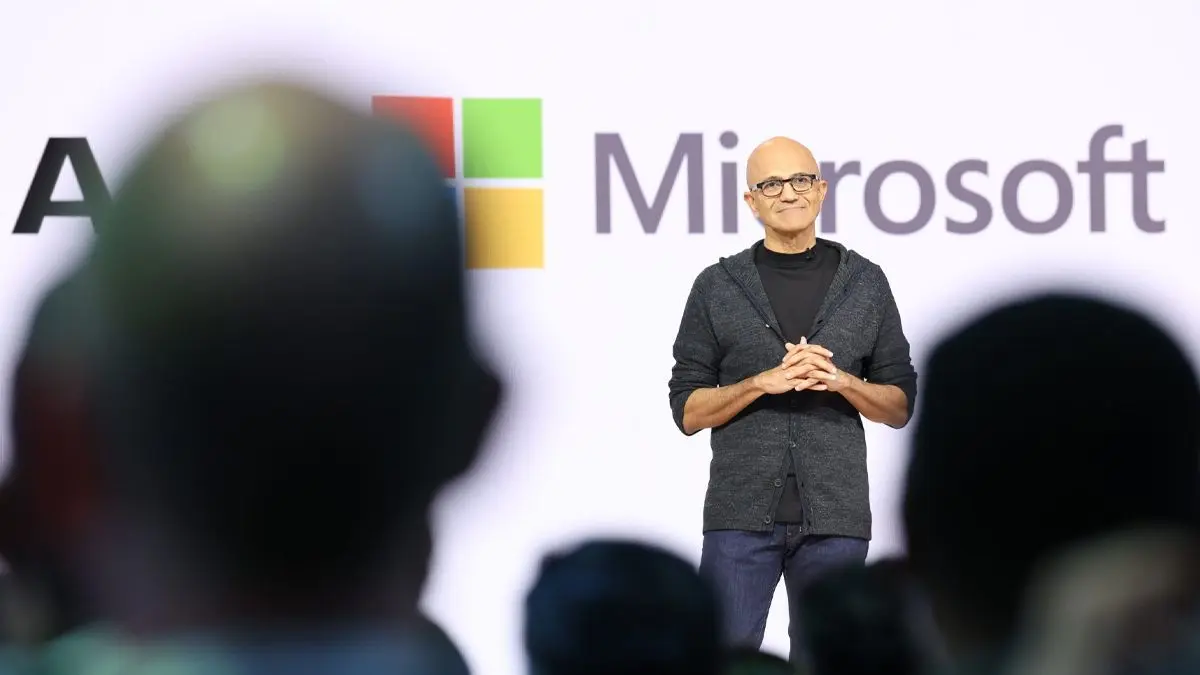
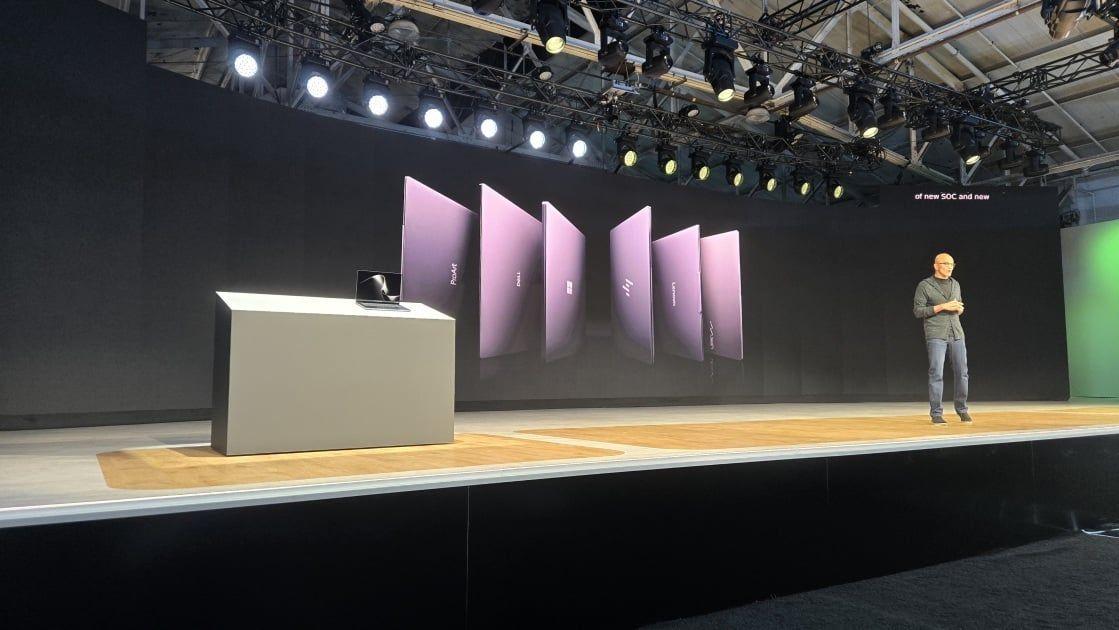
Microsoft CEO Satya Nadella opened Build 2026 with Windows front and center, a rare sight at the developer conference that signals a renewed focus on Windows as the foundation for the company's AI ambitions
1
. Rather than addressing ongoing Windows 11 issues, Nadella unveiled the Surface Laptop Ultra powered by Nvidia's new RTX Spark chips, calling it a "dream machine"1
. The message was clear: Microsoft AI is positioning Windows as the platform for what Nadella reframed as "unmetered intelligence on every desk and in every home," a modern twist on Bill Gates' original mission1
.
Source: Tom's Guide
The conference emphasized how AI agents would fundamentally reshape Windows, with Microsoft and Nvidia championing local compute as a solution to costly cloud-based AI pricing. Nvidia CEO Jensen Huang described the evolution from personal computer to personal AI, envisioning a future where users can text their laptops via WhatsApp to assign tasks
1
. "You don't want to necessarily run everything in the cloud, because if you can run it locally, it's free," Huang explained1
. The RTX Spark chips can run local AI models with up to 120 billion parameters and support up to 128GB of shared memory, allowing many AI workloads to run without touching the cloud1
2
. This capability addresses what Microsoft Head of AI Mustafa Suleyman called "a new era in AI...that you control on your terms"2
.Integrating AI into PCs comes with security concerns, which Microsoft addressed through Microsoft Execution Containers (MXC), a sandboxing technology that isolates AI agents and controls their permissions
2
3
. In one memorable keynote moment, Microsoft demonstrated OpenClaw repeatedly failing to delete desktop files after being restricted to read-only access3
. OpenClaw creator Peter Steinberger, now at OpenAI, took the stage saying, "Watching a claw try to delete all your desktop files and just fail makes me really happy. Because six months ago, that totally would've worked"3
. The new OpenClaw Windows companion app lets users configure agent permissions in a few clicks, while MXC ensures agents can't damage other systems or resources2
3
.
Source: The Verge
Microsoft unveiled Microsoft Scout, its first Autopilot agent designed to work autonomously across Microsoft 365 applications
4
. Powered by OpenClaw and the new MAI-Thinking-1 reasoning model, Scout monitors user habits through Work IQ to coordinate schedules, organize meetings across time zones, and flag outstanding responses in Outlook and Teams4
. This shift toward agentic computing extends beyond individual productivity tools. Microsoft announced seven new Microsoft AI models, including its first reasoning model, with what Suleyman described as a "clean lineage" and transparency about training2
. The company positioned these models not as the best, but as the most cost-effective for many tasks2
.Related Stories
The Surface Laptop Ultra targets developers and creators with RTX Spark chips that enable high-performance local compute, though Windows chief Pavan Davuluri noted it should appeal to STEM applications and CAD users who need similar computational patterns
1
. Microsoft also unveiled Project Solara, a chip-to-cloud platform built specifically for AI agent interactions, featuring unconventional form factors like a smart clock and work ID badge designed for spaces where traditional PCs might not be present4
. These hardware announcements complement software improvements, including performance enhancements to the Start menu and taskbar, new developer tools like WSL containers and Coreutils, and the Intelligent Terminal for running agents alongside traditional development work1
2
.
Source: PC Magazine
Microsoft's strategy centers on hybrid compute, where RTX Spark and similar chips handle local workloads and intelligently hand off to the cloud when needed
1
. Nadella emphasized the scale of edge computing power: "The amount of compute that there is at the edge is astounding. Every PC, if you sort of aggregate that, that's a lot of compute power"1
. For enterprises, Microsoft stressed they could fine-tune models with their own data and manage agent ecosystems while controlling costs through what it calls AI on your terms2
. The company introduced WebIQ for real-time web data, combining with WorkIQ, Foundry IQ, and Fabric IQ to create comprehensive context for AI systems2
. Developers expressed excitement about new Linux utilities in Windows, though the reception was more measured than the 2019 Windows Terminal announcement1
. When asked why Microsoft won't jump to Windows 12, Davuluri explained that versioning decisions focus on end-user workflows rather than marketing, with the team more concerned about making the product experience better1
.Summarized by
Navi
[1]
[4]
1
Technology

2
Policy and Regulation

3
Technology

News Categories