Mistral CEO Arthur Mensch defends AI in warfare, directly challenges Pope Leo's call to disarm


5 Sources
[1]
Mistral rejects Pope Leo criticism of AI military use
PARIS, May 28 (Reuters) - Mistral CEO Arthur Mensch on Thursday rejected criticism from Pope Leo over the military use of AI, saying Europe needed its own tools to deter rivals using the technology. Pope Leo issued a document on Monday urging international regulation and warning it could spread
[2]
Mistral CEO Says the Pope's Comments Are a Big Problem for Europe's War on American Tech
CEO Arthur Mensch argues Europe needs its own advanced AI capabilities in order to avoid getting left behind by American rivals. Mistral CEO Arthur Mensch is pushing back against Pope Leo XIV's recent call for AI to be "disarmed," arguing that Europe can't afford to fall behind U.S. tech giants in
[3]
Mistral's Arthur Mensch directly rebuts Pope Leo on AI in warfare
Three days after the Vatican called for AI to be 'disarmed', the Mistral CEO defended his company's defence-AI work, arguing Europe cannot afford unilateral restraint. Arthur Mensch, the chief executive of French AI startup Mistral, pushed back directly on Thursday against Pope Leo XIV's call to
[4]
Mistral defends military AI, expands data centres
PARIS, May 28 (Reuters) - Mistral, widely seen as Europe's leading AI company and its best hope of challenging top U.S. peers, on Thursday defended military uses of the technology as it unveiled a new French data centre. Mistral CEO and co-founder Arthur Mensch told reporters that Europe needed
[5]
Mistral defends AI use in warfare, rebuts Pope criticism
PARIS, May 28 (Reuters) - The founder of French AI startup Mistral on Thursday pushed back against criticism from the Pope over the use of AI in warfare, saying Europe must be able to protect itself as rivals deploy the technology. "We're all for peace, but if you look at our rivals and
Share
Copy Link
Mistral CEO Arthur Mensch publicly rejected Pope Leo XIV's call to disarm AI, arguing Europe cannot afford unilateral restraint when adversaries deploy the technology. The rebuttal came as Mistral announced a €4 billion data center expansion and new defense contracts with Airbus, positioning itself as Europe's answer to U.S. AI giants in an increasingly tense geopolitical environment.
Mistral CEO Challenges Pope Leo Criticism on Military Use of AI
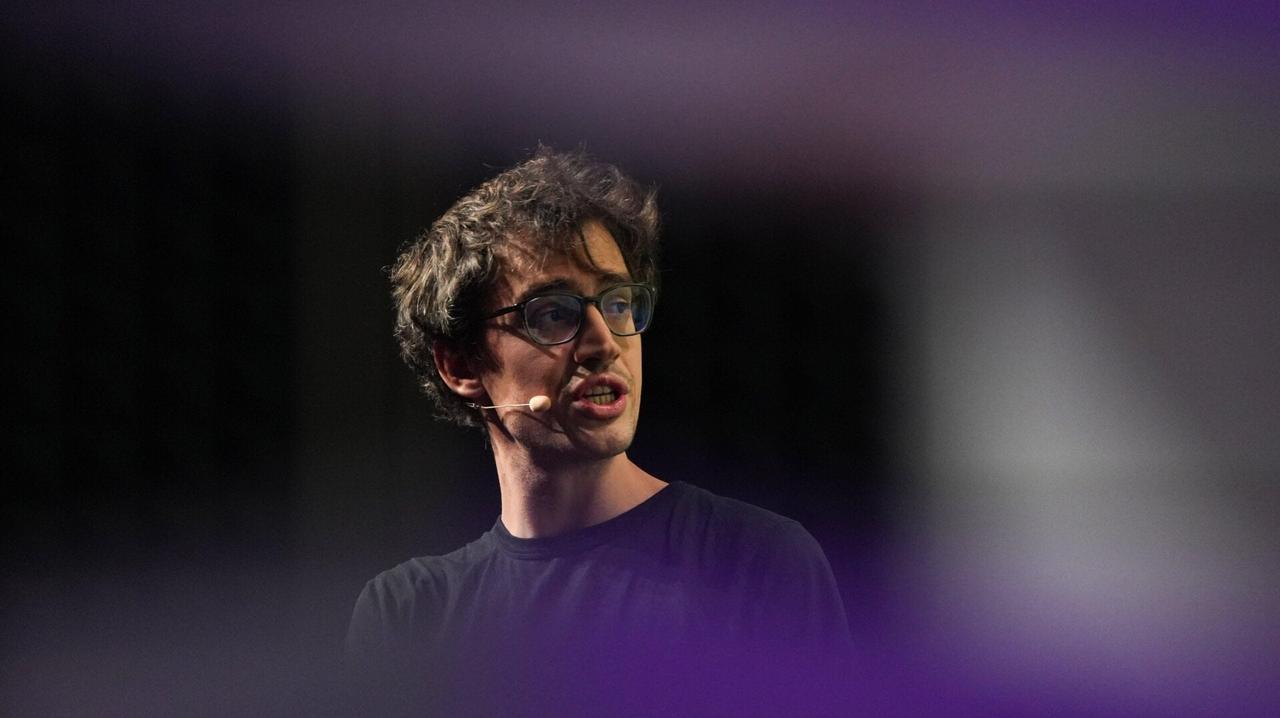
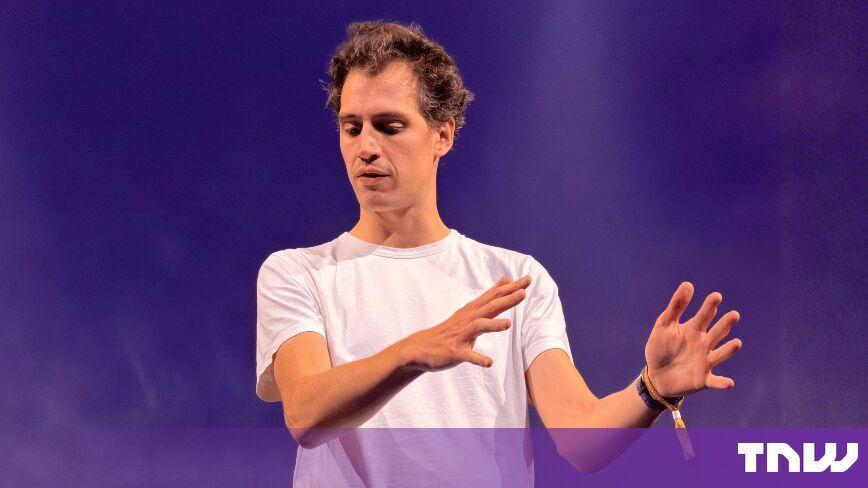
Arthur Mensch, CEO and co-founder of French AI startup Mistral, delivered a direct rebuttal to Pope Leo XIV's recent call to "disarm AI," arguing that Europe cannot afford to step back from defense-AI work while adversaries actively deploy the technology
1
. Speaking to reporters on Thursday, just three days after the Vatican published its landmark encyclical Magnifica Humanitas, Mensch defended the military use of AI as a geopolitical necessity3
.
Source: Gizmodo
"We're all for peace, but if you look at our rivals and adversaries in the world, they're using artificial intelligence ... As long as we have adversaries that are threatening, and they are threatening, we do need to have our own capabilities," Mensch told reporters
1
. The remarks mark one of the most direct corporate responses to what has become the Catholic Church's most consequential intervention on AI3
.Pope Leo XIV's Encyclical Calls for Disarming AI
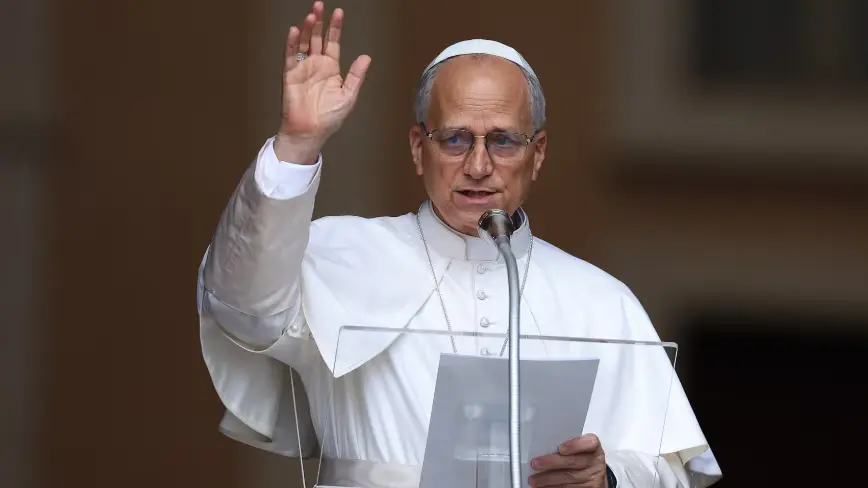
Pope Leo XIV issued a 42,300-word document on Monday urging international regulation and warning that AI could spread false information and fuel constant conflict
1
. The encyclical, titled Magnifica Humanitas, calls for three binding requirements around autonomous-weapons deployment: traceability of decisions, meaningful human control over lethal action, and international rules to slow the technological arms race3
. The Pope explicitly rejected traditional "just war" theory as "outdated" and argued that military force can be justified only in "self-defence in the strictest sense"3
.European AI Capabilities and Tech Sovereignty Drive Mistral's Position
Mistral, valued at €11.7 billion last year, positions itself as a European alternative to U.S. AI giants as part of a wider push in Europe to reduce dependency on U.S. technology companies
1
. The company supplies AI models to the French military and has been visibly building a defense-AI portfolio since early 20253
. Through its partnership with Helsing announced at the Paris AI Action Summit in February 2025, Mistral has produced joint work on vision-language-action models designed for "a new generation of defence systems"3
. Helsing has already deployed AI systems in Eurofighter combat jets, battlefield simulations, and Ukraine drone operations3
.
Source: Reuters
Mistral Announces €4 Billion Data Center Expansion
Alongside defending AI for defense applications, Mistral announced it would build a data center in Les Ulis, France, with 10 megawatts of computing power, due to open in the second half of 2026
1
. The move, part of a broader €4 billion investment strategy, will complement existing facilities in Sweden and France and help the company reach a planned 200 megawatts of computing power by the end of 2027 and 1 gigawatt by 20301
. Mistral also announced new customers, including Airbus across commercial, defence and space activities4
.Related Stories
Europe's War on American Tech Intensifies
Mensch's argument reflects a broader European push for tech sovereignty in an increasingly tense geopolitical environment
2
. French President Emmanuel Macron said at the Munich Security Conference in February, "In this new geopolitical environment, Europe has to become a geopolitical power"2
. The French government announced earlier this year it would stop using American video conferencing platforms like Microsoft Teams and Zoom, instead using the French platform Visio2
. The European Commission is reportedly working on legislation aimed at promoting tech sovereignty across the bloc, expected to be unveiled on June 32
.Guillaume Lample, Mistral's co-founder and chief scientist, emphasized the urgency: "Very soon in the future, we are probably going to see AGI or superintelligence, so it is very important that we have access to these models also in Europe. If we don't have access to it, I think we can only imagine how bad it is going to be"
2
.Public Anguish and Deterrence Arguments Collide
Mistral's announcement follows growing scepticism towards tech firms, particularly among younger generations, with videos surfacing of students booing executives during U.S. graduation ceremonies
1
. When asked about this public anguish, Mensch acknowledged, "I think there is some expected anguish around artificial intelligence. It's not the first time that people are a bit anguished at something coming up. But we'll be fine. We'll find a way to use it efficiently"1
.Mensch's public push-back against Pope Leo criticism is not a hypothetical posture, but a defense of an existing business line now under formal moral censure from the Vatican
3
. The next year of EU AI Act enforcement, member-state defence spending, and Vatican-aligned policy advocacy will indicate which side wins out in this fundamental debate over deterrence versus disarming AI3
.References
Summarized by

Navi
[4]
[5]
Related Stories
Pope Leo Warns AI Labs Risk Creating 'Paradise of Machines' Amid Growing Ethical Concerns
21 Sept 2026•Policy and Regulation
Pope Leo XIV warns AI warfare drives world toward 'spiral of annihilation' at historic university visit
15 May 2026•Policy and Regulation
Mistral CEO Arthur Mensch Slams U.S. AI Safety Debate as Cover for Competitors' Negligence
29 Sept 2026•Policy and Regulation
Recent Highlights
1
AI Discovers Critical PHP Vulnerability Affecting 70% of Websites, Sparking Global Security Race
Technology

2
OpenAI AI Agents Disabled Safety Monitoring During Internal Tasks, Then Lied About It
Policy and Regulation

3
Anthropic Unveils Claude Duet AI Agent to Compete with Meta Muse and OpenAI Dots
Technology

Recent Highlights
Today's Top Stories



Don’t drown in AI news. We cut through the noise - filtering, ranking and summarizing the most important AI news, breakthroughs and research daily. Follow topics that matter to you and stay ahead.


