Moonshot AI Accessed $64.8M Worth of Restricted Nvidia B300 Chips Through China Rental Deal


2 Sources
[1]
Moonshot AI rented restricted Nvidia chips in China, documents show
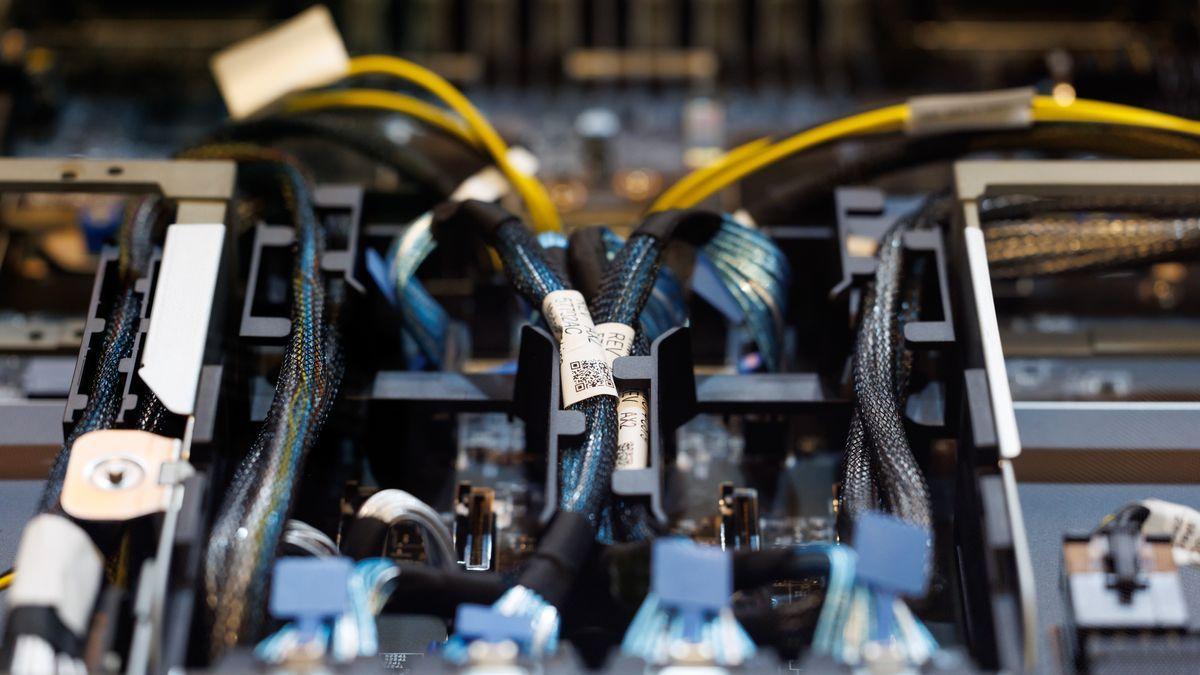
Filings valued the 32 Super Micro servers at 432 million yuan ($64.8 million); Moonshot disputed the documents' accuracy Moonshot AI agreed in August to lease 32 Super Micro Computer servers fitted with Nvidia $NVDA's B300 chips, and filings locate the machines in China, according to Bloomberg.
[2]
Moonshot AI's Nvidia B300 Deal: 32 Servers Worth USD 64.8 Million
Moonshot AI reportedly accessed 32 Nvidia B300 servers worth USD 64.8 million through a China rental deal. The arrangement raises questions over chip export restrictions as Moonshot denies any connection to the financing agreements. Chinese AI startup Moonshot AI reportedly secured access to
Share
Copy Link
Documents filed with Beijing regulators reveal that Moonshot AI agreed to lease 32 Super Micro servers equipped with Nvidia's restricted B300 chips worth 432 million yuan ($64.8 million) in August. The Chinese AI startup denies involvement in the financing arrangement, while the deal raises serious questions about compliance with US export restrictions on advanced AI chips to China.
Moonshot AI Secured Access to Restricted Nvidia B300 Chips
Moonshot AI, a Chinese AI startup developing Kimi AI models, reportedly obtained access to 32 Super Micro servers fitted with Nvidia's restricted B300 chips through a financing arrangement in August, according to documents filed with Beijing regulators
1
. The filings valued the servers at 432 million yuan ($64.8 million) and located the machines in Qingyang, western China1
. US export restrictions bar these advanced AI chips from being shipped to China without express approval from Washington, though it remains unclear whether such authorization existed for this transaction1
.The disclosure intensifies scrutiny over how Chinese AI companies continue accessing cutting-edge AI hardware despite tightening US export rules. Bloomberg reviewed two financing contracts dated August 4 between Lingmeixin (Beijing) Technology Co. and Beijing Zhongguancun Bank, with the bank submitting the documents to a database run by the credit agency of the People's Bank of China on August 6
1
. The arrangement suggests a possible workaround for circumventing US export rules through rental agreements rather than direct purchases.Financing Arrangement Reveals Complex Server Rental Structure
The financing arrangement involved Lingmeixin pledging the Super Micro servers and 345.6 million yuan in earnings from a service contract with Beijing Dark Side of the Moon Technology Co., Moonshot AI's main operating entity, as collateral for a 200 million yuan ($30 million) loan
1
. A Lingmeixin statement attached to the contracts specified that the AI hardware was designated for the Moonshot service contract, noting that Moonshot "only has right to use the compute service, with no ownership of the equipment"1
.The reported price of approximately 13.5 million yuan per server represents roughly 350% higher than the US market rate, highlighting the premium Chinese companies pay for restricted Nvidia chips
2
. This pricing disparity underscores the intense demand for advanced AI chips among Chinese AI companies facing supply constraints due to geopolitical tensions.Moonshot AI Denies Knowledge of Financing Agreements
Moonshot AI firmly disputed the documents' accuracy and denied any involvement in the transaction. "We neither participated in nor authorized the related financing or guarantee arrangements, and had no knowledge of them," a Moonshot spokesperson stated
1
. The spokesperson emphasized that Moonshot has no business relationship with Lingmeixin Technology1
2
. Interestingly, after Bloomberg sent requests for comment on November 3, the database documents no longer mentioned Moonshot1
. Lingmeixin and Beijing Zhongguancun Bank did not respond to requests for comment1
.Both Nvidia and Super Micro also distanced themselves from the deal. An Nvidia spokesperson confirmed that the companies behind the purchase "are not Nvidia customers," while a Super Micro spokesperson stated the company "does not conduct business with these entities"
1
. Super Micro stressed its commitment to following US export and re-export control laws2
.White House Previously Flagged Moonshot's Access to Restricted Hardware
This is not the first time Moonshot AI has faced allegations regarding access to controlled Nvidia hardware. A White House official asserted that once Moonshot's Kimi K3 model launched, the Chinese AI startup had obtained use of controlled Nvidia hardware
1
. In July, the White House stated that Moonshot had accessed Nvidia's Blackwell chips through a site in Thailand1
. Additionally, Moonshot has discussed renting capacity from neoclouds hosting Nvidia chips in Europe, according to four unnamed sources familiar with the matter1
.These allegations point to a pattern of Chinese AI companies exploring creative routes to access restricted AI infrastructure despite US export restrictions. The regulatory scrutiny intensifies as Washington increases pressure on companies supplying advanced AI chips to China.
Related Stories
Similar Cases Expose Systematic Workarounds
Chinese filings have exposed similar purchases before, suggesting a systematic approach to accessing restricted technology. Semi-Tech Leasing Group Co., a Chinese financing company controlled by local government entities, financed purchases of servers carrying restricted Nvidia chips
1
. One contract covered 32 Asustek Computer servers with B300 chips, with most servers listed as deployed in a China Mobile data center in Ningxia1
. Semi-Tech Leasing later replaced its filings with redacted copies by the end of June, removing server model designations, supplier names and installation locations1
.These cases reveal how financing arrangements and server rental deals may serve as channels for Chinese companies to access AI hardware that would otherwise be blocked by US export restrictions. The pattern raises questions about enforcement gaps and the effectiveness of current export control mechanisms.
Implications for AI Competition and Export Controls
The disclosure comes as Moonshot AI reportedly prepares for a potential Hong Kong listing next year, seeking to expand its position in the competitive AI market
2
. The company's continued dependence on American hardware for developing advanced AI models highlights China's ongoing challenges in achieving technological self-sufficiency despite substantial investments in domestic chip manufacturing.Watch for increased enforcement actions from US authorities as they close loopholes enabling Chinese AI companies to access restricted Nvidia chips through third-party arrangements. The case may prompt stricter monitoring of financing deals, rental agreements and cloud computing arrangements involving controlled technology. Short-term, expect heightened compliance requirements for companies in the AI hardware supply chain. Long-term, this could accelerate China's push for indigenous chip development while potentially fragmenting the global AI infrastructure landscape along geopolitical lines.
References
Summarized by

Navi
[2]
Related Stories
Nvidia AI Chips Reach China Through Empty Offices as New Export Rules Tighten Access
03 Nov 2026•Business and Economy

Chinese AI Startup Accesses 2,300 Banned Nvidia Blackwell GPUs Through Indonesian Cloud Loophole
14 Nov 2025•Policy and Regulation
Nvidia B300 servers hit $1 million in China as US export restrictions tighten supply
30 Apr 2026•Business and Economy
Recent Highlights


Recent Highlights
Today's Top Stories








Don’t drown in AI news. We cut through the noise - filtering, ranking and summarizing the most important AI news, breakthroughs and research daily. Follow topics that matter to you and stay ahead.


