7 Sources
[1]
A Holographic Dragon, With AI Smarts, Lives Inside MSI's Newest MEG Desktop
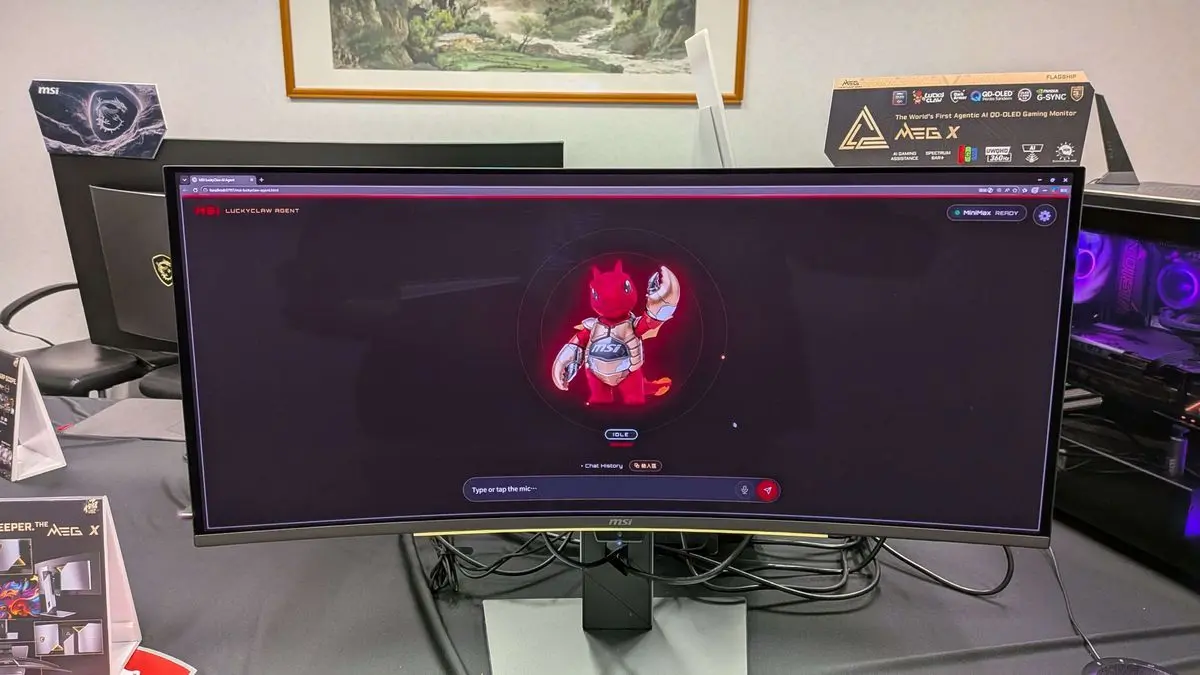
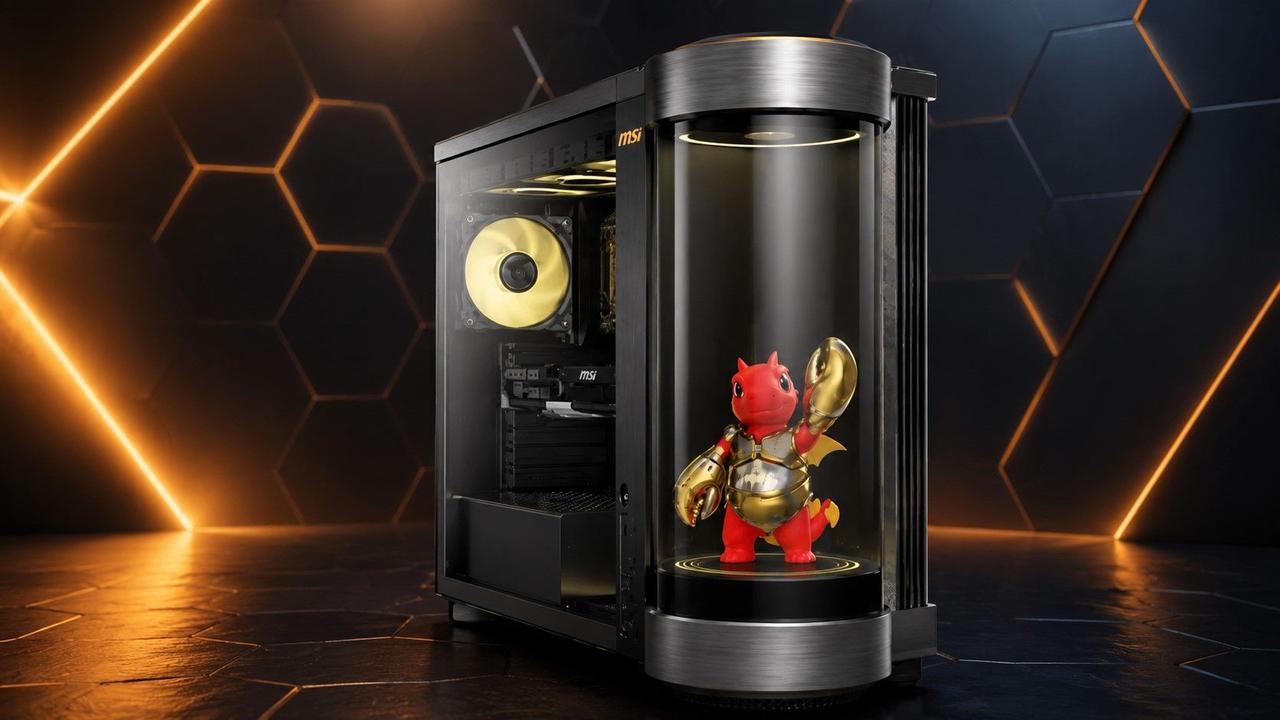
John has been a tech journalist for 30+ years covering PC hardware -- from the 386SX to 64-core CPUs -- as an editor, a writer, and a columnist. TAIPEI -- To be sure: It's become increasingly hard to differentiate one maxed-out, high-end gaming desktop from another. You can pack a massive tower with the latest Intel or Ryzen processors, slot in a monstrous GeForce RTX 5080 or 5090, and add all the RGB bling imaginable, but at a certain point, they all start to blend together. However, MSI has managed to build a rig that no-doubt stands out from any other tower in recent memory: The company stuck an AI avatar of its iconic dragon mascot in a front-mounted cylinder. Previewed ahead of Computex 2026, the newly unveiled MEG Vision X2 AI+ desktop PC is the latest addition to MSI's Enthusiast Gaming (MEG) series. Under the hood, the system delivers the bleeding-edge hardware you would expect, including up to an Intel "Arrow Lake Refresh" Core Ultra CPU, a hulky video card up to GeForce RTX 5090 (like in the unit I saw), and gobs of DDR5 memory and storage. (Leading-edge PCI Express 5.0 SSDs are, as you'd expect, supported.) But the real conversation-starter sits squarely on the front of the chassis. MSI has integrated a holographic cylinder into the case that houses Lucky, the company's long-tenured red dragon mascot, now imprisoned and serving as an AI "physical layer" and a relatable avatar-style face for the system's new agentic AI underpinnings. Despite being penned in, Lucky remains remarkably chipper, though; here, Lucky is working under the umbrella of what MSI dubs "LuckyClaw" -- a clear nod to the open-source OpenClaw and the Nvidia NemoClaw reference stack for agentic AI. The AI is designed to respond, adapt, and engage with users through spoken queries; nothing new there. But here, the dragon acts as a visible front-end UI or avatar for the agentic output. Instead of mere text, you get a voice explanation. As a hologram, he's living in a space MSI is calling its "AI Holostage." All the World's an AI Holostage The cylinder on the front of the MEG tower is topped by a striking logo circle... Inside the cylinder, the space is bisected by a vertically oriented 2D panel. This panel, employing some projection jiggery-pokery and likely some mirrors, projects Lucky into the space as a 3D hologram. (You do need to be standing more or less directly in front of the machine in a "sweet spot" for the three-dimensional visual effect to properly take hold.) The AI agent is voice-activated. You speak your queries into a microphone input on the front left of the tower chassis. Alternately, you can type your queries into a request box onscreen. Trying the Agentic AI: Do You Feel Lucky? As for how smart this dragon actually is, our early demo showed that while Lucky may be a well-seasoned employee of MSI, he is still in training as an AI avatar. The character itself has also been rechristened "LuckyClaw" and outfitted with a pair of golden lobster-style claws and armor. MSI noted that the LLM powering the little guy had just been uploaded the day prior, and its training data was heavily focused on MSI's Computex 2026 product lineup and the products' tech specs and traits. That was the limit of his abilities. Ask the dragon a question about, say, MSI's complex new mix of gaming and productivity monitors, and he could rattle off key specs and basic insights like a machine gun, talking animatedly from inside the AI Holostage in a high-pitched voice. He did show something of an unnatural pause before replying to each query, with a "Thinking" progress message on screen to keep us engaged. But he was clearly running locally off the powerful internal components on the display system. However, we decided to get a bit fresh with him. When we went off-script to ask Lucky about the weather in Taipei, or about who might win the NBA Finals back in the US, the dragon was predictably stumped. Lucky ultimately fell back on generic platitudes, suggesting we check the NBA app, or told us to look up the weather ourselves, as that was out of his job description, before politely steering the conversation back to how he could help us with MSI technology info. Lucky, at least, knows how to stay in his lane tactfully. While it remains to be seen just how versatile and effective LuckyClaw will be as a daily AI assistant, it is an undeniably unique way to give MSI brand fans a fun, interactive centerpiece for their gaming setups. Talking to a chatbot or agent through a solely typed UI is one thing; here, you get a little guy you can talk to face-to-face inside your tower. MSI has not yet shared exact pricing for this MEG desktop, noting that regional availability and launch timing will vary. Given the high-end parts you'd want to complement an AI avatar with, to make him worth talking to, it won't be cheap.
[2]
MSI's latest gaming PC ships with LuckyClaw agent and a...
WTF?! MSI has just unveiled a desktop PC featuring two things that every gamer wants: an AI agent and a cylindrical holographic attachment containing a digital companion. The machine even has an equally appealing name: the MEG Vision X2 AI+ brings the promise of being the first PC with an "AI Holostage." MSI writes that its PC introduces the company's own agentic AI companion, LuckyClaw, which will be available from the machine's initial setup. According to the press release, it responds to natural speech commands, enabling seamless, hands-free control of performance profiles, MSI monitor settings, RGB lighting, and more. There's also the promise of future skill updates that expand the agent's capabilities over time. The other element of the MEG Vision X2 AI+ is the AI Holostage, a cylindrical display interface integrated directly into the chassis. MSI writes that this gives a physical (kind of) presence to AI, creating an external form for digital companions, desktop pets, and custom third-party AI avatars. The LuckyClaw name and lobster-like avatar are an obvious nod to the wildly popular OpenClaw AI agent, though MSI doesn't offer any details. We don't even know what kind of hardware the PC will be packing, but the MEG series is MSI's enthusiast-tier flagship brand for hardcore gamers, so expect it be very powerful and expensive. That brings us to the main issue. Most people, especially gamers, tend to view AI with disdain - the common reaction when the tech is added to a PC is to uninstall it. And while the Holostage might appeal to some, it certainly seems more gimmicky than anything else. If MSI really wanted to create a PC that appealed to gamers, the best option would have been to make it as cheap as possible without compromising the hardware. MSI isn't the first gaming company to show off an AI hologram contained within a cylindrical device. Back at CES in January, Razer unveiled an expansion of its Project Ava AI gaming co-pilot from last year. It could take the holographic form of a 5.5-inch-woman called Kira or a muscular tattooed man called Zane - more characters were announced later - with the avatar appearing inside a Resident Evil-style glass container.
[3]
MSI's Chatty AI Hologram Talked My Ear Off at Computex
The closest approximations we have to true artificial intelligence and hard-light holograms are constant casualties of misunderstood technology. It's why when I see the two combined, I can't help but breathe a deep sigh of consternation. Then I have to listen to the incessant prattling of a digital avatar inside a jar, and my exasperation turns to pure annoyance. Anyway, MSI came to Computex with a desktop PC, the MEG Vision X2 AI, built with a massive glass cylinder in front. Inside the container sat the Taiwanese gaming company's cute dragon mascot, Lucky. The hologram display uses mirrors and projectors to create the sense of a 3D image. You need to stand directly in front of it to make the character seem 3D. In other words, this isn't a hologram you can manipulate with your own hands; it's a lighting trick. Remember Razer's Project Ava, aka the "AI waifu?" It was essentially basic holographic technology attached to AI, creating a conversational, desk-side assistant. It was long-winded and not very helpful back at CES 2026, but the concept seems to be sticking within the gaming peripheral community. I sat there, listening to MSI's hologram talk my ear off for more than two minutes, after it received the prompt "introduce yourself." The AI took nearly 10 seconds to respond, then went on a tirade. "Hey, I'm LuckyClaw, MSI's official AI assistant, here to help you..." Its voice had a tone somewhere between that of the 1990s Sonic the Hedgehog cartoon's Sonic and a carnival barker. It went on and on about MSI's promoting "40 years of innovation," how it was "built for natural conversation," and so forth. LuckyClaw is MSI's AI agent. Essentially, agents use multiple AI models in concert to complete multi-step, complex tasks on your behalf. In an ideal scenario, LuckyClaw would have access to your PC's data, folders, files, and photos and then use that information to bring up your personal information. For this presentation, MSI trained Lucky on the company's product lineup for Computex 2026, so it could answer questions about its Claw 8 EX AI+ or new gaming laptops and PC components. The problem is how well it can accurately regurgitate that data without boring you with endless soliloquies. The long-windedness is a constant issue with conversational AI. It's not trying to be helpful; it's just trying to sound human. While MSI only showed off the AI's conversational skills, the fact that it's named for the OpenClaw suggests that it can do more on your PC. Maybe it could change Windows or BIOS settings on command. I doubt most will miss needing to trawl through endless Windows just to troubleshoot basic issues. Under ideal circumstances, this AI wouldn't require an internet connection and could instead run off the PC's powerful GPU you paid top dollar for. In this case, MSI ran the LuckyClaw model in the cloud -- hence the delayed responses. MSI's MEG Vision X2 should come with either an Nvidia GeForce RTX 5080 or 5090 graphics card, which ostensibly should be capable of running some moderate AI models. The company behind the MEG Vision X2 told me you should be able to swap the hologram's avatar with one of your own. However, you can't upload a simple .jpg of your favorite anime character to talk to, so it's unclear what kinds of files you'd actually need to be able to do this. MSI's hologram-filled PC isn't just a concept device. The company plans to sell it as a product you can buy, though it hasn't shared pricing or expected shipping dates. I can only assume, however, that a hologram face on a large language model will likely cost you a premium on top of the cost of an existing, expensive PC.
[4]
MSI's MEG Vision X2 AI+ desktop has a holostage to keep you busy with an AI pet
MSI's MEG Vision X2 AI+ takes the gaming desktop somewhere new, a cylindrical Holostage display built into the chassis gives your AI companion a physical home. This story is part of our coverage of Computex, the world's biggest computing conference. Updated less than 7 minutes ago Gaming desktops have been getting smarter every year with better cooling, faster chips, and more RGB lights than anyone asked for. MSI has decided that none of that is interesting enough and has introduced something genuinely unexpected at Computex 2026. The Taiwanese company has unveiled a gaming desktop, and its most interesting aspect is the built-in cylindrical display that exists purely to give your AI companion a physical avatar. What is the AI Holostage and why does it exist? The MEG Vision X2 AI+ is MSI's new flagship gaming desktop, which sits at the top of its MEG product line. The main main highlight is the AI Holostage, a cylindrical display integrated directly into the chassis rather than sitting as a separate accessory. Recommended Videos The Holostage gives digital companions, desktop pets, and custom third-party AI avatars a visible, physical presence on your desk. Out of the box, the system ships pre-configured with MSI's own AI companion, which is called LuckyClaw. LuckyClaw is MSI's agentic AI companion, which responds to natural voice commands and gives users hands-free control over performance profiles, MSI monitor settings, and RGB lighting. The chassis also features a tool-free upgradeable design. While this might be something of a novelty or a visually appealing factor, it might not serve a practical utility purpose as such. What hardware is inside the MEG Vision X2 AI+? The MEG Vision X2 AI+ features the Intel Core Ultra 7 265 processor, paired with an NVIDIA GeForce RTX 5070 Ti graphics card with support for DLSS 4.5, and MSI's Silent Storm Cooling AI system handles cooling. Pricing and availability have not been confirmed in the official press release. Whether the Holostage becomes the defining feature for gaming PCs or ends up as the most elaborate desktop widget ever built remains to be seen. But as a statement of intent, it is hard to ignore. Some popular gaming desktop brands, including Asus, Razer, and Lenovo, have tested virtual assistants in their software ecosystems. However, MSI is the first to give the companion a dedicated physical display embedded in the chassis itself.
[5]
MSI MEG Vision X2 AI+ Introduces AI Holostage and LuckyClaw
MSI has unveiled the MEG Vision X2 AI+, a new flagship desktop PC that combines high-end gaming hardware with a unique AI-focused user experience. The system introduces two major technologies: the LuckyClaw AI assistant and the AI Holostage, a dedicated display integrated directly into the chassis. The announcement highlights MSI's growing focus on artificial intelligence as a core part of the desktop experience. Rather than treating AI as a background service or software utility, the company is attempting to create a more visible and interactive relationship between users and their PCs. At the center of the platform is LuckyClaw, MSI's local AI companion. Designed to run directly on the system, LuckyClaw supports natural voice interaction and can perform a variety of hardware and system-management tasks. Users can adjust performance modes, modify RGB lighting settings, configure supported MSI monitors, and control other functions through voice commands rather than navigating conventional software menus. MSI says LuckyClaw will continue to gain new capabilities through future updates. The company describes the assistant as an "agentic AI" platform capable of expanding its skills over time, allowing the desktop to become increasingly personalized as additional functionality is introduced. Perhaps the most distinctive feature of the MEG Vision X2 AI+ is the AI Holostage. Integrated into the front of the chassis, the cylindrical display serves as a dedicated visualization platform for AI companions and digital characters. Instead of existing solely on the primary monitor, virtual assistants can maintain a constant physical presence within the desktop system itself. The AI Holostage ships configured with LuckyClaw out of the box, but MSI also envisions support for custom avatars, digital companions, desktop pets, and third-party AI personalities. The display effectively transforms the PC case into part of the user interface, creating a dedicated space for AI interactions separate from the main desktop environment. While the AI features dominate the announcement, the MEG Vision X2 AI+ remains a member of MSI's premium MEG enthusiast gaming lineup. Although detailed hardware specifications have not yet been disclosed, MSI positions the system as a flagship desktop designed to combine advanced gaming performance with next-generation AI functionality. The concept reflects a broader shift occurring throughout the PC industry. AI assistants have become increasingly common across operating systems, productivity software, and hardware platforms. MSI's implementation differs by giving AI a dedicated hardware interface, turning the assistant into a visible component of the desktop rather than simply another application running in the background. Whether AI companions become a standard feature of future gaming desktops remains uncertain, but the MEG Vision X2 AI+ represents one of the industry's most ambitious attempts to integrate AI into both the physical and digital aspects of the PC experience. By combining local AI processing, voice control, and dedicated visualization hardware, MSI is exploring new ways for users to interact with their systems beyond the traditional keyboard, mouse, and monitor paradigm.
[6]
MSI's new flagship gaming desktop has a built-in cylindrical display for its LuckyClaw AI companion
Gaming desktops have been getting faster, cooler, and more RGB-laden every year. MSI is now taking things a step further by bringing AI out of chat and image generation and into PCs themselves. The MEG Vision X2 AI+ is MSI's new flagship gaming desktop, and its most talked-about feature has nothing to do with its processor or GPU. The desktop's headline feature is the AI Holostage, a cylindrical display built directly into the chassis that gives digital companions, desktop pets, and custom third-party AI avatars a visible physical presence on your desk. Out of the box, the system includes MSI's own AI companion, LuckyClaw. According to MSI, LuckyClaw will respond to natural voice commands, allowing users to control performance profiles, display settings, and RGB lighting hands-free. MSI also says more features will be added through future software updates. In simple terms, LuckyClaw is designed to make system tweaking and tuning easier, with an AI agent ready to assist whenever needed. LuckyClaw is integrated directly into the chassis's front panel, creating what MSI describes as a physical AI presence that is always there and always interactive. Users can also swap out LuckyClaw with custom third-party AI avatars, adding a layer of personalization beyond what most pre-built systems offer. Underneath all the AI theatrics sits a genuinely capable machine. The MEG Vision X2 AI+ features an Intel Core Ultra processor, up to an NVIDIA GeForce RTX 5090 GPU, a 360mm liquid cooling solution, MSI's Project Zero back-connect motherboard for cleaner cable management, PCIe 5.0 storage, Wi-Fi 7, 5G Ethernet, and DDR5 memory. So it is safe to say you are not just paying for software tricks, as the hardware can easily handle whatever you throw at it. MSI previously introduced the MEG Vision X AI 2nd, which used a 13-inch FHD IPS touchscreen on the front panel for system controls and monitoring. The X2 AI+ takes that concept further by replacing the flat touchscreen with its cylindrical Holostage, combined with a live AI agent. Pricing and availability have not been confirmed, with MSI saying only that the system will launch before the end of 2026.
[7]
MSI's New MEG Vision X2 AI+ Desktop Ships With A Talking Holographic Pet That Tweaks Your RGB And Performance On Command
MSI is taking the AI experience to the next level by introducing a live AI agent that helps users in real-time. MSI Unveils MEG Vision X2 AI+ Desktop, Coupled With LuckyClaw That Becomes Personal AI Companion for Making Tasks Easier Artificial Intelligence is no longer limited to chats and image generation. It's now assisting users in real-time, and the new approach just took MSI's newly launched desktop to a new level that might become a common theme in future PCs. MSI has launched MEG Vision X2 AI+, which it calls the "next evolution" in intelligent gaming desktops. Alongside the MEG Vision X2 AI+, MSI launched a built-in AI assistant called LuckyClaw. The LucklyClaw will serve as an AI assistant to users for various tasks. Whether you want to change settings, tweak RGB lighting modes, or control the performance modes of your PC, LuckyClaw will do it for you. Right now, one has to deep dive into the software and utilities to tweak such stuff, but with LuckyClaw, users wont' need to indulge in manual tweaks. By instructing LuckyClaw, one can get all the tweaks done in seconds. LuckyClaw resides in the AI Holostage, which is a cylindrical display interface attached to the front panel of the MEG Vision X2 AI+. This AI Holostage creates a physical AI presense of the LuckClaw that is always there to meet your demands. The AI Holostage converts your digital companions or desktop pets a physical form with which you can interact in real time. With LuckyClaw, users will be able to interact out of the box, which will help them in various circumstances. AI Assistants are going to be common across devices from now one, and MSI has become the first PC hardware vendor to introduce its personal AI assistant before everyone. This shows MSI's vision about future gaming desktops that evolves beyond performance-focused gaming machines into intelligent systems that can adapt and automate tasks. News Source: MSI Follow Wccftech on Google to get more of our news coverage in your feeds.
Share
Copy Link
MSI unveiled the MEG Vision X2 AI+ gaming desktop at Computex 2026, featuring an integrated cylindrical holographic display called AI Holostage that houses LuckyClaw, an AI companion based on the company's dragon mascot. The system responds to voice commands for hands-free control of performance profiles, RGB lighting, and monitor settings, though early demos reveal limitations in its conversational abilities.
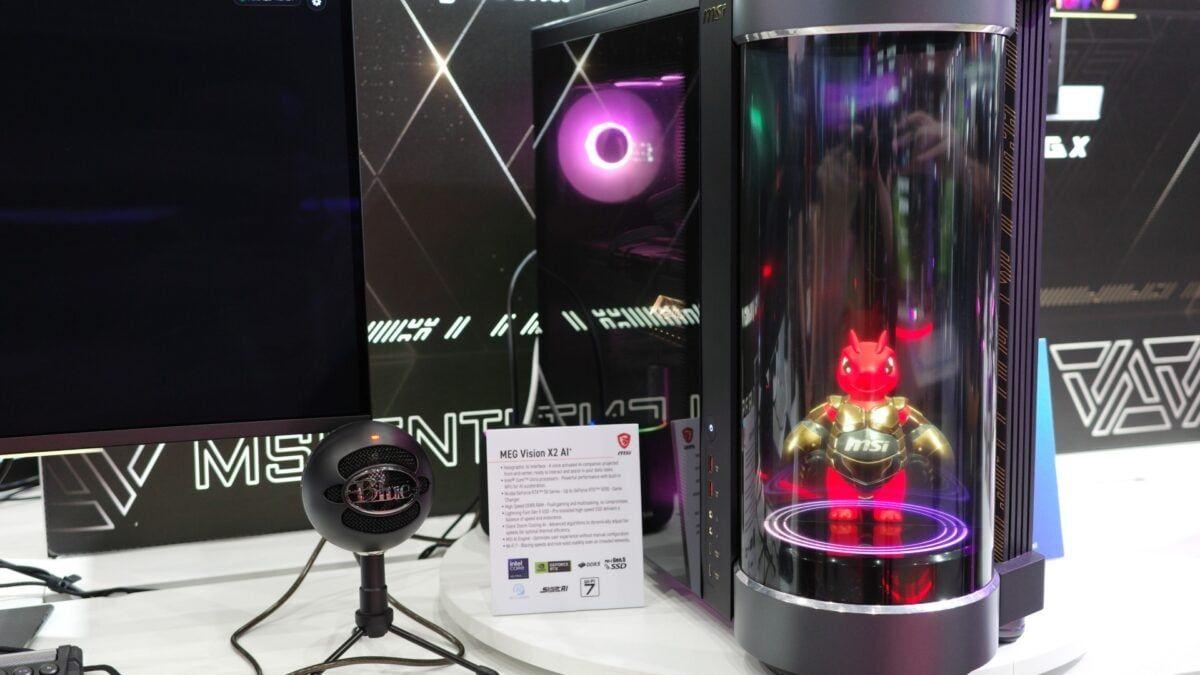
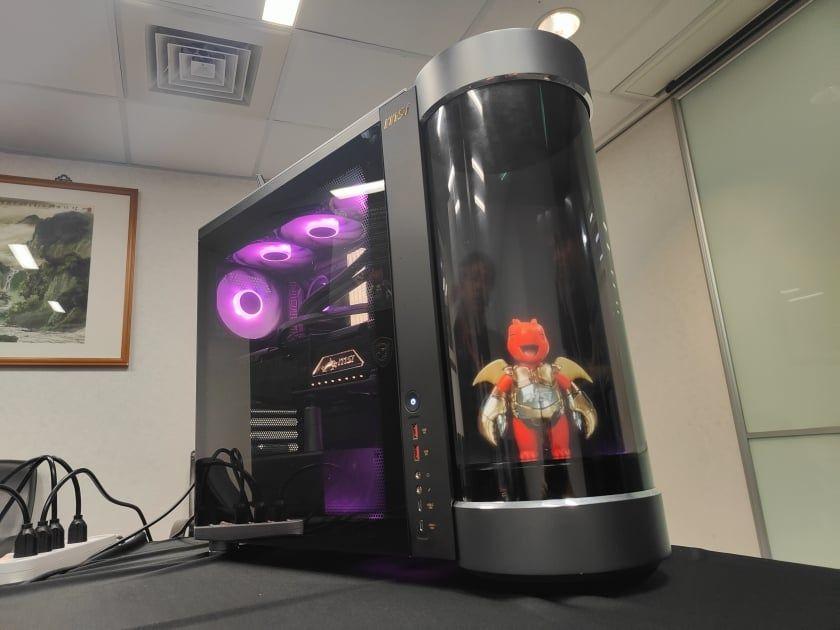
MSI has unveiled the MSI MEG Vision X2 AI+ at Computex 2026, a flagship gaming desktop that attempts to differentiate itself in an increasingly crowded high-end PC market through an unusual approach: a cylindrical holographic display built directly into the chassis
1
. The AI Holostage, as MSI calls it, houses LuckyClaw, an AI companion based on the company's long-standing red dragon mascot, Lucky5
. Rather than treating AI as background software, MSI positions the holographic AI avatar as a visible, interactive centerpiece that gives digital companions a physical presence on the desktop4
.
Source: Gizmodo
The cylindrical holographic display uses mirrors and projection technology to create a 3D visual effect, though users need to stand directly in front of the machine in a "sweet spot" for the effect to work properly
3
. The AI Holostage transforms the PC case into part of the user experience, creating a dedicated space for AI interactions separate from the main monitor5
. MSI envisions support for custom avatars and third-party AI personalities beyond the pre-installed LuckyClaw character4
.
Source: PC Magazine
The LuckyClaw AI agent responds to natural speech commands through a microphone input on the front left of the tower chassis, enabling hands-free control of performance profiles, MSI monitor settings, RGB lighting, and other system functions
1
. Users can also type queries into an onscreen request box as an alternative to voice commands1
. The name LuckyClaw references the open-source OpenClaw and Nvidia NemoClaw reference stack for agentic AI, suggesting capabilities beyond simple conversational AI1
2
.MSI describes LuckyClaw as an AI gaming co-pilot designed to run locally on the system, with promises of future skill updates that expand capabilities over time
2
5
. The company positions this as deeper AI integration that allows the desktop to become increasingly personalized as additional functionality is introduced5
. The AI-powered product represents MSI's attempt to move beyond treating AI as a background utility and instead create a more visible relationship between users and their gaming PC5
.Early demonstrations at Computex revealed significant limitations in LuckyClaw's conversational AI capabilities. MSI acknowledged that the large language model powering the AI companion had only been uploaded the day before the showcase, with training data heavily focused on MSI's Computex 2026 product lineup and technical specifications
1
. When asked about MSI's gaming monitors, LuckyClaw could rattle off specifications rapidly in a high-pitched voice, but showed unnatural pauses before responding, with a "Thinking" progress message displayed on screen1
.Off-script questions about topics like Taipei weather or NBA Finals predictions stumped the AI agent, which fell back on generic responses suggesting users check other apps or websites
1
. One journalist reported that after receiving the prompt "introduce yourself," the AI talked for more than two minutes in a voice resembling "1990s Sonic the Hedgehog cartoon's Sonic and a carnival barker," going on about MSI's "40 years of innovation" and being "built for natural conversation"3
. The long-windedness reflects a common issue with conversational AI attempting to sound human rather than being concise and helpful3
.Related Stories
The MEG Vision X2 AI+ features Intel Core Ultra 7 265 processor options, with support for up to NVIDIA GeForce RTX 5090 graphics cards, DDR5 memory, and PCI Express 5.0 SSDs
1
4
. MSI's Silent Storm Cooling AI system handles thermal management4
. The chassis features a tool-free upgradeable design, though practical utility remains unclear4
.
Source: Wccftech
MSI hasn't shared pricing or exact availability details, though the company confirmed regional launch timing will vary
1
. Given the premium components and holographic display technology, the system will command a significant price premium3
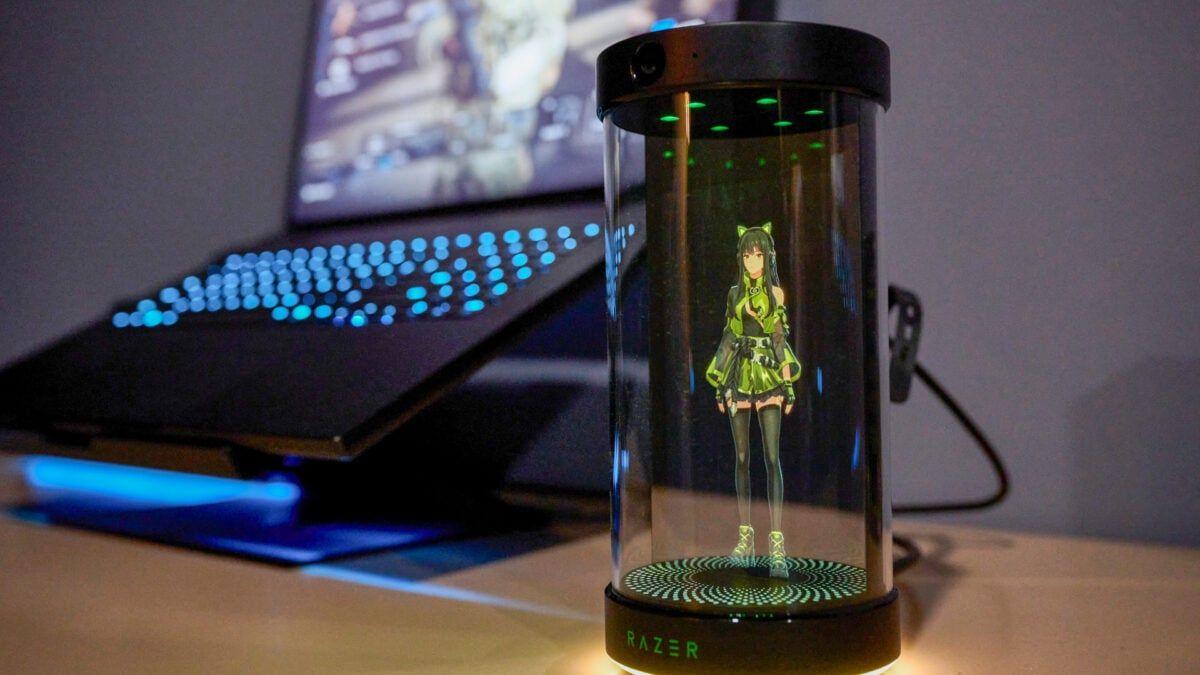
. The concept follows Razer Project Ava, which showcased AI hologram characters at CES 2026, though that system also proved long-winded and not particularly helpful3
. Most gamers view AI additions with skepticism, typically choosing to uninstall such features when possible2
. Whether the AI Holostage becomes a defining feature or ends up as an elaborate desktop widget remains to be seen, but MSI is the first gaming brand to give an AI companion a dedicated physical display embedded in the chassis itself4
.Summarized by
Navi
09 Jan 2025•Technology

31 May 2026•Technology

06 Jan 2026•Technology
1
Startups

2
Policy and Regulation

3
Policy and Regulation