Munich Becomes Europe's Defence Tech Hub as Germany Rearmament Fuels AI-Powered Drone Boom


2 Sources
[1]
Defence tech hub Munich booms as Europe rearms
Munich (Germany) (AFP) - Munich is booming as a hub for young defence tech firms making everything from AI-powered drones to cutting-edge military software as Europe rearms to face an increasingly dangerous world. UAV makers Quantum Systems, Helsing and Tytan Technologies are among dozens of
[2]
Germany's rearmament reshaping Munich as a defence tech hub
Behind the record budgets and drone contracts lies a story of ex-carmakers retraining for the battlefield and a city racing to build faster than its own permitting system will allow. Munich, long known for the Oktoberfest and Bayern Munich, is fast becoming one of Europe's leading centres for
Share
Copy Link
Munich is rapidly transforming into a leading European defence tech hub as Germany rearmament accelerates. With 60 defence technology startups clustered around the Bavarian capital, firms like Quantum Systems, Helsing and Tytan Technologies are building AI-powered drones and military software. But bureaucratic hurdles and security concerns shadow the €108 billion defence spending surge.
Munich Defence Tech Hub Emerges as Germany Rearmament Accelerates
Munich is rapidly establishing itself as a Munich defence tech hub, with the Bavarian capital becoming home to approximately 60 defence technology startups building AI-powered drones, interceptor drones, and military software
1
2
. This number has doubled in recent years according to Munich's Chamber of Commerce and Industry, driven by Europe's response to geopolitical tensions and the Ukraine war. Companies including Quantum Systems, Helsing, and Tytan Technologies are among dozens of mil-tech players clustering around the city traditionally known for Oktoberfest and Bayern Munich. The transformation reflects how Germany rearmament is reshaping not just military capabilities but entire regional economies.Record German Military Budgets Drive Defence Innovation
Germany's federal budget for 2026 allocates roughly €82.7 billion to defence, representing an increase of about €29.4 billion over the previous fiscal plan
2
. When including an off-budget special fund created to modernize the armed forces, total defence spending reaches around €108 billion for 2026—a roughly 24% year-on-year jump. According to the Stockholm International Peace Research Institute, this marks the first time since 1990 that Germany's military spending has clearly exceeded 2% of GDP. These record German military budgets are fueling demand for modern military technology, particularly autonomous systems that have proven crucial in the Ukraine war where AI-driven defence solutions are reshaping battlefield tactics.AI-Powered Drones and Defence Technology Startups Lead Innovation
Quantum Systems, established in 2015, exemplifies the success of Munich's defence technology startups, supplying AI-powered drones to Ukrainian armed forces and militaries worldwide while expanding into unmanned systems on land and at sea
1
. "Munich and the greater Munich area offer a great combination of skills, talent and history," Martin Karkour, chief revenue officer of Quantum Systems, told AFP. "We have engineering capabilities, we have software and AI capabilities, robotics capabilities—it is a great combination that would be hard to replicate somewhere else." Tytan Technologies, founded in 2023 by two Technical University of Munich graduates after participating in a Ukraine hackathon, has grown its staff tenfold and is opening a new production site. The company makes interceptor drones designed to counter hostile unmanned aerial vehicles and protect against attacks. "Our founders had a very straightforward mission—restoring the economics of European air defence," said Nemo Farber, Tytan's chief manufacturing officer1
2
.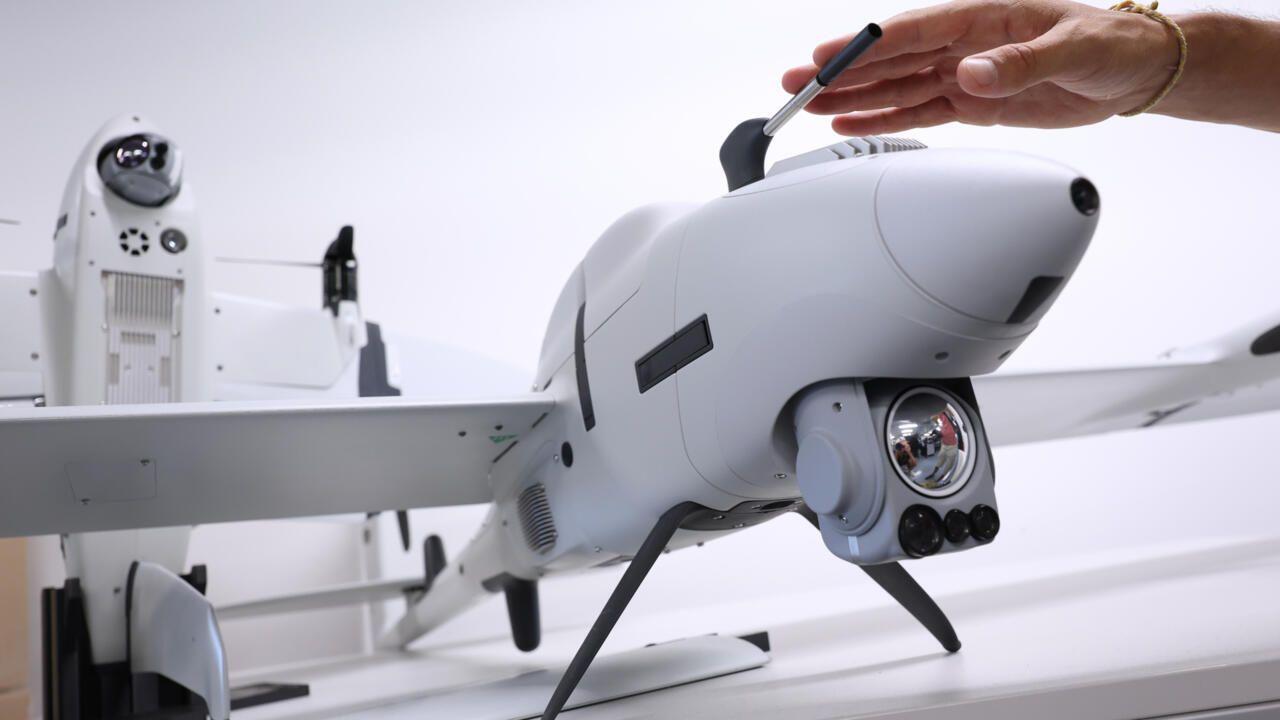
Source: France 24
Technical Universities and Talent Pool Fuel Military Software Startups
The region's success stems from collaboration between technical universities, legacy aerospace firms, and a ready pool of talent, industry insiders say. Munich mayor Dominik Krause credits the region's success to collaboration between large and small firms and strong links between universities and state authorities. "That ultimately creates a kind of fertile ground where many good ideas can take root," he told AFP
1
. As the region's legacy automakers downsize, they're providing a source of skilled workers for military software startups and defence firms. This talent migration from automotive to defence represents a significant shift in Germany's industrial landscape, with ex-carmakers retraining for battlefield technology development2
.Related Stories
Bureaucratic Hurdles Challenge Autonomous Systems Production
Despite record German military budgets, defence technology startups face significant obstacles. Firms complain that insufficient funding flows toward autonomous systems compared to traditional weaponry like tanks, which are vulnerable to cheaper AI-powered drones. "Startups really struggle when growth is there, and orders are there, and they want to ramp up production, but they can't fully exploit their production potential because the permits for new warehouses and production facilities haven't come through yet," defence expert Maximilian Epp from the chamber of commerce told AFP
1
2
. Other bureaucratic hurdles include lengthy security vetting for staff and red tape that slows expansion. Building facilities to keep pace with demand remains especially challenging, threatening to constrain the growth of AI-driven defence solutions even as orders surge.Security Concerns Shadow Defence Tech Leaders
The defence boom highlights how the Ukraine war is reshaping attitudes toward the industry in Germany, long regarded with suspicion due to the country's World War II history. However, security concerns now extend to industry leaders themselves. The CEO of Bavaria-based drone maker Donaustahl has reportedly gone into hiding due to an alleged Russian assassination plot, while a 2024 plot to kill the boss of Rheinmetall, Germany's biggest defence firm, was foiled
1
2
. Defence groups are taking precautions in response. "We are aware of the situation we are operating in, and we have the measures in place," said Quantum's Martin Karkour. Germany has also reported suspicious drone sightings at sensitive sites, including the discovery in August of an explosive-laden drone at Leipzig airport, underscoring the real-world threats facing the Munich defence tech hub as it becomes central to Europe's military modernization efforts.References
Summarized by

Navi
[1]
Related Stories
Germany's AI-Driven Defense Revolution: From Spy Cockroaches to Autonomous Robots
23 Jul 2025•Technology

Veterans Spearhead Europe's Defence Tech Revolution Amid Ukraine War Investment Surge
04 Sept 2025•Business and Economy
Wingman Drones Take Center Stage as Europe Pushes to Bolster Defense Capabilities
19 Jun 2026•Technology

Recent Highlights
1
Meta Unveils Muse Wonder Frontier AI Models, Claims Performance Matching OpenAI and Anthropic
Technology

2
IMF Report Warns AI Market Correction Could Spark Global Financial Crisis With $1.4T at Risk
Business and Economy

3
OpenAI Releases 722 AI-Generated Math Solutions, Triggering Existential Crisis in Mathematics
Technology

Recent Highlights
Today's Top Stories








Don’t drown in AI news. We cut through the noise - filtering, ranking and summarizing the most important AI news, breakthroughs and research daily. Follow topics that matter to you and stay ahead.


