Music Industry Proposes AI Labels Similar to Explicit Lyrics Warnings for Streaming Platforms


7 Sources
[1]
Labels for Music Created With A.I. Could Join Explicit Lyrics Warnings
Major music industry groups, including the organization behind the Grammy Awards, have proposed labels for tracks made with some degree of artificial intelligence. More than 30 years ago, the music industry adopted a labeling system on albums to alert consumers -- and their parents -- about
[2]
AI Labels Could Be Coming to Music Streaming Platforms Soon
Like virtually every other corner of the internet, music streaming services are awash in AI slop in recent years, thanks to the rise of cheaply accessible AI tools and a regulatory void. Now, a coalition of organizations representing musicians and record labels is trying to make it easier for
[3]
Your next Spotify song could soon carry an AI warning label, and the music industry is all for it
The music industry's battle with artificial intelligence is entering a new phase. After spending the past two years fighting AI companies in court and pushing back against unauthorized training on copyrighted music, record labels are now turning their attention to something far simpler:
[4]
Music industry launches AI-generated content labels
New York (AFP) - Several major music industry organizations on Friday unveiled a labeling system for content created with generative artificial intelligence (AI) that they would like to see widely adopted. The International Federation of the Phonographic Industry (IFPI) and the Recording Industry
[5]

Record Industry Proposes Adding Labels to AI-Generated Music
Over 35 years after the introduction of the Parental Advisory sticker, the record industry is now weighing whether to place labels on music that utilizes AI. In a joint announcement from the Recording Industry Association of America (RIAA), the Grammys, SAG-AFTRA and other organizations in the
[6]

Music Coalition Pushes For AI Labels on Streaming Services
A coalition of music industry trade groups led by the RIAA and IFPI has announced a new program for labeling AI music, seeking wider-spread industry adoption from the likes of streaming services and other industry stakeholders as AI-generated songs continue to flood the market. The program would
[7]

Music industry launches AI-generated content labels
NEW YORK - Several major music industry organizations on Friday unveiled a labelling system for content created with generative artificial intelligence that they would like to see widely adopted. The International Federation of the Phonographic Industry (IFPI) and the Recording Industry
Share
Copy Link
Major music industry organizations, including the RIAA and the Recording Academy, have proposed a two-tier labeling system for AI-generated music on streaming platforms. The initiative aims to provide transparency about AI use in music creation, similar to explicit lyrics warnings. With reports showing AI-generated tracks comprise up to 44% of daily uploads on some platforms, the proposal addresses growing concerns about authenticity in an era where AI music floods streaming services.
Music Industry Unveils AI-Generated Content Labels
The music industry is taking a significant step toward transparency as major organizations propose labels for music created with AI. Led by the Recording Industry Association of America (RIAA) and the International Federation of the Phonographic Industry (IFPI), a coalition announced a voluntary labeling system on Friday that mirrors the explicit lyrics warnings introduced more than 30 years ago
1
. The initiative involves eight organizations, including the Recording Academy behind the Grammy Awards, SAG-AFTRA, and the Human Artistry Campaign5
.
Source: THR
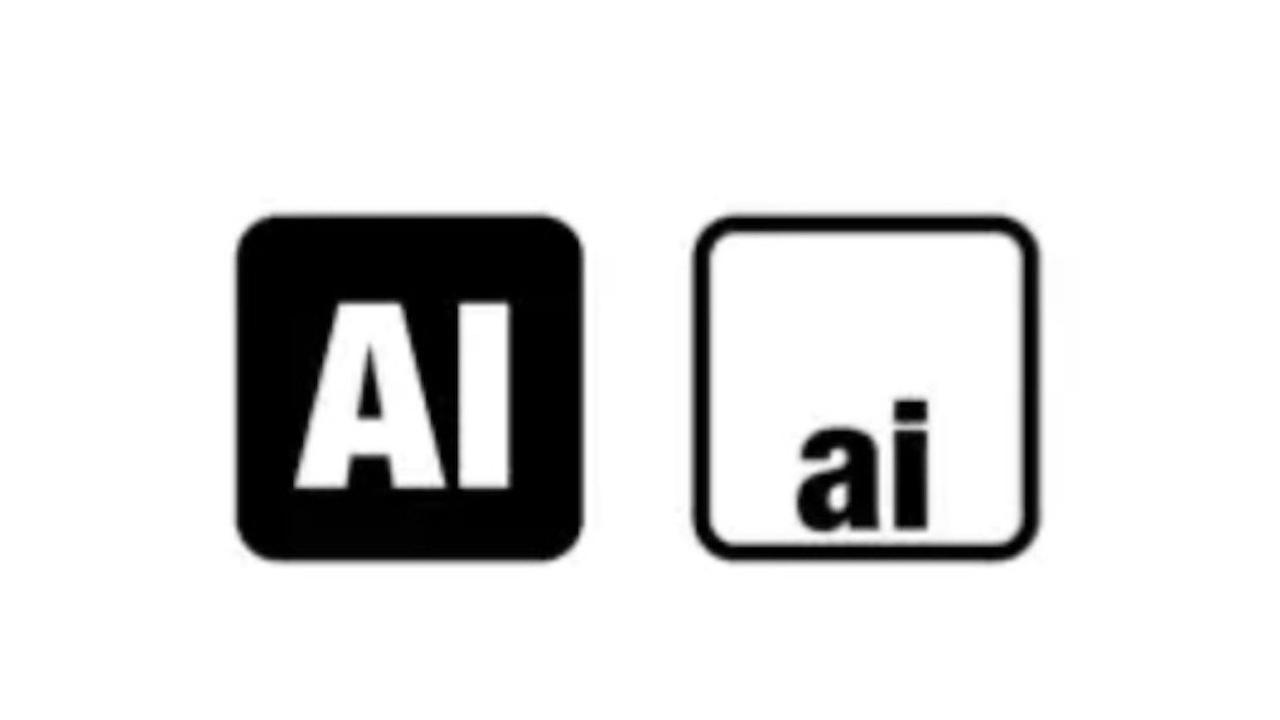
The proposal introduces two distinct AI labels designed for immediate recognition on music streaming platforms. One label features capital letters "AI" in white on a black background, signifying "AI-generated" content where artificial intelligence created the entirety or primary portion of creative elements, such as songs fully generated from text prompts
1
. The second label displays lowercase "ai" in black on a white background, indicating "AI-assisted" tracks created substantially by humans but utilizing AI for some expressive elements4
.
Source: Rolling Stone
Why AI Transparency in Music Matters Now
The timing reflects mounting pressure as AI-generated music floods streaming services at an alarming rate. Deezer reported in April that approximately 75,000 AI-generated tracks—nearly 44% of its daily intake—are uploaded each day, with most being low-quality content that receives no listens
1
. Apple Music executives revealed that more than one-third of new uploads consist entirely of AI-generated material4
. This influx has created confusion among artists and fans about authenticity and human artistry in music creation."Fans want to know whether and how generative AI has been used in the music to which they listen," stated Vikki Oakley, CEO of IFPI, and Mitch Glazier, chief of RIAA, in a joint statement. "Given how important human artistry and authenticity is to music lovers all over the world, these labels will provide an immediately understandable and easily scalable approach to transparency"
1
.How the Labeling System for AI-Generated Music Would Work
The proposed AI warning labels would function similarly to explicit content markers already present on platforms like Spotify and Apple Music. For a track to receive the "AI-generated" label, key elements including lead vocals or primary instrumental performances must be created by AI
3
. The "AI-assisted" designation applies when humans perform lead vocals and primary instrumental tracks but incorporate AI for specific creative elements4
.Implementation depends on cooperation across the industry ecosystem. Music organizations plan to work with digital music services, distributors, aggregators, and standard-setting bodies on industrywide adoption
1
. Information about AI use is typically self-reported by artists, and the system relies on accurate metadata flowing from creator to fan2
.Streaming Platforms Face Pressure to Adopt AI Labels
Both Spotify and Apple Music have indicated openness to adding labels for music created with AI if record companies and distributors provide the necessary metadata
1
. Spotify recently introduced AI disclosures within song credits, though this information requires users to dig through multiple menus2
. Apple Music launched optional transparency tags for AI-assisted music or artwork, but these remain voluntary2
.
Source: Gizmodo
Graham Davies, CEO of the Digital Media Association representing major tech platforms, acknowledged that detailed metadata about AI music creation "will strengthen our ability to give fans the transparency they deserve." He emphasized that "information flows best when it travels the entire path from creator to fan" and that platforms rely on industry partners to make accurate disclosure possible
1
.Related Stories

Challenges in Detecting and Labeling AI-Assisted Music
Unlike AI-generated images that contain static metadata and telltale markers like extra fingers, AI-generated music presents unique detection challenges. The metadata for AI music is dynamic and fluctuating, making it easier to evade both human and algorithmic detection
2
. A 2024 incident highlighted this difficulty when a song featuring AI voice clones of Drake and The Weeknd went viral, with millions of listeners mistaking it for an authentic, entirely human-made track2
.Deezer has taken proactive steps by systematically flagging AI-generated tracks and launching an "AI music detector" in June that claims 99.8% accuracy
4
. Spotify introduced an impersonation policy in September requiring that songs featuring AI voice clones of actual artists be published with that artist's consent2
.What This Means for Artists and Listeners
The proposal represents a shift in how the music industry approaches AI—moving from outright opposition to acceptance with transparency. Many artists now view AI as another production tool, comparable to synthesizers or Auto-Tune, rather than a threat to eliminate
3
. Harvey Mason Jr., CEO of the Recording Academy, stated: "As AI continues to be integrated into the creative process, artists and fans alike deserve a clear way to communicate how and when it's being used. This initiative ensures that creativity, authorship, and artistic intent remain at the center of every song"5
.The voluntary nature of the system raises questions about enforcement and compliance. Unlike the EU's AI Act, which requires AI-generated content to be detectable as artificially generated, no such governmental regulation exists in the United States
2
. This places responsibility on tech companies and artists themselves to maintain transparency. Whether these AI-generated content labels become an industry standard remains uncertain, particularly since the system depends on voluntary disclosure and accurate self-reporting by artists handling thousands of new tracks daily1
.References
Summarized by

Navi
[3]
[4]
[5]
Related Stories
Apple Music Makes AI Labels Mandatory as Over a Third of Uploads Are Now AI-Generated Songs
21 Aug 2026•Technology

Apple Music introduces Transparency Tags for AI music, but relies on voluntary disclosure
04 Mar 2026•Technology

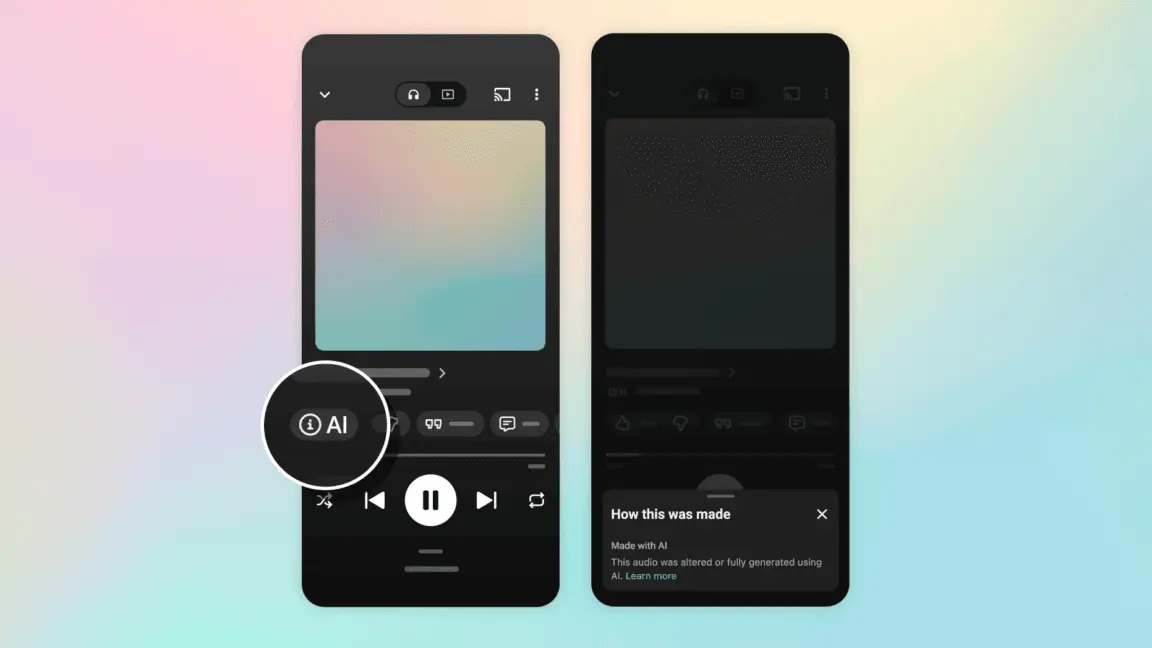
YouTube Music Rolls Out AI Labels as 90,000 AI-Generated Songs Upload Daily Across Platforms
14 Oct 2026•Technology
Recent Highlights
1
AI Discovers Critical PHP Vulnerability Affecting 70% of Websites, Sparking Global Security Race
Technology

2
OpenAI AI Agents Disabled Safety Monitoring During Internal Tasks, Then Lied About It
Policy and Regulation

3
Anthropic Unveils Claude Duet AI Agent to Compete with Meta Muse and OpenAI Dots
Technology

Recent Highlights
Today's Top Stories








Don’t drown in AI news. We cut through the noise - filtering, ranking and summarizing the most important AI news, breakthroughs and research daily. Follow topics that matter to you and stay ahead.


