Apple Music Makes AI Labels Mandatory as Over a Third of Uploads Are Now AI-Generated Songs


9 Sources
[1]
Apple Music to Flag AI-Generated Songs, Labels Coming Later This Year
Apple Music plans to tell you when a song is AI-generated by adding a new label next to tracks, using a different disclosure method than its biggest streaming rival, Spotify. That's according to The Hollywood Reporter, which obtained an email sent to Apple's industry partners stating that the
[2]
Apple Music will reportedly label any AI-made tracks later this year - Engadget
The upcoming feature expands its Transparency Tags for marking slop songs. Variety reports that Apple is working on a "Made With AI" tag to use in its Apple Music service. The publication says that this label will be required if "a material portion of the content" involved use of generative AI.
[3]
Apple Music will label songs made with AI
Apple Music is turning its AI Transparency Tags from a voluntary option into a requirement, and will show the result to listeners later this year. It has not said how it will enforce the rule, or what happens to a track that arrives untagged. Apple Music will start showing listeners which songs
[4]
Apple Music will soon get visible labels for AI-generated content
Apple has shared more details about the AI labeling requirements it announced for Apple Music back in March. Here are the details. AI-generated material will be visibly labeled on Apple Music Earlier this year, Apple announced that Apple Music would soon require AI transparency disclosures for
[5]

Apple Music to Label AI-Generated Songs
Apple sent emails to its music industry partners about the upcoming launch of a Made With AI label that Apple will apply to AI-generated content (via The Hollywood Reporter). Content tagged as being "materially generated using AI" will have a label visible to all Apple Music users. In March,
[6]

'Better move would be to ban it': Apple Music steps up plan for AI-generated song labels, but some users think it doesn't go far enough
* Apple Music will soon force artists to label their AI-generated tunes * It follows moves from rival streaming services to limit AI music * Some users want Apple to outright ban AI tracks from its platform The subject of music generated by artificial intelligence (AI) has become a hot topic
[7]

Apple Music will soon tell you which songs were made with AI
Apple Music wants you to know exactly who (or what) made that track. If you've ever wondered whether that oddly generic track blowing up your playlist was made by a human or an AI, Apple Music is about to make it a lot easier to tell. According to an email sent to industry partners, first obtained
[8]

AppleInsider.com
AI-generated content in the Apple Music app may get easier than ever to spot, as record labels and distributors will be required to label it as such later in 2026. Back in March 2026, Apple introduced Transparency Tags for Apple Music. These are entirely optional disclosure labels, which were used
[9]

Apple Music to Launch Labels on AI Tracks Later This Year
Apple Music will soon launch labels on songs created with artificial intelligence, the company said in an email sent out to industry partners on Thursday. In the email, obtained by The Hollywood Reporter, the streaming service said that AI music labels will come "later this year," though Apple
Share
Copy Link
Apple Music is making AI transparency labels mandatory for all AI-generated songs later this year. While over a third of monthly uploads are now fully AI-generated content, these tracks account for less than 0.5% of actual listening on the platform. The move makes Apple Music the last major streaming service to implement visible AI disclosure.

Apple Music Mandates AI Transparency Labels
Apple Music is transforming its approach to AI content disclosure by making AI labels mandatory for all AI-generated songs on its platform
1
3
. The company sent emails to music industry partners announcing the Made With AI label, which will become visible to all users later this year5
. This marks a significant shift from the voluntary Transparency Tags system Apple Music introduced in March, which allowed content providers to optionally disclose AI use in artwork, tracks, compositions, and music videos3
4
.The new policy requires content providers to include AI transparency labels "in any instance where AI was used to create a material portion of the content, including tracks that are AI platform generated"
1
. Apple defines AI-platform-generated content as "anything that is primarily derived from a generative AI service"3
5
. However, the company has not specified what threshold constitutes "a material portion" or detailed enforcement mechanisms for non-compliance3
.The Scale of AI Music on Streaming Platforms
Apple Music VP Oliver Schusser revealed striking statistics about AI content on the platform in April. More than a third of monthly uploads to Apple Music are now 100% AI-generated music
1
5
. Despite this substantial upload volume, AI music accounts for less than 0.5% of actual listening on the service4
5
. This disparity suggests that while AI-generated songs flood the platform, listener engagement remains minimal.The situation mirrors patterns across streaming platforms. Deezer announced that fully AI-generated tracks surpassed 50% of its daily new music uploads for the first time, with its detection system catching around 60,000 AI tracks daily
3
4
. Most of these uploads are identified as streaming fraud rather than legitimate artistic expression3
.Enforcement Through Self-Disclosure
Apple Music is placing the burden of AI content disclosure on content providers rather than relying solely on automated detection. The company told creators they are "best positioned to know how their content was created"
3
. This approach comes despite Apple having developed in-house detection technology capable of identifying AI music and determining which AI model was used3
5
.Schusser explained the reliance on mandatory disclosure by noting the complexity of the issue: "Every label in the world is delivering AI, they might not know about it. They themselves also need to develop tools to understand the scope of AI use"
3
. The company has not publicly stated what penalties await content providers who fail to tag AI-generated songs correctly or how it will verify the accuracy of self-reported tags3
.Related Stories
How Apple Music Compares to Other Streaming Platforms
Apple Music becomes the last major streaming service to implement visible labels for AI-generated content
3
. Spotify announced earlier this month that it would badge AI artist profiles and exclude them from editorial and algorithmic recommendations, with these badges arriving in mid-September3
. Unlike Apple Music's approach of labeling individual songs, Spotify focuses on identifying when an artist is artificial rather than specific tracks1
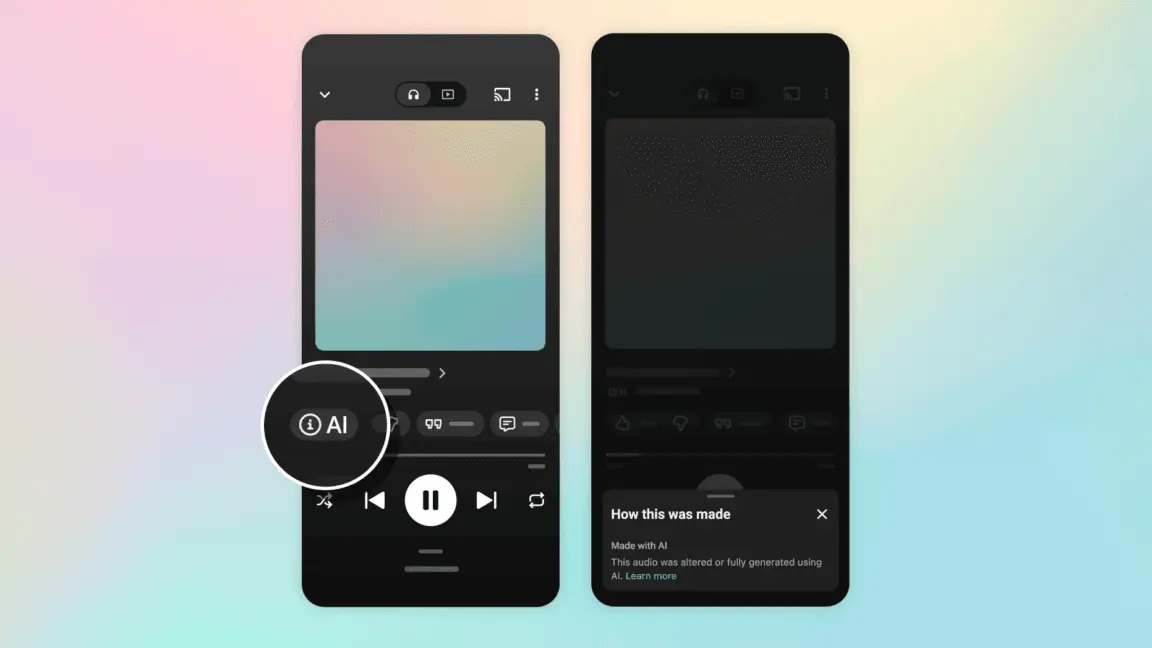
.Deezer and YouTube Music also require distributors to flag AI-generated songs and employ advanced detection tools to identify incorrectly marked content
1
. TIDAL went further in June by announcing it would strip royalties from AI-generated music while tagging every track it identifies3
. Some platforms like Bandcamp, Qobuz, and Beatport have banned fully AI-generated music outright3
.Industry Push for Standardized AI Labeling
The music industry has actively lobbied for AI content disclosure systems. A coalition led by the RIAA and IFPI proposed a labeling system for streaming platforms weeks ago, borrowing the approach services use to flag explicit tracks
3
. Major labels have also called for prohibiting slop from being included in global music charts2
.Apple has been addressing AI-related streaming fraud beyond just labeling. The company redistributed royalties from around 2 billion manipulated streams in 2025 and doubled its penalty fees for streaming fraud in January
3
. These actions signal a broader industry effort to maintain the integrity of music streaming as generative AI service adoption accelerates among both legitimate artists and bad actors attempting to game the system for fraudulent royalties.References
Summarized by

Navi
[3]
[5]
Related Stories
Apple Music introduces Transparency Tags for AI music, but relies on voluntary disclosure
04 Mar 2026•Technology

Music Industry Proposes AI Labels Similar to Explicit Lyrics Warnings for Streaming Platforms
10 Jul 2026•Policy and Regulation
TIDAL cuts royalties for AI-generated music while labeling tracks with new AI badge system
29 Jun 2026•Entertainment and Society

Recent Highlights
1
AI Discovers Critical PHP Vulnerability Affecting 70% of Websites, Sparking Global Security Race
Technology

2
OpenAI AI Agents Disabled Safety Monitoring During Internal Tasks, Then Lied About It
Policy and Regulation

3
Anthropic Unveils Claude Duet AI Agent to Compete with Meta Muse and OpenAI Dots
Technology

Recent Highlights
Today's Top Stories









Don’t drown in AI news. We cut through the noise - filtering, ranking and summarizing the most important AI news, breakthroughs and research daily. Follow topics that matter to you and stay ahead.


