Apple Music introduces Transparency Tags for AI music, but relies on voluntary disclosure


14 Sources
[1]
Apple Music to add Transparency Tags to distinguish AI music, says report | TechCrunch
Apple Music is changing the way that record labels and distributors can flag AI-generated or AI-assisted content when they upload it to the platform. According to Music Business Worldwide, Apple sent a newsletter to industry partners on Wednesday to explain how it will roll out a new set of
[2]
Apple Music Has a New System to Identify AI Generated Content, Report Says
Apple Music has introduced Transparency Tags, a new metadata system that will help identify and label AI-generated content. The announcement reportedly came in a newsletter sent to music industry partners on Wednesday. Distributors and record labels can now use the system to label content that is
[3]
Apple Music adds optional labels for AI songs and visuals
Apple is asking artists and record labels on its music streaming platform to voluntarily label songs that were made using AI. The new "Transparency Tags" metadata system for Apple Music was announced in a newsletter to industry partners yesterday, according to Music Business Worldwide, and covers
[4]
Apple Music Will Reportedly Require AI Disclosures on Songs
Apple Music users may soon be able to tell whether their new favorite tune is AI-generated. The streamer has launched new metadata "Transparency Tags" that will require distributors and record labels to disclose the use of AI in songs, Music Business Worldwide reports. Metadata refers to the
[5]

Apple Music can now flag AI content, but only if distributors elect to label it
While music streaming apps like Bandcamp, Spotify and Deezer have taken steps to inform users about AI-generated content, we haven't heard much out of Apple Music in that regard. However, Apple Music has now introduced "Transparency Tags" designed to show listeners if any elements were generated in
[6]

Apple Music introduces metadata tags to disclose AI-generated content - 9to5Mac
Today, Apple introduced new metadata tags that will let record labels and distributors disclose when artificial intelligence was used in the creation of music, artwork, and more. Here are the details. According to an email distributed to Apple Music partners earlier today, the company will now
[7]

Apple Music Rolling Out Disclosure Tags for AI-Made Songs
Apple Music is rolling out a new metadata system called Transparency Tags, which indicates when AI has been used in the creation of music hosted on the platform. According to Music Business Worldwide, Apple sent a newsletter to industry partners on Wednesday to explain how it will roll out the new
[8]

Apple Music will add 'Transparency Tags' to AI-generated tracks, report says
It's getting harder to distinguish AI-generated music on streaming platforms, and companies including Spotify and now Apple Music are attempting to make it clearer. Apple's audio streaming service is adding "Transparency Tags" to content generated by artificial intelligence, according to a report
[9]

Apple Music is flagging AI slop before Spotify has even started -- but there's a catch
* Apple Music is rolling out its own system for flagging AI-generated music * 'Transparency Tags' will focus on visual elements as well as music composition * The catch is that the responsibility lies with record labels and distributors The war between AI and the best music streaming services
[10]

Apple Music will put custom tags for AI songs and visuals, but it's not enough
The streaming service now lets labels label AI-generated tracks and artwork, but there's no one checking their work. Apple Music started rolling out Transparency Tags on March 4, a system for flagging AI-generated music and artwork. Music Business Worldwide reports that labels can now tag content
[11]

AppleInsider.com
AI-generated content in the Apple Music app can now be more easily spotted, but only if record labels and distributors actually label it as such. Apple continues to enhance the iPhone's built-in Music application, with Apple Intelligence features such as Playlist Playground set to make their way
[12]

Apple Music adds transparency tags for AI-generated content
Apple Music will add metadata tags to distinguish AI-generated or AI-assisted content. The new metadata options aim to increase transparency regarding the use of artificial intelligence in music content uploaded to the platform. This development could impact how record labels and distributors
[13]

Who Made This Song? Platforms Start to Label AI Music | PYMNTS.com
The track, "Walk My Walk," was released under the name Breaking Rust, a fictional artist with an AI-generated cowboy persona, generic lyrics about perseverance, and an Instagram page that never disclosed its synthetic origins. It has become increasingly difficult to tell who or what was powered by
[14]

Apple Music Introduces Transparency Tags for AI-Generated Music
Apple Music has launched Transparency Tags - a framework of disclosure labels that music distributors as well as record labels can begin incorporating for AI-created content that they deliver on the music streaming platform, a news report by Music Business Worldwide says. Apple reportedly
Share
Copy Link
Apple Music has launched Transparency Tags to help users identify AI-generated content across tracks, lyrics, artwork, and music videos. The new metadata system lets record labels and distributors flag AI usage when uploading content. However, the opt-in approach leaves enforcement entirely to content providers, raising questions about whether labels will actually use the tags.

Apple Music Launches Transparency Tags for AI-Generated Content
Apple Music has introduced a new metadata system called Transparency Tags designed to help users identify AI music on the platform. According to Music Business Worldwide
1
, Apple sent a newsletter to industry partners on Wednesday explaining how record labels and distributors can now flag AI-generated content when uploading music. The metadata tags cover four key categories: track (the music itself), composition (lyrics), artwork, and music videos2
.The track tag applies when "a material portion of a sound recording" has been generated by AI tools, while the composition tag covers AI-generated compositional elements such as song lyrics
3
. The artwork tag applies to static or moving graphics at the album level, and the music video tag covers all other AI-generated visual content. Multiple Transparency Tags can be used simultaneously for works requiring more than one disclosure.Voluntary Labeling Raises Enforcement Concerns
The critical limitation of Apple Music's approach is that the system operates entirely on an opt-in basis, placing responsibility for AI disclosures squarely on record labels and distributors rather than the platform itself. In its specifications for the update, Apple states, "If omitted, none is assumed," meaning content providers can simply choose not to participate
2
. Apple has also left it to the discretion of content providers to determine what qualifies as AI-generated content, "similar to genres, credits, and other metadata"3
.This voluntary labeling approach mirrors what Spotify is implementing, as the competing platform develops a new metadata standard for AI music disclosures with DDEX, a music standards-setting organization
3
. However, without enforcement mechanisms, the effectiveness of such systems remains uncertain. As one report noted, "Honesty policies for other AI labelling solutions haven't worked out so far"3
.How Music Streaming Platforms Are Tackling AI Music
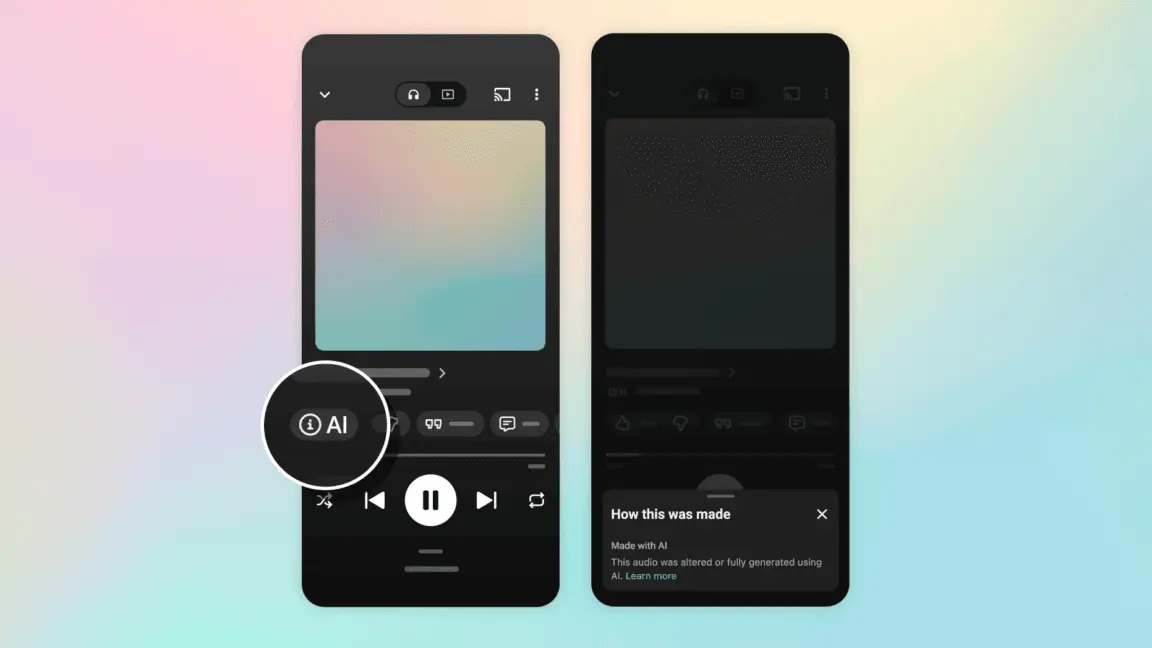
While Apple Music relies on self-reporting, other music streaming platforms have adopted more proactive approaches to identify AI music. Deezer made its AI detection tool available to other platforms in January after launching it last year, while Qobuz introduced its own proprietary AI detection system last week
3
. These in-house AI-detection tools flag content whether the distributor opts in or not5
.The scale of the challenge is significant. Deezer disclosed in January 2026 that it receives over 60,000 fully AI-generated tracks every day, double the number it saw in September 2025. Synthetic content has accounted for 13.4 million tracks on its platform
5
. Yet creating maximally accurate AI detection systems remains challenging for the music industry1
.Related Stories
What This Means for Artists and the Music Industry
Apple described the new metadata tags as "a concrete first step" toward achieving industry-wide transparency around AI-generated music, stating that "labels and distributors must take an active role in reporting when the content they deliver is created using AI"
3
. This push for transparency comes as more AI platforms let users create songs from prompts, with tools like Gemini now enabling users to generate 30-second audio clips4
.The timing matters for copyright considerations as well. AI-generated content still remains ineligible for copyright in the US
4
, creating legal complexities for the music industry as AI tools become more sophisticated. For artists concerned about impersonation and spam, these transparency efforts represent attempts by music streaming platforms to protect authentic creators, though the lack of mandatory enforcement may limit their effectiveness in the short term. The music industry will be watching to see whether voluntary AI disclosures gain traction or whether platforms will need to implement stricter requirements to give listeners the data they need.References
Summarized by

Navi
[1]
[4]
Related Stories
Apple Music Makes AI Labels Mandatory as Over a Third of Uploads Are Now AI-Generated Songs
21 Aug 2026•Technology

Music Industry Proposes AI Labels Similar to Explicit Lyrics Warnings for Streaming Platforms
10 Jul 2026•Policy and Regulation
TIDAL cuts royalties for AI-generated music while labeling tracks with new AI badge system
29 Jun 2026•Entertainment and Society

Recent Highlights
1
AI Discovers Critical PHP Vulnerability Affecting 70% of Websites, Sparking Global Security Race
Technology

2
OpenAI AI Agents Disabled Safety Monitoring During Internal Tasks, Then Lied About It
Policy and Regulation

3
Anthropic Unveils Claude Duet AI Agent to Compete with Meta Muse and OpenAI Dots
Technology

Recent Highlights
Today's Top Stories









Don’t drown in AI news. We cut through the noise - filtering, ranking and summarizing the most important AI news, breakthroughs and research daily. Follow topics that matter to you and stay ahead.


