NASA's Perseverance Rover Completes First AI-Planned Drive on Mars Using Claude AI Models


11 Sources
[1]
NASA's Perseverance Rover Completes First AI-Planned Drive on Mars - NASA
The team for the six-wheeled scientist used a vision-capable AI to create a safe route over the Red Planet's surface without the input of human route planners. NASA's Perseverance Mars rover has completed the first drives on another world that were planned by artificial intelligence. Executed on
[2]
NASA Used AI to Drive Its Perseverance Mars Rover for the First Time
NASA used Anthropic's Claude for an experiment in plotting the rover's course, which the agency deemed successful. Plotting a course for NASA's Perseverance rover, 140 million miles away on Mars, is significantly more difficult than setting a driving route here on Earth, where we can punch an
[3]
NASA's Perseverance rover completes the first AI-planned drive on Mars
The team behind NASA's six-wheeled Mars explorer tested a vision-enabled artificial intelligence system to map a safe route across the Martian surface without relying on human route planners. NASA's Perseverance rover has now completed the first drives on another planet that were planned by
[4]
NASA's Perseverance Mars rover completes its 1st drive planned by AI
"The fundamental elements of generative AI are showing a lot of promise in streamlining the pillars of autonomous navigation for off-planet driving." NASA's Perseverance rover has completed its first-ever drive on Mars fully planned by artificial intelligence, the space agency announced. The
[5]

NASA taps Claude to conjure Mars rover's travel plan
Anthropic's Claude machine learning model has boldly planned what no Claude has planned before - a path across Mars for NASA's Perseverance rover. Perseverance traveled about 400 meters on the Martian surface last month based on an AI-generated path. It did so with the blessing of engineers at
[6]

NASA used Claude to plot a route for its Perseverance rover on Mars
Since 2021, NASA's Perseverance rover has achieved a number of historic milestones, including sending back the first audio recordings from Mars. Now, nearly five years after landing on the Red Planet, it just achieved another feat. This past December, Perseverance successfully completed a route
[7]

NASA Let AI Drive a Rover on Marsâ€"and It Somehow Survived
February marks the five-year anniversary of Perseverance's time on Mars. But when it comes to trying out new things, NASA's rover seems to be as active as it was on the day it first arrived on the Martian regolith. According to NASA JPL, Perseverance completed two driving stints using an itinerary
[8]

For the first time on Mars, a rover planned its own drive
Planning a Mars rover drive is usually a slow, careful chess game played from Earth. But in a new test, NASA let an AI system do one of the hardest parts - picking the route. The result? NASA's Perseverance rover completed the first drives on another planet whose waypoint plans were generated by
[9]

NASA and Anthropic complete first AI-planned drive on Mars
Image taken by the Perseverance Mars Rover whilst driving. Image: NASA/Anthropic The organisation used GenAI to create waypoints for NASA's rover, a task that is typically undertaken by a mission's human planners. The National Aeronautics and Space Administration (NASA) and artificial
[10]

AI Takes the Wheel as Perseverance Rover Navigates Mars on Its Own
Breakthrough could enable faster, long-distance rover missions on Mars The Perseverance rover, which landed in Jezero Crater on Mars in 2021 to investigate evidence of ancient life and sample the rocks and another milestone has been achieved by NASA. In December 2025, the six-wheeled rover made
[11]
NASA's Perseverance Makes History on Mars with Claude AI at the Helm
NASA's Mars rover, Perseverance, recently completed its first drive using commands shared by Anthropic's artificial intelligence (AI) chatbot, Claude. The milestone marks the first time a generative AI model has played a direct role in planning a rover's movement on another planet. The drive took
Share
Copy Link
NASA's Perseverance rover achieved a milestone by completing the first drives on another planet planned entirely by artificial intelligence. On December 8 and 10, the rover traveled nearly 1,500 feet across Mars using routes generated by Anthropic's Claude AI models, marking a shift from decades of manual route planning by human drivers at the Jet Propulsion Laboratory.
NASA Achieves Milestone in Autonomous Space Exploration
NASA's Perseverance rover has completed the first AI-planned drive on Mars, marking a significant advance in autonomous space exploration. Executed on December 8 and 10, 2025, the demonstration used generative AI to plan routes across the Martian terrain without manual input from human route planners
1
. Led by NASA's Jet Propulsion Laboratory in Southern California, the initiative leveraged Anthropic's Claude AI models to generate waypoints—a complex decision-making task that has traditionally consumed significant time and resources2
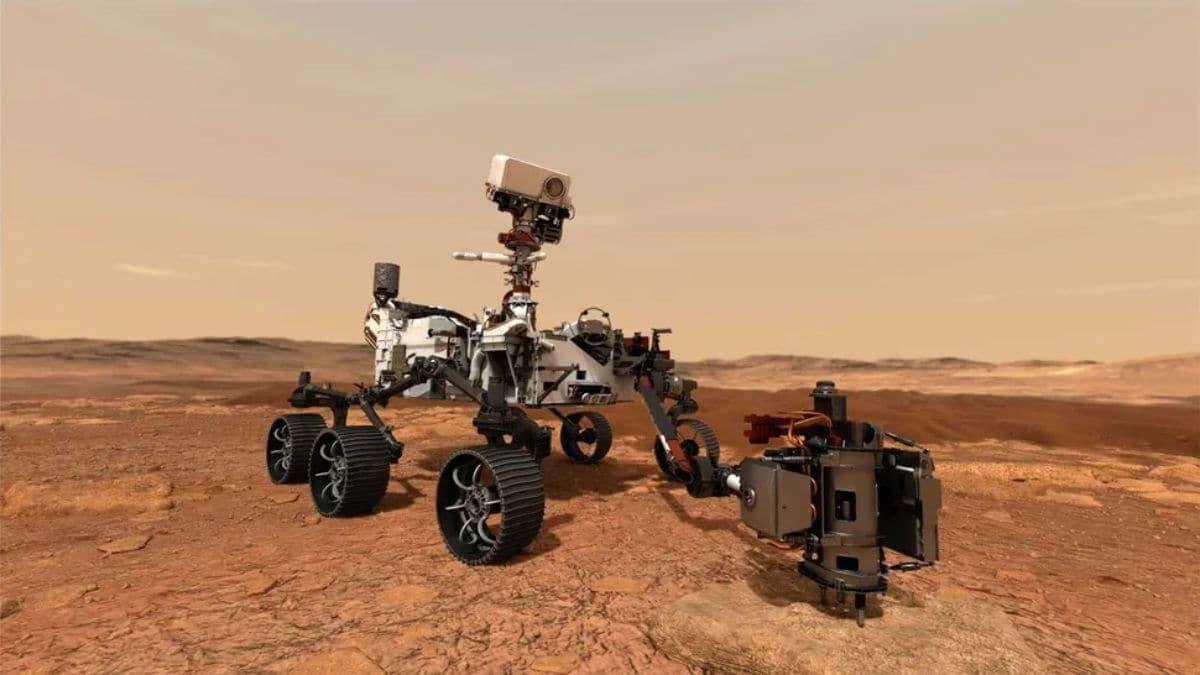
.
Source: Gadgets 360
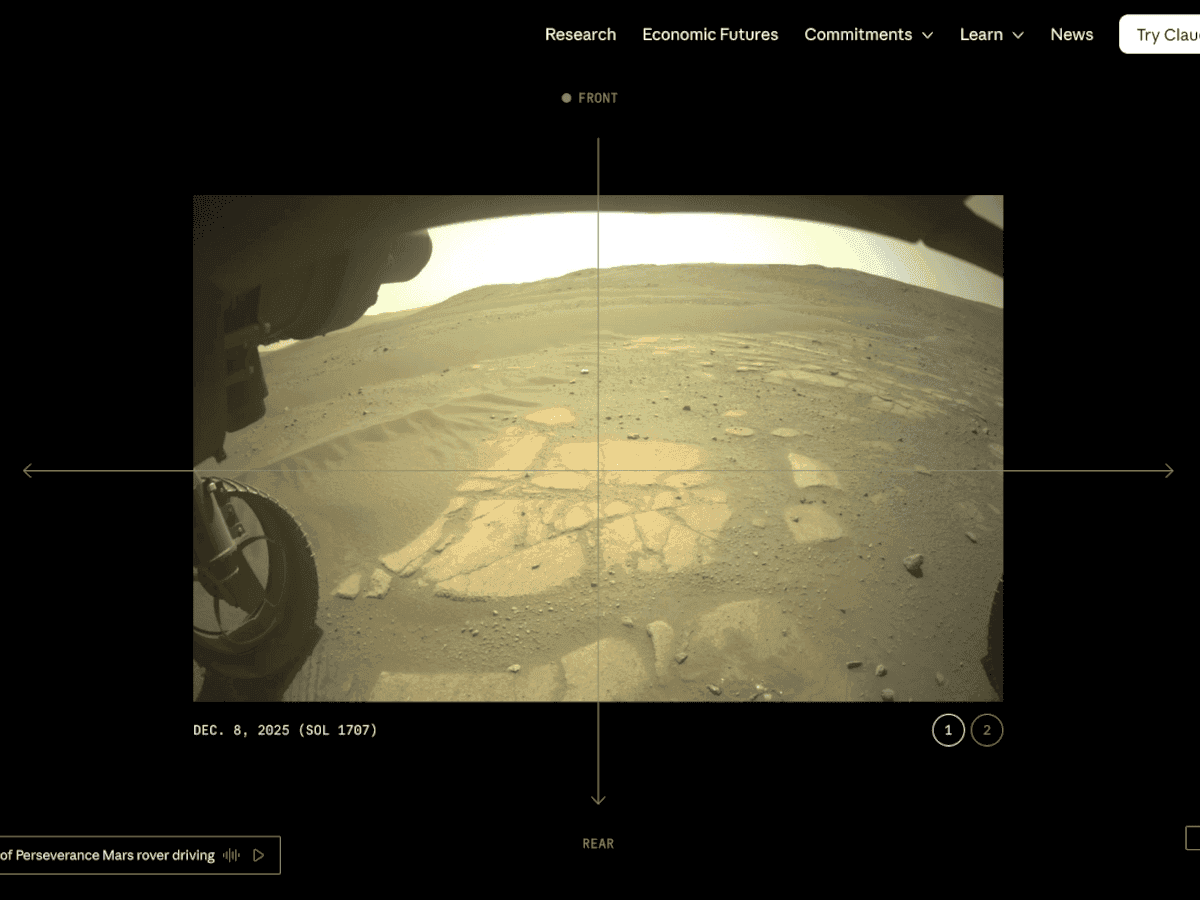
During the two test drives on sols 1,707 and 1,709 of the mission, the Perseverance rover traveled 689 feet (210 meters) and 807 feet (246 meters) respectively, totaling nearly 1,500 feet across the challenging surface of Mars
4
. NASA Administrator Jared Isaacman emphasized the significance: "This demonstration shows how far our capabilities have advanced and broadens how we will explore other worlds. Autonomous technologies like this can help missions to operate more efficiently, respond to challenging terrain, and increase science return as distance from Earth grows"1
.
Source: Silicon Republic
How Generative AI Transformed Route Planning
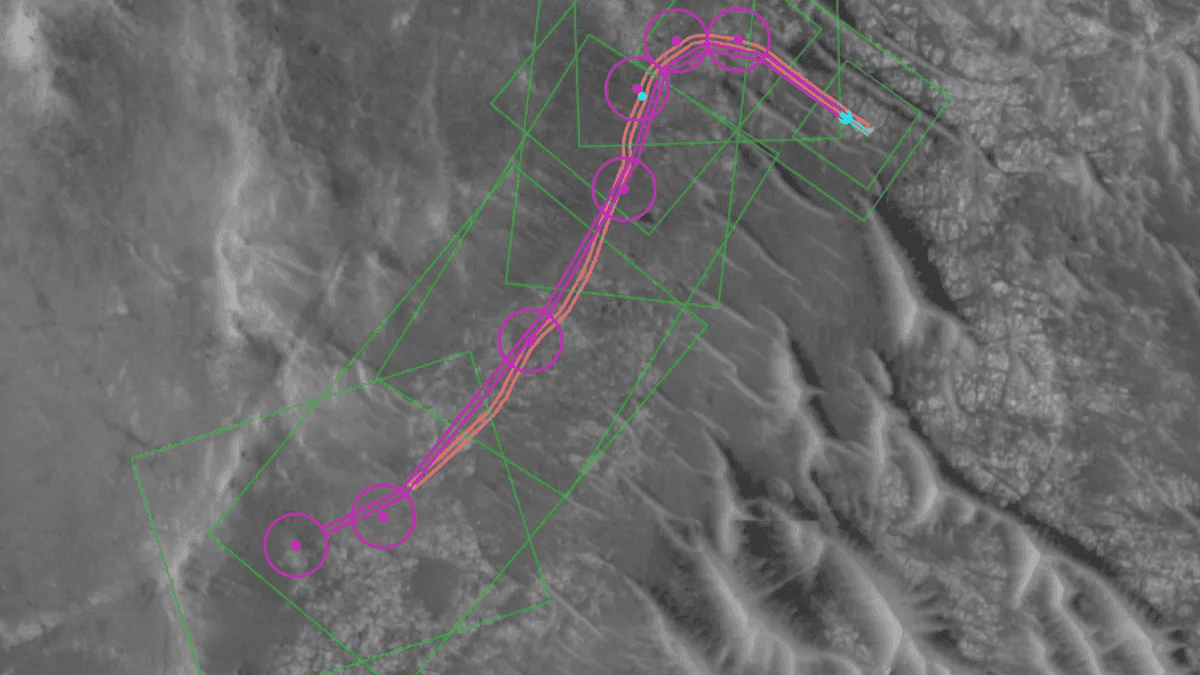
The team at the Rover Operations Center used vision-language models to analyze the same data that human planners typically rely on for route planning. The AI examined high-resolution orbital imagery from the HiRISE (High Resolution Imaging Science Experiment) camera aboard NASA's Mars Reconnaissance Orbiter, along with terrain-slope data from digital elevation models
3
. After identifying critical terrain features—bedrock, outcrops, hazardous boulder fields, and sand ripples—the Claude AI models generated a continuous path complete with waypoints1
.
Source: Gadgets 360
Before transmission to Mars via the Deep Space Network, engineers processed the AI-generated commands through JPL's digital twin, a virtual replica of the rover. This verification step checked more than 500,000 telemetry variables to ensure full compatibility with the rover's flight software
1
. According to Anthropic, JPL engineers found that only minor changes were needed when reviewing Claude's plans, and the route planning time could be cut in half5
.Overcoming Communication Delays and Operator Workload
Mars sits an average of 140 million miles (225 million kilometers) from Earth, creating significant communication delays that make real-time remote operation impossible
1
. For nearly 28 years across several missions, rover routes have been planned by human planners who analyze terrain and status data to sketch routes using waypoints, typically spaced no more than 330 feet (100 meters) apart to avoid potential hazards3
.Vandi Verma, a space roboticist at JPL and member of the Perseverance engineering team, explained the broader implications: "The fundamental elements of generative AI are showing a lot of promise in streamlining the pillars of autonomous navigation for off-planet driving: perception (seeing the rocks and ripples), localization (knowing where we are), and planning and control (deciding and executing the safest path). We are moving towards a day where generative AI and other smart tools will help our surface rovers handle kilometer-scale drives while minimizing operator workload, and flag interesting surface features for our science team by scouring huge volumes of rover images"
1
.Related Stories



Implications for Future Missions to Enhance Mission Efficiency
The successful demonstration carries substantial implications for future autonomous technologies in space exploration. As of December 2025, the Perseverance rover has driven a total of just 25 miles in roughly four years, with waypoints typically set no more than 330 feet apart—exploring Mars one football field at a time
2
. AI-assisted navigation could dramatically accelerate this pace while reducing the burden on mission teams.Matt Wallace, manager of JPL's Exploration Systems Office, outlined the vision: "Imagine intelligent systems not only on the ground at Earth, but also in edge applications in our rovers, helicopters, drones, and other surface elements trained with the collective wisdom of our NASA engineers, scientists, and astronauts. That is the game-changing technology we need to establish the infrastructure and systems required for a permanent human presence on the Moon and take the U.S. to Mars and beyond"
1
.The AI-generated routes work in tandem with Perseverance's existing AutoNav system, which handles real-time decision making and allows the rover to autonomously re-plan its route around rocks or other obstacles on its way to pre-established destinations
5
. While the rover didn't follow the AI-planned route exactly—making slight adjustments based on AutoNav decisions—the demonstration proved that AI can safely handle the time-consuming and laborious task of pre-planning5
. This careful and responsible application of new technology in real operations sets a precedent for how AI might enhance mission efficiency and increase scientific return as NASA ventures farther into the solar system.References
Summarized by

Navi
[5]
Related Stories
Recent Highlights
1
Meta Unveils Muse Wonder Frontier AI Models, Claims Performance Matching OpenAI and Anthropic
Technology

2
IMF Report Warns AI Market Correction Could Spark Global Financial Crisis With $1.4T at Risk
Business and Economy

3
OpenAI Releases 722 AI-Generated Math Solutions, Triggering Existential Crisis in Mathematics
Technology

Recent Highlights
Today's Top Stories









Don’t drown in AI news. We cut through the noise - filtering, ranking and summarizing the most important AI news, breakthroughs and research daily. Follow topics that matter to you and stay ahead.


