NASA's Dynamic Targeting: AI Empowers Satellites to Make Autonomous Decisions in Space


3 Sources
[1]
A satellite just used AI to make its own decisions in space
For the first time, a satellite has used onboard AI to autonomously decide where and when to capture a scientific image -- all in under 90 seconds, with no human input. The technology, called Dynamic Targeting, was tested by NASA's Jet Propulsion Laboratory (JPL) earlier this month. It was
[2]
In 90 seconds, AI satellite thinks, tilts, and shoots without human help
Cloud cover can keep optical instruments on satellites from clearly capturing Earth's surface. In a first, a satellite used AI to spot, think, and act in under 90 seconds, without human help. The breakthrough came during a recent NASA test of a new technology called Dynamic Targeting, which
[3]
AI system helps satellites make their own decisions - Earth.com
A new kind of onboard AI gives satellites the power to think for themselves - deciding in under 90 seconds whether a target on Earth is worth capturing. The system is called Dynamic Targeting, and it's designed to make space-based observations sharper, quicker, and more useful. This innovation was
Share
Copy Link
NASA successfully tests Dynamic Targeting, an AI system that allows satellites to autonomously decide where and when to capture scientific images in space, potentially revolutionizing Earth observation and space exploration.
NASA's Breakthrough in Satellite Autonomy
In a groundbreaking development, NASA's Jet Propulsion Laboratory (JPL) has successfully tested a new artificial intelligence system that allows satellites to make autonomous decisions in space. The technology, called Dynamic Targeting, enables satellites to analyze their surroundings and decide where and when to capture scientific images without human input, all within 90 seconds
1
.
Source: Earth.com
The Dynamic Targeting System
Dynamic Targeting represents a significant leap in satellite technology. It allows orbiting spacecraft to:
- Look ahead along their orbital path
- Detect valuable observation targets
- Autonomously direct their instruments for data collection
This system transforms satellites from passive data collectors into intelligent observers, capable of making real-time decisions about what to photograph
2
.The CogniSAT-6 Test
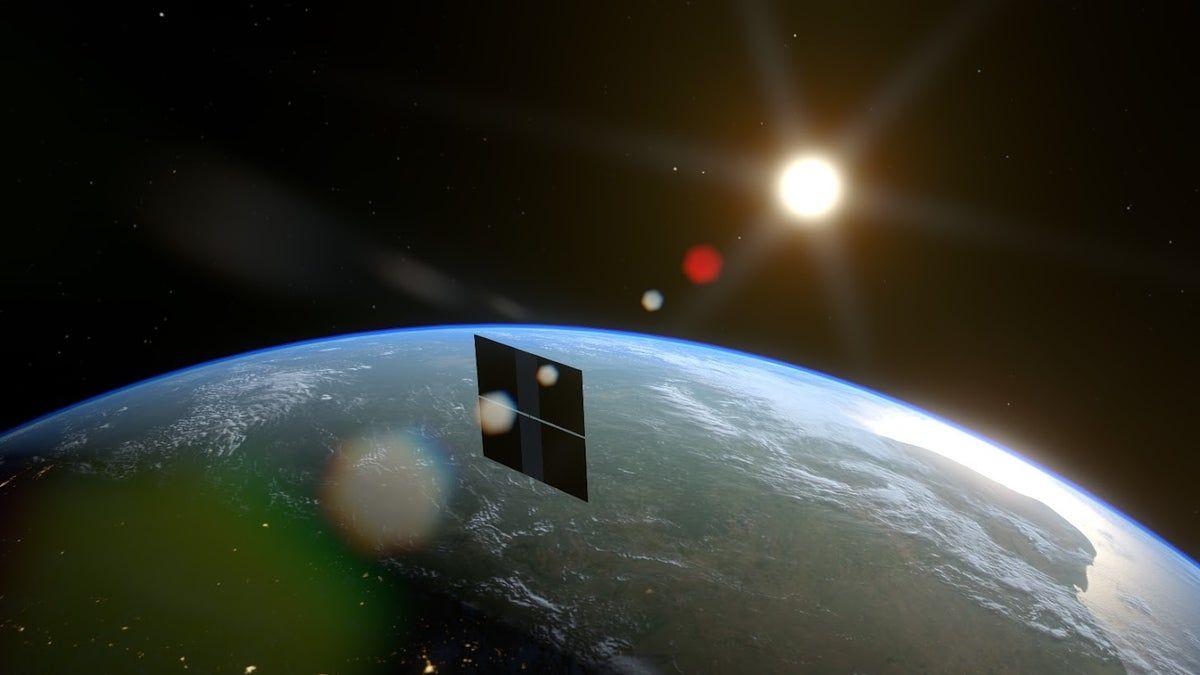
The recent test was conducted on CogniSAT-6, a compact CubeSat launched in March 2024. Built and operated by UK-based startup Open Cosmos, the satellite carried a machine learning processor developed by Dublin-based firm Ubotica
3
.During the test, the satellite demonstrated its ability to:
- Tilt forward to scan 500km ahead of its orbit
- Capture a preview image
- Analyze the scene for cloud cover using AI
- Make a decision to either take a detailed photo or skip the shot
This process, from scanning to shooting, occurs while the satellite travels at 17,000 miles per hour, completing the cycle in under 90 seconds
3
.
Source: Interesting Engineering
Related Stories
Implications and Future Applications
The successful implementation of Dynamic Targeting has far-reaching implications for Earth observation and space exploration:
-
Improved Data Quality: By avoiding cloud cover, the system ensures a higher proportion of usable data, saving time, storage, and bandwidth
1
. -
Rapid Event Detection: The technology could be expanded to quickly spot and monitor wildfires, volcanic eruptions, and severe storms from space
1
. -
Beyond Earth Applications: The team drew inspiration from past work with ESA's Rosetta orbiter, suggesting potential uses beyond Earth observation
3
. -
Satellite Teamwork: Future developments may include a fleet of autonomous satellites working together, sharing data in real-time
3
.
The Road Ahead
With the cloud-avoidance test complete, the NASA team is already planning future trials. These include targeting severe storm systems and heat anomalies like volcanic eruptions or active wildfires. Each task will use its own set of tailored algorithms
3
.
Source: The Next Web
Steve Chien, principal investigator for the Dynamic Targeting project, emphasized the significance of this development: "This initial deployment of Dynamic Targeting is a hugely important step. The end goal is operational use on a science mission, making for a very agile instrument taking novel measurements."
3
As this technology continues to evolve, it promises to revolutionize our ability to observe Earth and explore space, marking a new era in satellite capabilities and autonomous space operations.
References
Summarized by

Navi
[1]
[2]
Related Stories
German Researchers Achieve First Autonomous AI-Controlled Satellite Reorientation in Space
18 Nov 2025•Science and Research

NASA Employs AI and Machine Learning to Enhance Mars Exploration
17 Jul 2024

NASA's Perseverance Rover Completes First AI-Planned Drive on Mars Using Claude AI Models
31 Jan 2026•Technology

Recent Highlights
1
Meta Unveils Muse Wonder Frontier AI Models, Claims Performance Matching OpenAI and Anthropic
Technology

2
IMF Report Warns AI Market Correction Could Spark Global Financial Crisis With $1.4T at Risk
Business and Economy

3
OpenAI Releases 722 AI-Generated Math Solutions, Triggering Existential Crisis in Mathematics
Technology

Recent Highlights
Today's Top Stories










Don’t drown in AI news. We cut through the noise - filtering, ranking and summarizing the most important AI news, breakthroughs and research daily. Follow topics that matter to you and stay ahead.


