National Security Experts Urge Trump Administration to Reconsider Nvidia H20 Chip Exports to China


2 Sources
[1]
Trump caving on Nvidia H20 export curbs may disrupt his bigger trade war
The next front in Donald Trump's trade war will be chip tariffs -- which could come by next month -- but national security experts are warning that the president may have already made a huge misstep that threatens to disrupt both US trade and national security. In a letter Monday to Department of
[2]
20 national security experts urge Trump administration to restrict Nvidia H20 sales to China | TechCrunch
Not everyone is happy that the Trump administration gave Nvidia the green light to start selling its H20 advanced AI chips in China again. A group of 20 national security experts and former government officials wrote a letter to the U.S. Department of Commerce Secretary Howard Lutnick on Monday
Share
Copy Link
A group of 20 national security experts have written a letter to the U.S. Department of Commerce, urging the Trump administration to reverse its decision on allowing Nvidia to sell H20 AI chips to China, citing potential threats to U.S. national security and AI technological edge.
National Security Concerns Over Nvidia H20 Chip Exports
A group of 20 national security experts and former government officials have penned a letter to U.S. Department of Commerce Secretary Howard Lutnick, urging the Trump administration to reconsider its recent decision to allow Nvidia to sell its H20 AI chips to China
1
2
. This move has sparked a heated debate about the balance between trade relations and national security concerns in the rapidly evolving field of artificial intelligence.Trump's Decision and Its Implications
Source: Ars Technica
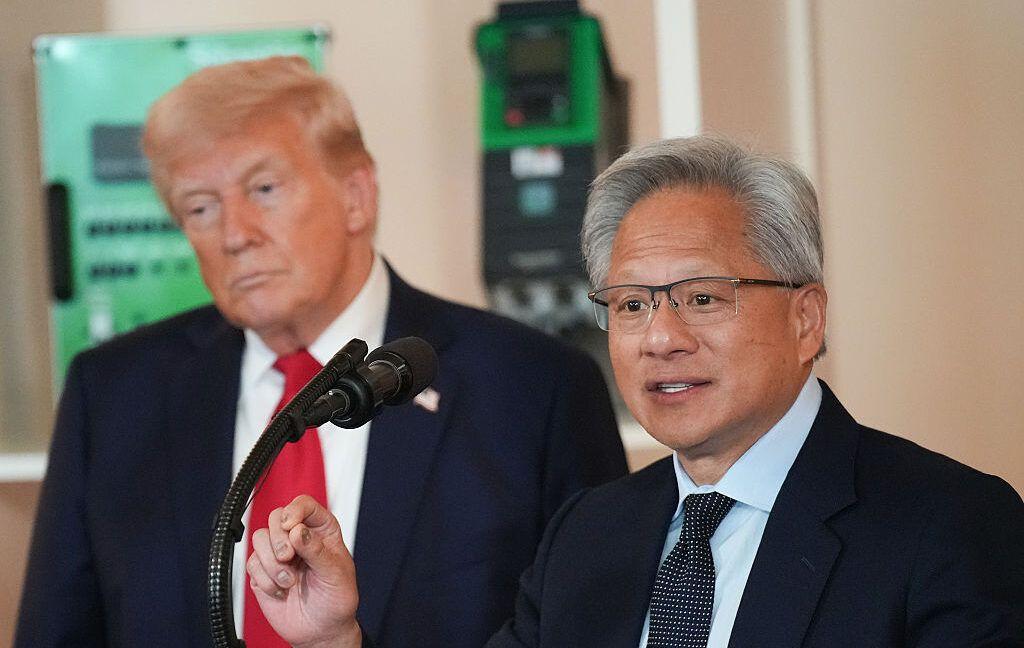
In April, the Trump administration decided against imposing additional export curbs on H20 chips, reportedly after Nvidia CEO Jensen Huang paid $1 million for a seat at a Mar-a-Lago dinner
1
. This decision was influenced by Nvidia's promise to invest $500 billion in AI data centers and a temporary truce with China, which involved the US halting H20 chip controls in exchange for China restoring imports of rare earth minerals1
.The H20 Chip Controversy
The national security experts expressed "deep concern" about the potential consequences of allowing H20 chip exports to China. While these chips cannot be used for AI training like the more advanced Blackwell and H100 chips (which remain restricted), they are optimized for inference - a crucial process in the latest generation of AI reasoning models
1
2
.The letter emphasized that the H20 is not an outdated AI chip, but rather a "potent accelerator of China's frontier AI capabilities"
2
. For inference tasks, the H20 reportedly outperforms even the restricted H100 chip, making it a valuable asset for advanced AI applications2
.Military and National Security Implications

Source: TechCrunch
Experts warn that China could potentially use these chips to enhance its military capabilities, including:
- Enabling autonomous weapons systems
- Improving intelligence surveillance platforms
- Advancing battlefield decision-making processes
1
The letter argues that by supplying China with H20 chips, the U.S. is "fueling the very infrastructure that will be used to modernize and expand the Chinese military"
1
. This could potentially erode the U.S. military's edge in artificial intelligence technologies.Related Stories
Broader Impact on U.S. AI Industry and Export Controls
The national security experts also raised concerns about the broader implications of this decision:
- Worsening the existing AI chip bottleneck in the U.S.
- Potentially weakening overall chip export controls
- Compromising America's technological edge in both military and civilian AI applications
2
Trump Administration's Stance and Future Plans
The Trump administration is currently investigating how chip tariffs and imports could affect national security, with a report due in two weeks
1
. This report is expected to help determine if relying too heavily on other countries for chips poses a national security threat.Last week, the administration unveiled its AI Action Plan, which highlighted the need for U.S. AI chip export restrictions but lacked specific details on implementation
2
. The ongoing debate surrounding the H20 chip exports underscores the complex interplay between trade policy, technological advancement, and national security in the era of artificial intelligence.References
Summarized by

Navi
Related Stories
Trump Administration's Reversal on China Chip Ban Sparks Bipartisan Backlash
29 Jul 2025•Policy and Regulation
Trump Administration Considers New Restrictions on Nvidia AI Chip Exports Amid DeepSeek Concerns
31 Jan 2025•Policy and Regulation

U.S. Imposes 15% Revenue Share on Nvidia and AMD's AI Chip Sales to China Amid Escalating Tech Rivalry
05 Aug 2025•Policy and Regulation

Recent Highlights



Recent Highlights
Today's Top Stories






Don’t drown in AI news. We cut through the noise - filtering, ranking and summarizing the most important AI news, breakthroughs and research daily. Follow topics that matter to you and stay ahead.


