NATO's new enemy is its own speed, alliance chiefs warn


2 Sources
[1]
Fast and furious: NATO wrestles with speed of AI-driven warfare
With growing concern, NATO militaries and defense giants are watching how artificial intelligence on the battlefield is forcing them into an ever more urgent race against time. Since Tuesday, military chiefs, officials and defense experts from the transatlantic alliance's 32 member states and
[2]
Fast and furious: NATO wrestles with speed of AI-driven warfare
Izmir (Turkey) (AFP) - With growing concern, NATO militaries and defence giants are watching how artificial intelligence on the battlefield is forcing them into an ever-more urgent race against time. Since Tuesday, military chiefs, officials and defence experts from the transatlantic alliance's 32
Share
Copy Link
The North Atlantic Treaty Organization has spent three days in Izmir hearing a single message from its own commanders: winning a war no longer turns on knowing something the enemy does not, it turns on joining the pieces faster than he can
2
. The NATO Edge conference has drawn military chiefs, officials and defence experts from all 32 member states plus Ukraine to debate critical technologies and digital warfare1
.The diagnosis from the top
Admiral Pierre Vandier, the alliance's Supreme Allied Commander Transformation, said the official view plainly. The decisive change, he said, runs "from data to understanding, from understanding to decision, from decision to effect"
2
. Terabytes of data flow in from the field every day; the bottleneck is how fast the alliance can integrate, adapt and scale what it does with them1
.His warning about the clock was sharper. "Today, time is not our friend anymore," he said, citing the speed of technology, of enemy adaptation and of geotechnical chaos. "Our environment is a race"
2
.The urgency has a concrete shape. An unnamed European industrialist told the conference that a front-line team has roughly one minute between a sensor triggering and the enemy's strike
2
.Ukraine's model, NATO's problem
Ukraine's minister for digital transformation, Oksana Ferchuk, brought the timelines her country's war has forced. "A drone that doesn't adapt to new electronic warfare within a month or two becomes obsolete," she said
2
. She said Ukraine made the change because front-line problems in the war with Russia demand answers within weeks1
. The result is a different way of thinking about equipment altogether: "We stopped thinking of capability as a finished product and started treating it as a continuous cycle. You must build, test in the field, receive feedback, update and repeat"2
.The alliance's structure works against that pace. Working with an alliance of 32 is far slower than dealing with one country, even though it brings strength in numbers
1
. Industry voices at the event said the alliance is harder to deal with than a single member nation, though it has begun engaging companies earlier in the process. "NATO is a little more challenging to deal with than a member nation," said Mitch Free, a vice president at Vantor, which supplies satellite imagery to defence and intelligence agencies2
.The battlefield itself keeps raising the bar. Drone swarms, jamming, cyber operations, electromagnetic attacks and real-time mapping of troop movements are now standard features
1
. The newest products are designed around AI from the outset, while older systems have to be fitted to work with it without breaking the whole.
Source: Tech Xplore
For two days the conference has been given over to how leaders and companies can speed up their dealings with each other
1
. Major General Rainer Beeck, described as one of the alliance's top cyberspace commanders, thinks the answer runs in one direction: "We need to bring businesses closer to the battlefield," he said2
.Related Stories

References
Summarized by

Navi
Related Stories
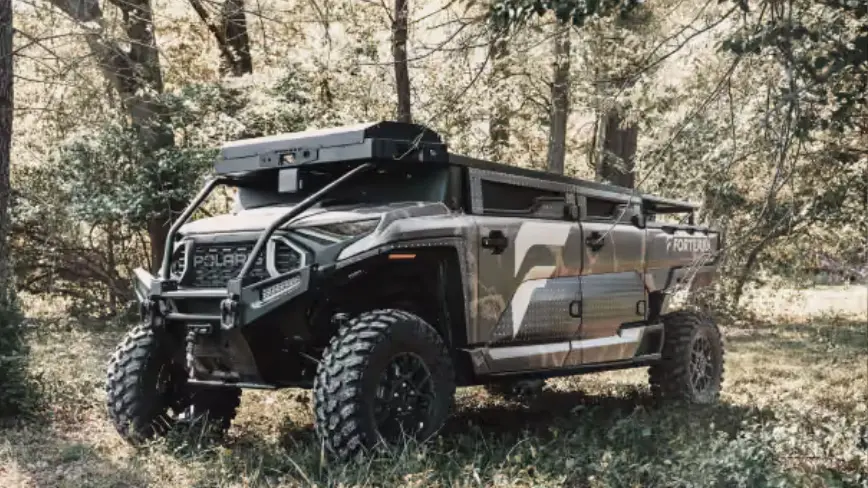
NATO builds AI kill web on Eastern Flank to detect and counter Russian threats before they move
09 Jul 2026•Policy and Regulation
Pentagon AI Chief Says US Allies Lack Resources to Match American Military AI Capabilities
09 Sept 2026•Policy and Regulation

NATO's $1 Billion Innovation Fund: Bridging Military and Tech Sectors
12 Jul 2024

Recent Highlights


Recent Highlights
Today's Top Stories











Don’t drown in AI news. We cut through the noise - filtering, ranking and summarizing the most important AI news, breakthroughs and research daily. Follow topics that matter to you and stay ahead.


