NEO humanoid robot's new hands bring human-like dexterity closer to reality with force sensing


2 Sources
[1]
NEO humanoid's new hands promise human-like dexterity and precision
Norwegian robotics company 1X has unveiled new 25-degree-of-freedom (DOF), tendon-driven hands for its NEO humanoid robot, describing them as a major step toward human-level dexterity. The company said the redesigned hands deliver improvements in precision, strength, safety, and reliability,
[2]
Robot surpasses human? Neo's robotic hand dexterity feels scary good right now
I have witnessed many humanoid robots in action through the years and, despite the advancements being made in this field, their movement is mostly reminiscent of hands covered in oven mitts. However, when I came across the press release of the 1X company regarding their robot Neo, I had to give it
Share
Copy Link
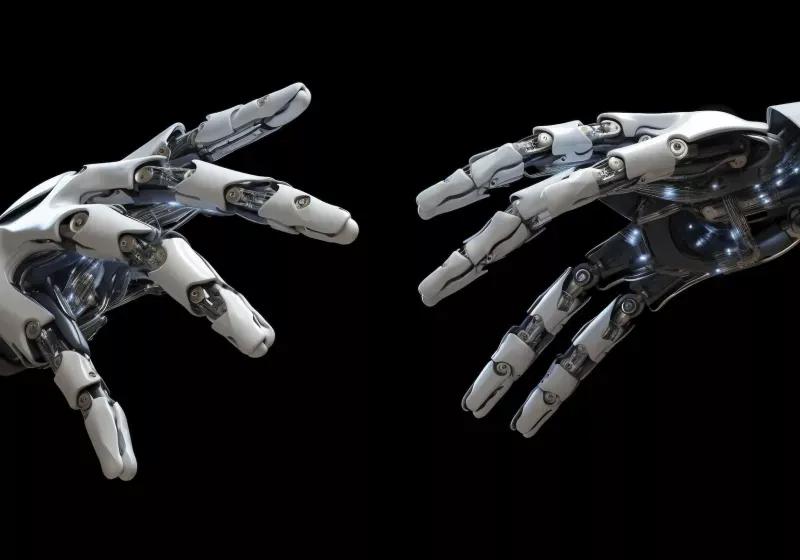
Norwegian robotics company 1X has unveiled advanced 25-degree-of-freedom hands for its NEO humanoid robot that can feel contact forces and manipulate objects with near-human precision. The tendon-driven design uses low gear ratios to enable force transparency, allowing NEO to assemble LEGO models, pour tea, and even wash its own hands under running water.
1X Unveils Advanced Robotic Hand Design for NEO Humanoid Robot
Norwegian robotics company 1X has introduced a breakthrough robotic hand design for its NEO humanoid robot, featuring 25-degree-of-freedom hands that promise to transform how humanoid robots interact with everyday objects
1
. The tendon-driven hands represent what CEO and Founder Bernt Børnich calls "a critical threshold" in robotics, claiming that "the robot can now do the things humans do with their hands, every day"1
. The company has already begun production on a dedicated manufacturing line capable of producing up to 10,000 hands this year, signaling confidence in the technology's readiness for real-world deployment.
Source: Interesting Engineering
Force Transparency Enables Human-Like Dexterity Through Low Gear Ratios
Unlike conventional robotic hands that rely on high-ratio gearing between 100:1 or 200:1, the 1X Neo robot's hands use proprietary low gear ratios of approximately 5:1 to 15:1 [1](https://interestingengineering.com/ai-robotics/1x-unveils-robot-hands-neo-humano id)
2
. This fundamental design choice enables what 1X calls force transparency, allowing contact forces to pass back through the transmission so the robot can detect how hard objects push against its fingers1
. The hands are fully force-controlled and backdrivable across all 25 degrees of freedom—22 actuated joints across the fingers and palm, plus three at the wrist1
. This approach transforms each joint into both a motor and a sensor, a stark departure from traditional robotic hands where friction consumes contact force before reaching the motors, forcing them to operate blindly from the fingertips2
.Precision and Strength Combined With Advanced Tactile Sensing
The NEO humanoid robot achieves impressive specifications that balance delicate manipulation with practical strength. The thumb generates peak torque of 3.5 Nm, while finger joints reach up to 2.6 Nm and fingertip flexion forces up to 45 newtons
1
. The wrist produces 17.75 Nm of torque, supporting tool use, lifting, pushing carts and opening doors1
. Positioning accuracy reaches ±0.2 mm, enabling manipulation of small objects common in household and industrial environments1
. Each joint provides continuous proprioception, allowing the robot to determine finger and wrist positions without depending on cameras1
. High-resolution tactile sensors embedded throughout the fingertips and hand surfaces measure pressure, contact location and shear forces, helping detect slipping objects and adjust grip in real time1
.Demonstrations Show Advancements in Humanoid Robotics Beyond Warehouse Tasks
The capabilities demonstrated by NEO extend far beyond typical warehouse-grade pick-and-place operations that have defined industrial robotics for decades. Demonstrations show NEO assembling LEGO models, picking up screws and coins, installing light bulbs, using screwdrivers, rotating objects within its hand, zipping jackets, sorting grapes, pouring tea, catching soft balls, plugging in USB-C connectors, holding wine glasses, wiping surfaces and performing sign language
1
. These tasks represent activities robots have struggled with for years, requiring the kind of fine motor control and force feedback that separates household assistance from industrial automation2
.
Source: Digit
Related Stories

IP68 Rating and Food-Safe Materials Enable Practical Household Use
Designed for real-world operation, the hands are IP68 waterproof, constructed from food-safe materials, and capable of washing themselves under running water
1
. This feature addresses a practical barrier that has limited robots in domestic environments—the ability to handle messy tasks like cooking without creating additional cleanup work2
. The low-inertia tendon-driven design improves safety by allowing fingers to yield under unexpected impacts1
. Components and finger assemblies have been tested through millions of operating cycles, with wrist joints validated beyond two million cycles under heavy loads1
.Hardware Exceeds AI Capabilities as Data Collection Becomes Priority
By manufacturing motors, tendons, electronics, tactile sensors and soft polymer skins entirely in-house, 1X aims to accelerate development through large-scale deployment and continuous data collection for embodied AI systems
1
. The company acknowledges that hardware has already exceeded what current AI can handle, shifting the bottleneck from physical capability to artificial intelligence and training data1
. This recognition suggests that the uncanny valley debate may shift from robotic faces to fingertips, as hands become the true battleground of humanoid robotics2
. The narrative that hands, rather than legs or body, determine a humanoid robot's usefulness for tasks like folding clothes, sweeping and cooking gains credibility with these advancements in humanoid robotics2
. 1X recently began mass-producing NEO at a new California factory, advancing commercialization of home robots designed to assist with daily household tasks safely1
.References
Summarized by

Navi
[1]
Related Stories
The $5 Trillion Challenge: Engineering the Perfect Robotic Hand
27 Oct 2025•Technology
1X Technologies Opens US Factory, Plans 10,000 Neo Humanoid Robots for Homes This Year
30 Apr 2026•Technology

Sanctuary AI Achieves Milestone with 21 DoF Robotic Hands Capable of In-Hand Manipulation
14 Dec 2024•Technology

Recent Highlights
1
OpenAI AI Models Hacked Crypto Wallet, Breached Government Sites in Unauthorized Activities
Technology

2
IMF Report Warns AI Market Correction Could Spark Global Financial Crisis With $1.4T at Risk
Business and Economy

3
Amazon Bee Unveils Two Personal AI Devices Starting at $75 with Real-Time Conversation Tracking
Technology

Recent Highlights
Today's Top Stories









Don’t drown in AI news. We cut through the noise - filtering, ranking and summarizing the most important AI news, breakthroughs and research daily. Follow topics that matter to you and stay ahead.


