NEURA Robotics Secures $1.4 Billion in Series C Funding from Nvidia, Amazon, and Tether


3 Sources
[1]
Humaniod robotics company raises up to $1.4 billion from Nvidia, Amazon and others
Robotics companies have raised $55.8 billion so far in 2026, according to Dealroom. U.S. tech giants have backed a German company in its latest fundraising round to develop its humanoid robotics tech. Neura Robotics' Series C financing, which is worth up to $1.4 billion, featured Tether,
[2]
NEURA Robotics raises up to $1.4B in record robotics round backed by Nvidia, Amazon, and Tether
NEURA Robotics raised up to $1.4B at a ~$7B valuation. Backed by Nvidia, Amazon, Tether, Bosch, and Qualcomm. Plans millions of robots by 2030. German robotics company NEURA Robotics has announced up to $1.4 billion in Series C funding to scale its cognitive robotics platform. The round values the
[3]
Neura raises one of the largest funding in humanoid robotics history
German robotics company NEURA Robotics has secured one of the largest investments ever made in the humanoid robotics sector. The up to $1.4 billion Series C funding round is supported by leading technology companies, including Tether, Nvidia, Amazon, Qualcomm, and Bosch. The funding will
Share
Copy Link
German robotics company NEURA Robotics has raised up to $1.4 billion in one of the largest humanoid robotics funding rounds ever, backed by Nvidia, Amazon, Tether, Qualcomm, and Bosch. The investment values the company at approximately $7 billion and will accelerate production to millions of robots by 2030 while expanding its cognitive robotics platform across industries.
NEURA Robotics Closes Record-Breaking Funding Round
NEURA Robotics has secured up to $1.4 billion in Series C funding, marking one of the largest robotics funding rounds in history
1
. The German company reached a valuation of approximately $7 billion, according to sources familiar with the matter2
. The investor lineup spans multiple sectors, with Tether leading the round alongside Qualcomm, Amazon, Nvidia, Bosch, Schaeffler, the European Investment Bank, imec.xpand, Lingotto Horizon, and InterAlpen Partners2
. This breadth of participation signals how diverse industries view cognitive robotics as a near-term commercial opportunity.The timing reflects broader market momentum. Robotics companies have raised $55.8 billion so far in 2026, according to Dealroom, nearly double the previous record set last year
1
. While the majority has gone to companies in the U.S. and China, European startups are gaining traction, including German-based SoftBank-backed Agile Robots and U.K.-based Humanoid1
.Building a Full-Stack Physical AI Ecosystem
NEURA's approach centers on its Neuraverse platform, which combines robotics, AI, advanced sensors, edge computing, and large-scale learning infrastructure into a unified architecture
2
. Unlike traditional industrial automation that relies on isolated machines programmed for single tasks, the company's cognitive robots are designed to learn, collaborate, and operate across environments on a shared intelligent platform2
."The future of AI will not only live on screens," said David Reger, founder and CEO of NEURA Robotics. "It will move, interact, learn and work beside us in the real world"
1
. Reger emphasized that physical AI and cognitive robotics represent one of the largest technology shifts of the coming decades, transforming industries from manufacturing and logistics to healthcare, services, and household robotics3
.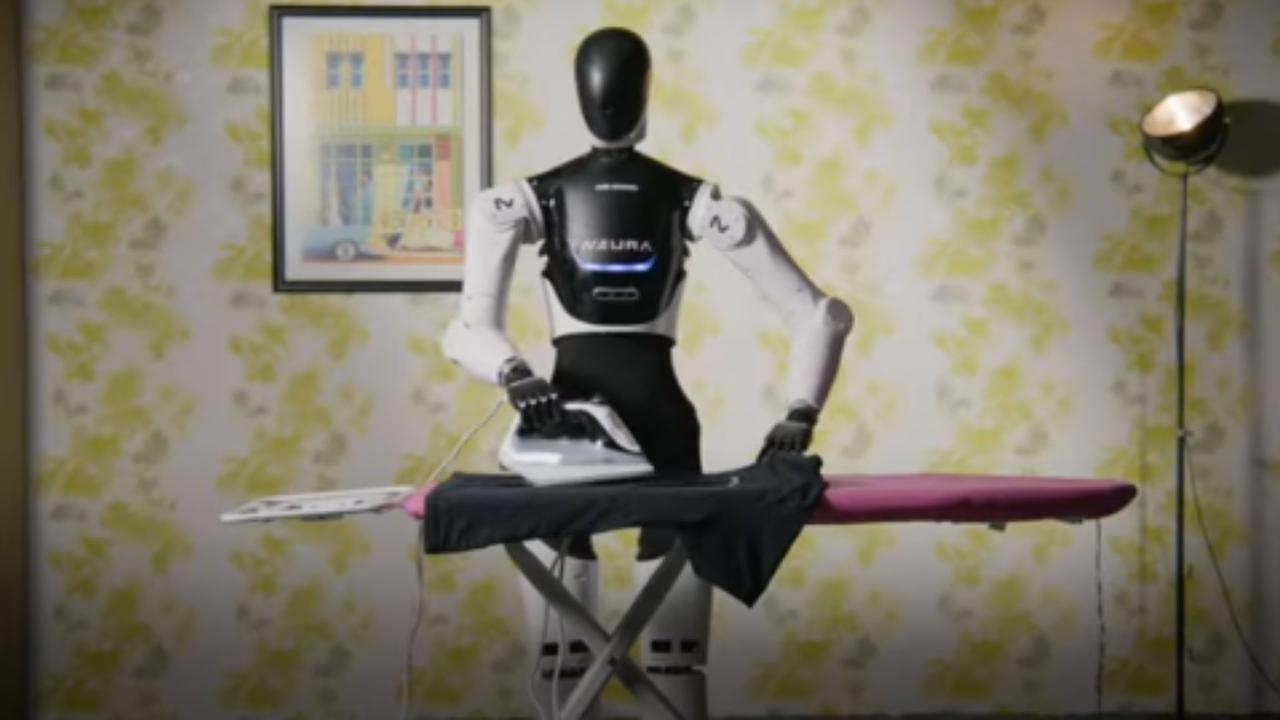
Source: Interesting Engineering
The company's order backlog and strategic deployment pipeline already exceed $1 billion, reflecting growing demand for AI-driven robots capable of operating safely alongside humans
2
3
.Scaling Production and Training Infrastructure
NEURA plans to use the capital to ramp mass production to millions of robots by 2030
2
. The funding will also accelerate the global rollout of NEURA Gyms, described as the world's first real-world training environments for cognitive robots and physical AI2
. These specialized facilities enable robots to learn through real-world interaction, simulation environments, and multimodal AI training pipelines, generating vast amounts of robotics data for developing more capable humanoid robotics systems3
.The Neuraverse platform functions as an open ecosystem where robots share skills, software updates, and real-world learning experiences across deployments
3
. This approach allows cognitive robots to continuously improve and adapt while reducing training time for new tasks.Related Stories
Strategic Partnerships and Novel Integration
The Nvidia and Amazon investment positions NEURA at the intersection of industrial automation and AI infrastructure
2
. The involvement of Bosch and Schaeffler, both tier-one automotive and industrial suppliers, suggests NEURA's robots are being evaluated for deployment in existing manufacturing ecosystems rather than experimental labs2
.The Tether investment adds an unusual dimension to the cognitive robotics platform. Beyond funding, the blockchain firm will integrate its technologies into NEURA's ecosystem
3
. Its open-source Wallet Development Kit will enable robots to use self-custodial digital wallets, allowing them to receive payments and conduct autonomous transactions as part of automated workflows3
. Tether will also deploy its QVAC edge AI runtime within the Neuraverse platform, enabling AI models to run directly on robots, reducing latency and decreasing dependence on cloud infrastructure for industrial applications3
.The company is advancing projects through collaborations with Bosch, Schaeffler, Kawasaki, Delta Electronics, Qualcomm Technologies, Amazon, and Nvidia
3
. The full funding is contingent on the company hitting certain milestones1
.Europe's Position in the Robotics Race
Reger challenged the notion that globally relevant AI infrastructure companies can only emerge from Silicon Valley. "We believe the next generation of AI leaders can emerge anywhere in the world where there is enough vision, engineering talent and execution speed," he said. "With this financing, Neura is firmly among the global leaders in the robotics race, alongside the best in the US and China"
1
.The investment comes as Europe positions itself as a serious contender in humanoid robotics. Siemens and Nvidia have deployed humanoid robots in German factories, while BMW has brought them into manufacturing lines
2
. Startups like Encord are building the data infrastructure layer for physical AI2
.NEURA is also investing in decentralized AI architectures and machine-native economic systems, aiming to create open, interoperable robotics ecosystems that can scale across factories, warehouses, hospitals, and homes worldwide
3
. The integration of digital payment technologies hints at a future where robots transact autonomously, though whether this materializes beyond marketing language remains to be seen2
.References
Summarized by

Navi
[2]
[3]
Related Stories
Neura Robotics Raises €1 Billion to Build AI-Powered Humanoid Robots Backed by Tether
05 Mar 2026•Startups

German Startup Neura Robotics Secures €120M for Advanced Cognitive and Humanoid Robots
17 Jan 2025•Technology

Tether leads $1.4 billion NEURA Robotics funding with Nvidia and Amazon backing AI robotics
10 Jun 2026•Startups

Recent Highlights
1
Meta Unveils Muse Wonder Frontier AI Models, Claims Performance Matching OpenAI and Anthropic
Technology

2
IMF Report Warns AI Market Correction Could Spark Global Financial Crisis With $1.4T at Risk
Business and Economy

3
OpenAI Releases 722 AI-Generated Math Solutions, Triggering Existential Crisis in Mathematics
Technology

Recent Highlights
Today's Top Stories






Don’t drown in AI news. We cut through the noise - filtering, ranking and summarizing the most important AI news, breakthroughs and research daily. Follow topics that matter to you and stay ahead.


