Tether leads $1.4 billion NEURA Robotics funding with Nvidia and Amazon backing AI robotics


2 Sources
[1]
Tether, Nvidia and Amazon Back Humanoid Robotics Firm NEURA in $1.4 Billion Funding Round
Other notable investors in the round include Nvidia, Amazon, Qualcomm, and Bosch. Tether, the company behind the world's largest stablecoin, USDT, announced Wednesday it had led a financing round of up to $1.4 billion into NEURA Robotics, a German humanoid robotics firm. It's billed as one of the
[2]
Tether Expands AI push with Lead Role in NEURA Robotics Raise
NEURA plans to integrate Tether's wallet and AI technologies into its robotics platform, enabling autonomous payments and on-device computing for machines. Tether is leading a funding round of as much as $1.4 billion for German tech company NEURA Robotics, deepening the stablecoin issuer's push
Share
Copy Link
Tether has led a $1.4 billion funding round for German humanoid robotics firm NEURA Robotics, marking one of the largest private investments in the physical AI sector. Nvidia, Amazon, Qualcomm, and Bosch joined the round, which values NEURA at roughly $7 billion. The stablecoin issuer will integrate its wallet and edge AI technologies into NEURA's robotic platforms, enabling machines to execute autonomous payments and process AI models locally.
Tether Leads Historic Funding Round for NEURA Robotics
Tether, the company behind the $187 billion USDT stablecoin, has led a funding round of up to $1.4 billion for NEURA Robotics, a German humanoid robotics firm founded in 2019 and headquartered in Metzingen
1
. The investment, which values NEURA at roughly $7 billion, represents one of the largest private investment rounds ever recorded in the physical AI and AI robotics sectors2
. Joining Tether in this funding round are tech giants Nvidia, Amazon, Qualcomm Technologies, Bosch, imec.xpand, Schaeffler, European Investment Bank, Lingotto Horizon, and InterAlpen Partners1
.NEURA Robotics develops a broad portfolio of robotic systems, including humanoids, precision robotic arms, autonomous mobile robots, and service robots designed for environments where humans and machines work side by side
1
. The company is building an ecosystem called Neuraverse, a software platform intended to connect robots, AI models, data, and services2
.
Source: Decrypt
Tether AI Push Brings Financial Infrastructure to Cognitive Robots
Beyond the capital commitment, Tether will deploy core technologies into NEURA's ecosystem, fundamentally changing how AI-powered robotics operate. The stablecoin issuer will integrate its open-source Wallet Development Kit into NEURA's robotic platforms, embedding self-custodial wallet functionality directly into the machines
1
. This integration will allow autonomous robots to receive payment for completed tasks and execute transactions within predefined operational parameters, making financial settlement part of the workflow itself2
.Tether CEO Paolo Ardoino emphasized the importance of this infrastructure shift: "As robotics moves beyond scripted automation and into true autonomy, the infrastructure behind it must evolve as well. Autonomous machines need the ability to process information locally, make decisions, and transact without relying on centralized intermediaries"
1
.Edge AI and On-Device Computing Transform Industrial Applications
Tether will also integrate its QVAC edge AI runtime into NEURA's Neuraverse software platform
1
. QVAC enables AI models to execute locally on a device rather than relying on remote cloud infrastructure, reducing latency, improving operational resilience, and limiting dependence on large centralized compute providers—a critical capability in industrial environments where uptime and precision are paramount1
. This on-device AI approach allows machines to process information and make decisions independently, without constant cloud connectivity.The QVAC platform represents a significant part of Tether's broader technology strategy. In March, the company introduced a training framework that enables AI models to be trained and run on consumer hardware, including smartphones and non-Nvidia chips
2
. Two months later, it unveiled QVAC MedPsy, a family of medical AI models designed to run directly on smartphones and other devices2
.Related Stories

Physical AI Reshapes Industrial and Commercial Sectors
NEURA Robotics founder and CEO David Reger articulated the vision behind this investment: "The future of AI will not only live on screens. It will move, interact, learn and work beside us in the real world. We believe physical AI and cognitive robotics will become one of the largest technology shifts of the coming decades, transforming industries ranging from manufacturing and logistics to healthcare, services, and household robotics"
1
.This investment follows reports from November 2025 that Tether was considering a 1 billion euro ($1.15 billion) investment in the company, though the Financial Times reported at the time that the deal could value the tech maker at between $9.3 billion and $11.6 billion
2
. The announcement did not disclose how much money Tether is contributing to the current funding round2
.Tether's Expanding Investment Strategy Beyond Stablecoins
The NEURA investment is part of Tether's broader push beyond stablecoins into artificial intelligence, autonomous payments, and emerging technologies
2
. The company reported $1.04 billion in net profit during the first quarter of 2026 and said its excess reserves reached a record $8.23 billion, providing additional capital for investments outside its core USDT business2
. Tether issues the $187 billion USDT stablecoin, which controls roughly 59% of the global stablecoin market, giving it one of the largest balance sheets in the digital asset industry2
.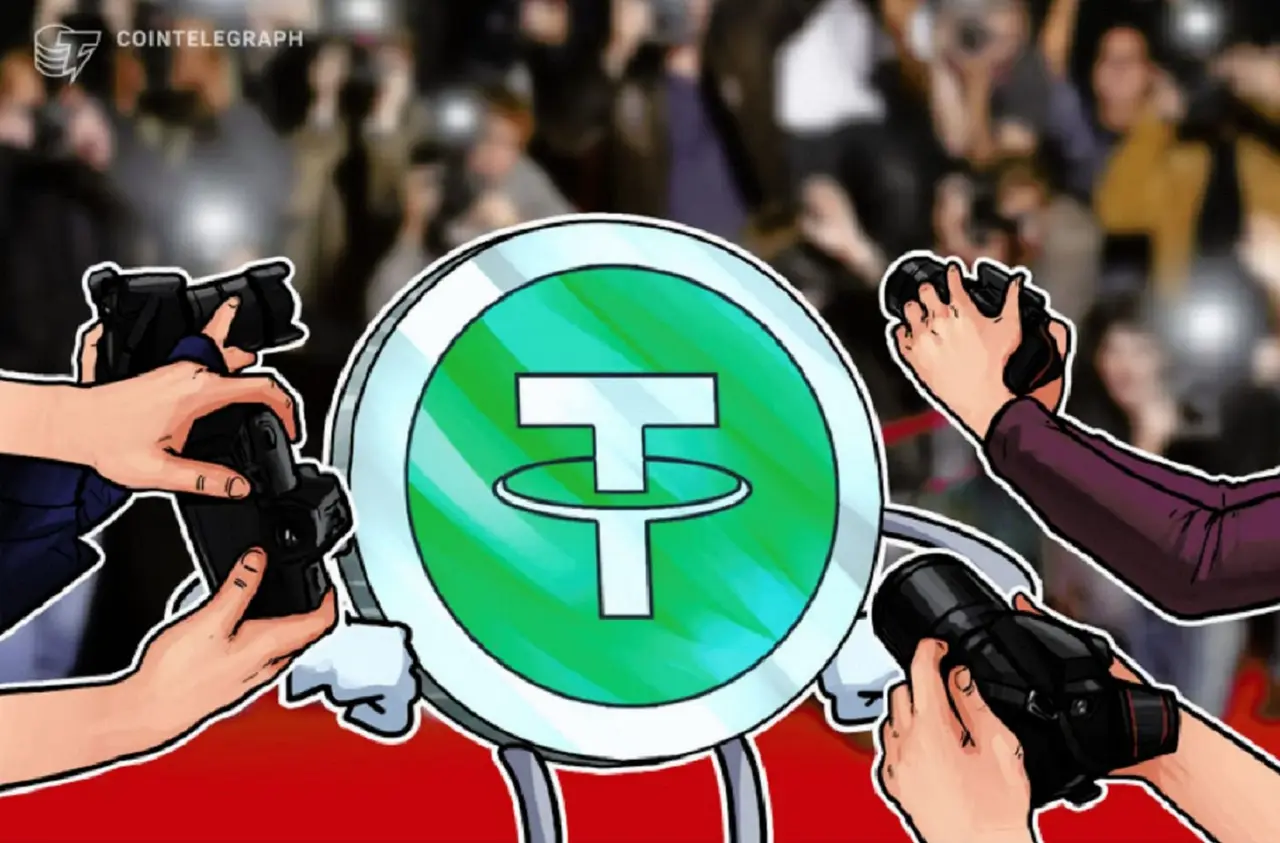
Source: Cointelegraph
In May, Tether launched a grants program to fund developers building local-first AI and payment applications using its open-source tools, including QVAC and its Wallet Development Kit
2
. In a January 2025 interview, CEO Paolo Ardoino said AI-powered humanoid robots could become commonplace within the next decade as advances in computing and automation reshape the workforce2
.References
Summarized by

Navi
[1]
[2]
Related Stories
Tether backs Italian robotics startup Generative Bionics with $81 million for humanoid robots
08 Dec 2025•Startups

Neura Robotics Raises €1 Billion to Build AI-Powered Humanoid Robots Backed by Tether
05 Mar 2026•Startups

NEURA Robotics Secures $1.4 Billion in Series C Funding from Nvidia, Amazon, and Tether
10 Jun 2026•Startups
Recent Highlights



Recent Highlights
Today's Top Stories






Don’t drown in AI news. We cut through the noise - filtering, ranking and summarizing the most important AI news, breakthroughs and research daily. Follow topics that matter to you and stay ahead.


