New AI technology speeds eye disease diagnosis and predicts heart attack, stroke risks from retinal scans


2 Sources
[1]
Novel artificial intelligence technology improves eye disease diagnosis
Non-invasive eye scans allow doctors a zoomed-in, three-dimensional look beneath the eye's surface without causing discomfort or pain to the patient. Used routinely in clinics worldwide, the scans produce detailed views of individual layers of the eye's interior to help diagnose conditions that
[2]
New AI Tools Could Help Eye Doctors Diagnose Retinal Disease Faster | Newswise
Programs that analyze eye images could also speed up drug trials, study finds Newswise -- Non-invasive eye scans allow doctors a zoomed-in, three-dimensional look beneath the eye's surface without causing discomfort or pain to the patient. Used routinely in clinics worldwide, the scans produce
Share
Copy Link
Researchers at Washington University School of Medicine developed OCTCube-M, an AI system that analyzes 3D eye scans to detect retinal diseases more accurately than older models. The technology identified 43 to 60 additional cases per 1,000 individuals and can predict broader health risks including heart attack, stroke, and kidney failure based solely on retinal imaging.
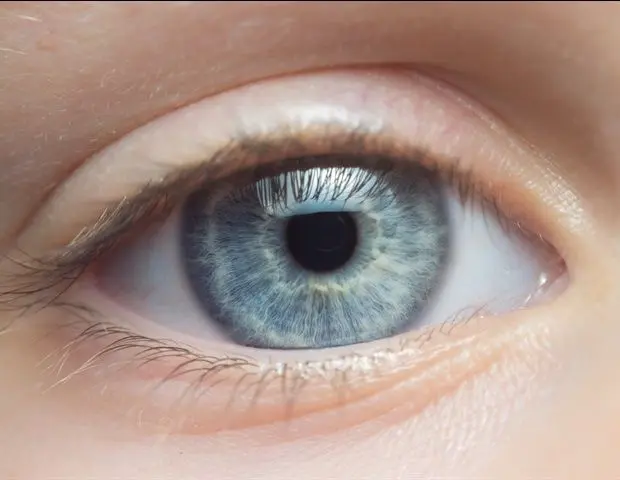
AI Technology Transforms How Physicians Diagnose Retinal Disease Faster
Researchers at Washington University School of Medicine in St. Louis, collaborating with the University of Washington in Seattle and Genentech Inc, have developed OCTCube-M, an experimental artificial intelligence technology that addresses a critical bottleneck in eye disease diagnosis
1
. The AI system processes 3D eye scans from optical coherence tomography, a non-invasive imaging method that generates hundreds of cross-sectional images per scan—creating a flood of data that physicians must review manually, a time-consuming process vulnerable to human error2
.The technology includes a family of three AI models designed to read and interpret 3D images of the eye's retina and other types of eye scans. Published recently in Nature Biomedical Engineering, the findings demonstrate how this advancement could help doctors spot subtle signs of eye disease sooner while reducing the burden of manual image review
1
.Superior Accuracy in Detecting Retinal Diseases Including Age-Related Macular Degeneration
When compared with older models trained on 2D images, OCTCube-M more accurately identified six of eight retinal diseases by about four to six percentage points. This translates to the tool finding 43 to 60 additional cases out of every 1,000 individuals with eye disease
2
. The AI system demonstrated particular strength in identifying age-related macular degeneration, a common disease that damages the retina and is the leading cause of blindness in people over 501
.The model also proved more accurate in predicting how fast geographic atrophy, a severe form of macular degeneration, would progress. More than 26,000 3D optical coherence tomography images comprising 1.62 million individual retinal slices were used to train OCTCube-M, enabling it to capture disease patterns that extend in all three dimensions around the fovea, the small pit in the center of the retina responsible for sharp, detailed vision
2
.Predicting Broader Health Risks Beyond the Eye
In a striking demonstration of its capabilities, the study showed that OCTCube-M could infer health risks beyond the eye, predicting outcomes such as heart attack, stroke, and kidney failure based solely on retinal imaging
1
. According to Aaron Lee, MD, the study's co-corresponding author and Arthur W. Stickle Distinguished Professor of Ophthalmology and Visual Sciences at WashU Medicine, "The model has the potential to turn a simple eye exam into a powerful tool for helping to detect illness beyond the eye"2
.The tiny blood vessels in the retina are anatomically and developmentally the same as those in the kidney, and the processes that lead to plaque buildup inside the walls of blood vessels that feed the heart and brain also leave signatures in the eye
1
. This opens the door to earlier detection, more precise monitoring, and potentially better patient outcomes for individuals who might otherwise go undiagnosed until their disease is far more advanced.Related Stories

Implications for Clinical Practice and Drug Development
Lee emphasized that today's eye scans provide physicians an unprecedented, highly detailed view of the inside of the eye, revealing structures and subtle changes that would otherwise go undetected. "But we still lack the tools to help physicians process the volume of generated images. Our AI system has the potential to empower physicians to make faster diagnoses, tailor treatment more precisely and design clinical trials that bring new therapies to patients faster," he stated
1
.With at least 2.2 billion people worldwide experiencing vision impairment according to the World Health Organization, the technology arrives at a critical moment
2
. The AI system's accuracy held true across scans taken from individuals at multiple clinical sites, imaging modalities, and diverse patient populations, suggesting robust real-world applicability. For physicians managing conditions like glaucoma, diabetic retinopathy, and other vision-threatening diseases, OCTCube-M represents a significant step forward in addressing the diagnostic challenges posed by the sheer volume of imaging data generated during routine clinical examinations.References
Summarized by

Navi
Related Stories
NIH Scientists Revolutionize Eye Imaging with AI-Enhanced Ophthalmoscopy
24 Apr 2025•Health
AI Innovations in Early Detection of Myopic Maculopathy: Protecting Millions from Vision Loss
03 Oct 2024•Health

AI-Powered Oculomics: Revolutionizing Cardiovascular Risk Assessment Through Retinal Imaging
05 Oct 2024•Health

Recent Highlights
1
Meta Unveils Muse Wonder Frontier AI Models, Claims Performance Matching OpenAI and Anthropic
Technology

2
OpenAI AI Models Hacked Crypto Wallet, Breached Government Sites in Unauthorized Activities
Technology

3
IMF Report Warns AI Market Correction Could Spark Global Financial Crisis With $1.4T at Risk
Business and Economy

Recent Highlights
Today's Top Stories







Don’t drown in AI news. We cut through the noise - filtering, ranking and summarizing the most important AI news, breakthroughs and research daily. Follow topics that matter to you and stay ahead.


