3 Sources
[1]
As AI agents become employees, NewCore emerges with $66M to give them identities
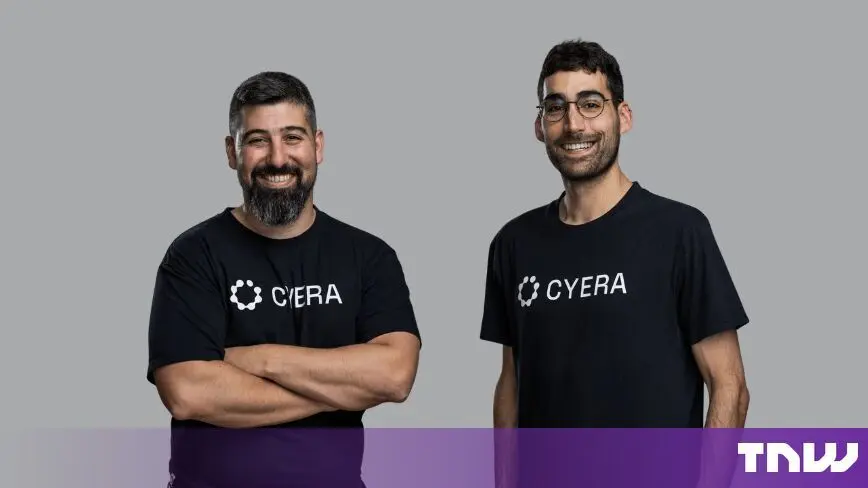
Cybersecurity startup NewCore emerged from stealth with $66 million in funding on Monday, aiming to solve a challenge it believes many companies will soon face as they deploy AI agents: how to authenticate, govern, and control them at scale. The seed round was led by cybersecurity-focused venture firm Cyberstarts, with participation from Index Ventures and Evolution Equity Partners, valuing NewCore at $300 million after investment. Companies are increasingly treating AI agents as workplace participants rather than software tools. Goldman Sachs last year tested AI coding agent Devin as a new employee, while McKinsey said earlier this year that 25,000 AI agents already work alongside its 60,000 employees. NewCore is betting companies will eventually need to manage those digital workers much like human employees. For co-founder and chief executive Zohar Alon (pictured above, center), the opportunity stems from a belief that identity systems have become one of the weakest links in enterprise security. Alon, who previously founded cloud-security startup Dome9 before its acquisition by Check Point, said the rise of AI agents convinced him and his co-founders that existing identity platforms were ill-suited for a future in which software workers operate alongside human employees. "We know for sure that the scale and the complexity that those things [AI agents] are going to add to 15- or 20-year-old identity platforms are going to break them," he told TechCrunch. Alon co-founded NewCore with chief technology officer Amihai Neiderman (pictured above, right), a former Unit 8200 research leader and founder of healthcare AI startup Nym Health, and chief revenue officer Erez Yarkoni (pictured above, left), who previously served as CIO of T-Mobile USA and Telstra. NewCore's platform is designed to manage both human and AI-agent identities in a single system. The startup says AI agents should be treated as first-class identities with their own permissions, lifecycle controls, and revocation mechanisms, rather than as traditional service accounts or machine credentials. The idea for NewCore, Alon said, began taking shape in 2023 while helping review the technology budget of a company that relied on an established identity provider. After seeing the size of the bill, he assumed the customer must be satisfied with the product. "I said, 'You must be extremely happy with them,'" Alon recalled. "He said, 'No, I'm not.'" The exchange reinforced Alon's belief that identity had become a large but stagnant market dominated by vendors facing limited competitive pressure. Established identity providers including Okta and Microsoft's Entra have begun adding capabilities for AI agents. However, Alon argues those efforts extend platforms originally designed for human employees, whereas NewCore was built from the ground up for a workforce made up of humans, machines, and AI agents. "The traditional vendors give you an agentic way to deal with identity, but it's on the side -- it's not integrated," Alon said. As one example, NewCore uses what it calls a "split-key" architecture that divides critical identity credentials between the customer and the platform, an approach designed to eliminate a single point of compromise. NewCore also offers an "Agentic Skill" integration package for coding assistants such as Anthropic's Claude Code, OpenAI's Codex and Cursor that allows those AI tools to access enterprise systems as managed identities rather than through manually distributed credentials. Employees can also use NewCore's mobile app to grant, review and revoke access for AI agents, providing what Alon described as a human oversight layer as companies deploy more autonomous systems. The startup has grown to more than 50 employees across the U.S. and Israel. Alon said the platform is being used by fewer than 10 customers and more than 10 design partners. The startup expects to begin charging customers this summer, he added. Alon predicts AI agents could outnumber human employees at many technology-focused organizations within a few years, a view recently echoed by TCS Chairman N. Chandrasekaran, who has said AI agents could eventually rival the Indian IT services company's workforce in size. Identity, Alon said, is likely to become one of the first enterprise systems strained by large-scale deployment of AI agents, arguing that companies will eventually need new ways to monitor, authorize, and revoke software workers operating across their networks. "It's inevitable," Alon said of AI agents becoming a significant part of the workforce. "The question is whether we're going to build the guardrails in time."
[2]
NewCore launches security-first identities for AI agents after closing $66M seed funding round
NewCore launches security-first identities for AI agents after closing $66M seed funding round Agentic identity startup NewCore Ltd. said today it's launching its security-focused platform for artificial intelligence agents after raising a massive seed funding round of $66 million. The company says it has built a comprehensive "security-first identity platform" that's able to secure and govern both humans and autonomous AI agents within a single, highly scalable architecture that's easy to deploy atop of existing information technology systems. That's sorely needed, the startup argues, because existing identity systems are ill-equipped to deal with the realities of a world where millions of AI agents are working alongside humans across thousands of enterprises that have adopted them. Identity has become a primary attack vector given the inefficiencies of existing infrastructure, which was never designed to support autonomous agents. According to NewCore founder and Chief Executive Zohar Alon, the business world has changed dramatically in the last couple of years, with AI agents being spun up in seconds and requiring fine-grained and revocable access to production systems. It has proved to be extremely problematic, he said. Most existing identity offerings were built exclusively for human users and leverage protocols such as the Security Assertion Markup Language, static service accounts and password-derived session tokens that were never designed to be used by agents. Alon knows a thing or two about identity and security systems, having previously founded and led the cloud security firm Dome9 Security Ltd., which was acquired by Check Point Software Technologies Ltd. back in 2018. He has put together a strong team, including Chief Technology Officer Amihai Neiderman, a pioneer in Applied AI and former research leader at Israel's Unit 8200 signals intelligence agency, and Chief Revenue Officer Erez Yarkoni, who previously worked at T-Mobile USA Inc. and Telstra Group Ltd. Under their leadership, NewCore, which already has more than 50 employees at its two offices in Tel Aviv and San Francisco, has developed an entirely new identity architecture that's primed for AI agents. Whereas existing platforms are focused on things like the number of seats provisioned, applications federated and tickets closed, NewCore eliminates multiple categories of risk. For instance, NewCore uses Secure SplitKeys that remove the single point of failure inherent in SAML signing infrastructure in order to eliminate an entire class of attack vectors, including Golden SAML, adversary-in-the-middle session theft and token replay attacks. Those vectors were responsible for some of the largest identity-related cyberattacks in history, Alon said. NewCore's platform also differs in that AI agents are treated as first-class identities and have their own lifecycles, trust scores and revocation paths. That's instead of their operating as standard service accounts. There's a strong focus on agent governance too, and the platform introduces the NewCore Agentic Skill, which is compatible with coding agents such as Claude Code, Cursor and Codex and enables them to authenticate themselves and operate securely within enterprise trust maps. With NewCore, the user verification for humans becomes a visually verifiable exchange using visual multifactor authentication processes. This ensures that human users will be resistant to relay, replay and social engineering attacks, the company said. Each user is verified using hardware-bound security credentials anchored in trusted platform modules and secure enclaves to eliminate the risk of phishing attacks entirely. Moreover, NewCore said its platform has been engineered to support the scale of the world's biggest enterprises, including environments where nonhuman identities can outnumber living workers by several orders of magnitude, the company said. NewCore's platform is being showcased for the first time at the Identiverse 2026 conference in Las Vegas this week, and enterprises can access it in general availability starting today. The round was led by Cyberstarts and saw participation from Index Ventures and Evolution Equity Partners.
[3]
NewCore exits stealth with $66m. at $300m. valuation to secure AI-agent identity
NewCore, a Tel Aviv and San Francisco-based identity security startup, emerged from stealth on Monday with $66 million in funding from Cyberstarts, Index Ventures, and Evolution Equity Partners, the company announced. The funding round values the company at $300 million, The Jerusalem Post has learned. The company said its platform was built to secure workforce identity for enterprises now operating with humans, machines, and AI agents. NewCore is led by co-founder and CEO Zohar Alon, co-founder and CTO Amihai Neiderman, and co-founder and CRO Erez Yarkoni. Identity security built for AI agents NewCore said enterprise identity systems were designed for an earlier era of employees logging into web applications and now face new pressure from AI agents that can require access to production systems within seconds. The company said its platform discovers, secures, and governs every identity in an enterprise, including human users, machine accounts, and agentic identities. The platform includes Secure Split Key, which NewCore said is intended to reduce the risk of a single point of compromise in signing infrastructure, along with phishing-resistant authentication tools and hardware-bound credentials. It also treats AI agents as first-class identities with their own lifecycle, trust score, and revocation path, rather than as service accounts. NewCore said its platform was engineered for enterprise environments where agentic identities may outnumber human ones by two orders of magnitude or more. The company said its goal is not only to manage access, but to reduce the volume of identity-related risk across the enterprise. Israeli cyber sector draws investor attention NewCore is entering a market where Israeli cybersecurity companies have continued to attract major investor backing. The Post reported that private funding for Israel's cybersecurity sector in 2024 nearly doubled from 2023, while other Israeli-linked cybersecurity companies have raised capital to address AI-driven threats and enterprise security automation. The launch follows several recent developments in Israeli cyber and AI security. Surf AI launched with $57 million for an AI-driven security operations platform, while Zafran Security raised $60 million for AI-native threat exposure management. Growing attention has also focused on the management of identities and permissions for AI agents. The Post reported that Check Point acquired Israeli start-ups including Cyata, whose technology focuses on identity and permissions management for AI agents. Investors point to security-first architecture "Identity is broken, and yet it has become the control plane of the modern enterprise," Alon said. "We built NewCore for the workforce that actually exists today, one of humans, machines, and agents, and we built it security-first from day one." Lior Simon, partner at Cyberstarts, said NewCore was built from a different starting point than earlier enterprise systems. "NewCore changes the starting point, building the identity system itself as if cybersecurity experts had designed it from day one, using the technology and models that are possible today," Simon said. NewCore said it is available to enterprise customers today and will demonstrate the platform at Identiverse in Las Vegas from June 15 to 18.
Share
Copy Link
Cybersecurity startup NewCore emerged from stealth with $66 million in funding to solve how companies authenticate and govern AI agents at scale. The agentic identity startup treats AI agents as first-class identities with their own lifecycle controls, addressing a gap in enterprise identity security as organizations deploy thousands of digital workers alongside humans.
NewCore, a cybersecurity startup focused on identity security, emerged from stealth on Monday with $66 million seed funding led by Cyberstarts, with participation from Index Ventures and Evolution Equity Partners. The round values the Tel Aviv and San Francisco-based company at $300 million post-investment, positioning it to address what co-founder and CEO Zohar Alon describes as one of the weakest links in enterprise security: identity systems
1
.The agentic identity startup has already grown to more than 50 employees across its U.S. and Israel offices and is working with fewer than 10 customers and more than 10 design partners. NewCore expects to begin charging customers this summer, marking its transition from development to commercial operations
1
.
Source: SiliconANGLE
As companies increasingly deploy AI agents as workplace participants rather than simple software tools, NewCore is betting that organizations will need to manage these digital workers much like human employees. Goldman Sachs tested AI coding agent Devin as a new employee last year, while McKinsey reported earlier this year that 25,000 AI agents already work alongside its 60,000 employees
1
.NewCore's platform treats AI agents as first-class identities with their own permissions, lifecycle controls, trust scores, and revocation mechanisms, rather than as traditional service accounts or machine credentials. This approach to AI-agent identity management represents a fundamental shift from how existing platforms handle non-human identities
2
.Alon, who previously founded cloud-security startup Dome9 before its acquisition by Check Point, argues that 15- to 20-year-old identity platforms will break under the scale and complexity that AI agents introduce. The business world has changed dramatically, with AI agents being spun up in seconds and requiring fine-grained and revocable access to production systems—a reality that existing identity offerings built exclusively for human users cannot adequately support
2
.NewCore's platform uses what it calls Secure SplitKeys, a split-key architecture that divides critical identity credentials between the customer and the platform. This approach eliminates single points of failure inherent in SAML signing infrastructure and removes entire classes of attack vectors, including Golden SAML, adversary-in-the-middle session theft, and token replay attacks—vectors responsible for some of the largest identity-related cyberattacks in history
2
.The platform introduces the NewCore Agentic Skill, an integration package compatible with coding assistants such as Anthropic Claude Code, OpenAI Codex, and Cursor. This allows AI tools to access enterprise systems as managed identities rather than through manually distributed credentials, providing what Alon describes as a human oversight layer as companies deploy more autonomous systems
1
.Employees can use NewCore's mobile app to grant, review, and revoke access for AI agents, ensuring proper governance and authentication controls remain in place. The platform has been engineered to support environments where agentic identities may outnumber human ones by two orders of magnitude or more, addressing the scale challenges that enterprise identity security systems will face
3
.While established identity providers including Okta and Microsoft's Entra have begun adding capabilities for AI agents, Alon argues those efforts extend platforms originally designed for human employees. In contrast, NewCore was built from the ground up for a workforce made up of humans, machines, and AI agents. "The traditional vendors give you an agentic way to deal with identity, but it's on the side—it's not integrated," Alon said
1
.The idea for NewCore began taking shape in 2023 while Alon was helping review the technology budget of a company relying on an established identity provider. Despite the size of the bill, the customer expressed dissatisfaction, reinforcing Alon's belief that identity had become a large but stagnant market dominated by vendors facing limited competitive pressure
1
.Related Stories
For human users, NewCore implements phishing-resistant authentication through visually verifiable exchanges using visual multifactor authentication processes. Each user is verified using hardware-bound security credentials anchored in trusted platform modules and secure enclaves, designed to eliminate the risk of phishing attacks entirely and resist relay, replay, and social engineering attacks
2
.
Source: TechCrunch
NewCore is led by Zohar Alon as CEO, chief technology officer Amihai Neiderman—a former Unit 8200 research leader and founder of healthcare AI startup Nym Health—and chief revenue officer Erez Yarkoni, who previously served as CIO of T-Mobile USA and Telstra
1
.Alon predicts AI agents could outnumber human employees at many technology-focused organizations within a few years, a view recently echoed by TCS Chairman N. Chandrasekaran, who said AI agents could eventually rival the Indian IT services company's workforce in size. Identity is likely to become one of the first enterprise systems strained by large-scale deployment of AI agents, Alon argues, with companies needing new ways to monitor, authorize, and revoke software workers operating across their networks
1
.Lior Simon, partner at Cyberstarts, noted that NewCore changes the starting point by building the identity system as if cybersecurity experts had designed it from day one. The platform is available to enterprise customers today and was showcased at the Identiverse 2026 conference in Las Vegas
3
. "It's inevitable," Alon said of AI agents becoming a significant part of the workforce. "The question is whether we're going to build the guardrails in time"1
.Summarized by
Navi
[2]
30 Jul 2025•Technology

04 Jun 2026•Startups

12 Mar 2026•Technology

1
Policy and Regulation

2
Business and Economy

3
Technology