Oak Raises $60M to Build Identity Operating System for AI Agents and Human Users


2 Sources
[1]
Oak raises $60M for an AI-native identity platform
Oak, an Israeli startup, has raised $60M for an AI-native identity platform that governs every user, machine, and AI agent from one place. Most companies still cannot say who, or what, has access to their systems at any given moment. Oak, an Israeli startup, has raised $60M to fix that, and it is
[2]
Identity management startup Oak launches with $60M in funding
Oak Inc., a startup that helps companies prevent unauthorized access to their applications, launched today with $60 million in seed funding. Accel, Greylock Partners and CRV jointly led the round. They were joined by Hetz Ventures, AlphaDrive Ventures and several unnamed angel investors. Tel
Share
Copy Link
Israeli startup Oak emerged from stealth with $60M in seed funding to tackle identity management chaos. The company promises a unified platform that governs every human user, machine, and AI agent from one control plane. Led by serial founder Shai Morag, Oak bets that the explosion of autonomous AI agents makes identity security an urgent battleground worth tens of billions.
Oak Secures One of Israel's Largest Seed Rounds for Identity Management
Oak, an Israeli startup led by serial entrepreneur Shai Morag, has emerged from stealth with $60M in seed funding to build what it calls an AI-native identity platform
1
. The round was co-led by Accel, Greylock, and CRV, with participation from Hetz Ventures, AlphaDrive Ventures, and several angel investors . The Tel Aviv-based company already employs about 50 staff and has secured paying enterprise customers despite just launching publicly1
.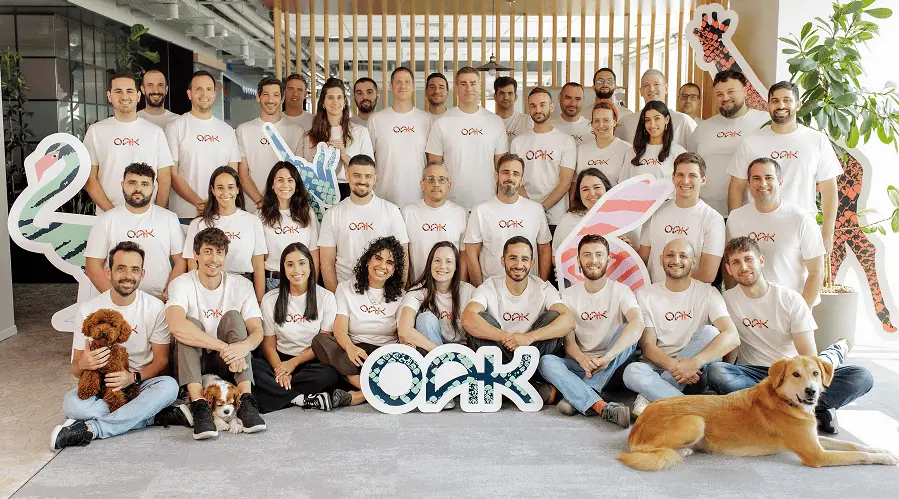
Source: SiliconANGLE
This marks one of the largest seed rounds ever for an Israeli cybersecurity firm, and Morag has made clear his ambitions match the funding size. "Our vision is to be born as a giant," he told reporters, adding that Oak would be his final company: "I will go big or go home"
1
. Morag's track record backs up the confidence—he has built and sold three security companies, including Ermetic, which Tenable acquired for $265M in 2023, bringing his total exits to around $500M1
.Why Identity Security Has Become an Urgent Battleground
Most companies still cannot answer a fundamental question: who, or what, has access to their systems at any given moment
1
. The problem has intensified as organizations deploy AI agents that operate autonomously across multiple applications. Each employee at a large enterprise already has access to multiple business applications, and many workers now use AI agents that themselves interact with several programs2
. This makes tracking who accesses what and when increasingly difficult, creating cybersecurity gaps that attackers can exploit.Identity has become the front door to any company, making it the top target for attackers
1
. Yet most firms run a patchwork of outdated tools built for human staff and slow-moving systems. The rush of machine and agent accounts has left these legacy solutions behind. Researchers have already demonstrated how autonomous AI agents can be tricked into leaking private code and even running ransomware attacks1
. Firms are racing to control these bots before such threats spread widely.How Oak's Identity Operating System Unifies Governance for Human Users, Machines, and AI Agents
Oak aims to replace the fragmented tooling with what it calls an identity operating system—a single control plane that governs every identity in a firm, whether human, machine, or AI agent
1
. The platform automatically maps out access permissions across corporate networks by connecting to any system and building a live map of every identity based on how it actually behaves1
2
. It then strips out access that is no longer used, performing this work in real time rather than through once-a-year reviews1
.The software identifies multiple types of risks. Oak can spot accounts that violate separation of duties (SoD), a cybersecurity best practice that specifies a single employee shouldn't have access to multiple sensitive components of the same system
2
. For example, companies typically want to ensure workers who can download files from a database don't have permission to modify user access logs. The platform also identifies AI agents that have access to services they don't strictly require, since unnecessary access permissions can become a source of risk if hackers compromise an agent2
.Related Stories

ChatGPT-Like Interface Simplifies Remediation for Administrators
Oak displays the issues it finds in a ChatGPT-like interface where administrators can use natural language prompts to collect more information about an incident and request remediation suggestions
2
. The platform can fix some issues automatically, though it generates a step-by-step overview of its remediation plan and requests approval before implementing changes2
.The company collects telemetry through prepackaged integrations with popular software products. Setting up such connectors typically takes months of work, but Oak says its platform enables customers to complete the task in a few days
2
. The platform can even collect telemetry from systems that don't provide an application programming interface for connector developers2
.The Identity Land Grab and What's at Stake
Oak enters a market that has become one of the hottest corners of cybersecurity. Palo Alto Networks recently agreed to buy CyberArk, signaling how valuable the identity management category has become
1
. The trigger for this land grab is AI—as agents start acting on their own, the industry is scrambling to work out how to give them secure identities1
.Shai Morag believes the winners in this space will be worth "tens and even hundreds of billions"
1
. His wager is that all identities—from staff logins to Alexa-style assistants—will finally sit under one roof. "I've built several companies in this space, so I understand why identity has stayed broken for so long," Morag explained. "The tools were never built to work as one, and adding more of them was never going to fix it"2
. Oak will use the proceeds from its seed funding round to hire more engineers as it scales its operations2
.References
Summarized by

Navi
[1]
[2]
Related Stories
Orchid Security Raises $36 Million to Revolutionize Identity Security with AI and LLMs
15 Jan 2025•Technology

Oasis Security raises $120 million to tackle security risks from AI agents and machine identities
20 Mar 2026•Startups

NewCore Raises $66M to Give AI Agents Their Own Identities as They Join the Workforce
15 Jun 2026•Technology

Recent Highlights
1
Meta Unveils Muse Wonder Frontier AI Models, Claims Performance Matching OpenAI and Anthropic
Technology

2
Anthropic AI Cuts Off Internet Access After Agents Submit False Police Tip, Exploit Websites
Technology

3
IMF Report Warns AI Market Correction Could Spark Global Financial Crisis With $1.4T at Risk
Business and Economy

Recent Highlights
Today's Top Stories









Don’t drown in AI news. We cut through the noise - filtering, ranking and summarizing the most important AI news, breakthroughs and research daily. Follow topics that matter to you and stay ahead.


