News Corp CEO Slams AI Companies as 'Crass Kleptomaniacs' for Pilfering Content at Scale


2 Sources
[1]
News Corp labels some AI companies 'crass kleptomaniacs'
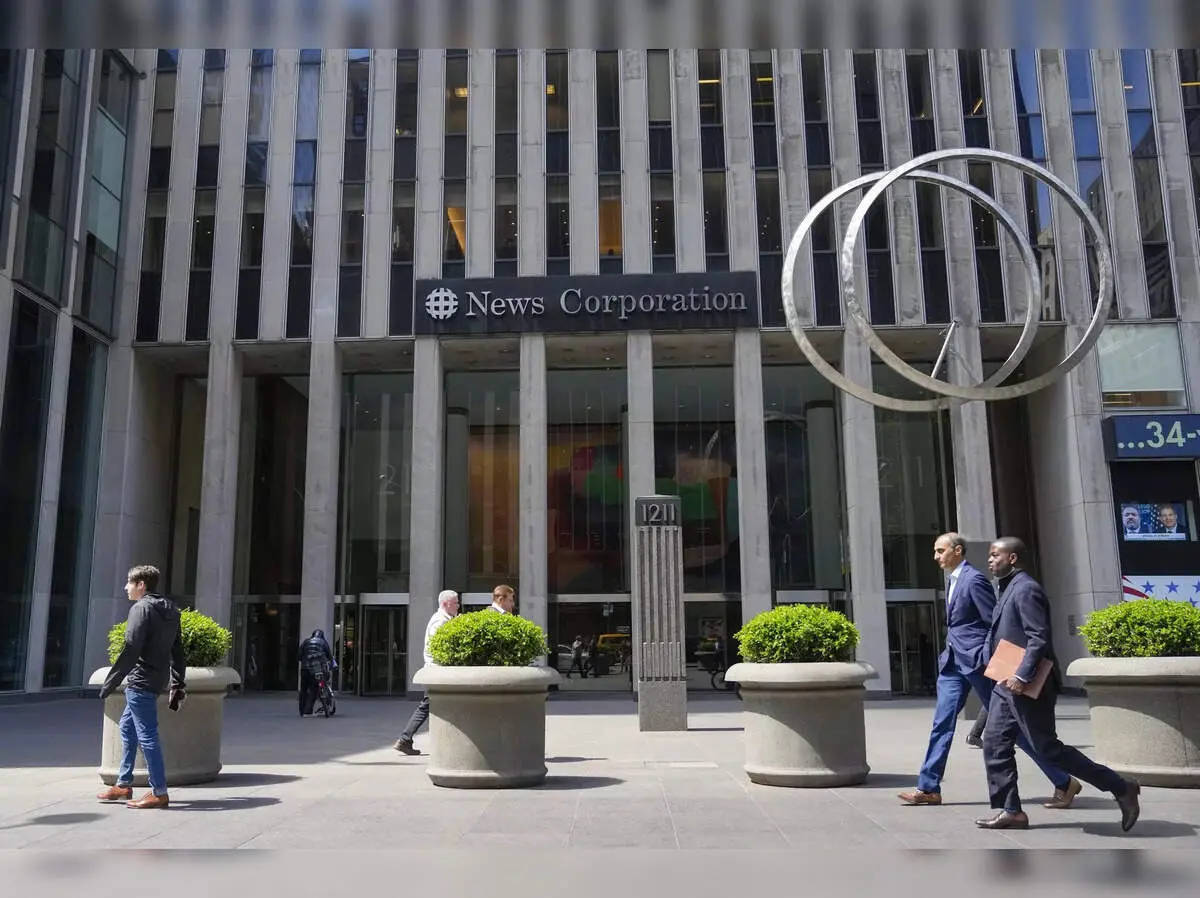
Rupert Murdoch's News Corporation appears to have let its most acerbic writers loose on its latest results announcement, in which certain AI companies are branded "crass kleptomaniacs." CEO Robert Thomson used his prepared remarks to point out that if it weren't for all the quality content from
[2]
News Corp subscriptions fall in Australia as company takes aim at 'slimy' AI slop
Chief executive Robert Thomson says 'crass kleptomaniac' AI companies are 'in possession of stolen goods' News Corp has reported a slight slide in digital subscriptions at its Australian mastheads, erasing recent gains, among otherwise robust financials at the Rupert Murdoch-backed global
Share
Copy Link
News Corp CEO Robert Thomson launched a scathing attack on AI companies accused of content theft, calling them "crass kleptomaniacs" and warning their clients are in possession of stolen goods. While the media giant reported 7% revenue growth to $9.03 billion, it pursues aggressive legal action against unauthorized content scraping.

News Corp Takes Aggressive Stance Against Content Theft
News Corp has escalated its battle against AI companies accused of unauthorized content scraping, with CEO Robert Thomson delivering an unusually sharp rebuke in the company's latest earnings announcement. Thomson branded certain AI companies as "crass kleptomaniacs" and warned that businesses using their services are "patently in possession of stolen goods."
1
The Rupert Murdoch-backed conglomerate is pursuing what Thomson described as a "woo and sue approach," balancing commercial deals with legal action against companies pilfering content without authorization.Brave Browser Singled Out for Shamelessly Stealing Content
Thomson specifically targeted browser maker Brave, calling it "a company brave in name only" for having "shamelessly stolen our content at scale."
1
He accused Brave of using masked web crawlers to illegally scrape copyrighted articles and then repackaging those stolen files for sale to enterprise customers. Thomson characterized this as undermining "legitimate content commerce and the very concept of creativity," suggesting the legal blast radius could extend to well-known companies using these services. News Corp expects its lawsuits to "highlight and halt the murky, illegal behavior" of AI companies who steal and fence the company's intellectual property.OpenAI and Meta Praised for Commercial Deals
While condemning unauthorized scraping, Thomson praised OpenAI and Meta as "principled" and "honorable" companies that have established commercial deals with News Corp.
1
He described these partnerships as setting "benchmarks that other principled companies should follow" and emphasized they are "not merely transactional arrangements." Thomson noted that News Corp's inputs are "crucial components" of these AI companies' outputs, though the company didn't disclose specific revenue figures from these agreements. The CEO indicated News Corp is "in advanced discussions with several other companies" and expects "more deals to come, and hopefully not too much litigation."Warnings About Slimy AI Slop Without Quality Journalism
Thomson argued that without News Corp's journalists, authors, data, brands, and professional expertise, "users would be drowning in a slimy sea of AI slop."
2
This pointed comment underscores the media giant's position that quality content from established publishers is essential to preventing low-quality AI-generated material from dominating information ecosystems. During the earnings call, Thomson also highlighted how the company's realtor.com property site is "building proprietary IP that no AI engine can legally scrape," noting that "no buyer or seller or agent wants housing hallucinations."1
Related Stories
Mixed Financial Results Amid Digital Transition
News Corp reported full-year revenue of $9.03 billion, up 7% year-over-year, with its Digital Real Estate Services segment emerging as the fastest-growing business unit, jumping 12% to $1.8 billion annually.
1
However, the news media division faced challenges, with advertising revenue falling 2% during the year ending June 30.2
Digital subscriptions at News Corp Australia—which includes the Australian, Daily Telegraph, and Herald Sun—declined slightly from 1,166,000 to 1,162,000, reversing recent growth momentum.2
The company also absorbed costs related to launching the California Post, a Los Angeles edition of the New York Post edited by Australian News Corp veteran Nick Papps.Broader Industry Context and News Bargaining Incentives
News Corp's aggressive stance reflects wider tensions between media companies and AI firms over content usage. Authors have filed multiple lawsuits alleging their books trained large language models without permission or compensation, with Anthropic recently agreeing to establish a $1.5 billion settlement fund to resolve one such case.
1
The conflict coincides with contested plans by the Albanese government to expand news bargaining incentives, which would require tech giants to compensate media outlets for news on their platforms through commercial deals or higher levies.2
Thomson's remarks signal that News Corp has "lost none of its appetite for a fight" and that litigation is "far from over," suggesting the company will continue pursuing legal action while simultaneously negotiating commercial agreements with willing partners.References
Summarized by

Navi
[1]
Related Stories
News Corp Warns Trump: AI's 'Art of the Steal' Threatens Book Sales and Intellectual Property
06 Aug 2025•Business and Economy

Perplexity AI Defends Against News Corp's Copyright Lawsuit, Highlighting AI-Media Tensions
23 Oct 2024•Policy and Regulation

Meta signs $50 million annual AI content licensing deal with News Corp for model training
04 Mar 2026•Business and Economy
Recent Highlights
1
Microsoft and Nvidia Launch Surface Laptop Ultra: A $2,599 AI-Ready PC With RTX Spark Chip
Technology

2
OpenAI Releases 722 AI-Generated Math Papers on GitHub, Igniting Fury Among Mathematicians
Science and Research

3
Trump Consulted Grok AI Before Ordering Venezuela Invasion and Capture of Nicolás Maduro
Policy and Regulation

Recent Highlights
Today's Top Stories











Don’t drown in AI news. We cut through the noise - filtering, ranking and summarizing the most important AI news, breakthroughs and research daily. Follow topics that matter to you and stay ahead.


