NHS App Gets AI Triage Tool to Direct Patients to Appropriate Services in £10bn Tech Overhaul


3 Sources
[1]
NHS app to use AI to determine which service best for patients
Artificial intelligence will be used on the NHS app to determine which service is most appropriate for patients in England, the health service has announced. A new triage tool will ask patients a series of questions, and will use the responses to direct them to a GP appointment, pharmacy, A&E,
[2]
NHS App gets AI triage in GBP 10bn tech overhaul
The UK government will add AI triage to the NHS App to steer patients in England towards GPs, pharmacies, or A&E, reaching 200,000 patients in year one and all users by April 2028. The rollout is part of a GBP 10bn technology overhaul that also includes ambient AI scribes, though health leaders
[3]
NHS to use AI on its app to direct patients to appropriate services
Update in England expected to reach about 200,000 patients over the next year as part of £10bn package to overhaul NHS systems The NHS will begin using AI on its app to direct patients to the appropriate services, it has been announced. The tool will be used to triage patients and to ascertain if
Share
Copy Link
The NHS is deploying AI triage on its app to direct patients in England to GP appointments, pharmacies, or A&E. The tool will reach 200,000 patients in the next 12 months and all users by April 2028. Part of a £10bn tech overhaul, the initiative also includes AI tools for real-time transcriptions at hospital appointments, though health leaders warn about overstated productivity claims and digital exclusion risks.
NHS App Introduces AI to Determine Which Service Best for Patients
The NHS has announced that artificial intelligence will be integrated into the NHS app to direct patients to appropriate services across England. The AI triage tool will ask patients a series of questions about their symptoms and use their responses to recommend whether they need GP appointments, should visit a pharmacy, head to A&E, access community services, or manage their condition with self-care advice
1
. This update represents a significant shift in how patients access NHS technology and is expected to reach more than 200,000 patients over the next 12 months before becoming available to all app users by April 20282
.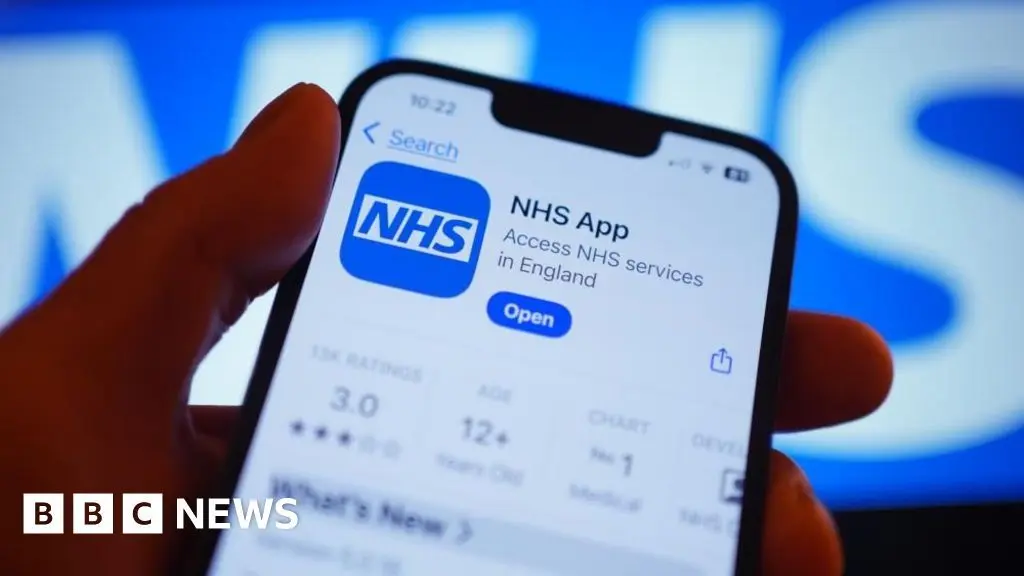
Source: BBC
The rollout forms part of a £10bn tech overhaul allocated by the government in 2025 to transform the NHS's technology, digital, and data systems
1
. Ending the 8am scramble for same-day appointments was a central promise in Labour's 2024 manifesto, and officials believe this AI-driven healthcare transformation will help achieve that goal3
.Early Trial Shows Promise in Reducing Wait Times
An initial trial at Wealden Ridge Medical Partnership in Sussex demonstrated a 29% reduction in the number of people queuing on the phone for an appointment
1
. Dr Ragu Rajan, who works at the practice, explained that integrating the tool "means our patients can tell us what they need, when they need it, and be directed to the right care first time." He emphasized that the technology "hasn't replaced our judgement - it's given us back the time to use it"1
. However, this figure has not yet been independently published2
.Sir Jim Mackey, chief executive of NHS England, said the tool would "help get patients to the best service for their needs first time... so that clinicians can make sure those most in need of a GP appointment can get one sooner"
1
. Health secretary James Murray stated he was "certain" that new technological advances would "get patients to the right care faster, free our brilliant clinicians from mountains of paperwork, and help drive down waiting times"3
.AI Tools for Real-Time Transcriptions Expand Across Hospitals
The £10bn investment also includes an England-wide rollout of AI tools for real-time transcriptions that record conversations between patients and NHS staff to generate clinical summaries
1
. The ambient AI scribes will initially launch at hospital appointments not requiring an overnight stay at four NHS trusts in and around London: St George's, Epsom and St Helier, Croydon, and Kingston and Richmond. Alder Hey Children's NHS Foundation Trust in Liverpool and Manchester University NHS Foundation Trust are also expanding their AI notetaking programmes1
.A trial led by Great Ormond Street Hospital for Children and carried out across nine NHS sites in London found NHS staff spent almost 25% more time interacting with patients when using the notetaking technology
1
. This reduction in administrative burden could free clinicians to focus more on patient care rather than paperwork.Related Stories




Health Leaders Raise Concerns About Patient Safety and Digital Exclusion
While the rollout has been largely welcomed, health bodies have urged caution. Prof Lynn Woolsey, chief nursing officer at the Royal College of Nursing, said the rollout could mark "an important step in upgrading technology in the NHS" but warned of "overstated, overly optimistic assessments" of AI's productivity benefits. She emphasized that patient safety and data confidentiality must be at the "heart of any AI triage system, with a guarantee that a health professional will be the one making decisions at key points in that process"
1
. Woolsey also cautioned that new systems must not create bureaucracy by producing flawed work that needs correcting3
.Pritesh Mistry, fellow at the King's Fund think-tank, noted that "people should find it easier to have support at the right time and in a way that best suits them, digitally or physically," but stressed that "the NHS will need to keep a strong focus on ensuring that people are not digitally excluded as clinical services become increasingly reliant on technology"
1
. The real test, Mistry added, is whether care feels more joined up for patients.Tim Horton, deputy director of policy at the Health Foundation, warned that the NHS risks "piecemeal adoption" of AI without a broader long-term strategy for guiding its use across the health system
3
. Questions remain about liability, after a Medical Protection Society report in June warned that doctors and the NHS could be sued for mistakes made by AI tools. As the NHS leans more heavily on digital services to reduce wait times, the challenge will be ensuring that those who never open the app are not left behind.References
Summarized by

Navi
[2]
Related Stories
Recent Highlights



Recent Highlights
Today's Top Stories





Don’t drown in AI news. We cut through the noise - filtering, ranking and summarizing the most important AI news, breakthroughs and research daily. Follow topics that matter to you and stay ahead.


