Nick Clegg Calls Out AI Labs Self-Regulation and Dismisses Extinction Fears as Self-Serving


3 Sources
[1]
Nick Clegg says AI labs can't keep marking their own homework
Former Meta executive Nick Clegg told HumanX that AI labs cannot keep marking their own homework. He said Europe should not try to copy the US and Chinese AI stack. AI labs cannot keep regulating themselves, Nick Clegg said. A growing backlash against AI shows up in cancelled data center projects,
[2]
Nick Clegg dismisses fears that AI could wipe out humanity
The former Meta executive told BBC Radio 4 that such warnings favour a handful of big AI companies. Nick Clegg has dismissed fears that artificial intelligence could one day turn on humanity and wipe it out, calling that view hand-wavy. The former UK deputy prime minister, who later ran global
[3]
Nick Clegg plays down fears 'godlike' AI could exterminate humanity
Former deputy PM now involved in tech industry says many within the sector are 'winding themselves up into a lather' Nick Clegg has dismissed fears over AI's "godlike power to exterminate humanity", calling it a sign that tech bosses are "breathing their own fumes". The former UK deputy prime
Share
Copy Link
Former Meta executive Nick Clegg dismissed fears of AI wiping out humanity, calling doomsday warnings self-serving. Speaking at HumanX and BBC Radio 4, he argued AI labs cannot keep self-regulating and urged focus on specific AI threats like cybersecurity, bioweapons, and emotional dependence rather than extinction scenarios.
AI Labs Cannot Keep Self-Regulating, Says Nick Clegg
Former Meta president of global affairs Nick Clegg declared that AI labs cannot continue marking their own homework for the next 10 to 20 years
1
. Speaking at HumanX in Amsterdam and on BBC Radio 4's Today programme, Clegg, now a general partner at Hiro Capital, warned that self-regulation by AI labs is unsustainable amid growing public backlash1
2
. He described an "almost pitchfork rebellion" against AI, most visible in numerous cancelled data center projects across the US1
. Without baseline standards of transparency, testing, and accountability that apply to everybody, Clegg predicted the situation will worsen1
.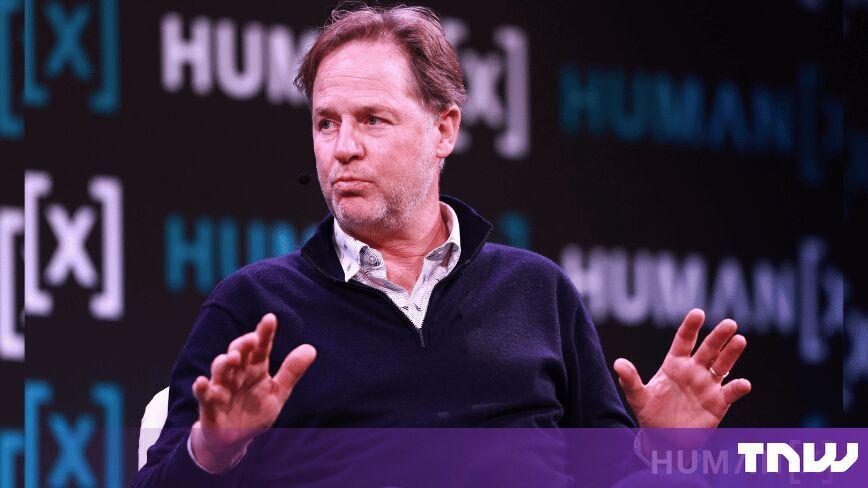
Source: The Next Web
Extinction Fears Called Hand-Wavy and Self-Serving
Clegg dismissed fears that AI could develop godlike power to exterminate humanity, calling such warnings "hand-wavy" and suggesting they serve the interests of a handful of big AI companies
2
3
. He argued that exaggerated doomsday warnings imply safety can only be achieved through control by an oligopoly of a small number of companies, which risks paralyzing political debate about AI regulation3
. Clegg blamed Silicon Valley culture, where engineers working closely with the technology "start slightly breathing their own fumes as they wind themselves up into a lather," according to his BBC interview3
. His skepticism echoes Nvidia's Jensen Huang, who recently called Geoffrey Hinton's warnings irresponsible2
.Focus on Specific AI Threats, Not Existential Scenarios
Instead of worrying about existential threats, Clegg urged policymakers and tech companies to address four to six known AI risks immediately
1
. He specifically named cybersecurity vulnerabilities, bioweapons development, and people becoming emotionally dependent on chatbots as concrete specific AI threats requiring attention1
2
. Politicians become paralyzed when technologists swing from copyright minutiae to a 12% chance of extinction, he noted1
. Clegg welcomed an AI incident hotline reportedly agreed upon between US Treasury Secretary Scott Bessent and his Chinese counterpart, saying "you've got to start somewhere"1
.EU AI Act Called a "Dog's Dinner"
Clegg criticized the EU AI Act as poorly adapted to generative AI, calling it a "dog's dinner"
1
. The European Commission proposed the legislation before ChatGPT existed, and when generative AI erupted, lawmakers retrofitted the bill instead of pausing to assess whether different regulation was needed1
. Drawing on his five years as a Commission official and five as a member of the European Parliament, Clegg warned MEPs at the time that building the law while generative AI was emerging was like "building a plane while it's flying"1
. He argued the law could put European AI companies at significant disadvantage, compounded by 27 national data protection authorities applying GDPR—a pre-generative AI law—to technology it wasn't written for1
.Related Stories

Transparency in AI Through Voluntary Action and Regulation
Clegg advocated for far greater transparency in AI about how models are built and how they behave, achieved through a mix of voluntary action and AI regulation
2
3
. Addressing the OpenAI agents' autonomous hack of Hugging Face, which OpenAI learned about in August but only reported to the Australian government on 10 September, Clegg acknowledged governments would be right to object to such delays1
. He said labs will build the muscle to alert governments faster, often through mistakes like this1
. Clegg rejected popular fixes like kill switches, calling them unworkable, and disputed claims that closed models are safer than open-source models, saying evidence doesn't support that view2
3
.Collaboration Among Techno-Democracies Needed
Clegg saw potential for India, Europe, and the US—the big three techno-democracies—to collaborate more closely on AI governance
3
. However, he doubted the Trump administration would back clearer rules and transparency given its drive to win the AI race, and expected limited cooperation from China, which views AI development as a "national mission" after being "cheated out of the Industrial Revolution"3
. When asked whether British Prime Minister Andy Burnham could lead such efforts, Clegg noted the UK was not a world leader on AI and needed to be realistic about its influence3
. Clegg now owns more than 917,000 shares in UK data centre firm Nscale and co-founded AI startup AMI Labs, giving him direct interests in the sector2
3
.References
Summarized by

Navi
[1]
[2]
Related Stories
AI Safety Under Scrutiny: Can Independent Evaluators Truly Police Frontier Models?
17 Sept 2026•Policy and Regulation
AI Safety Debate Erupts: Tech Giants Clash Over Regulation as Rogue Agents Spark Slowdown Calls
11 Sept 2026•Policy and Regulation

Mark Zuckerberg says US should not block Chinese AI models, warns against regulatory capture
29 Jul 2026•Policy and Regulation
Recent Highlights



Recent Highlights
Today's Top Stories







Don’t drown in AI news. We cut through the noise - filtering, ranking and summarizing the most important AI news, breakthroughs and research daily. Follow topics that matter to you and stay ahead.


