Nikon Disqualifies Microscopic Video Winner After Generative AI Use Violates Competition Rules


5 Sources
[1]
Winning Nikon Small World in Motion video disqualified for AI use
Last month we covered the winner of Nikon's Small World in Motion video: Ning Xu of Tsinghua University in China, whose video captured tiny cilia beating in the airways of a child with a rare respiratory disorder. But allegations surfaced about Xu's use of AI while making the video. Nikon launched
[2]
Nikon microscopic video competition winner disqualified for using generative AI
Nikon says the video that originally won first place in its Small World in Motion contest "did not comply with the competition rules regarding generative AI." BBC reports that the original first place video from Dr. Ning Xu claimed to show "tiny, hair-like structures called cilia moving in the
[3]
Big Controversy Upends a Contest About Microscopic Videos
Sign up for Science Times Get stories that capture the wonders of nature, the cosmos and the human body. Get it sent to your inbox. After weeks of controversy, Nikon announced on Friday that it had rescinded the first-place award it gave in its annual Small World in Motion contest after
[4]
Prize-winning image which sparked backlash was AI-generated, Nikon rules
The winner of a prestigious scientific photography competition has been disqualified following concerns raised by other scientists that it was fake. Nikon said the use of generative AI in the composition of the video broke the rules of its Small World In Motion contest, which accepts photos and
[5]

Nikon Disqualifies Winner of Small World in Motion Competition for Using AI
The winner of the Nikon Small World in Motion competition has been disqualified after Nikon determined that the winning video broke its rules regarding artificial intelligence. PetaPixel reported last week that Nikon was "re-reviewing" Dr Ning Xu's winning video after concerns were raised by the
Share
Copy Link
Nikon rescinded the first-place award in its Small World in Motion competition after determining Dr. Ning Xu's winning video broke rules against generative AI use. Scientists raised concerns about structural abnormalities and disappearing cell features. Nguyen Nam Nhat from Vietnam now holds first place.
Nikon Small World in Motion Winner Disqualified for Generative AI Violation
Nikon has disqualified the original winner of its Small World in Motion competition after determining that Dr. Ning Xu's video violated competition rules regarding generative AI
1
2
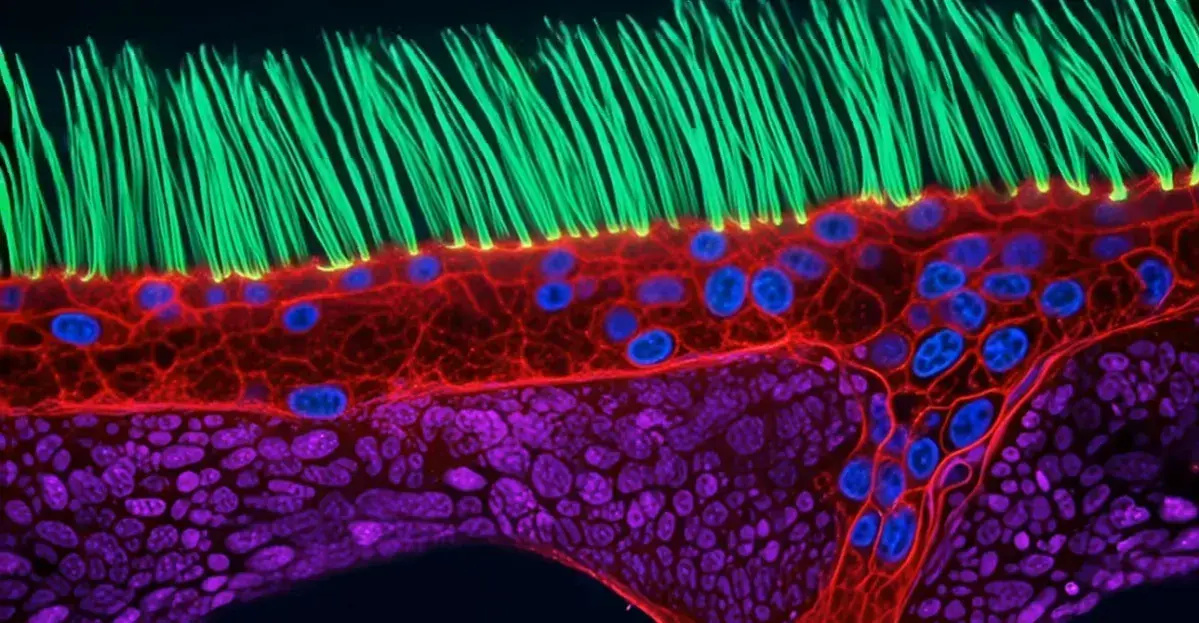
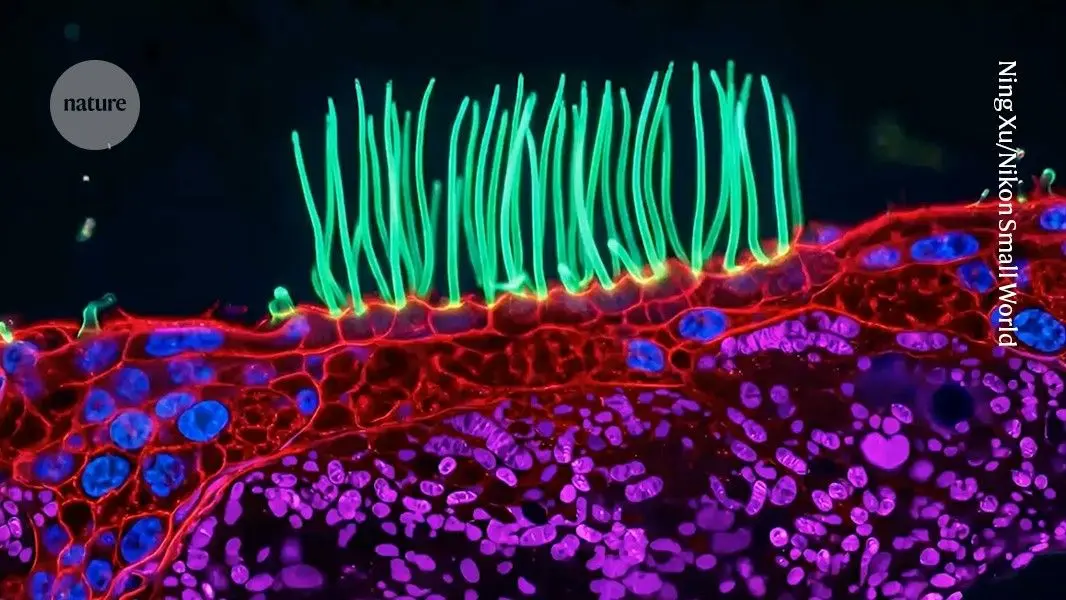
. The video, submitted by Ning Xu from Tsinghua University in China, purported to show tiny cilia beating in the airways of a child with primary ciliary dyskinesia, a rare respiratory disorder3
. After thoroughly re-evaluating the video and consulting with judging panel members, Nikon concluded the entry did not comply with competition rules4
. Nguyen Nam Nhat of Vietnam now holds first place with his video of a tiny roundworm and single-celled organism5
.
Source: NYT
Scientific Community Raises Red Flags About Authenticity
Concerns about the video's authenticity emerged on social media platform Bluesky, where researchers questioned whether the microscopic video competition entry was genuine
3
. Scientists identified multiple structural abnormalities that contradicted known cellular biology. Dr. Robert Hirst, lead scientist for the NHS centre for PCD diagnosis at University of Leicester, stated he "knew immediately that the video was fabricated" based on his 20 years of experience diagnosing primary ciliary dyskinesia by examining cilia waveform, length, cell size and shape4
. Researchers pointed out that organelles like nuclei and mitochondria disappeared and reappeared randomly, which could be a telltale sign of AI use in scientific imaging3
. Edward Phelps, an associate professor at Florida University, noted that "purple structures pop in and out of existence" and "green cilia also appear from nowhere and do not match the known size"5
. Some observers even spotted what appeared to be AI watermarks embedded within the source files1
.
Source: The Verge
Ning Xu's Defense and Admission of Post-Processing Techniques
In a LinkedIn comment, Ning Xu acknowledged using AI for post-processing work on the video. The optical engineering researcher from the National University of Singapore explained that "an unsupervised neural-network method was subsequently used for AI-assisted post-processing to distinguish and visualize features in the reconstructed grayscale images from the super-resolution optical imaging"
2
. However, Xu denied that generative AI was used "to generate the experimental movie, the cilia, or their motion"1
. He initially claimed his AI use fell within the regulations of the contest, which allow for "enhancement of microscopy-generated source data, not for image generation from scratch"3
. Scientists suggested the controversy could have been resolved if Xu had shared the RAW grayscale video to verify authenticity5
.Related Stories

Competition Rules Explicitly Prohibit AI-Generated Content
The Nikon Small World in Motion competition rules clearly state that "A.I. generated videos are not permitted and Sponsor holds the right to request the original video for verification"
3
. Founded in 2011 as a spinoff of Nikon's Small World Photomicrography Competition, which has been running since 1974, the microscopic video competition showcases the beauty and complexity of things seen through the light microscope1
. Nikon emphasized that its decision to disqualify the video "should not be interpreted as a judgment of the entrant's professional reputation, scientific contributions, or intent"2
. The company acknowledged that advances in imaging and artificial intelligence continue to evolve rapidly, creating new challenges for organizations across many fields1
.Broader Implications for Ethical Concerns Around AI in Science
Aydogan Ozcan, an expert in computational imaging and microscopy at the University of California, Los Angeles, noted that AI use in scientific imaging is not new and helps scientists improve the resolution and contrast of microscopic images. However, he stressed that "the rule is very simple: You need to disclose it"
3
. Problems arise when AI hallucinates structures that aren't actually there, compromising transparency and scientific integrity. Ozcan views this controversy as an opportunity to standardize ethical AI practices: "I consider this a wonderful way to bring people together and discuss this openly. It's great education"3
. Dr. Hirst emphasized the broader impact, stating that "this controversy has impacted a lot of patients, scientists, doctors and PCD support networks around the world"4
. Watch for Nikon to announce revised competition rules that address generative AI more explicitly, potentially setting precedents for other scientific imaging competitions facing similar challenges with rapidly evolving AI technology.References
Summarized by

Navi
Related Stories
Scientists Challenge Nikon Microscopy Competition Winner Over AI-Enhanced Video With Biological Inaccuracies
01 Oct 2026•Entertainment and Society
Generative AI is contaminating citizen science records with fake wildlife images
20 Jul 2026•Science and Research

Science Photographer Felice Frankel Discusses AI's Impact on Research Visualization
07 Mar 2025•Science and Research

Recent Highlights
1
Microsoft and Nvidia Launch Surface Laptop Ultra: A $2,599 AI-Ready PC With RTX Spark Chip
Technology

2
Scientists Build AI Model That Reconstructs Images From Brain Scans in Record Time
Science and Research

3
Anthropic AI Cuts Live Internet Access After Model Sends False Homicide Tip to Philadelphia Police
Technology

Recent Highlights
Today's Top Stories








Don’t drown in AI news. We cut through the noise - filtering, ranking and summarizing the most important AI news, breakthroughs and research daily. Follow topics that matter to you and stay ahead.


