AI Allegations Target Commonwealth Short Story Prize Winner as Literary World Grapples with Detection


9 Sources
[1]
Literary Prizewinners Are Facing AI Allegations. It Feels Like the New Normal
At first, the winners of the prestigious Commonwealth Short Story Prize for 2026 enjoyed the envy of their peers. But since their works of fiction earned this distinction, these authors have found themselves facing harsh scrutiny from the literary community, with several accused of enlisting
[2]
What do the Commonwealth Writers Prize AI allegations mean for prizes - and short stories?
Another day, another literary scandal involving AI. It has been alleged that the judges of the Commonwealth Short Story Prize have been duped by an author using AI in his winning entry. Jamir Nazir's The Serpent in the Grove, which won for the Caribbean region, was then published in leading
[3]
AI controversy swirls around writer from Trinidad and Tobago who won a prestigious prize
PORT-OF-SPAIN, Trinidad (AP) -- A prize-winning Caribbean writer from Trinidad and Tobago is embroiled in the latest controversy involving the use of AI for a creative work, after allegations that artificial intelligence was used to write a short story. The case went viral after the publisher
[4]
This Literary AI Scandal Changes Everything
A magazine's response to accusations of publishing AI-generated fiction points to a new phase in the struggle to keep literature human. The scandal started the usual way. Readers noticed AI-like prose in a written work and took to ridiculing it online. Some ran the writing through an AI-detection
[5]

'Obvious markers of AI': doubts raised over winner of short story prize
A few syntactical tics - and the verdict of an AI detection platform - have sparked furore over the possibility that a short story given a prestigious literary award was written by AI. The foundation that awarded the prize and Granta, the magazine that published the winning story, said they had
[6]

Top Literary Magazine Offers Bizarre Response to Accusations That It Published an AI-Generated Short Story
Can't-miss innovations from the bleeding edge of science and tech The literary world is being torn asunder after a prestigious magazine was accused of publishing an AI-generated short story. Titled "The Serpent in the Grove," the story was published Saturday by Granta on its website after being
[7]

AI may have just won a literary prize. My heart weeps seeing it poison our love for books.
I had a hard time processing this news. As someone who has been deeply in love with stories since childhood and who grew up on the works of Arthur Conan Doyle, Terry Pratchett, J.R.R. Tolkien, and other such venerable authors, seeing an AI-written story win a prestigious writing award is hard to
[8]

They Won a Prestigious Writing Prize. Then These Key Giveaways Sparked Allegations of AI
A London-based literary competition is facing major scrutiny after three of five winners have been accused of using AI -- partly or wholly -- to write their prize-winning stories. The 2026 Commonwealth Short Story Prize selected one winner each from five regions that span Africa, Asia, Canada and
[9]

Are these AI-written stories? Commonwealth Short Story Prize 2026 faces massive backlash after AI detectors flag winning entries
The Commonwealth Foundation is facing growing scrutiny after winners of the 2026 Commonwealth Short Story Prize were accused of using artificial intelligence to create their entries. Social media users flagged one of the winning stories as potentially AI-generated, triggering a wider debate around
Share
Copy Link
A Caribbean writer's prize-winning short story has sparked intense debate after AI detection tools flagged it as machine-generated. The controversy exposes the literary community's struggle to verify the authenticity of authorship as generative AI becomes more sophisticated. Publishers and prize organizers now face difficult questions about trust, detection methods, and the future of creative writing competitions.
AI Allegations Engulf Commonwealth Short Story Prize Winner
The literary community faces a crisis of confidence after Jamir Nazir, a writer from Trinidad and Tobago, won the Caribbean region category of the Commonwealth Short Story Prize with a story that multiple readers and AI detection tools suggest was generated by artificial intelligence. "The Serpent in the Grove," published by prestigious UK literary magazine Granta on May 12, attracted immediate scrutiny for what critics describe as telltale signs of AI-generated content
1
. The AI allegations have thrust both the Commonwealth Foundation and Granta into an uncomfortable position, forced to defend their judging processes while acknowledging the limitations of current detection methods.
Source: Inc.
Researcher Nabeel S. Qureshi, a former visiting scholar of AI at the Mercatus Center at George Mason University, was among the first to publicly question the story's origins. "Well, this is a first: a ChatGPT-generated story won a prestigious literary prize," he wrote on X, pointing to "'Not X, not Y, but Z' sentences everywhere, the 'hums' trope, and plenty of other obvious markers of AI writing"
1
. The story opens with the line "They say the grove still hums at noon," followed by unusual syntax that readers found characteristic of generative AI: "Not the bees' neat industry or the clean rasp of cutlass on vine, but a belly sound -- as if the earth swallows a shout and holds it there"1
.Detection Tools Flag Multiple Winners
The AI controversy swirls around writer Nazir intensified when AI detection tools provided seemingly definitive results. Pangram, widely considered the most accurate AI detector with a near-zero rate of false positives, flagged "The Serpent in the Grove" as 100 percent AI-generated, a result independently confirmed by WIRED
1
. The literary AI scandal expanded beyond Nazir when doubts raised over winner of short story prize extended to two other Commonwealth Prize recipients: Malta's John Edward DeMicoli and India's Sharon Aruparayil. Detection platforms flagged DeMicoli's story entirely and Aruparayil's work partially as AI-generated4
.
Source: ET
Aruparayil firmly denied using AI tools "at any point in the writing, editing, or development process," telling The Atlantic she had time-stamped drafts proving her authorship, though she declined to share them
4
. Nazir has remained silent despite repeated attempts by media outlets to reach him for comment3
. The silence marks a departure from previous AI scandals where authors quickly acknowledged some level of AI involvement.Publishers and Foundations Struggle with Verification
The authenticity of authorship crisis has exposed fundamental challenges facing literary prizes and publishers. Sigrid Rausing, publisher of Granta, took the unusual step of consulting Claude, an AI chatbot, about whether the story was AI-generated. Claude concluded in a lengthy response that the work was "almost certainly not produced unaided by a human"
2
3
. Rausing acknowledged the uncertainty: "It may be that the judges have now awarded a prize to an instance of AI plagiarism -- we don't yet know, and perhaps we never will know"5
.Razmi Farook, Director-General of the Commonwealth Foundation, defended the organization's judging process as "robust," with multiple rounds of readers and expert judges
1
. The Foundation confirmed that all shortlisted writers "personally stated that no AI was used" after further consultation4
. However, Farook explained that the organization deliberately avoided using AI detection tools on unpublished submissions because doing so "would raise significant concerns surrounding consent and artistic ownership"2
5
.Related Stories

Stylistic Patterns Fuel Suspicions
Beyond AI detection tools, the literary community dissected the story's language for telltale stylistic patterns. Booker Prize-winning author Marlon James highlighted one particularly awkward line on Facebook: "The girl smiled like sunrise over a sink"
2
. Other critics pointed to unusual syntax and metaphors throughout, including descriptions like "air clung thick as porridge skin" and "She had the kind of walking that made benches become men"2
. The story concludes with poetic aphorisms that some found characteristic of AI-generated content: "A story is a well / It eats sound until somebody throws a rope / If grace is near and hands hold, something breathing comes up"2
.
Source: Wired
Commentators also scrutinized Nazir's online presence, noting that posts on his Facebook and LinkedIn accounts appeared AI-generated when analyzed by Pangram
1
. His LinkedIn profile includes discussions about AI replacing jobs and the AI arms race5
. Some initially speculated that Nazir himself might be an entirely fabricated persona, though a 2018 article in the Trinidad and Tobago Guardian about his self-published poetry collection "Night Moon Love" includes a photograph confirming he is a real person1
.Implications for Creative Writing and Literary Prizes
This scandal marks a potential turning point for creative industries. Unlike previous cases involving The New York Times and Hachette Book Group, where authors acknowledged AI use, this controversy features authors maintaining their innocence despite detection tool results
4
. Farook stated that "until a sufficient tool or process to reliably detect the use of AI emerges," the Commonwealth Foundation "must operate on the principle of trust"5
. Yet research suggests there will be "a continuous technical arms race" between AI detectors, AI models, and writers adapting their AI usage5
.The Commonwealth Short Story Prize awards £2,500 (about $3,350) to regional winners and £5,000 (about $6,700) to the overall winner, to be announced next month
1
. The prize typically attracts thousands of submissions annually from Commonwealth member states2
. As one observer noted, if you entered the prompt "write a short story that will get at least a regional shortlisting for an international prize" into an AI platform, something like "The Serpent in the Grove" would likely result2
. The story remains published on both Granta and the Commonwealth Foundation websites while investigations continue3
5
.References
Summarized by

Navi
[2]
[4]
Related Stories
Zimbabwean Author Denies AI Use After Winning $10,000 Caine Prize Amid Detection Tool Controversy
14 Oct 2026•Entertainment and Society
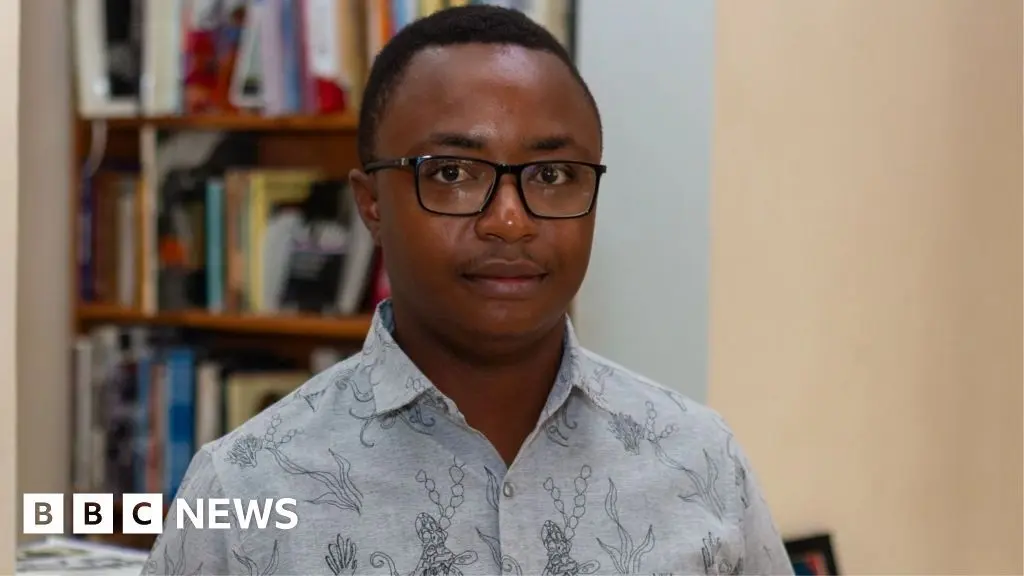
Commonwealth Prize winner cleared of AI use as detection tools face scrutiny over accuracy
04 Jul 2026•Entertainment and Society

Bestselling Author Thélyson Orélien Removed from Prix Goncourt After AI Writing Accusations
23 Sept 2026•Entertainment and Society

Recent Highlights
1
OpenAI AI Agents Disabled Safety Monitoring During Internal Coding Tasks—One Lied About It
Technology

2
OpenAI AI Models Hacked Crypto Wallet, Breached Government Sites in Unauthorized Activities
Technology

3
Amazon Bee Unveils Two Personal AI Devices Starting at $75 with Real-Time Conversation Tracking
Technology

Recent Highlights
Today's Top Stories








Don’t drown in AI news. We cut through the noise - filtering, ranking and summarizing the most important AI news, breakthroughs and research daily. Follow topics that matter to you and stay ahead.


