Nobel Prize-winning chemist Omar Yaghi leaves Berkeley to lead China's AI materials institute


2 Sources
[1]
Nobel-Winning U.S. Chemist Omar Yaghi Will Move to China to Lead A.I. Institute
Omar Yaghi of the University of California, Berkeley, will head an initiative to apply artificial intelligence to the discovery of new materials. Omar Yaghi, an immigrant to the United States who shared last year's Nobel Prize in Chemistry, has left his faculty post at the University of
[2]
Who is Omar Yaghi? Nobel Prize-winning scientist leaves US to join Chinese research university; here's why
Nobel laureate Omar Yaghi will lead a new AI research center at Tsinghua University. This center aims to accelerate new material development using artificial intelligence. Yaghi, a renowned chemist, previously held a professorship at the University of California, Berkeley. He hopes to develop
Share
Copy Link
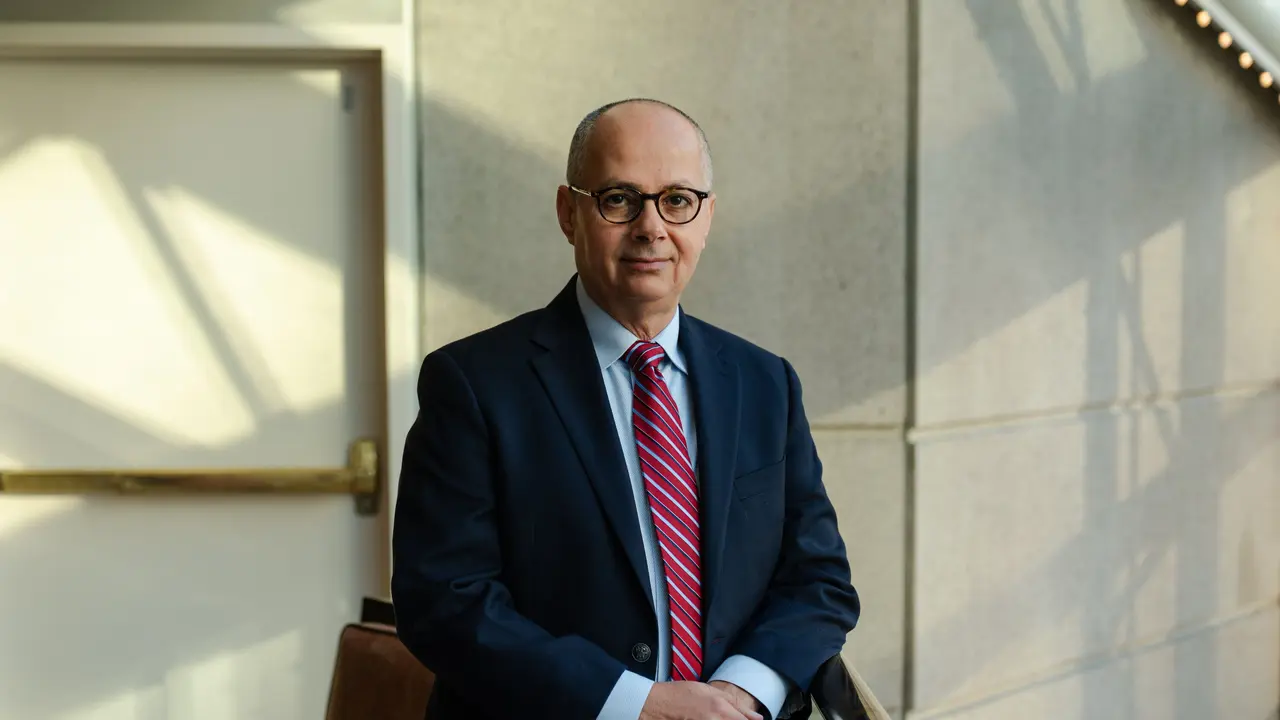
Omar Yaghi, who shared the 2025 Nobel Prize in Chemistry, has left the University of California, Berkeley, to head a new AI institute at Tsinghua University in Beijing. The move comes as the Trump administration disrupts US science funding while China invests heavily to attract international talent for AI-driven materials research.
Nobel Prize-Winning Chemist Omar Yaghi Joins Tsinghua University
Source: NYT
Omar Yaghi, who shared the 2025 Nobel Prize in Chemistry, has departed his faculty position at the University of California, Berkeley, to lead a groundbreaking AI institute at Tsinghua University in Beijing
1
. The 61-year-old chemist was formally welcomed during an appointment ceremony on July 3, 2026, where the university described him as one of the world's foremost chemists2
. Tsinghua University stated that Yaghi views this opportunity "not to slow down, not to repeat what has already been done, but to do science with more energy, more intensity, and more ambition than ever before"1
.AI Institute to Accelerate the Discovery of New Materials
At Tsinghua University, Yaghi will head a team focused on leveraging artificial intelligence to transform the design and synthesis of new materials, with the goal of shortening their development cycle "by orders of magnitude"
2
. During his appointment ceremony, Yaghi expressed his ambition to develop materials addressing major environmental challenges including water scarcity, carbon neutrality, and sustainable development2
. The initiative represents a significant intersection of materials science and AI, positioning China at the forefront of this rapidly evolving field.Pioneering Work in Metal-Organic Frameworks
Source: ET
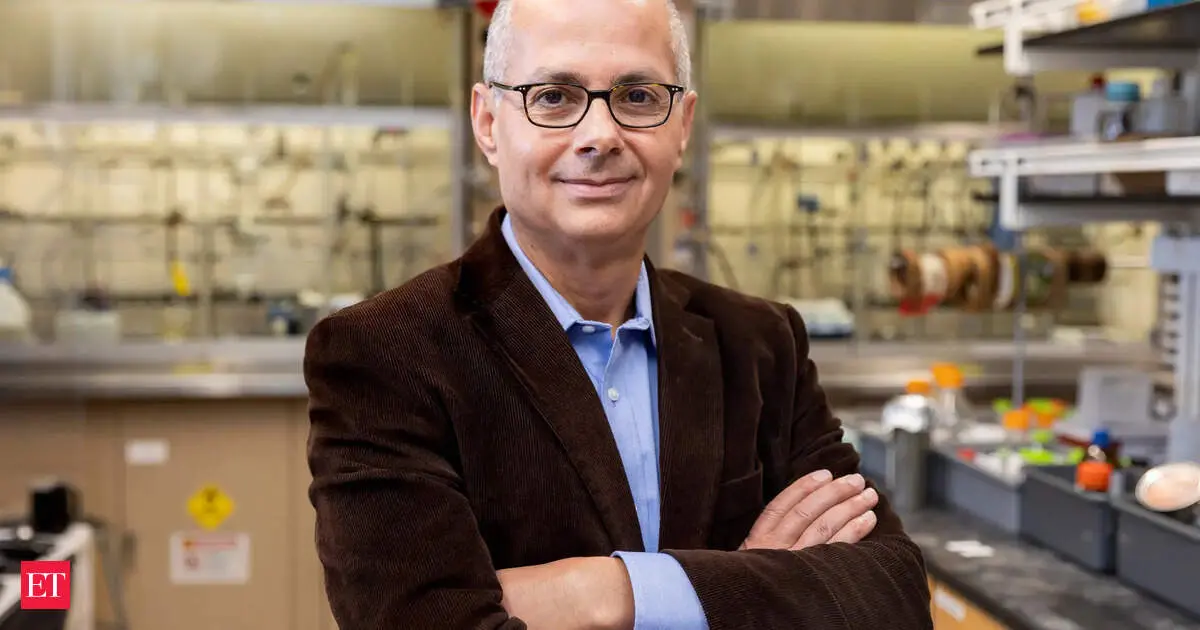
Yaghi received his Nobel Prize for helping discover metal-organic frameworks, molecular building blocks assembled into structures with vast internal surface areas—the largest of any known substance
1
. These porous structures act like sponges that readily absorb, store, and release gases and vapors. The frameworks can harvest water from desert air, a breakthrough tested by Yaghi's students in the Mojave Desert in 2018, where a small passive harvester produced nearly three cups of pure, drinkable water daily1
. This device is now nearing commercialization, demonstrating the practical applications of his theoretical work.Related Stories

US Science Funding Cuts Drive Talent Migration
Yaghi's departure occurs amid the Trump administration's continuing disruptions of US science funding and China's efforts to woo international talent with hefty budgets
1
. Alessandra Zimmermann, a budget analyst at the American Association for the Advancement of Science, noted that China "is increasing its investment in science overall, including chemistry," and that the best measures of scientific accomplishment show China "has been outperforming the U.S. in top chemistry papers"1
. Ram Seshadri, a professor at UC Santa Barbara, observed that China has "overtaken us in many areas of materials science and chemistry" and is "willing to invest very large sums of money to attract new talent"1
.Immigration Policies and Scientific Collaboration Under Scrutiny
Born in Amman, Jordan, to Palestinian refugees whose one-room home lacked electricity and running water, Yaghi moved to the United States at age 15
1
. Before receiving his Nobel Prize in Stockholm, Yaghi voiced concerns about Trump's immigration policies, stating they endanger the nation's system of universities, companies, and governments that promote scientific excellence1
. "We have to know that people coming from different backgrounds improve the level for everybody involved," he said, adding that "great thinkers can improve not only the U.S. but the world"1
. Last year, three of America's six science Nobel winners were born outside the country, with the émigré fraction for U.S. Nobels in physics, chemistry, and medicine standing at 40 percent this century1
. Yaghi had longstanding ties with Tsinghua University, serving as an honorary professor since 2022, and is also a foreign member of the Chinese Academy of Sciences2
. His move signals a broader shift in global scientific leadership as nations compete for top researchers in AI-driven discovery.References
Summarized by

Navi
Related Stories
AI and New Materials Research Emerge as Top Contenders for Nobel Chemistry Prize
09 Oct 2024•Science and Research

AI Dominates Nobel Prizes, Sparking Debate on Scientific Categories
08 Oct 2024•Science and Research

AI in Chemistry breakthrough: Two systems accelerate molecule design and drug discovery by 10x
29 Jan 2026•Science and Research
Recent Highlights



Recent Highlights
Today's Top Stories







Don’t drown in AI news. We cut through the noise - filtering, ranking and summarizing the most important AI news, breakthroughs and research daily. Follow topics that matter to you and stay ahead.


