NVIDIA Vera CPU Powers New Los Alamos Supercomputers for Agentic AI and Scientific Discovery


2 Sources
[1]
NVIDIA Vera CPU Opens the Way for Agentic Scientific AI at Los Alamos National Laboratory
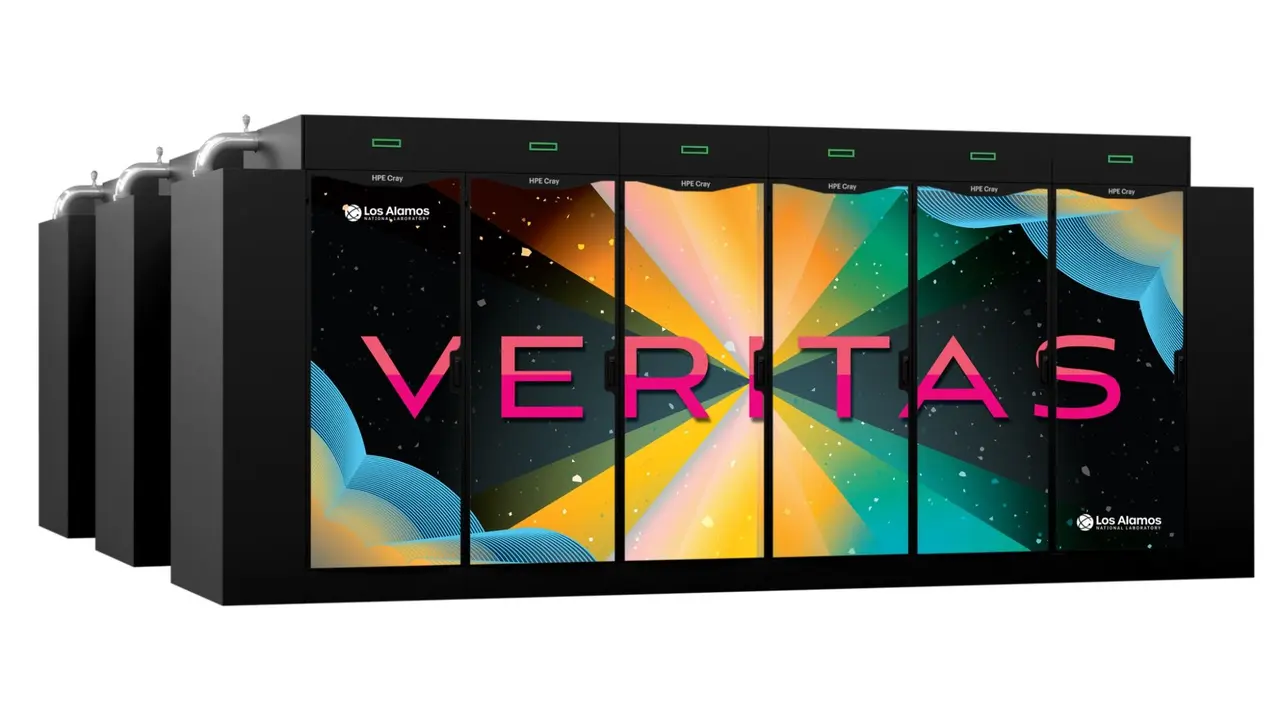
Mission, Vision and Veritas supercomputers with Vera CPUs to advance materials simulation, scientific AI agents and molecular design. Mission, Vision and Veritas -- new Los Alamos National Laboratory (LANL) supercomputers to be built with HPE and NVIDIA -- are tapping NVIDIA Vera CPUs to
[2]
NVIDIA Vera Rubin Delivers World-Class Supercomputers for Science
With 7 Exaflops of AI for Science and 5 Petaflops of Native FP64 Performance, Vera Rubin Packs TOP500 Supercomputing in a Single Rack * NVIDIA Vera Rubin accelerates the world's most demanding HPC workloads including climate modeling, computational fluid dynamics and energy exploration. * NVIDIA
Share
Copy Link
NVIDIA unveiled its Vera CPU and Vera Rubin platform to power next-generation supercomputers at Los Alamos National Laboratory. The Mission, Vision, and Veritas systems will accelerate agentic AI for science, delivering 7x higher performance on AI workloads and 3x faster simulation speeds. The deployment marks a shift toward AI agents that can autonomously form hypotheses, run simulations, and refine experiments.
NVIDIA Vera CPU Brings Agentic AI for Science to Los Alamos National Laboratory
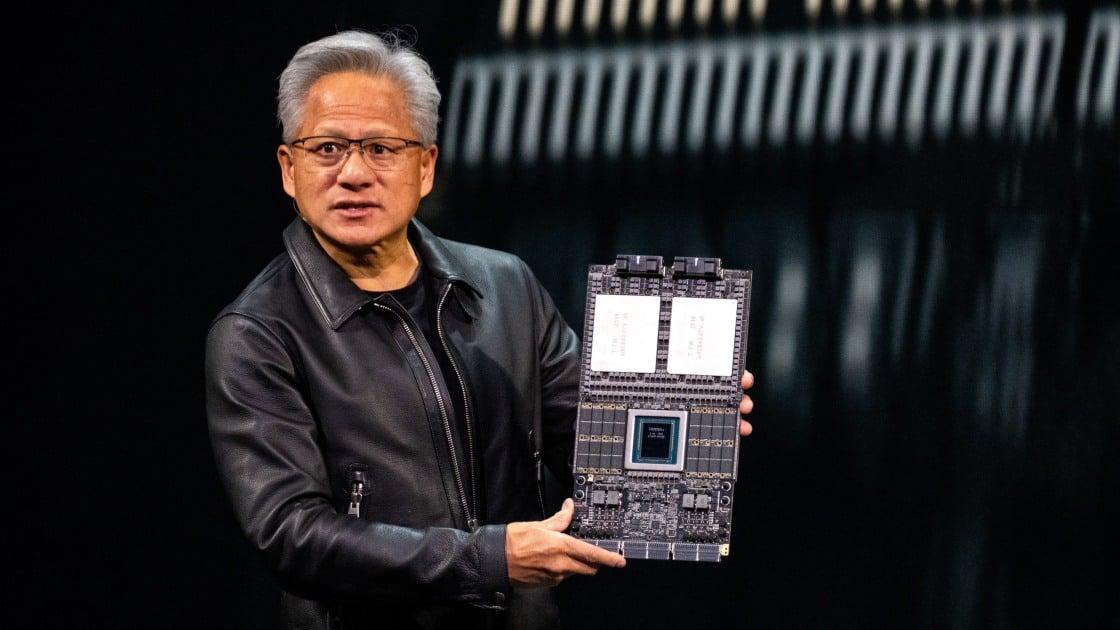
NVIDIA has announced that its Vera CPU and Vera Rubin platform will power three new supercomputers at Los Alamos National Laboratory (LANL), marking a significant advance in how scientific AI and high-performance computing merge to accelerate scientific discovery
1
. The Mission, Vision, and Veritas systems, built in collaboration with HPE, are designed to unlock agentic AI for science—autonomous AI agents capable of forming hypotheses, selecting tools, launching simulations, analyzing outputs, and refining experimental approaches without constant human intervention1
.Los Alamos National Laboratory demonstrated that the NVIDIA Vera CPU delivered 7x higher performance on URSA workloads compared to the CPUs in the Crossroads x86 supercomputer
1
. URSA, the Universal Research and Scientific Agent, represents a modular, feedback-driven AI framework designed to help scientists brainstorm hypotheses, plan experiments, run simulations, and analyze results. This performance leap stems from Vera's custom Olympus core, LPDDR5 memory, and fast on-chip fabric, which together enable a single Vera CPU to outperform a single socket x86-based CPU by more than 3x while providing more than 4x the memory per core and 6x the memory per node1
.
Source: NVIDIA
Supercomputers Built for National Security and Open Science
Mission, expected to be operational in 2027, will serve as the fifth Advanced Technology System in the National Nuclear Security Administration's Advanced Simulation and Computing program, replacing Crossroads for classified national security workloads
1
. Under the planned configuration, Mission will include NVIDIA Vera Rubin GPU nodes and 2,300 standalone NVIDIA Vera CPUs using the HPE Cray Supercomputing GX240 blade1
.Vision, also launching in 2027, will serve as a resource for fundamental science, including materials simulation, nuclear science, energy modeling, biomedical research, and AI—allowing more scientists to test methods, train models, and explore ideas before moving into higher-consequence work
1
. Veritas will feature approximately 1,150 standalone NVIDIA Vera CPUs to complement NVIDIA Vera Rubin nodes and will serve the Laboratory Directed Research and Development program, helping test technologies for larger systems being built at LANL1
.Vera Rubin Platform Delivers Rack-Scale Supercomputing Power
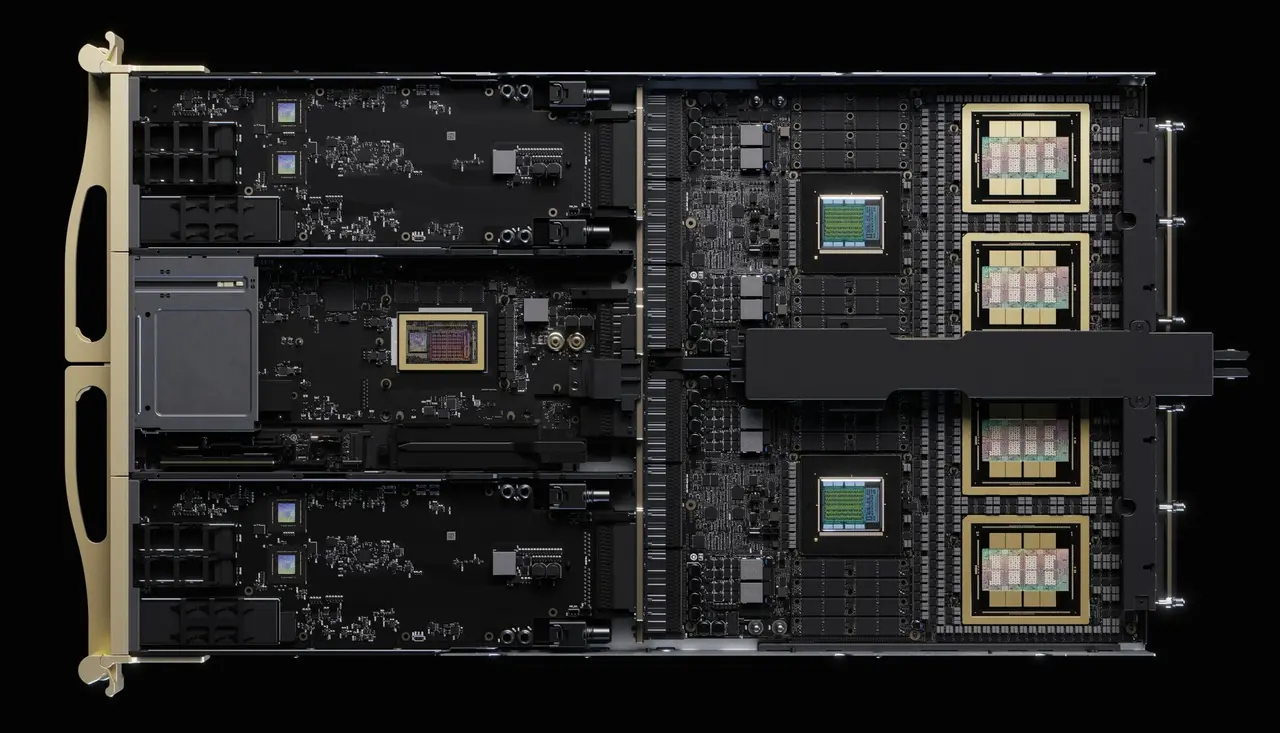
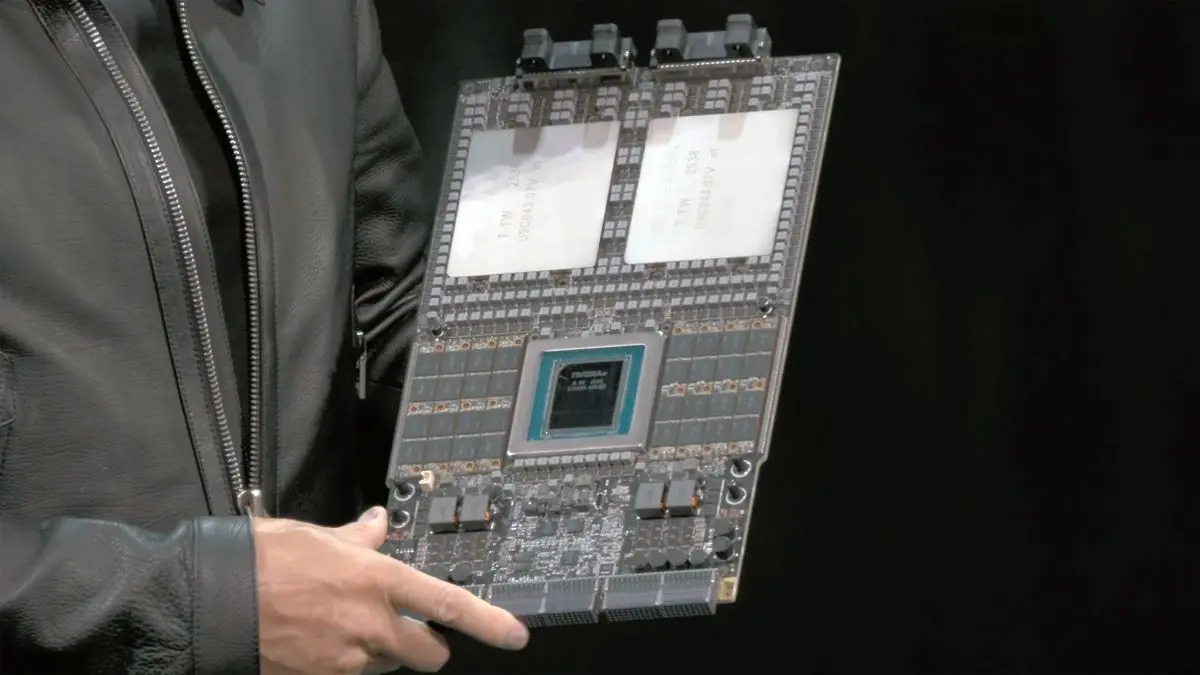
The Vera Rubin platform combines NVIDIA's complete accelerated computing stack, bringing together Rubin GPUs and NVIDIA Vera CPU connected via high-speed NVIDIA NVLink-C2C, NVIDIA ConnectX-9 SuperNICs, and NVIDIA BlueField-4 DPUs in a direct liquid-cooled architecture
2
. With more than 7 exaflops of AI for science, 5 petaflops of native FP64 precision support, and extreme memory bandwidth with up to 144 GPUs, a Vera Rubin supercomputing system can deliver performance on par with systems on the TOP500 list of the world's most powerful supercomputers2
.
Source: NVIDIA
Jensen Huang, founder and CEO of NVIDIA, described the platform as "a new instrument for science—a rack-scale supercomputer that brings simulation, AI and data processing together to help researchers and industries design and discover faster than ever"
2
. The platform is built to unite high-precision simulation, AI, and data analytics, designed specifically for the era of agents to advance workloads such as climate modeling, computational fluid dynamics, quantum chemistry, and energy exploration2
.Related Stories

Global Adoption Signals Shift in Scientific Computing
Beyond Los Alamos, leading supercomputing centers are adopting Vera Rubin to build next-generation systems. At Leibniz Supercomputing Centre, Blue Lion will deliver approximately 30x the computing power of LRZ's current system and come online in 2027
2
. At the National Energy Research Scientific Computing Center, Doudna—the next flagship U.S. Department of Energy supercomputer at Lawrence Berkeley National Laboratory—will be a Dell Technologies system powered by NVIDIA Vera Rubin, built for large-scale HPC workloads, AI training and inference, and data-intensive workflows across molecular design, high-energy physics, fusion energy, and astronomy2
.The three new Los Alamos supercomputers build on Venado, the HPE Cray EX supercomputer installed at the laboratory in 2024 with NVIDIA GH200 Grace Hopper Superchips and NVIDIA Grace CPU Superchips, extending more than a decade of collaboration between LANL and NVIDIA on CPUs
1
. All of the lab's supercomputers were codesigned by hardware architects, system software developers, domain scientists, computer scientists, and applied mathematicians—ensuring systems are shaped by real scientific workloads, not abstract benchmarks alone1
. This approach to exascale computing positions these systems to handle the complexity of modern scientific challenges while enabling researchers to explore AI-assisted workflows that could fundamentally change how science is conducted.References
Summarized by

Navi
Related Stories
Nvidia and HPE to Build Blue Lion Supercomputer in Germany, Powered by Next-Gen Vera Rubin Architecture
10 Jun 2025•Technology
NVIDIA Vera CPU with Olympus cores delivers unprecedented ARM performance against Intel and AMD
26 May 2026•Technology
Nvidia Unveils Vera Rubin Superchip: Six-Trillion Transistor AI Platform Set for 2026 Production
29 Oct 2025•Technology
Recent Highlights
1
Microsoft and Nvidia Launch Surface Laptop Ultra: A $2,599 AI-Ready PC With RTX Spark Chip
Technology

2
Trump Consulted Grok AI Before Ordering Venezuela Invasion and Capture of Nicolás Maduro
Policy and Regulation

3
Scientists Build AI Model That Reconstructs Images From Brain Scans in Record Time
Science and Research

Recent Highlights
Today's Top Stories






Don’t drown in AI news. We cut through the noise - filtering, ranking and summarizing the most important AI news, breakthroughs and research daily. Follow topics that matter to you and stay ahead.


