Doudna Supercomputer: Dell and Nvidia Join Forces with DOE for Next-Gen AI-Powered Scientific Discovery


9 Sources
[1]
Nvidia Vera-Rubin chips to power DOE's Doudna supercomputer
System promises a 10x increase in 'scientific output' - not necessarily performance The US Department of Energy's next supercomputer will be built by Dell Technologies and powered by Nvidia's next-gen Vera-Rubin accelerators - a notable switch from the usual Cray-AMD tag teams that build such
[2]
Dell, Nvidia, and Department of Energy join forces on "Doudna" supercomputer for science and AI
Serving tech enthusiasts for over 25 years. TechSpot means tech analysis and advice you can trust. What just happened? The Department of Energy has announced plans for a new supercomputer designed to significantly accelerate research across a wide range of scientific fields. The initiative
[3]
Dell, Nvidia, and Department of Energy join forces on...
The advanced system, to be housed at Lawrence Berkeley National Laboratory and scheduled to become operational in 2026, will be named "Doudna" in honor of Nobel laureate Jennifer Doudna, whose groundbreaking work on CRISPR gene editing has revolutionized molecular biology. Dell Technologies has
[4]
Energy Department Unveils New Supercomputer That Merges With A.I.
The DealBook Newsletter Our columnist Andrew Ross Sorkin and his Times colleagues help you make sense of major business and policy headlines -- and the power-brokers who shape them. Get it sent to your inbox. Scientific computing and artificial intelligence were once separate worlds, using
[5]
The Supercomputer Designed to Accelerate Nobel-Worthy Science
Built by Dell and powered by NVIDIA's next-generation Vera Rubin platform, a new system brings together AI and simulation to help 11,000 scientists tackle fusion, astronomy, and the future of life itself. Ready for a front-row seat to the next scientific revolution? That's the idea behind Doudna
[6]

US taps Dell, Nvidia to power AI-sriven 'Doudna' supercomputer
"The Doudna system represents DOE's commitment to advancing American leadership in science, AI, and high-performance computing," said U.S. Secretary of Energy Chris Wright. "It will be a powerhouse for rapid innovation that will transform our efforts to develop abundant, affordable energy supplies
[7]

Dell, Nvidia To Build Next-Gen Supercomputer For US Energy Department - NVIDIA (NASDAQ:NVDA), Dell Technologies (NYSE:DELL)
The U.S. Department of Energy announced a deal with Dell Technologies to develop NERSC-10, a supercomputer that will support HPC tasks and be named after Nobel Prize winner Jennifer Doudna. It will be powered by Nvidia Corp's platform and connected to DOE facilities. During a visit to Lawrence
[8]

Dell: to launch Doudna supercomputer in 2026
Nvidia announces that the Doudna supercomputer, developed by Dell Technologies and powered by Nvidia's Vera Rubin platform, will be launched in 2026. Designed to accelerate scientific research by integrating simulation, data, and artificial intelligence, Doudna aims to support the critical
[9]
Nvidia: launching Doudna supercomputer in 2026
Nvidia announces that the Doudna supercomputer, developed by Dell Technologies and powered by Nvidia's Vera Rubin platform, will be launched in 2026. Designed to accelerate scientific research by integrating simulation, data, and artificial intelligence, Doudna aims to support the critical
Share
Copy Link
The US Department of Energy announces plans for a new supercomputer named Doudna, built by Dell and powered by Nvidia's Vera-Rubin platform, designed to accelerate scientific research through AI and traditional computing methods.
A New Era of Supercomputing
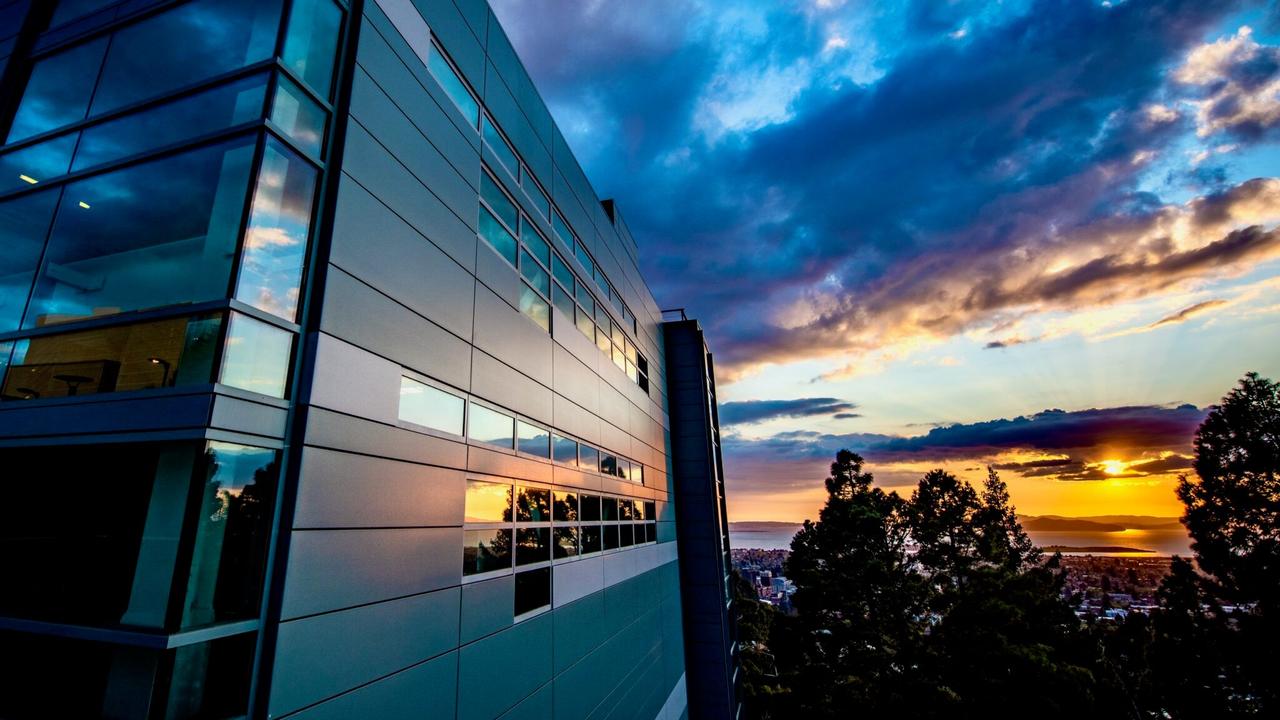
The US Department of Energy (DOE) has unveiled plans for a groundbreaking supercomputer named Doudna, set to revolutionize scientific research by merging traditional high-performance computing (HPC) with cutting-edge artificial intelligence (AI) capabilities
1
2
. This next-generation system, scheduled for deployment in 2026 at the Lawrence Berkeley National Laboratory, represents a significant shift in the landscape of government-funded supercomputing2
.
Source: NVIDIA
Technological Powerhouse
Doudna will be built by Dell Technologies and powered by Nvidia's next-generation Vera-Rubin platform, marking a departure from the usual Cray-AMD systems that have dominated DOE supercomputers in recent years
1
3
. The system is expected to deliver a tenfold increase in "scientific output" compared to its predecessor, Perlmutter, while consuming only 2-3 times more power1
.AI-Driven Scientific Discovery
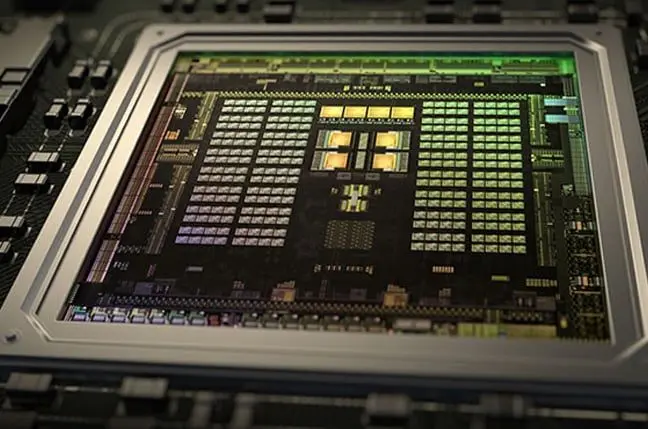
A key feature of Doudna is its focus on AI-powered research. Unlike previous DOE supercomputers that relied on processors from Intel or AMD, Doudna will incorporate a general-purpose Arm-based CPU from Nvidia, paired with the company's Rubin AI chips designed specifically for artificial intelligence and simulation workloads
2
4
. This architecture aims to meet the needs of the laboratory's 11,000 users, who increasingly depend on both high-precision modeling and rapid AI-driven data analysis2
.
Source: The Register
Real-Time Analysis and Connectivity
Doudna is designed to be an integral part of scientific workflows, not just a standalone system. It will be tightly integrated with the Energy Sciences Network (ESnet), allowing researchers nationwide to stream data directly into the supercomputer for real-time analysis
1
5
. This capability will enable scientists to perform tasks such as real-time plasma modeling using data streamed from fusion ignition facilities1
.Broad Scientific Applications
The Doudna supercomputer is expected to accelerate research across a wide range of scientific fields, including:
- Fusion power research
- Materials sciences
- Drug discovery
- Astronomy
- Protein design
- Climate modeling
- Particle physics
- Quantum computing
1
2
5
Related Stories

Shifting Paradigms in Supercomputing
Doudna's design reflects a broader shift in supercomputing priorities. While traditional systems have focused on 64-bit calculations for maximum numerical accuracy, modern AI workloads often benefit from lower-precision operations (such as 16-bit or 8-bit) that enable faster processing speeds
2
4
. This flexibility to combine different levels of precision opens new frontiers for scientific research.Impact on US Technological Leadership

Source: Interesting Engineering
The development of Doudna is seen as a critical step in maintaining US leadership in science, AI, and high-performance computing. US Secretary of Energy Chris Wright emphasized the system's role in advancing American leadership in these key technological fields
5
. The project also highlights the growing convergence between commercial AI development and the computational demands of cutting-edge scientific discovery4
.As Jensen Huang, founder and CEO of Nvidia, put it, "Doudna is a time machine for science - compressing years of discovery into days"
2
. With its unique combination of AI capabilities and traditional scientific computing power, Doudna is poised to accelerate breakthroughs across multiple scientific disciplines, potentially leading to Nobel-worthy discoveries in the years to come.References
Summarized by

Navi
[1]
[2]
Related Stories
New Supercomputer 'Doudna' to Boost AI and Scientific Research at Berkeley Lab
30 May 2025•Technology

AMD and DOE Forge $1 Billion Partnership for Sovereign AI Supercomputers
27 Oct 2025•Science and Research

Nvidia and HPE to Build Blue Lion Supercomputer in Germany, Powered by Next-Gen Vera Rubin Architecture
10 Jun 2025•Technology
Recent Highlights
1
Microsoft and Nvidia Launch Surface Laptop Ultra: A $2,599 AI-Ready PC With RTX Spark Chip
Technology

2
Trump Consulted Grok AI Before Ordering Venezuela Invasion and Capture of Nicolás Maduro
Policy and Regulation

3
Scientists Build AI Model That Reconstructs Images From Brain Scans in Record Time
Science and Research

Recent Highlights
Today's Top Stories






Don’t drown in AI news. We cut through the noise - filtering, ranking and summarizing the most important AI news, breakthroughs and research daily. Follow topics that matter to you and stay ahead.


