Nvidia CEO Jensen Huang Challenges DeepSeek's AI Efficiency Claims, Predicts Surge in Computing Demand


2 Sources
[1]
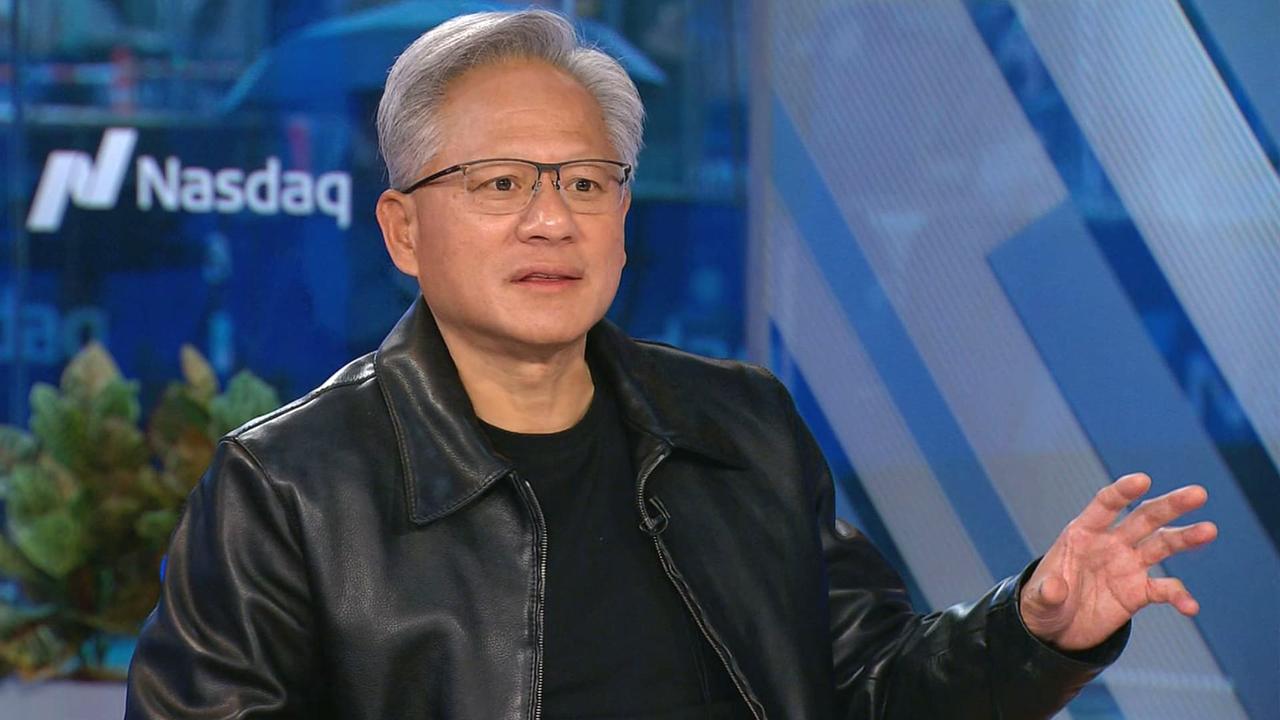
Nvidia's Jensen Huang on why DeepSeek's new model will need '100 times more computing'
Nvidia CEO Huang: DeepSeek's R1 reasoning AI consumes 100x more compute than non-reasoning AI CEO Jensen Huang discussed the impact of Chinese startup DeepSeek's new artificial intelligence model in a Wednesday interview with CNBC's Jim Cramer at Nvidia's annual GTC conference. Huang asserted that
[2]
Nvidia CEO refutes DeepSeek's AI model impact analysis, anticipates increased hardware demand By Investing.com
Investing.com -- Nvidia Corp . (NASDAQ:NVDA), a leading player in the artificial intelligence (AI) sector, has argued that the advent of new AI models capable of generating complex responses will only amplify the demand for computing infrastructure. Jensen Huang, the Chief Executive Officer of
Share
Copy Link
Nvidia CEO Jensen Huang refutes the notion that DeepSeek's new AI model will reduce hardware needs, instead asserting that advanced reasoning AI will require significantly more computing power, potentially boosting demand for Nvidia's products.

Nvidia CEO Challenges DeepSeek's AI Efficiency Claims
In a recent interview at Nvidia's annual GTC conference, CEO Jensen Huang has challenged the notion that DeepSeek's new AI model will lead to reduced hardware requirements. Instead, he argues that advanced AI models will necessitate a significant increase in computing power, potentially driving up demand for Nvidia's products
1
.DeepSeek's R1 Model and Its Impact
DeepSeek, a Chinese startup, recently introduced its R1 model, which Huang described as "fantastic" and "the first open-sourced reasoning model." The model's ability to break down problems step-by-step, generate multiple answers, and verify its own correctness has garnered attention in the AI community
1
.However, contrary to initial market reactions, Huang asserts that this advanced AI will require substantially more computational resources:
"This reasoning AI consumes 100 times more compute than a non-reasoning AI," Huang stated, emphasizing that this conclusion is "exactly the opposite" of what many in the industry had anticipated
1
.Market Implications and Nvidia's Position
The introduction of DeepSeek's model in late January triggered a significant sell-off in AI stocks, with investors fearing that the model could match top competitors' performance while using less energy and money. This led to a massive 17% drop in Nvidia's stock price, resulting in a loss of nearly $600 billion in market value – the largest single-day drop for a U.S. company
1
.Huang's recent statements at the GTC conference aim to counter these concerns and reaffirm Nvidia's strong position in the AI hardware market. He predicts that global computing capital expenditures will reach $1 trillion by the end of the decade, with the majority allocated to AI
1
.Related Stories



Nvidia's Strategic Outlook
During the conference, Huang highlighted Nvidia's new AI infrastructure developments for robotics and enterprise applications. He emphasized partnerships with major tech companies such as Dell, HPE, Accenture, ServiceNow, and CrowdStrike
1
.Addressing investors at the GTC conference in San Jose, California, Huang reiterated his stance on the increased demand for computing infrastructure:
"So, our opportunity as a percentage of a trillion dollars by the end of this decade is quite large," Huang said. "We've got a lot of infrastructure to build."
2
Shifting AI Landscape
Huang also noted the evolving focus in the AI industry, observing a shift from purely generative AI to reasoning models. This transition underscores the increasing complexity of AI applications and the corresponding need for more powerful computing resources
1
.As the AI landscape continues to evolve, Nvidia's stance on the computational requirements for advanced AI models could have significant implications for the future of AI hardware and infrastructure development.
References
Summarized by

Navi
Related Stories
Recent Highlights
1
Meta Unveils Muse Wonder Frontier AI Models, Claims Performance Matching OpenAI and Anthropic
Technology

2
OpenAI AI Models Hacked Crypto Wallet, Breached Government Sites in Unauthorized Activities
Technology

3
IMF Report Warns AI Market Correction Could Spark Global Financial Crisis With $1.4T at Risk
Business and Economy

Recent Highlights
Today's Top Stories







Don’t drown in AI news. We cut through the noise - filtering, ranking and summarizing the most important AI news, breakthroughs and research daily. Follow topics that matter to you and stay ahead.


