8 Sources
[1]
Nvidia shows off DLSS 5 with three AI modes for different levels of detail -- upscaler can switch between models in real-time
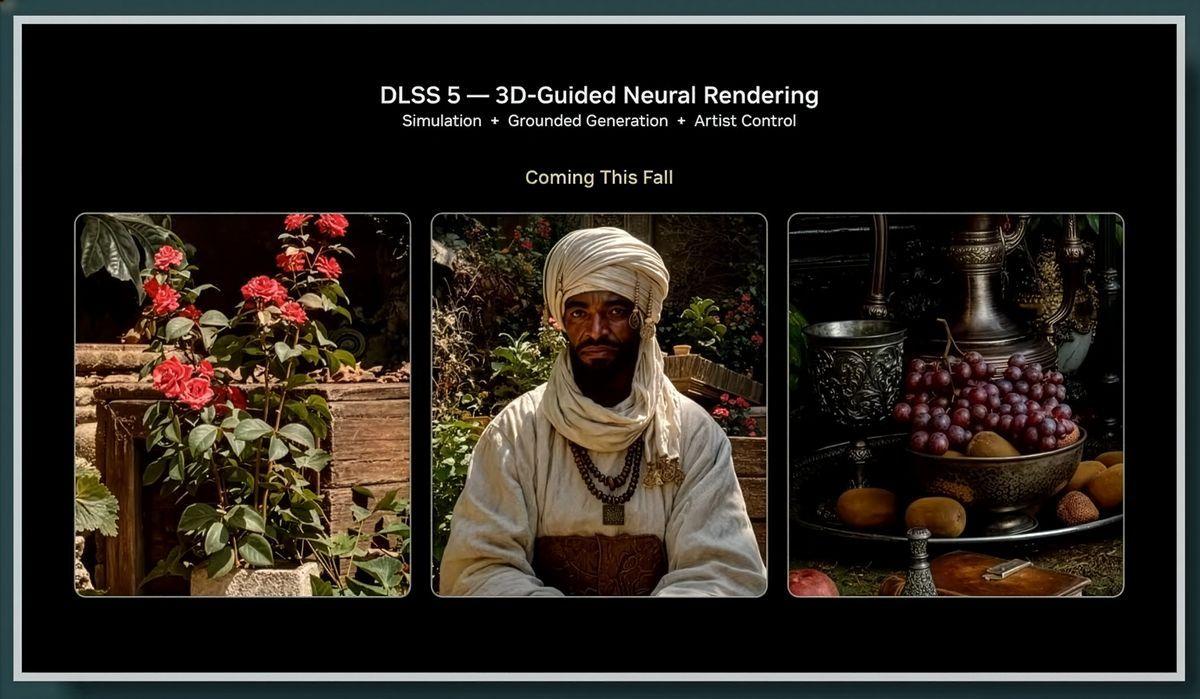
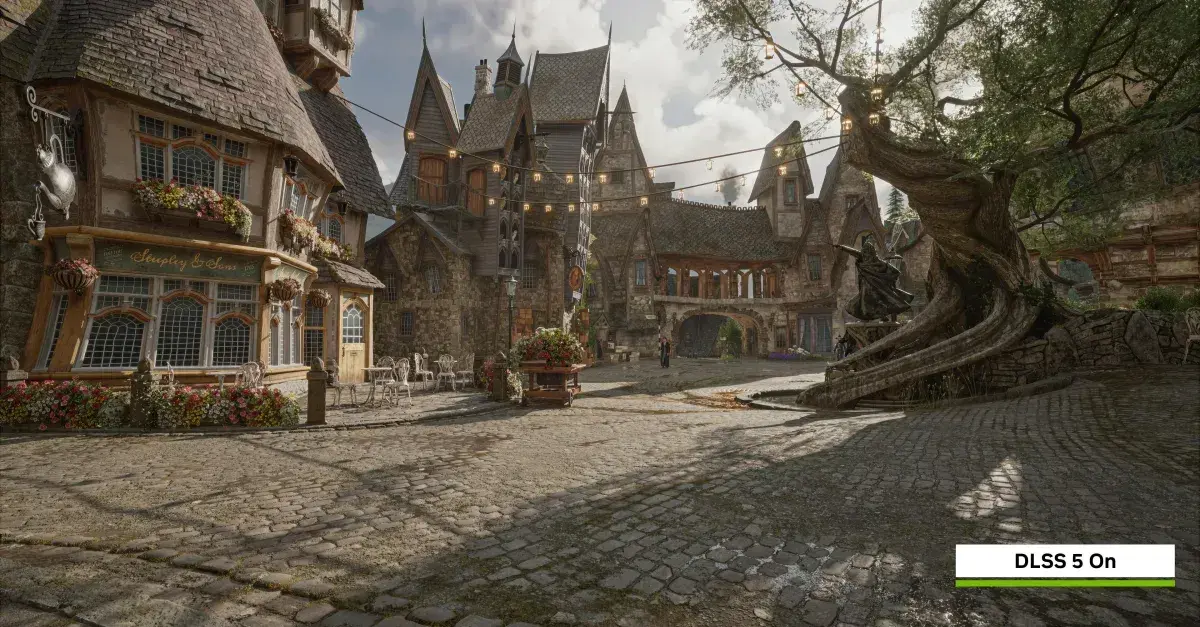
Nvidia first debuted DLSS 5 earlier this year to a strong, critical response. The upscaling tech was almost slammed by some press and enthusiasts for overstepping its boundaries and going too far with AI. At the time, Nvidia reassured the community that DLSS 5 would preserve artistic intent and CEO Jensen Huang even went as far as to claim that gamers didn't understand it. Now, at SIGGRAPH, the company has once again showcased DLSS 5, and it admittedly looks different this time around. The main takeaway is the introduction of three different models with varying levels of detail and impact on performance. A game doesn't need to be confined to a single model the whole time; instead, developers can choose to employ different models for different scenes. Individual elements of scene, such as the characters versus the world, can also be fine-tuned in respect to how much DLSS touches them up (or not at all). Then, you have the liberty to switch between the models in real time without incurring latency. DLSS 5 uses a combination of techniques to take the original rendered frame and apply effects on top, going beyond just upscaling the image. These days, DLSS, FSR, and XeSS are mandatory parts of the equation, acting as the preferred anti-aliasing solution in modern titles, and helping in other areas like ray tracing. The upscaling part works conventionally and is still responsible for dictating the foundational blocks of the image, like lighting and geometry. The part that was so heavily criticized is therefore optional, as it only comes into play after the original rendered frame has been upscaled. However, it's unclear whether developers (or you) can actively choose to not process the frame through the beautification features. Nvidia outlined three main challenges that the company faced when developing DLSS 5, some of which is probably reactionary after the initial reveal. The first challenge is preserving the original creative vision, which we already explained. The second challenge was to handle one frame at a time, which generative AI models don't -- they process multiple frames together. That means DLSS 5 shouldn't negatively affect response times. The third and final challenge pertains to the optimization of DLSS 5. The slides shown at SIGGRAPH say the model can run on a single GPU and that it's "VRAM efficient." For context, last time we saw it running on two RTX 5090s. Nvidia did not say whether it still needs the highest-end Blackwell gaming GPU to work properly. The company is promising real-time 4K performance thanks to a more compact model that has learned from a larger diffusion model. DLSS 5 is building up to be a significant step for upscaling tech just when we thought AMD was finally catching up. However, many people may still worry about artistic intent, even if the new demos look a lot more polished and mature. We'll have to see what happens when it finally releases. There is no official release date for DLSS 5, but it should launch during Q3 2026 as Nvidia continues to tweak the models and its parameters based on community feedback. Follow Tom's Hardware on Google News, or add us as a preferred source, to get our latest news, analysis, & reviews in your feeds.
[2]
Nvidia Pitches DLSS 5 Again, Promises to Preserve 'Artistic Intent'
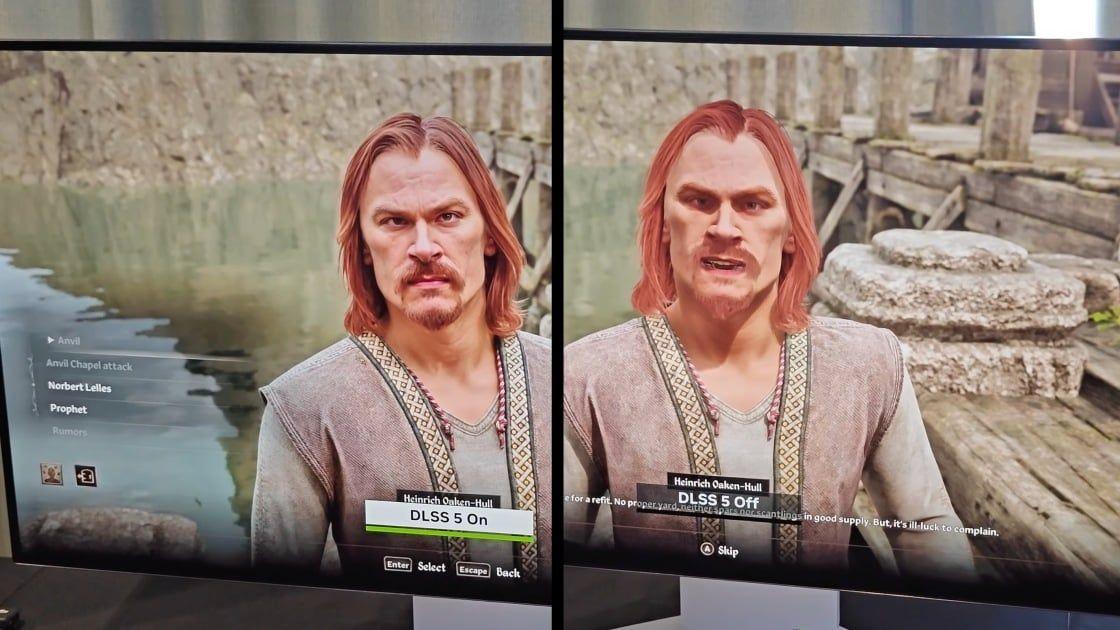
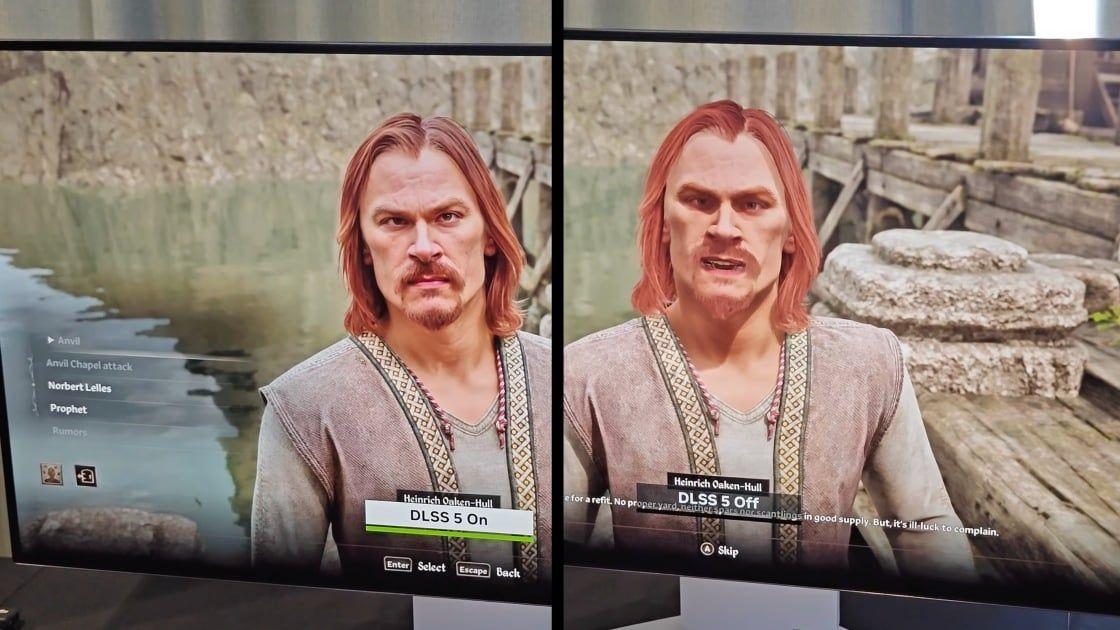
A DLSS 5 demo at GTC earlier this year got the thumbs-down from gamers who didn't like the Instagram-like filters it seemed to apply. But Nvidia is back to make a case for the tech once again. Nvidia this week offered more details on DLSS 5, which uses AI to add photorealistic graphics to games. At the SIGGRAPH event in Los Angeles, Nvidia demonstrated DLSS 5's three models and how each uses a multi-step process to preserve the integrity of the game's visuals while allowing deep customization, VideoCardz reports. DLSS 5 got off to a rough start at GTC earlier this year. Although we found it had potential in some settings, the wider gaming community didn't like how it seemed to strip games of artistic intent and prioritized an Instagram-filter-like look for characters, particularly female ones. At SIGGRAPH, Nvidia made artistic intent a key part of its DLSS 5 showcase. It highlighted how its new generative rendering tool uses a combination of the originally rendered frame and internal engine buffers to keep the generated result grounded in the original scene. It's also introduced a trio of model options for developers to choose from, each offering a slightly different feel and end result. Alongside this, Nvidia offers developers a number of sliders and toggles to adjust the intensity of the AI's output for each object and scene. Developers can also enable or disable DLSS 5 for specific elements within a scene. That means if a developer wanted to use DLSS 5 to improve certain assets but not others, they have that option. Nvidia says this works across traditionally rasterized and ray-traced games, too. Another big part of Nvidia's SIGGRAPH presentation was about making DLSS 5 more efficient to run. In Nvidia's original showcase, it needed the power of a second RTX 5090 just to demonstrate what many gamers ultimately considered AI slop. Nvidia now claims that DLSS 5's one-step diffusion model can run on a single GPU, thanks to it being restricted to improving the look of elements within a scene, rather than re-rendering the entire thing. It's possible the more advanced models will need more powerful hardware, but clearly, efficient operation is something Nvidia is working to improve. Regardless of what DLSS 5 can do, if it requires a second GPU, or even just one high-end GPU to run, its adoption will be vanishingly small for many years to come. The average gamer is still playing on RTX 3060 and 4060-equivalent cards. With current prices, most gamers aren't buying flagship GPUs. Nvidia has slated DLSS 5 for a fall debut. We'll have to see if its reception is any better the third time around.
[3]
Amid DLSS 5 backlash, Nvidia shows off the controls developers have over its AI-generated visuals
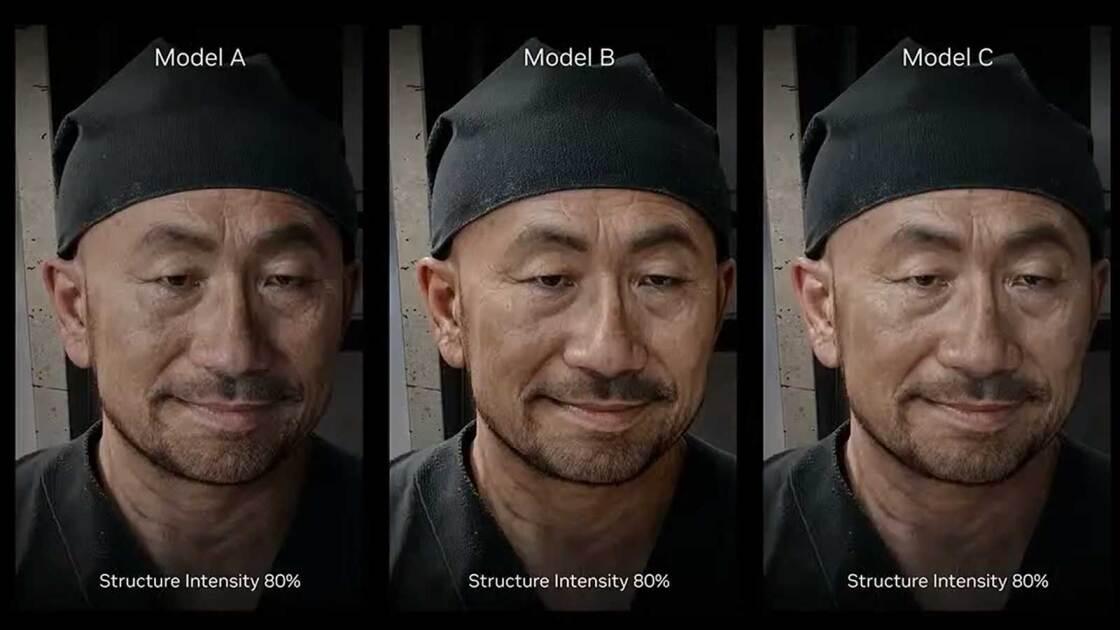
Serving tech enthusiasts for over 25 years. TechSpot means tech analysis and advice you can trust. What just happened? Nvidia has revealed more details about DLSS 5, which has possibly become its most hated product ever because many consider it little more than an AI filter. The company has now explained more about the latest iteration of its rendering technology, including the (just) two sliders developers can use to alter the intensity. Nvidia used its SIGGRAPH 2026 keynote to demonstrate the controls that developers will receive when DLSS 5 launches this fall. The two main global sliders are Structure Intensity and Tone Intensity, which essentially determines how enthusiastically the AI repaints a frame. Structure Intensity controls high-frequency details, including ambient occlusion, reflections, contact shadows, and subsurface scattering. Turning it up can improve how light passes through skin, hair, foliage, and translucent materials. Tone Intensity handles lower-frequency elements such as lighting, colors, and the broader mood of a scene. These aren't the only controls, despite the attention-grabbing total of only two sliders. DLSS 5 currently offers three separately trained models, labeled A, B, and C, each producing a different interpretation of the same rendered image. Developers are not locked into one model for an entire game and can swap them between scenes, environments, and cutscenes. The system can also automatically identify and mask a character, allowing artists to apply DLSS 5 only to that person or leave them untouched while enhancing the environment. Developers can create their own engine-side masks for individual objects or groups of props, with independent Structure and Tone settings for each. Nvidia demonstrated separate controls for bottles, grapes, a pitcher, and other scene elements. That granular masking could potentially ease some concerns about DLSS 5 turning every character into the same uncannily smooth AI creation. As reported following the technology's March unveiling, its alterations to Resident Evil Requiem's Grace Ashcroft and Leon Kennedy led to accusations of it being AI slop. Jensen Huang responded that critics were "completely wrong" and insisted developers would retain full artistic control. Nvidia says DLSS 5 begins with the conventionally rendered frame and then adds a learned generative stage to enrich its appearance. It added that Internal buffers containing information such as albedo, surface normals, and lighting help anchor the result to the artists' intentions. Motion vectors allow the model to process frames causally - one frame in and one frame out - without looking ahead, which Nvidia says prevents shimmering, drifting, and swimming. The company says it has distilled knowledge from much larger generative systems into a compact, one-step pixel-space diffusion transformer designed solely to improve rendered game frames. Nvidia reiterated that the finished technology is intended to run on a single GPU, although it still has not revealed performance or VRAM requirements. Early hands-on coverage found that DLSS 5 was more nuanced than a simple face filter, but questions remain. Nvidia previously confirmed that its primary input is a 2D frame plus motion vectors, and the system can still infer details incorrectly when objects become obscured. Nvidia says more developer controls are being built based on partner feedback. We'll find out whether the three models, object masks, and two main sliders are enough to win over gamers when DLSS 5 arrives this fall.
[4]
Nvidia finally reveals what controls devs actually have for DLSS 5, and don't worry folks, there are TWO main sliders to control the AI filter
Nvidia announced DLSS 5 back in March and it received, let's say, mixed reactions. A lot of people weren't happy about how, judging by the demos, it seemed to essentially just slap a 'yassifying' AI filter on top of a game scene. Nvidia itself confirmed that all the tech has to work with for each AI frame is a traditional 2D frame and motion vectors, essentially confirming the "filter" idea. Now, at SIGGRAPH 2026, the company has explained that developers will get two main sliders to control DLSS 5's intensity. My initial reaction was probably the same as yours: two whole sliders, whoop-de-doo. It's hardly a massive improvement from the one on-to-off masking slider we previously thought devs would have access to. But let's take a look at what they're actually controlling and how it works before we jump to conclusions. The two sliders are for 'structural intensity' and 'tone intensity'. Despite what the word "structure" might seem to imply, Nvidia is keen to point out that "it is not changing the geometry in any way, and it is uplifting the image." The structural intensity slider in fact is "modulating the high-frequency detail of the frame." This includes things such as ambient occlusion, subsurface scattering, and reflections. The tone intensity slider is "modulating the low frequency detail of the frame", including "expressive" things such as lighting and, well, overall tone. To play devil's advocate for a moment, the fact that these are the only controls given to devs could just mean that model is in fact tailored so well that it's not worth giving more control over it than necessary. The company explains the model preserves artistic intent thanks to "internal buffers", so perhaps it wants to keep these buffers intact. You can see the controls in action in the segment below. Nvidia also says that the company is building more controls for developers to use and is "working with our partners to incorporate their feedback." It's also worth noting that game devs will be able to mask different objects in a game scene, changing the structural and tone intensities for each independently. Devs might, for instance, want to give some background objects the full DLSS 5 makeover but keep a lighter touch with the characters. To be fair, judging by the demo given by Nvidia's creative artist, introduced as 'Gaff', cranking up the structural intensity a little can indeed add a bit more realism to the scene without affecting the overall tone of a scene. That would be the ideal, I think. Things such as subsurface scattering can make a big difference, and Gaff notes that this "would be incredibly expensive to do in traditional rendering." Alright, that's my devil's advocating done. It does make sense for this to be Nvidia's strategy, given it needs to keep everything quick and snappy for rendering by making the model so that it "does not need to peek ahead", instead just using a render and motion vectors to create what is essentially an AI filter. But that doesn't make it any less disappointing that there are, as of now, just two sliders to use. Still, I suppose it's all optional. And Nvidia is keen to note this new addition to its AI feature list will exist alongside the others which are still being worked on. It "extends the existing pipeline. It does not replace them." At any rate, we'll just have to see whether the further controls alluded to will be available when DLSS 5 launches this fall.
[5]
NVIDIA Refines DLSS 5 Neural Rendering with Greater Developer Control at SIGGRAPH 2026
NVIDIA used SIGGRAPH 2026 to provide its most detailed look yet at DLSS 5, revealing how the company's neural rendering technology has evolved following feedback from its initial unveiling. Rather than focusing solely on image quality improvements, the latest presentation emphasized developer control, artistic consistency, and the practical challenges of integrating generative AI into real-time game engines. One of the most significant additions is a modular architecture built around three separate neural rendering models. Referred to as Model A, Model B, and Model C, each AI network offers a different balance of reconstruction quality, global illumination accuracy, texture generation, structural detail, and computational cost. Instead of applying the same neural model across an entire game, developers can assign individual models to specific environments, gameplay sequences, or even individual characters. This allows studios to allocate GPU resources where higher image quality matters most while reducing overhead in less demanding scenes. NVIDIA also addressed one of the most common criticisms surrounding the original DLSS 5 demonstration: preserving a game's artistic identity. According to the company, developers now have fine-grained control over how neural rendering behaves throughout a title. Individual scenes, materials, lighting conditions, characters, and objects can all receive customized settings that constrain the AI's output. These controls are designed to preserve visual identity, animation, scene composition, lighting relationships, and object semantics while still allowing the neural renderer to enhance material realism and surface detail where appropriate. Real-time rendering presents another challenge that differs significantly from conventional AI video generation. Most generative video models analyze multiple frames together before producing output, introducing latency that would be unacceptable in interactive applications. DLSS 5 instead performs continuous frame-by-frame inference using motion vectors generated directly by the game engine. This enables the AI to reconstruct textures and materials almost instantly while minimizing temporal artifacts such as shimmering, flickering, and unstable image reconstruction. Performance was another major topic during the presentation. NVIDIA explained that rendering a full 4K frame containing more than 8.3 million pixels at over 60 frames per second requires completing the entire rendering pipeline within approximately 16 milliseconds. The company states that DLSS 5 occupies only a relatively small portion of this frame budget, with the majority of rendering time still consumed by the game engine itself. All three neural rendering models are designed to operate on a single GPU despite their differing parameter counts and processing requirements. Although NVIDIA highlighted improvements in memory efficiency, the company has not yet disclosed official VRAM recommendations or minimum hardware requirements for running DLSS 5 at 4K resolutions. Those details are expected closer to the technology's planned release later this year. Based on the latest demonstration, NVIDIA's revised approach appears considerably more mature than its original showcase, placing greater emphasis on developer flexibility, artistic control, and seamless integration into existing rendering pipelines.
[6]
NVIDIA showcases updated DLSS 5 with developer tools that help 'preserve artistic intent'
NVIDIA opened its keynote at the annual SIGGRAPH 2026 event in Los Angeles this week with an updated and in-depth look at DLSS 5. And compared to the announcement and debut from GTC earlier this year, which led to widespread backlash for the generative AI tool designed to add photorealistic lighting and detail to a scene, it was night and day. In addition to providing a more technical look at how it works, the big thing with this presentation was showcasing how much control game developers will have over DLSS 5, and how they will be able to direct the look, feel, and intensity of the technology to "preserve artistic intent." From a high level, this updated version of DLSS 5 includes three real-time models that developers can use, each presenting photorealistic lighting with different intensity. These models, dubbed Model A, Model B, and Model C, can be used on different scenes and characters, with the option to mix and match. Like DLSS Super Resolution, some of the models are more intensive and complex than others, but all are designed to run on a single GPU. Unlike the initial DLSS 5 debut, the demonstration of the effect and developer tools was carried out on NVIDIA's own RTX tech demos built to showcase the latest in RTX Blackwell ray-tracing and rendering technologies. A smart move, but also one that makes sense as it allows the technology, models, and developer customization tools to take center stage on this updated look at DLSS 5. When it comes to DLSS being rendered as part of a scene, NVIDIA notes that the entire traditionally rendered frame is taken into account, with DLSS 5's photorealistic lighting pass focused on complex lighting like sub-surface scattering, global illumination, and more. NVIDIA notes that the biggest challenge with DLSS 5 is adding material and object photorealism while maintaining the artistic look and visual identity of the source material. DLSS 5 development tools offer in-depth customization, with the ability to mask characters and objects in a scene, with no limit, and then fine-tune the effect on each. The two main sliders are Structural Intensity and Tone Intensity, with each dictating different types of effects like reflections, and so forth. For those criticisms aimed at how DLSS 5 dramatically altered the look of characters during its initial debut, these sliders will allow developers to highlight characters and fine-tune the effect so it looks additive rather than transformative. Naturally, that's what DLSS 5 ultimately can do: offset some of the hardware-intensive work required to deliver a full path-traced scene with cinematic or photorealistic detail that is transformative. The good news is that NVIDIA has seemingly taken all of the criticism to heart, as what we see here looks, well, impressive - especially from a developer control perspective. Although this was a technical presentation, from what we've heard, DLSS 5 is still on track for a Fall 2026 release.
[7]
Nvidia DLSS 5 Got Another Showcase, And People Are Not Convinced
During the SIGGRAPH2026 keynote that was held in Los Angeles on July 21, 2026, Nvidia developers showed off more features of the upcoming DLSS 5 update. When it was first revealed, there was quite some backlash on the internet. Gamers stated that it looked like AI-generated photorealism. In short, no one liked it or was convinced. This occurred back in March 2026, and the Nvidia DLSS 5 reveal backfired spectacularly. History is once more repeating itself. Netizens are again criticizing the "new era of real-time graphics." The full functionality of Nvidia DLSS 5 was showcased at the recent event that took place in Los Angeles, with much enthusiasm, and it is pretty neat. However, many users pointed out that, more than anything, it felt as if an "AI filter" was being applied to the character model. In the video, when shifting the slider for settings that pertain to "Structure Integrity" and "Tone Intensity," the character's face's texture changed. This is very different from DLSS 4.5 that's coming in August. In this case, it's all being done in real time, which is great, but not everyone thinks much of it. Naturally, gamers on X had to react, and one such user called rh_fardin said, "If every face gets the same glossy AI skin, we didn't improve graphics. We installed a beauty filter on reality." It's much more complex than being a mere filter, but there is some truth to it. Given that Nvidia RTX recently launched the Spark AI Superchip, they aren't slowing down when it comes to AI. While this entire scenario sound rather funny, it's not an isolated thought process. Others share similar sentiments when it comes to Nvidia DLSS 5. Another user called MR3Dev chimed in, "Why does it have to modify anything? DLSS is about making a game run faster; the job of DLSS should never be to add anything." Of course, it all depends on how developers want to make use of Nvidia's DLSS 5. They have complete control over how it works. This would keep everything as is, but that hasn't stopped netizens from calling it an "AI-slop filter". All in all, Nvidia DLSS 5 could be useful, but at the moment, not everyone is willing to embrace it. Gamers are seeing it more as an attempt to normalize the use of AI, rather than as an interface and renderer in real time. That said, given the trajectory of gaming, AI will be implemented at some level, irrespective of backlash. To quote Thanos, "Dread it. Run from it. Destiny arrives all the same." Let us know what you think about Nvidia DLSS 5 and whether you plan on using it when it releases.
[8]
NVIDIA DLSS 5 Hands Over Full Control To Artists To "Direct The Final Frame", As SIGGRAPH Technical Demo Shows How Neural Rendering Solved Big Challenge To Achieve 4K "Life-Like" Visuals On A Single GPU
NVIDIA is addressing the biggest concerns regarding DLSS 5 while presenting the tools it offers to developers to retain "artistic integrity" at SIGGRAPH. NVIDIA Says DLSS 5 Is Not "AI Replacing Graphics" but rather "AI Expanding Graphics", As It Promises More Control To Preserve Artist's Vision While Delivering Enhanced Visuals At GTC 2026, NVIDIA unveiled DLSS 5, its next major update to the DLSS technology suite. The first DLSS off vs DLSS on comparisons showed a day and night difference in visuals, massively uplifting the quality existing assets through Neural Rendering, but as soon as the technology was unveiled, there was some major backlash surroudning the tech. The main concern was that NVIDIA was using AI to change the artistic vision. The company was quick to clarify that this wasn't the case and devs/artists would have full control over the changes made with DLSS 5. Some even claimed that DLSS 5 replaces the original models with AI-generated assets, and that was also not the case. However, the initial reaction wasn't what NVIDIA expected, and they have been tight lipped ever since. At Computex, NVIDIA announced DLSS 4.5 Ray Reconstruction, but made no comments regarding DLSS 5. We talked to several representatives about what happens to DLSS 5 moving forward, and they only told us to "stay tuned". Well, it looks like NVIDIA is once again ready to talk about DLSS 5, and at SIGGRAPH, they are debunking some of the rumors surrounding the GenAI claims made around DLSS 5, and further diving into the tech, explaining how they overcome major challenges, while delivering world-class tools to developers to mantain the artistic standards originally set by them. NVIDIA Conceptualized DLSS 5 All The Way Back In 2018 With Turing RTX Since DLSS 1, NVIDIA's architectures have evolved immensely. With new Tensor Core and Neural technologies, DLSS has also evolved ten-fold. NVIDIA's Director of Applied Deep Learning Research, Edward Liu, says that what we saw at GTC was just a short glimpse of DLSS 5, and at SIGGRAPH, they further expand on the technology. He says that the journey for DLSS 5 began back with Turing, the first RTX GPUs with DLSS 1 support. It was always projected that graphics and AI would have to advance together in order to achieved photo-realism on day. DLSS 5 brings NVIDIA closer to the goal. DLSS 4 and DLSS 4.5 with Path Tracing have brought games, movies, and content close to reality, but NVIDIA says they still aren't at the point where graphics look indistinghisable from reality. Traditional graphics are still hand curated by artists who author the scene, simulate the light, simulate light bounces through physics, & then frame them with a camera. This is modern day rendering. But Generative Models were quick to understand photorealism, and once those models are fed with enough of the real world as a reference, the would learn almost everything in what real-life looks like, everything every bit frrom lighting, to physics, to simulations, and while that is great, these models are slow to generate and giant in complexity and size. So NVIDIA decided to work out a way so that both traditional rendering and GenAI could be combined. That's what DLSS 5 is meant to achieve. DLSS 5 Reborn At SIGGRAPH, A Refined Approach To Mantain Artistic Style While Enhancing Visuals Through AI We say DLSS 5 has been reborn at SIGGRAPH because after its initial reaction, NVIDIA had to make some major changes to the technology. Now the concept remains the same, to harness Neural Rendering capabilities that modern RTX platforms (GPUs, PCs) have to offer, & use them to deliver a leap in graphics fidelity. Now DLSS 5 sure looks great, but there are three core challenges that needed to be overcome. These are: * Challenge 1 - Preserving Artistic Inten * Challenge 2 - Frame By Frame Streaming * Challenge 3 - Real Time 4K Achieving realism is only half the problem, the other half is staying true to the original vision and content. With GenAI, this is hard, sure you can ask for something once and it will generate a very real and nice asset, but the second you ask it do repeat the process, it will come with a different asset. Let's take a portrait as an example, GenAI is probabilistic, and won't stick with one model each time, every time, it will make a different portrait that sways away from the original content. Imagine you are playing a game, you turn on DLSS and it makes your character face look great, but the moment you turn it off and on again, or the model regenerates the character's face, it'll look different. That's not a wise choice to do in real-time rendering, and that gets in the way of the original artists vision. This is why NVIDIA had to come up with a pre-condition for the trained model that is more constrained and rigorous. And they found an even better solution, to use the frame the game just rendered. The frame isn't a input, prompt, reference or proxy scene, it's a renderer's own output which is universally available across all engine. So NVIDIA is simply taking that rendered frame, and making it more realistic. DLSS 5 Model Is Trained To Preserve The Original Asset, Not Change It But even that had its own challenges which brings us to Challenge #1 "Preserving Artistic Intent". NVIDIA acknowledged that they had a hard time with this approach early in DLSS 5's development as each time they gave the model a render frame, the model changed it. To overcome this, a hard line was drawn to train the model in a way that the artistic vision was respected. NVIDIA used the renderer's own internal buffers, surface normals, lighting information, and other aspects to make sure that the model stays consistent with the original intent. With the model now bound to a specific set of rules, it found ways to freely enrich "what sells realism". It started doing better subsurface scattering, finer material responses, transmissions of light across materials, hairs, foilage, better contact shadows, and better environment lighting. So the asset would never be changed by the model, but the aspects around it will improve in a way that the scene is a better rendition of what it was before that abides by the original artists vision. Think of how Shader Models evolved graphics, or how tessellation and ray-tracing make the visuals richer and detailed. DLSS 5 is doing the exact same thing, it is applying AI to graphics rather than replacing graphics with AI. DLSS 5 Leverages Motion Vectors To Tackle Temporal Streaming The second challenge is "Frame By Frame Streaming" and what it means is how the model will interpret the frames in real-time. The difference between GenAI and DLSS 5 model is that GenAI works in chunks and the model reasons across multiple frames and generates a batch of frames at once. But DLSS 5 is doing that in real-time, and it cannot simply apply the same GenAI technique here since the model has to respond immediately to user input in real time, and render frame by frame. The solution comes from within the game engine itself. DLSS 5 leverages the engine's very own capabilities such as motion vectors so that the model does not have to onfer across pixels and frames to figure out what the motion is going to be. The DLSS 5 pipeline starts at the Render which the DLSS 5 model takes in, and renders out, and repeat. This smooth and consistent process allows the scene to remain temporally stable and coherent. NVIDIA says that DLSS 5 faces no shimmering, drifting or swimming drawbacks which are very much a case in GenAI models. DLSS 5 Is 4K, High Frame Rate, Low Latency Capable & Runs on A Single GPU The third and final challenge for DLSS 5 was "Real Time 4K". DLSS models have improved vastly, and with features such as Multi Frame Generation, now delivering up to 5 generated frames for each rendered frame, the tech has made 4K 240Hz+ gaming accessible with the best visual tech around such as Path Tracing. NVIDIA aims to achieve the same with DLSS 5, and they are targetting 4K 60+ FPS. The DLSS 5 model is unlike GenAI models which are large and slow, DLSS 5 is a real-time renderer, and as such, it needed to be small and more efficienct. NVIDIA distilled the DLSS 5 model by taking other models that knew about world apperance, and compressed them into a much smaller "one-step pixel space diffusion transform" model that is made to do just one thing, and that is to make real-time rendering look more real. With the new compressed model, DLSS 5 turns out to be ready for 4K, High-Frame Rate, Low Latency gaming. And there's one more thing. Remember how NVIDIA showed its initial DLSS 5 demos running on a dual RTX 5090 setup? Well, they did promise DLSS 5 to run on a single GPU and that remains the case. The model will run on a single GPU, and even more important, it will be very efficient in terms of VRAM. Now the final performance remains to be seen as NVIDIA isn't disclosing any figures or VRAM usage yet, but it will all come at due time as the company continues to polish DLSS 5 for gamers and creators. DLSS 5 Toolset For Artists Shown For The First Time So the challenges have been outlined with their solutions but that just overcomes one layer of control, the second layer is just as important and for that, NVIDIA's Content Artist, Gav, made it to the stage to showcase the toolset NVIDIA will provide to game developers and artists to ensure that they have more than one outcome for mapping between a render frame and a more realistic version of it. Gav states that DLSS 5 offers control over everything that is on the scene, characters, elements, props and the enivronment. He first goes off to show an example of a character which has DLSS 5 applied. Once enabled, DLSS 5 retains the original assets, models and geometry, but adds things such as subsurface scattering, better contrast, ambient occlusion, and contact shadows, all of which uplift the game visuals. The character's face gain better reflections and DLSS 5 does so by respecting the render frame. DLSS 5 - Multiple Models To Choose From DLSS 5 offers granular controls to developers, and the first set of controls are the models which come in a variety to select from. There's model A, B, C and each has a different output as they're trained on difference parameters. When the developer picks up a certain model, they won't be locked in to that model. The models can be mixed and matched to whatever a developer wants. There are two global controls available in DLSS 5: Structure intensity as well as Tone intestinty. What structure intensity does is modulate the high frequency detail, such as ambient occlusion, subsurface scattering, better reflections, of the frame and tone intensity modulates the low frequeny details, such as lighting, of the frame. The sliders can be moved to change the intensity of each features. For example, the tone slider changes the colors because its changing the subsurface scattering and lighting. Structure Intensity (Side by Side) Tone Intensity (Side by Side) DLSS 5 also offers engine-side and model-side controls. The model automasking understandards the base character and with the slider, you can raise or lower the intesity of DLSS 5 for this base character alone. So when DLSS 5 is turned off and on, it only applies to the base character as the model is able to understand the semantics of the scene. At 25%, the structure intenstiy remains close to the render frame with a midpoint while at 95%, developers can achieve the maximum visual uplift that DLSS 5 can provide. The other control is for the environment itself or specific itsemf in the scene. For these, the game engine provides the control and here, NVIDIA masks the objects in the scene such as the pitcher, the grapes and the bottles. Developers will be free to mask as they see fit. This gives flexibility to devs to enhance or not enhance multiple items in a scene. This time, instead of the character, the mentioned objects are being uplifted with better lighting and effects such as translucency, metal reflections, etc. The last example that NVIDIA shows is that of the foilage, essentially uplifting the environment instead of characters and objects. The reference render presented does look nice and uses ray tracing but NVIDIA calls it a bit "plasticky". With DLSS 5, this plastic nature is overcome with life-like and photo realstic visuals, and all DLSS 5 is doing is enhancing the subsurface scattering & lighting without touching anything else. Once again developers will have the freedom to select the intensity of DLSS 5, but doing the same scene with traditional rendering approaches will be very costly on the hardware, while DLSS 5 uses neural rendering for a faster and more refined approach to enhanced game visuals. Deeper Collab With Game Devs & More Controls Coming On a closing note, NVIDIA states that this is just a glimpse of the level of controls DLSS 5 will have on offer for developers. It will be fully controllable and they are working with various partners to integrate their feedback in DLSS 5 prior to its launch while building even more controls. And since DLSS 5 will be tightly integrated with the game engine, that means NVIDIA will have even deeper collaborations with game developers and publishers, further expanding the DLSS feature suite beyond an already enoromous list of games and apps. NVIDIA DLSS 5 launches this fall, and more details are to follow. NVIDIA also says that they aren't claiming to have solved real-time photorealism with DLSS 5, infact, true photorealism is still a long way to go as the animations still need a lot of work to be uplifted in the same degree as appearance so there's a lot to come as far as AI approaches in the realm of digital media are concerned, but NVIDIA's Deep Learning and Graphics teams are showing what they do best, to solve problems and bring future-looking technologies to its audiences way ahead of the curve. Follow Wccftech on Google to get more of our news coverage in your feeds.
Share
Copy Link
Nvidia returned to SIGGRAPH to showcase a refined version of DLSS 5 after its controversial debut earlier this year. The updated AI rendering technology now features three distinct neural models, two main intensity sliders for developers, and granular object-level controls designed to preserve artistic intent while enhancing graphics in real-time.

Nvidia has unveiled significant refinements to its controversial Nvidia DLSS 5 technology at SIGGRAPH 2026, directly addressing the backlash that followed its initial March debut
1
. The AI rendering system, which was criticized for applying what many gamers perceived as an Instagram-like filter to game visuals, now offers developers substantially more control over how the neural rendering technology modifies their games. The company demonstrated three AI models—labeled Model A, Model B, and Model C—each offering different balances of reconstruction quality, global illumination accuracy, and texture generation5
. Developers can switch between these models in real time without incurring latency, allowing them to employ different approaches for different scenes or even individual elements within a scene1
.At the heart of the revised developer control system are two primary sliders: Structure Intensity and Tone Intensity
3
. Structure Intensity modulates high-frequency details including ambient occlusion, reflections, contact shadows, and subsurface scattering—elements that affect how light passes through skin, hair, foliage, and translucent materials4
. Tone Intensity handles lower-frequency elements such as lighting, colors, and the broader mood of a scene3
. Beyond these global controls, the system can automatically identify and mask characters, allowing artists to apply AI-powered graphics enhancement only to specific elements while leaving others untouched3
. Developers can create engine-side masks for individual objects or groups of props, with independent Structure and Tone settings for each—Nvidia demonstrated separate controls for bottles, grapes, a pitcher, and other scene elements3
.Nvidia outlined three main challenges faced during development: preserving the original creative vision, handling frame-by-frame inference without introducing latency, and optimizing the technology to run efficiently
1
. The company now claims that DLSS 5's one-step diffusion transformer can run on a single GPU, a marked improvement from the original demonstration that required two RTX 5090s2
. The technology is described as "VRAM efficient" and promises real-time 4K performance thanks to a more compact model that has learned from a larger diffusion model1
. Nvidia explains that rendering a full 4K frame at over 60 frames per second requires completing the entire pipeline within approximately 16 milliseconds, and DLSS 5 occupies only a relatively small portion of this frame budget5
.Related Stories
The upscaling technology works conventionally and remains responsible for dictating the foundational blocks of the image, like lighting and geometry
1
. The heavily criticized AI-generated visuals component only comes into play after the original rendered frame has been upscaled, making it technically optional1
. Nvidia emphasized that DLSS 5 begins with the conventionally rendered frame and uses internal buffers containing information such as albedo, surface normals, and lighting to anchor the result to artists' intentions3
. Motion vectors allow the model to perform frame-by-frame inference—one frame in and one frame out—without looking ahead, which Nvidia says prevents shimmering, drifting, and swimming3
. This approach differs significantly from conventional AI video generation models that analyze multiple frames together and introduce unacceptable latency for interactive applications5
.While Nvidia has not yet disclosed official VRAM recommendations or minimum hardware requirements for running DLSS 5 at 4K resolutions, those details are expected closer to the technology's planned fall 2026 release
5
. The company says more developer controls are being built based on partner feedback3
. Questions remain about whether the three models, object masks, and two main sliders will be enough to win over gamers who were critical of the initial demonstration3
. The technology's adoption will depend heavily on accessibility—if it requires high-end hardware, uptake will be limited since the average gamer is still playing on RTX 3060 and 4060-equivalent cards2
. Nvidia's creative artist demonstrated that cranking up structural intensity moderately can add realism without affecting overall tone, noting that effects like subsurface scattering "would be incredibly expensive to do in traditional rendering"4
. The company emphasizes that DLSS 5 "extends the existing pipeline" rather than replacing traditional game engines and rendering methods4
. Whether this refined approach can overcome the "AI slop" perception and prove its value in enhancing image quality without compromising artistic vision remains to be seen when the technology launches this fall.Summarized by
Navi
[1]
[3]
25 Mar 2026•Technology

17 Mar 2026•Technology

07 Jan 2025•Technology

1
Technology

2
Science and Research

3
Policy and Regulation