Nvidia Partners with 8 Australian Data Centres to Build 2GW AI Infrastructure by 2027


6 Sources
[1]
Nvidia signs eight Australian data centre partners for up to 2GW of AI capacity by 2027
Nvidia has signed eight Australian data centre and cloud companies to build what it calls AI factory capacity, in an arrangement the chipmaker says could support up to two gigawatts of AI compute in Australia by 2027. The partners named in the announcement are Firmus, Sharon AI, IREN, Megaport,
[2]
NVIDIA Expands AI Infrastructure Capacity in Partnership With Australia's Data Center Ecosystem
Firmus, Sharon AI, IREN, Megaport, ResetData, CDC, NEXTDC and AirTrunk to Deliver Up to 2-Gigawatt Buildout by 2027, Meeting Surging Demand From AI Labs and AI-Native Startups * NVIDIA is collaborating with Australian NVIDIA Cloud Partners and AI infrastructure partners including Firmus, Sharon
[3]
Nvidia partners with 8 Australian firms for 2GW AI buildout
Australia's current computing capacity stands at 1.6 GW, meaning the buildout could more than double the country's AI compute Nvidia $NVDA announced on Thursday that it is partnering with eight Australian data center and cloud companies to expand AI computing capacity in the country, targeting a
[4]
Nvidia outlines sprawling Australian vision, and energy strain
Nvidia says its chips will use more energy in Australia next year than all the existing data centres currently require, as the American giant unveiled ambitious plans to power artificial intelligence in the country. Widely considered the world's most valuable business, Nvidia said it would target
[5]

Nvidia enters partnerships to build out more Australian data center capacity By Investing.com
Investing.com-- Nvidia said on Thursday it will collaborate with several Australian data center and cloud partners to build out more cloud computing capacity in the country over the coming years. Nvidia said it will partner with Australian firms including Firmus, Sharon AI, IREN, ResetData,
[6]

NVIDIA Expands AI Infrastructure Capacity in Partnership With Australia?s Data Center Ecosystem
NVIDIA Corporation announced that it is collaborating with a growing ecosystem of Australian NVIDIA Cloud Partners and AI infrastructure partners to expand land, power and shell capacity designed to host multiple generations of NVIDIA DSX AI factories, supporting the nation?s growing demand for AI
Share
Copy Link
Nvidia announced partnerships with eight Australian data centre operators to build AI factory capacity targeting 2 gigawatts by 2027. The expansion could more than double Australia's current 1.6GW computing capacity but raises questions about power supply and sovereignty as the chipmaker's energy demands will exceed all existing data centres combined.
Nvidia Targets Massive AI Infrastructure Expansion in Australia
Nvidia has signed partnerships with eight Australian data centre and cloud companies to build what the chipmaker calls AI factory capacity, targeting up to
1
2 gigawatts of AI capacity by 2027. The partners include Firmus, Sharon AI, IREN, Megaport, ResetData, CDC, NextDC and AirTrunk, marking a significant push to expand AI infrastructure capacity across the nation2
. Australia's current computing capacity stands at3
1.6GW, meaning this buildout could more than double the country's AI compute capabilities.The expansion addresses surging AI compute demand from technology giants including Amazon, Meta and Microsoft
4
. However, Nvidia acknowledged that its chips will use more energy in Australia next year than all existing data centres currently require, highlighting the significant energy strain this expansion will create.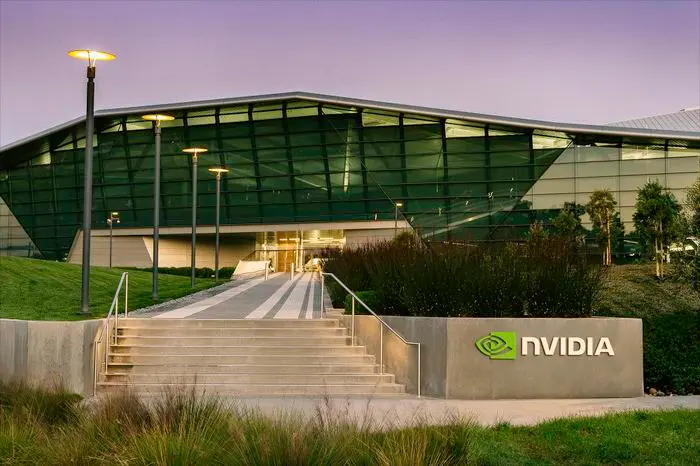
Source: NVIDIA
Understanding the AI Factory Model and Nvidia DSX Platform
An AI factory, in Nvidia's definition, represents a full-stack arrangement rather than just physical buildings. Built on the Nvidia DSX platform, these facilities integrate compute infrastructure, networking, software and reference designs around the CUDA ecosystem
1
. The DSX platform is compatible with the CUDA ecosystem and enhanced through software over the infrastructure's lifetime, improving performance and extending asset life.
Source: Financial Review
Raj Mirpuri, vice president of global AI clouds and infrastructure ecosystem at Nvidia, explained that "AI factories turn energy into intelligence—the essential resource of the AI economy"
2
. The platform aims to make AI factories more productive, fungible and durable, creating what Nvidia positions as a new investable asset class.Sharon AI is deploying up to 68,000 NVIDIA GPUs connected with NVIDIA Quantum InfiniBand and NVIDIA Spectrum-X Ethernet networking using the DSX platform
2
. This infrastructure will support startups, enterprises and research organizations seeking high-performance accelerated computing.The Sovereign AI Pitch and Its Limitations
Nvidia frames this expansion as enabling sovereign AI for Australia, emphasizing data residency rules, locally trained regional AI models, and industries preferring not to send data offshore
1
. The expanded capacity will give Australian innovators greater access to accelerated computing and NVIDIA Nemotron open models to develop locally relevant applications and agents.James Manning, cofounder and CEO of Sharon AI, stated that "Australia has the energy, connectivity and ambition to lead in AI"
2
. Yet the sovereignty claim carries an inherent contradiction: while the racks sit on Australian soil, the accelerators, interconnect, software stack and reference architecture remain entirely American1
.This arrangement represents a meaningful improvement over shipping data to Virginia, but falls short of true independence. The distinction matters increasingly in Canberra, particularly as Washington pressures Australia over platform regulation
1
.Related Stories
Scale of Partner Commitments and Infrastructure
IREN's Bundey campus in South Australia operates as an 800MW site
1
. CDC operates more than 550MW across Australia and New Zealand with a further 800MW under construction. Firmus is expanding its Project Southgate initiative, developing NVIDIA-powered AI factories designed to support hyperscale and AI-native demand across Australia and Asia-Pacific2
.Oliver Curtis, cofounder and co-CEO of Firmus, described Project Southgate as "a tangible commitment to building Australia's AI future"
2
. The initiative aims to give Australian businesses, researchers and innovators access to world-class computing capacity domestically while positioning Australia to meet growing demand across Asia-Pacific.Notably, six of the eight partners are landlords or connectivity providers rather than model builders
1
. This reveals the market reality: capacity is being committed well ahead of demand that would justify it, on the assumption demand will materialize.The Power Question and Missing Details
2 gigawatts represents roughly the output of two large nuclear reactors, committed in a country whose grid operator has warned about firm capacity in eastern states for several years
1
. Nvidia does not build power stations, and the announcement makes no claim about where the electricity comes from—the standard gap in these arrangements.The announcement from Nvidia
5
provided no financial terms for the partnership. Critical details remain undisclosed: no timetable per site, no capital commitment figure, no specific customers named, and no word about power generation1
. These four factors determine whether 2 gigawatts represents a concrete plan or merely a headline.This approach contrasts sharply with Europe's AI gigafactory competition, which runs through state aid, consortium bids and site selection, attempting to answer ownership and power supply questions before construction begins
1
. Europe's energy regulators actively debate whether data centres should bring their own clean supply. The Australian model, assembled from eight private operators without public subsidy, moves faster but defers these fundamental questions.Watch for announcements on power generation partnerships, specific customer commitments, and how Australia's grid infrastructure adapts to this unprecedented AI computing capacity expansion.
References
Summarized by

Navi
[1]
[2]
[4]
Related Stories
Nvidia partners with major energy companies to build flexible AI factories that respond to grid needs
23 Mar 2026•Technology

Nvidia DSX Platform Drives 40% Energy Efficiency Gains as Power Becomes AI Infrastructure's Biggest Constraint
16 Sept 2026•Technology
OpenAI NextDC strike $4.6 billion deal to build massive AI data centre in Sydney
05 Dec 2025•Business and Economy

Recent Highlights



Recent Highlights
Today's Top Stories







Don’t drown in AI news. We cut through the noise - filtering, ranking and summarizing the most important AI news, breakthroughs and research daily. Follow topics that matter to you and stay ahead.


