5 Sources
[1]
South Korea's Naver to build gigawatt-scale AI factories using Nvidia technology
SEOUL, June 8 (Reuters) - Nvidia (NVDA.O), opens new tab said on Monday that South Korean internet conglomerate Naver (035420.KS), opens new tab would use its technology to build AI factories at gigawatt scale to meet rising global demand for AI services and physical AI. The project is aimed at serving growing global demand for AI services and physical AI applications, Nvidia said. Reporting by Heekyong Yang; Editing by Jamie Freed Our Standards: The Thomson Reuters Trust Principles., opens new tab
[2]
NVIDIA AI Cloud Ecosystem Expands Worldwide to Meet Global AI Compute Demand
Fast-growing ecosystem helps enterprises, startups, nations, AI labs and developers scale agentic AI applications. The NVIDIA AI Cloud ecosystem is accelerating the global buildout of AI factory infrastructure. Partners are expanding capacity to meet growing demand from enterprises, startups, nations, AI labs and developers scaling agentic AI applications. NVIDIA AI Clouds are a growing ecosystem of purpose-built clouds serving the exploding token demand behind today's most popular AI applications. These AI clouds have been co-designed with NVIDIA's full-stack AI infrastructure to meet surging demand for AI from enterprises, startups and nations looking for new vendors and regional capacity. They combine NVIDIA accelerated computing, networking and AI software to help partners support training, fine-tuning, inference, agentic AI, physical AI and sovereign AI deployments. Specific configurations vary by partner and workload. AI cloud partners choose NVIDIA for the best economics -- lowest token cost, best throughput per watt -- to run frontier and open source AI. Built with NVIDIA accelerated computing, networking and AI software, these clouds bring AI factories closer to where data, developers, users and industries are, helping customers train, tune and run agentic AI applications at scale. The ecosystem spans nearly every geography, supporting regional and sovereign AI capacity for frontier model builders, enterprises, startups, software providers and national AI programs. "Every company and every country needs AI factory infrastructure to turn data into intelligence," said Jensen Huang, founder and CEO of NVIDIA. "NVIDIA AI Clouds bring full-stack AI factories closer to the regions, industries and developers building the next generation of AI, from model training to real-time inference and AI agents that will transform how people and organizations work." Broad AI Cloud Ecosystem AI cloud providers, telcos, sovereign AI builders and vertically integrated infrastructure providers are building AI factories with NVIDIA to serve customers across frontier AI, enterprise AI, telecommunications, developer clouds and national AI programs. Regional growth is accelerating across Southeast Asia, Australia and the Americas, with NVIDIA AI Clouds now reaching six continents following the addition of Cassava in Africa and Claro in South America. NVIDIA AI Clouds are pairing large-scale AI factory buildouts with demand from leading AI labs, enterprises, governments and digital service providers. Partners including CoreWeave, Firmus, IREN and Nscale are expanding AI infrastructure to support frontier model development, enterprise AI, agentic applications and high-volume inference. Across regions, NVIDIA AI Clouds are bringing AI factories closer to local industries and sovereign AI ecosystems. Partners including Firebird, GMI Cloud, Indosat Ooredoo Hutchison, Lambda, Naver Cloud, Sharon AI, Yotta and YTL are supporting emerging AI companies, national AI initiatives, financial services, telecommunications, manufacturing, education, healthcare and developer ecosystems. For governments and regulated industries, regional AI clouds can support sovereign controls and local compliance requirements. For developers and enterprises, they can reduce friction in accessing accelerated infrastructure for AI agents, enterprise copilots, digital workers and other AI services that must run close to users and data. Firmus Expands AI Factory Footprint Across Australia and Asia-Pacific Firmus Technologies is expanding its AI factory footprint across South Australia and Southeast Asia, building energy-efficient infrastructure to support growing demand for large-scale training, inference and agentic AI workloads. Through Project Southgate, Firmus is developing AI factories in Tasmania, Melbourne, South Australia and New South Wales, with an emphasis on renewable power, advanced cooling and modular infrastructure that can bring capacity online faster. The company has also deployed AI infrastructure in Singapore through a partnership with ST Telemedia Global Data Centres. Firmus is using NVIDIA's accelerated computing and reference architecture as part of its buildout, with NVIDIA DSX helping streamline AI factory design, deployment and operations. Engineered in alignment with the NVIDIA DSX platform, the liquid-cooled Firmus HyperCube is designed to fast-track modular AI Factory builds and optimize for low cost per token. Firmus is innovating across the AI factory supply chain, including cooling and energy. "AI agents are creating a new class of industrial-scale demand for tokens, and Asia-Pacific needs AI factories that can be built faster, liquid-cooled more efficiently and operated at gigawatt scale," said Tim Rosenfield, co-CEO of Firmus. "Together with NVIDIA, Firmus is building liquid-cooled, AI infrastructure designed to deliver AI tokens as efficiently and rapidly as possible for the region's most important customers." CoreWeave Advances Physical AI and Next-Generation AI Factories CoreWeave is expanding its NVIDIA AI Cloud platform to support the next wave of agentic AI, physical AI and frontier model workloads. An early adopter of NVIDIA Vera Rubin and the NVIDIA Vera CPU, CoreWeave is also among the first to adopt NVIDIA Spectrum-X Ethernet Photonics, helping provide the networking foundation for million-GPU AI factories. CoreWeave is extending its platform for robotics and physical AI workflows, including using NVIDIA Cosmos 3, the latest frontier world foundation model, to help teams generate synthetic data, fine-tune models and accelerate robotics data flywheels. Leading AI labs, including Anthropic, build on CoreWeave's infrastructure to support frontier models at scale. "AI factories are becoming the foundation for the agentic era," said Michael Intrator, cofounder, chairman and CEO of CoreWeave. "Together with NVIDIA, CoreWeave is building the full-stack cloud infrastructure that gives AI labs, enterprises and developers the performance, scale and reliability they need to turn frontier models, AI agents and physical AI systems into production applications." Nebius Builds an Open Physical AI Workbench for Agentic Workflows Nebius is expanding its NVIDIA AI Cloud with a full-stack platform for training, inference and physical AI development. An early adopter of NVIDIA Vera Rubin, Nebius is building integrated AI infrastructure from silicon to software, including its Nebius AI Cloud, Token Factory inference layer and new Physical AI Workbench. The workbench brings technologies including NVIDIA Cosmos 3, NVIDIA Isaac Sim and Isaac GR00T into composable workflows that can be assembled by AI agents, helping robotics and autonomous systems teams move faster from simulation and synthetic data to training and evaluation. "Developers should be able to build AI systems without spending weeks wiring together infrastructure," said Arkady Volozh, founder and CEO of Nebius. "With NVIDIA, Nebius is creating an AI cloud where AI agents can compose the tools, data and compute needed to accelerate AI workloads -- from robotics and life sciences to the enterprise -- from experimentation to production." NVIDIA Exemplar Cloud Momentum Since NVIDIA introduced Exemplar Cloud last year, six NVIDIA Cloud Partners have achieved Exemplar Cloud status: CoreWeave, Crusoe, Lambda, Nebius, Vultr and YTL. The growing roster reflects increasing demand for AI cloud infrastructure that can deliver consistent performance, reliability and efficiency for production AI workloads. These providers are helping raise the performance bar across the AI cloud ecosystem, giving enterprises, developers and AI labs more validated options for scaling training, inference and agentic AI services. Engineered for AI Factory Economics As AI shifts from model development to reasoning and high-volume inference, the measure of infrastructure is no longer just capacity announced but also the economics of token output driven by platform utilization, uptime, long asset life and the breadth and depth of useful AI agents people can put to work. Built on NVIDIA full-stack AI factory platforms, AI Clouds help partners optimize infrastructure for these measures. Cost per token is the total cost of ownership metric that directly accounts for hardware performance, software optimization, ecosystem support and real-world utilization. NVIDIA delivers the lowest cost per token in the industry, driven by delivered token throughput, software optimization and full-stack codesign across compute, networking, memory and storage. DSX Helps AI Clouds Bring Capacity Online Faster NVIDIA AI Clouds are adopting the NVIDIA DSX platform to design, build and operate AI factories. DSX brings together validated reference designs, simulation, software and ecosystem technologies to help cloud providers bring capacity online faster, operate more efficiently and maximize revenue. DSX Sim helps teams model and validate AI factories before deployment. DSX Flex helps AI factories dynamically adapt workloads to grid conditions. DSX MaxLPS helps power-constrained AI factories maximize compute within a fixed power budget, enabling up to 40% more GPUs. DSX OS helps automate lifecycle management and operations at scale. DSX helps AI Clouds reduce deployment risk, improve resiliency, deliver more tokens per watt and achieve the lowest cost token.
[3]
SK Telecom and NVIDIA Build AI Infrastructure to Power Korea's AI Innovation
Korea's Leading Telco to Add NVIDIA-Powered AI Cloud Capacity Built on NVIDIA DSX AI Factory Architecture to Accelerate AI Startups, Robotics and Industrial Physical AI * SK Telecom plans to build a gigawatt-scale AI Cloud in Korea using the NVIDIA DSX platform, with the first AI factory planned to come online in 2027. * The AI Cloud will support sovereign, physical and agentic AI services for enterprises and industries across Korea, building on SK Telecom's network, data center and enterprise infrastructure expertise. * NVIDIA DSX will serve as the AI factory architecture blueprint, combining NVIDIA accelerated computing, systems, software and partner technologies to improve time to production and token performance per megawatt. * NVIDIA and SK Group are planning to expand their collaboration from AI infrastructure deployments to joint research on next-generation AI factory architectures. NVIDIA and SK Telecom today announced that SK Telecom plans to build a gigawatt-scale AI Cloud in Korea using the NVIDIA DSX™ platform, with the first AI factory coming online in 2027. An AI Cloud is large-scale AI infrastructure comprised of AI factories that manufacture tokens, building blocks of intelligence, from data. Unlike conventional large-scale providers offering general-purpose cloud services, AI Clouds specialize in GPU-based cloud computing tailored specifically for AI workloads across training, inference and agentic AI. SK Telecom's AI Cloud will be built on the NVIDIA DSX full-stack reference architecture of software, hardware and operations producing the lowest-cost tokens at maximum energy efficiency. SK Telecom's AI Cloud will power training, inference and agentic workloads including sovereign, physical and enterprise AI services for companies and industries across Korea, with the vision to expand to greater Asia regions. The initiative reflects Korea's role as one of the world's most advanced pro-AI industrial economies. Korean companies lead in telecommunications, memory, semiconductors, manufacturing, robotics, mobility and consumer technology -- industries where AI is moving from research labs and chatbots into secure, production-grade deployments. "Telecom networks are becoming national AI infrastructure," said Jensen Huang, founder and CEO of NVIDIA. "They connect people, companies, devices and machines -- and now they can become the backbone of new AI clouds. With NVIDIA DSX, SK Telecom can build Korea's AI cloud at scale and bring agents, enterprise and physical AI to the companies and industries that power Korea and the world." "Through our close partnership with NVIDIA, we have now secured full-stack AI infrastructure capabilities, from chips to data center operations," said Chey Tae-won, Chairman of SK Group. "We will work with NVIDIA to tackle GPU, memory and energy challenges and become a leading AI factory player shaping Asia's AI ecosystem." SK Telecom AI Cloud to Scale Agentic and Physical AI for Industries and Enterprises The new SK Telecom AI Cloud is designed to serve rising demand for AI infrastructure, as accelerated AI computing growth continues to increase. The new infrastructure builds on SK Telecom's leadership in physical AI and agentic AI development. At GTC Taipei last week, SK Telecom announced its latest work in applying digital twins to SK hynix semiconductor fabs using NVIDIA Omniverse™ libraries, optimizing the technology for complex, large-scale manufacturing environments. In April, SK Telecom revealed that it has adopted open source NVIDIA Nemotron™ datasets to train the A.X K1 model as part of the Korea government's Sovereign AI Foundation Model Project. Moreover, as part of this collaboration, SKT will become an NVIDIA Cloud Partner, joining a global program through which participants use NVIDIA's latest AI infrastructure, software and developer ecosystem to deliver excellent AI performance and economics through AI cloud services. NVIDIA DSX Platform Delivers Rapid Design, Ultraefficient Operations The NVIDIA DSX platform is engineered from the ground up with extreme codesign for AI factories, built and operated to drive lowest token cost and accelerate time to first production across NVIDIA chips, systems, software, facilities and partner technologies. NVIDIA DSX MaxLPS™ software delivers the lowest token cost by maximizing token performance per megawatt. NVIDIA DSX OS™ is the operating layer that helps providers increase revenue and improve margins with open source, modular software for lifecycle management, runtime consistency, health automation, resiliency and multi-tenant AI factory operations. NVIDIA and SK Group to Pursue Joint Research for Next-Gen AI Infrastructure NVIDIA and SK Group today announced plans to pursue joint research to codevelop next-generation AI factory architecture, extending their collaboration beyond infrastructure deployment. The companies will focus on silicon-to-grid innovation across accelerated computing, memory technologies and data center operations. NVIDIA and SK Group companies including SKT will also explore projects for full-stack AI factory optimization to drive more efficient, scalable and resilient AI services.
[4]
NAVER Expands AI Infrastructure With NVIDIA to Serve Surging Global AI Demand
NAVER to Build NVIDIA DSX-Based AI Factories at Gigawatt Scale to Power Agents and Physical AI * NAVER, an AI Cloud, will build AI factories on the NVIDIA DSX platform at gigawatt scale, starting with AI infrastructure expansion at GAK Sejong. * NVIDIA DSX gives NAVER a proven AI factory blueprint to serve Korea's industries and global AI cloud customers as demand for useful AI surges at lowest token cost. * NAVER will use NVIDIA full-stack AI platforms, models and software to advance regional AI models including next-generation HyperCLOVA X models, its Seoul World Model development and agentic AI services. NVIDIA and NAVER today announced that NAVER will expand sovereign AI infrastructure, starting at 55 megawatts with plans to move to gigawatt scale using the NVIDIA DSX™ platform to rapidly design, build and scale full-stack, end-to-end AI platforms that can serve enterprises, industries and government. "Useful AI has arrived, and demand for AI factories is extraordinary," said Jensen Huang, founder and CEO of NVIDIA. "NAVER is building AI factory infrastructure that will serve its companies, developers and industries. With NVIDIA DSX, we can help Korea scale sovereign intelligence infrastructure for the agentic era -- from AI agents to AI factories and physical AI." "NAVER is building sovereign AI infrastructure that can serve Korea's industries and global customers with trusted, high-performance AI," said Haejin Lee, founder and chairman of NAVER. "By building on the NVIDIA DSX platform, we can help customers move from AI experimentation to production-scale AI factories that power models, agents and real-world services." As useful AI increasingly moves to production, AI factories are becoming critical infrastructure for training, post-training and inference. Built with the NVIDIA DSX platform with NVIDIA accelerated computing, NAVER's AI factories will give Korea a sovereign foundation to create intelligence for enterprises, manufacturers, government organizations and AI cloud customers. NVIDIA DSX-Powered AI Cloud to Expand NAVER GAK Sejong Data Center The new DSX-powered cloud will expand NAVER's GAK Sejong data center, a next-generation, hyperscale facility in Sejong, South Korea, built to power the company's rapidly growing AI and cloud services. Designed for high‑density NVIDIA accelerated computing, GAK Sejong delivers resilient, energy‑efficient operations with advanced automation, sustainability features and robust disaster‑response capabilities. GAK Sejong positions NAVER to support large‑scale digital services and innovation across Korea and beyond. NAVER is serving sovereign AI demand with infrastructure across Europe and the Middle East. By combining its hyperscale data center capabilities with NVIDIA DSX, NAVER aims to offer government and enterprise customers a trusted alternative for secure, high‑performance digital services compliant with local regulatory and data‑sovereignty requirements. NAVER will use NVIDIA full-stack AI platforms not only to fuel sovereign AI models and agentic AI services but also accelerate its AI data center business. AI Cloud Infrastructure Builds on Companies' Model Development Collaboration The new AI cloud infrastructure builds on NVIDIA and NAVER's partnership in advancing sovereign and physical AI models in Korea. NAVER is advancing its HyperCLOVA X models by fine-tuning the NVIDIA Nemotron™ 3 Ultra open model with its proprietary data and training expertise, delivering a more capable and culturally fluent model for Korean and global enterprise customers. HyperCLOVA X models based on NVIDIA Nemotron also provide a platform to support sovereign AI initiatives in Europe and the Middle East. NAVER is the first Korean company to participate in the NVIDIA Nemotron Coalition, contributing to open model development across pretraining, post-training and reinforcement learning to accelerate global AI innovation. It plans to launch an AI Agent Platform in Korea in the second half of the year, powered by NVIDIA NemoClaw™ blueprints. NAVER is also developing a Seoul World Model using its proprietary urban street-view data and spatial modeling technology, building on NVIDIA Cosmos™ world foundation models. NVIDIA DSX Platform to Power Rapid NAVER Expansion The NVIDIA DSX platform is purpose-built as an end‑to‑end, codesigned stack for AI factories, spanning chips, systems, software, facilities and partner technologies to minimize token cost and speed time to first production. NVIDIA DSX platform will pair with NAVER's expertise in building and operating large-scale proprietary GPU clusters and hyperscale data centers. NVIDIA DSX MaxLPS™ software achieves the lowest token cost by maximizing token throughput per megawatt, while NVIDIA DSX OS™ provides the operating layer that enables providers to grow revenue and enhance margins through open source, modular software for lifecycle management, consistent runtime operations, health automation, resiliency and multi‑tenant AI factory management.
[5]
NVIDIA DSX Gives Infrastructure Builders the Playbook for AI Factories
* Engineered from the ground up for AI factories, the NVIDIA DSX platform defines how next-generation infrastructure is designed, built and operated -- driving lowest token cost and accelerating time to first production across NVIDIA chips, systems, software, facilities and partner technologies. * New DSX MaxLPS software enables AI infrastructure and factories to deliver the lowest token cost by maximizing token performance per megawatt. * Open source, modular DSX OS software brings together lifecycle management, runtime consistency and health automation, resiliency, multi-tenant AI factory operations and platform services. * Industry-leading manufacturers are building NVIDIA DSX-ready systems supporting the buildout of AI factories with extreme codesign. * Growing DSX partnerships across every layer of the stack accelerate the design, deployment and operation of AI factories worldwide. NVIDIA GTC Taipei -- NVIDIA today announced the NVIDIA DSX™ platform, which gives infrastructure builders a complete playbook to create AI factories. NVIDIA DSX brings together open source, modular software libraries, application programming interfaces, reference designs, NVIDIA accelerated computing platforms and partner technologies into a common, codesigned platform for AI factory design, deployment and operations. NVIDIA is the only company that builds the full AI factory. By aligning every layer of the stack across compute, software, facilities and partner technologies, DSX provides infrastructure builders with a proven framework to design, deploy and operate AI factories at scale. The integrated platform accelerates deployment, improves operational reliability and resiliency at scale and enables a broad ecosystem of solutions designed to turn every megawatt into more intelligence at the lowest token cost. "We're not just shipping chips -- we're giving every infrastructure builder a complete playbook to build AI factories," said Jensen Huang, founder and CEO of NVIDIA. "With the DSX platform, you can simulate the entire factory before you spend a dollar, validate performance before a single rack is installed and operate with the kind of reliability that production AI demands." DSX Platform Elements DSX now spans the full stack, from silicon and systems to infrastructure software, facilities and partner technologies. The latest additions to the platform include new open source software: * DSX MaxLPS™: A suite of technologies to maximize token performance per megawatt within a fixed power budget, enabling lowest token cost for AI factories. Combining 45-degrees-Celsius liquid cooling with in-rack technologies that optimize performance per watt, DSX MaxLPS lets operators run up to 40% more GPUs at their most energy-efficient operating point with minimal impact on workload performance. * DSX OS™: Open source, modular software purpose-built for AI factory operations, providing lifecycle management, intelligence scheduling, runtime consistency, health automation, resiliency, multi-tenant operations and platform services. DSX MaxLPS and DSX OS join an existing set of features under the DSX platform: * DSX Reference Design: Generation-specific, validated AI factory architectures covering compute, networking, storage, hardware cluster design and facilities infrastructure -- including power, cooling and controls, as well as civil, structural and architectural design. * DSX Sim™: High-fidelity simulation layer for the AI factory lifecycle, helping NVIDIA, partners and customers to model, validate and optimize infrastructure decisions from planning and design through deployment and operations. * DSX Flex: Connects AI factories to power-grid services, enabling dynamic workload adaptation to grid signals such as load shedding, demand response and pricing events, and orchestrating renewable and hybrid power across utility, onsite renewables and storage. * DSX Exchange™: Enables scalable, secure integration of compute, network, energy, power and cooling plant signals between IT, operational technology and operations agents. Growing DSX Ecosystem NVIDIA is partnering with industry-leading Taiwan system manufacturers to expand the DSX ecosystem, supporting the buildout of AI factories with extreme codesign at their core. NVIDIA cloud partners CoreWeave, Crusoe, Firmus, IREN, Lambda, Nebius, Nscale and Yotta Data Services are deploying core components of the DSX platform stack -- DSX Sim, DSX MaxLPS and DSX OS -- to reduce risk, improve GPU utilization and bring AI cloud capacity online faster. Dell Technologies, HPE, Lenovo and Supermicro together with ASUS, Foxconn, GIGABYTE, Pegatron, Quanta Cloud Technology (QCT), Wistron and Wiwynn are building NVIDIA DSX-ready systems and contributing simulation-ready assets that enable customers to deploy complete, full-stack AI factory solutions at global scale. Within the ecosystem, model-based systems engineering serves as the bridge between rack design to facility deployment, for an AI infrastructure optimized for token performance per megawatt. Quanta Cloud Technology (QCT) and Pegatron are working with Dassault Systèmes to create a live AI factory digital twin configurator to automate rack-to-facility design with increased quality and reduced workload. The adoption of DSX Sim by system manufacturers expands the NVIDIA Omniverse DSX Blueprint ecosystem, deepening integration with software partners Cadence, PTC and Siemens. DSX Flex is powering a commercial, multi-megawatt pilot with Emerald AI and Silicon Valley Power to demonstrate grid-responsive AI factories that can dynamically adjust power consumption in response to utility signals while protecting AI workload performance, helping safeguard grid reliability and affordability for customers while unlocking additional power capacity to support AI growth. Partners are adopting various DSX OS software components for lifecycle management, multi-tenancy, security, health automation, resilience and platform services. Ecosystem partners adopting DSX OS components include Aible, BeyondAI, Bhashini, DCAI, Mirantis, OpenNebula Systems, Rafay, Red Hat, Sarvam, Simplismart, Spectro Cloud, Supermicro, vCluster and Vultr. Watch Huang's keynote and learn more at NVIDIA GTC Taipei.
Share
Copy Link
NVIDIA announced major partnerships with South Korean tech giants Naver and SK Telecom to build gigawatt-scale AI factories using its DSX platform. The infrastructure will support sovereign AI, agentic AI, and physical AI applications across Korea and beyond, with SK Telecom's first facility coming online in 2027.
NVIDIA has unveiled ambitious plans to scale AI infrastructure in South Korea through strategic partnerships with internet conglomerate Naver and telecommunications leader SK Telecom
1
. Both companies will build gigawatt-scale AI facilities using the NVIDIA DSX platform, marking a significant expansion in the region's capacity to meet global AI demand. The announcement comes as enterprises, startups, nations, and AI labs scramble to secure infrastructure capable of supporting the next generation of AI applications, from agentic AI to physical AI deployments.
Source: NVIDIA
Naver will expand its AI infrastructure starting at 55 megawatts with plans to scale to gigawatt capacity, beginning with expansion at its GAK Sejong data center
4
. SK Telecom plans to build a gigawatt-scale AI Cloud in Korea, with its first AI factory scheduled to come online in 20273
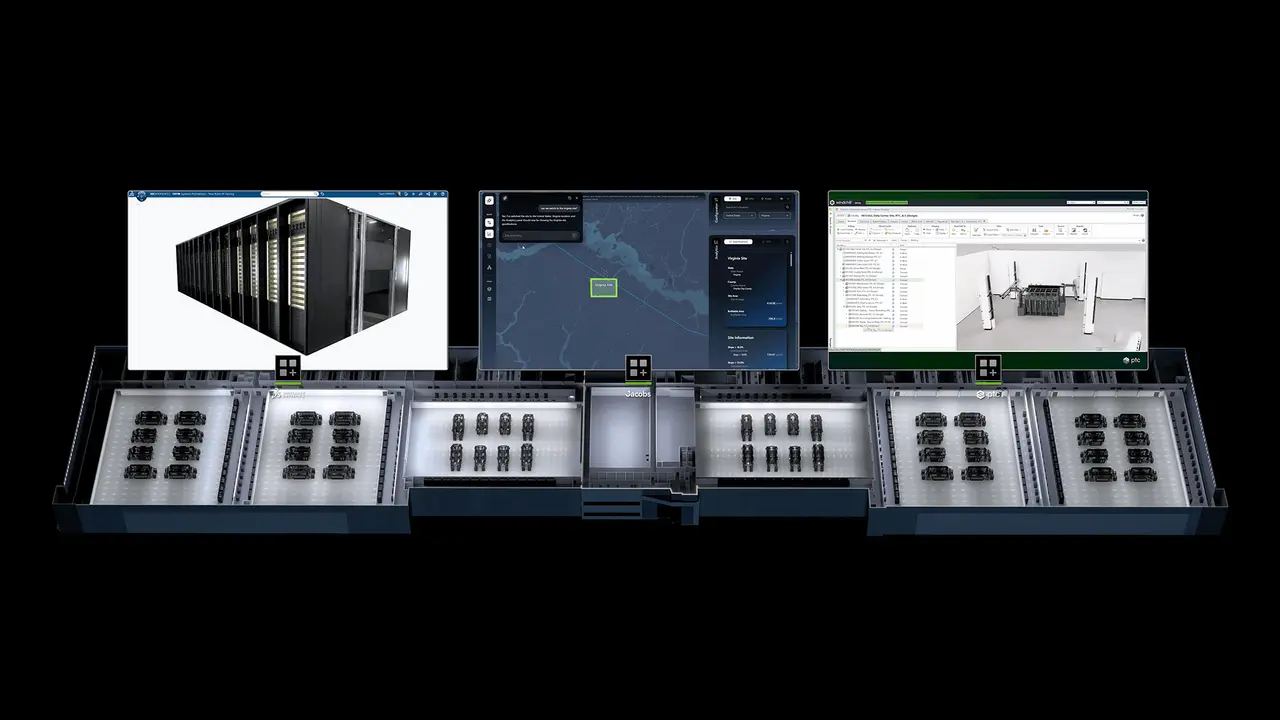
. These facilities will serve as critical infrastructure for training, post-training, and inference workloads, transforming how Korea's industries access and deploy AI capabilities.The NVIDIA DSX platform serves as the architectural blueprint for these massive buildouts, combining accelerated computing, systems, software, and partner technologies to optimize both time to production and token performance per megawatt
5
. DSX MaxLPS software enables AI factories to deliver the lowest token cost by maximizing token performance per megawatt, while DSX OS provides open source, modular software for lifecycle management, runtime consistency, health automation, and multi-tenant operations.
Source: NVIDIA
Jensen Huang, founder and CEO of NVIDIA, emphasized the strategic importance of these partnerships: "Every company and every country needs AI factory infrastructure to turn data into intelligence. NVIDIA AI Clouds bring full-stack AI factories closer to the regions, industries and developers building the next generation of AI, from model training to real-time inference and AI agents"
2
.The infrastructure investments reflect Korea's ambition to become a leading player in Asia's AI ecosystem. SK Telecom's AI Cloud will power sovereign AI, physical AI, and enterprise AI services for companies across Korea, with plans to expand to greater Asia regions
3
. Chey Tae-won, Chairman of SK Group, stated: "Through our close partnership with NVIDIA, we have now secured full-stack AI infrastructure capabilities, from chips to data center operations. We will work with NVIDIA to tackle GPU, memory and energy challenges and become a leading AI factory player shaping Asia's AI ecosystem."Naver is advancing its HyperCLOVA X models by fine-tuning the NVIDIA Nemotron 3 Ultra open model, delivering more capable and culturally fluent models for Korean and global enterprise customers
4
. The company also plans to launch an AI Agent Platform in Korea in the second half of the year, powered by NVIDIA NemoClaw blueprints. Additionally, Naver is developing a Seoul World Model using proprietary urban street-view data and spatial modeling technology, building on NVIDIA Cosmos world foundation models.Related Stories

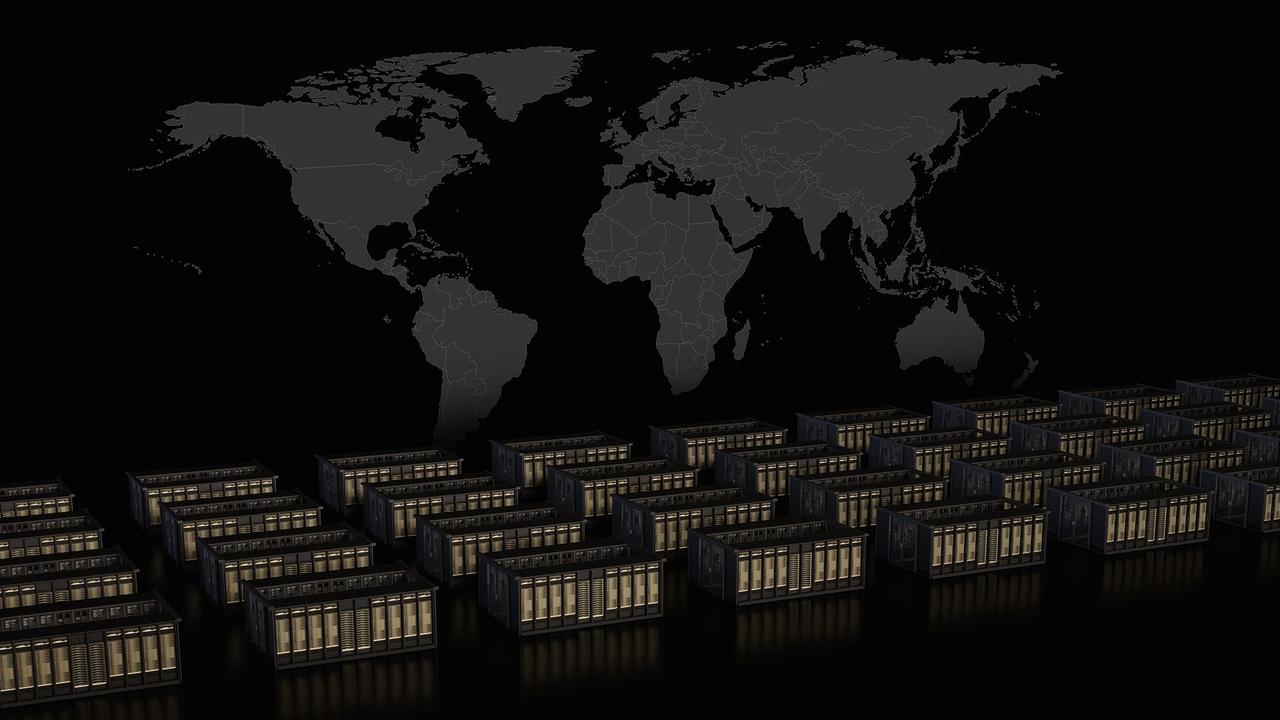
The Korean partnerships are part of a broader expansion of the NVIDIA AI Cloud ecosystem, which now spans six continents following additions in Africa and South America [2](https://blogs.nvidia.com/blog/ai-unless otherwise specified, this will also run on an AI Cloud ecosystem/). Partners including CoreWeave, Firmus, IREN, and Nscale are expanding AI infrastructure to support frontier model development, enterprise AI, and high-volume inference. Firmus Technologies is expanding its footprint across South Australia and Southeast Asia through Project Southgate, developing AI factories in Tasmania, Melbourne, South Australia, and New South Wales with emphasis on renewable power and advanced cooling
2
.
Source: NVIDIA
For governments and regulated industries, regional AI clouds support sovereign controls and local compliance requirements. For developers and enterprises, they reduce friction in accessing accelerated computing for AI agents, enterprise copilots, and digital workers that must run close to users and data. The ecosystem's rapid growth signals a fundamental shift in how organizations approach AI deployment, moving from experimental projects to production-scale infrastructure capable of supporting the token-hungry applications driving today's AI revolution. As SK Telecom becomes an NVIDIA Cloud Partner, it joins a global program delivering AI performance and economics through specialized cloud services designed specifically for energy efficiency and operational scale
3
.Summarized by
Navi
02 Jun 2026•Technology

31 Oct 2025•Business and Economy

22 Apr 2026•Technology

1
Startups

2
Policy and Regulation

3
Policy and Regulation