12 Sources
[1]
Nvidia and OpenAI in talks for up to $250 billion dollar backstop to fund AI infrastructure plans
OpenAI is in discussions with Nvidia about a backstop of up to $250 billion that would help fund its ambitious plans to lease a massive new artificial intelligence data center, CNBC confirmed. The backstop would let OpenAI raise debt for a 10 gigawatt data center campus in Pike County, Ohio, on the strength of Nvidia's credit, according to a source familiar with the discussions who asked not to be named because the details are confidential. The guarantee would cover the lease and construction debt, not the Nvidia chips inside, which the two companies are discussing separately, the person said. Nvidia declined to comment. The Wall Street Journal was first to report the negotiations about the $250 billion backstop. The large site in Ohio once functioned as a uranium-enrichment plant, the person said. A gigawatt is a measure of power, and 10 gigawatts is roughly equivalent to the annual power consumption of 8 million U.S. households, according to a CNBC analysis of data from the Energy Information Administration. The data center campus could cost more than $500 billion in total, the person said. The talks about the site and its financing are in progress and still subject to change, according to another source familiar with the plans who asked not to be named due to confidentiality.
[2]
OpenAI Close to Landing $500 Billion Data Center With Backing From Nvidia
Maureen Farrell reported from New York, and Cade Metz from San Francisco. OpenAI is close to leasing a $500 billion data center in southern Ohio that could be among the largest of the artificial intelligence boom, according to three people familiar with the project. OpenAI is in separate talks with the chipmaking giant Nvidia for a $250 billion financial backstop for the project, said the three people, who spoke on the condition of anonymity because they were not authorized to discuss it. The U.S. government, which is helping to provide the electrical power for the project, is still talking to other potential tenants, and the deal will not be final until it is agreed to by Commerce Secretary Howard Lutnick, one of the people said. But the Japanese conglomerate SoftBank, an OpenAI investor that is leading the development of the data center, and government officials are leaning toward OpenAI as the main tenant because Nvidia has added financial muscle to the A.I. company's proposal, the three people said. Microsoft, Google and possibly other companies have also submitted bids to use the data center, the people said. The center, financed in part through a trade deal with Japan, will be backed by 10 gigawatts of electricity, which is enough electricity to power millions of households. The financing for the Ohio project is indicative of the elaborate deals that have helped fuel the A.I. boom over the past several years. Through unusual and creative arrangements with chipmakers, cloud-computing companies and governments across the globe, start-ups like OpenAI and Anthropic are tapping into huge amounts of computing power they could not afford on their own. Many of these deals can be described as circular. A start-up will receive billions of dollars from giant tech companies before sending those billions back to the same companies to pay for computing power and other services. Last week, Anthropic announced such deal with AMD, one of Nvidia's chief rivals. AMD agreed to invest $5 billion in Anthropic, while Anthropic agreed to purchase tens of billions of dollars in hardware from the chipmaker. OpenAI has made similar agreements with AMD, Nvidia and others. Nvidia would allow OpenAI and its partners to receive more favorable terms on the billions of dollars in debt they must raise to help fund the project. Nvidia would agree to cover both OpenAI's lease payments and its debts if the start-up was unable make payments on its own. Nvidia, with a market valuation of nearly $5 trillion, is one of the few companies in the world that has the financial wherewithal to backstop a deal of this size. It can help a smaller company raise large amounts of money at reasonable interest rates. That makes the deal less risky, said Jeremy Kress, an associate professor of business law at the University of Michigan who specializes in financial stability and systemic risk in the economy. "It is nice to have a backstop," he said. "You want to see stable money that can absorb loses." The Wall Street Journal reported earlier on the talks between OpenAI and Nvidia. From 2019 through 2023, Microsoft pumped more than $13 billion into OpenAI. Then OpenAI funneled most of those billions back into Microsoft, buying cloud-computing power needed to fuel the development of new A.I. technologies. Anthropic made similar agreements with Google and Amazon. And Google has provided chips and financial backstops for new data centers built by Anthropic and other partners. (The New York Times has sued OpenAI and Microsoft, claiming copyright infringement of news content related to A.I. systems. The two companies have denied the suit's claims.) OpenAI's latest effort is even larger and more elaborate. Nvidia, which previously invested $30 billion in OpenAI, is also considering financing the purchase of $350 billion of its chips for the data center in Ohio, person familiar with the talks said. The U.S. government is providing the electrical power through a partnership with Japan. The Japanese government agreed to help fund the project as part of an agreement to invest in U.S. projects in exchange for lower tariffs. Mr. Lutnick will ultimately need the approval of the Japanese government to complete the deal. SoftBank, a longtime investor and partner of OpenAI, is building the data center from a decommissioned Cold War-era uranium enrichment plant on federal land in Piketon, Ohio, about 50 miles south of Columbus. The project is still in the early stages, and it is not yet clear when the data center will be completed. The first stage of construction is planned for completion in 2028. Financial experts have long warned that such deals pose risks to the economy because companies are taking on enormous amount of debt to fund new data centers -- and because of the circular nature of many of the deals. "Five hundred billion dollars is a very large project, even given the current level of spending across the industry," said Gil Luria, head of technology research at the investment firm D.A. Davidson. "Is this investment worthwhile? Will it generate the appropriate returns? Is it sustainable? This is the right conversation to have." Dr. Kress said that even if Nvidia was backstopping the deal, it still would come with risk. If OpenAI struggles to repay its debts, that may mean that the entire A.I. industry, including Nvidia, is in financial distress. "It is not really outside equity that it coming in to backstop the project," he said. "There is a very high correlation between Nvidia's business and the success of this project." Mr. Luria said some investors were already beginning to see sizable returns from their data center deals. This includes tech giants like Google as well as investment banks like Blackstone. Google said last week that its revenues in the three months ending in June rose 24 percent from the previous year, boosted by investments the company has made in A.I.-related companies like SpaceX and Anthropic. Gains tied to those investments were valued at about $99 billion and contributed $77 billion to the company's overall profit. When Blackstone reported quarterly earnings last week, Stephen Schwarzman, the company's chief executive, said the "most significant driver" of the firm's results and its quarterly profits came from investments in A.I., specifically citing data centers, energy and power as well as A.I. companies. "We are in the early days of what I believe will be the most consequential transformation in industry and markets in a generation," Mr. Schwarzman said during the firm's investor call.
[3]
Nvidia's $750bn AI deals push its credit default swaps to record
Credit default swaps on Nvidia bonds hit a record on Monday as investors priced the risk of a chipmaker underwriting the customers who buy its chips. Jensen Huang has called the circularity charge "ridiculous." Nvidia is working on a fresh round of AI infrastructure deals potentially worth more than $750 billion, Bloomberg reported, accelerating a pattern of investment that critics say inflates demand and valuations across the sector. The response from the debt market was unusually direct. Nvidia's five-year credit default swap spread surged to a record 82 basis points on Monday, its largest single-day intraday increase since the contract began actively trading in November 2025, according to ICE Data Services figures cited by Bloomberg. Credit default swaps are effectively insurance against a bond issuer failing to pay. What is in the $750bn An AI initiative with SK Group, parent of chipmaker SK Hynix, was unveiled late Friday and is worth more than $500 billion by Nvidia's own accounting. The two will build more than two gigawatts of AI data centres on the Korean Peninsula, roughly the power required for 1.5 million homes. Separately, Nvidia is in talks to guarantee as much as $250 billion so OpenAI can lease a 10-gigawatt data centre campus that a SoftBank subsidiary is developing in southern Ohio. It is also discussing financing a further $350 billion of OpenAI chip purchases. Nvidia also said late Friday it will invest $1 billion in Naver Corp to help fund an AI data centre under construction in South Korea, developed jointly with Brookfield. The funding will let Naver more than triple the size of the facility, and its shares rose more than 8% in Seoul. The Sutskever deal On Monday Nvidia announced a long-term partnership with Safe Superintelligence, the lab founded by OpenAI co-founder Ilya Sutskever, reportedly worth $5 billion. Nvidia said the arrangement gave it "rare access into the company's closely guarded research." The deal gives SSI access to Nvidia's Vera Rubin platform and will increase its compute by an order of magnitude. For a company with no product and two years of near-total silence, the validation is arguably worth as much as the silicon. Why the market reacted The concern is structural rather than moral. Nvidia takes equity stakes in or guarantees debt for customers such as OpenAI and CoreWeave, which then spend the money on Nvidia hardware, a loop that can make demand look stronger than underlying end-user appetite. "While Nvidia's investments and partnerships reinforce confidence in long-term AI buildouts, investors remain concerned about circular financing," said Gary Tan, a portfolio manager at Allspring Global Investments. "Capital is increasingly being used to fund future AI customers and infrastructure deployments." Billy Leung, an investment strategist at Global X Management, framed the OpenAI guarantee as a warning sign rather than a bullish one. "It's as much a reminder of funding strain in the AI buildout as it is a demand signal," he said. Both the IMF and the Bank for International Settlements have flagged AI circular financing as a systemic downside risk. Huang's rebuttal Jensen Huang has consistently rejected the framing, arguing Nvidia's stakes are small relative to what its partners raise elsewhere. "It's a small percentage of the amount of money that they ultimately have to go raise," he said of the CoreWeave investment in January, adding that "the idea that it is circular is, it's ridiculous." On the Korean deals he was expansive. "This is the golden ages for Korea," Huang told Bloomberg Television, noting the $500 billion figure covers Nvidia's memory chip purchases as well as SK Group buying Nvidia supercomputers. That last point matters. The SK arrangement flows in both directions, since Nvidia needs high-bandwidth memory that Hynix and Samsung dominate, which makes it a supply deal as much as a demand one. Not just Nvidia Vendor guarantees have spread across the industry. Google agreed to backstop lease payments at five data centre sites for Anthropic, helping the OpenAI rival obtain what amounts to a $35 billion loan. Nvidia has extended credit further down the stack too. It has offered AI startups compute now and payment later, a structure that solves a customer's cash problem while booking the revenue. Much of the resulting obligation sits outside standard debt disclosure. Big Tech's off-balance-sheet AI commitments have been estimated at around $1.65 trillion, which is why guarantees rather than headline borrowing have become the metric to watch. The tally so far Nvidia has announced more than $540 billion of such deals in 2026 alone, excluding the potential OpenAI arrangement. It holds stakes in OpenAI, Marvell, IREN, CoreWeave, and Nebius. Monday cost it. Nvidia shares fell close to 5% to $196.51, stripping roughly $250 billion from its market value and handing the title of world's most valuable company back to Apple. The OpenAI negotiations are early stage and could collapse or change terms, and neither Nvidia nor OpenAI commented. What is already settled is that the credit market has decided this pattern carries a price, and it has started charging for it.
[4]
Nvidia reignites "circular" AI concerns
Why it matters: The potential deal underscores the swift pace of the AI economy, but it also renews concerns that the increasingly "circular" nature of AI deals could create systemic financial risks. The big picture: Nvidia, which is making oodles of cash, is using its financial heft to buoy its customers, who are losing oodles of cash. * The company is weighing a plan to guarantee $250 billion for an OpenAI data center project in southern Ohio, WSJ and Bloomberg reported. * It's also reportedly considering a separate deal to finance OpenAI's purchase of $350 billion in Nvidia chips. These are things you can consider when your market cap is hovering around $5 trillion and your profit margin is an astonishing 75%. * But the possibility of more circular deals -- you buy from me, I invest in you, and everything's fine unless one of us has a problem, in which case both of us have a problem -- soured the debt market on Monday. * The price of credit default swaps on Nvidia bonds -- which provide a version of bond-default insurance to investors -- recorded their highest intraday increase since they started to actively trade in November, according to ICE Data Services figures cited by Bloomberg. Zoom in: The Ohio data center is being developed by an arm of the Japanese tech investment firm SoftBank, which sold its Nvidia shares in late 2025. * With Nvidia backing OpenAI, the vision is that the data center developer would be able "to raise debt at more favorable terms than it could if OpenAI had no financial backer," WSJ reports. * The operation would be located on a decommissioned uranium enrichment site on federal land, giving the Commerce Department control over the supply of power, which will come from a new $33 billion natural gas plant pledged by Japan. Meanwhile, Nvidia announced another deal Monday to invest in and partner with OpenAI co-founder Ilya Sutskever's new firm, Safe Superintelligence. * The deal serves as something of a public validation for the stealthy AI startup, with Nvidia saying that it had obtained "rare access into the company's closely guarded research." * Details of their arrangement were thin, but it will allow the startup "to increase its compute by an order of magnitude" and the companies will "collaborate on the technical advancement of NVIDIA's current and future compute platforms," according to Nvidia. What they're saying: Reps for OpenAI and Nvidia had no immediate comment Monday on the reports of their under-discussion deals. Madison Mills contributed reporting to this story.
[5]
Nvidia Funds AI Frenzy: Timeline of its Circular Financing Deals ... So Far - NVIDIA (NASDAQ:NVDA)
* NVDA stock is down on the report. See the chart and price action here. Nvidia would also discuss separately financing up to $350 billion of chip purchases tied to the same site, pushing total project costs past $500 billion and making it the largest data center ever proposed. The arrangement would let SB Energy borrow against Nvidia's balance sheet rather than OpenAI's, since the ChatGPT maker still lacks an investment-grade credit rating. The scale drew immediate pushback. Investor Michael Burry and commentator Ed Zitron flagged the guarantee as further evidence of a self-reinforcing loop, with Burry writing "around and around we go." Nvidia's own filings show why: its first quarter fiscal 2027 10-Q caps total lease-guarantee exposure at $3.5 billion, meaning a $250 billion commitment would run roughly 71 times its current disclosed guarantee book. This is the latest entry in a pattern stretching back nearly two years: Each deal shares the same skeleton: Nvidia writes a check or backstops debt, and the recipient turns around and spends heavily on Nvidia silicon or Nvidia-powered cloud capacity. Nvidia has consistently maintained it does not contractually require partners to buy its chips with the proceeds. CEO Jensen Huang had suggested in March that the $30 billion OpenAI stake and $10 billion Anthropic commitment might mark the end of Nvidia's largest AI equity checks, citing both companies' expected IPOs. The Ohio site talks suggest the chipmaker has instead found a new vehicle for the same dynamic, shifting from direct equity into loan backstops as OpenAI's projected compute spending climbs toward $750 billion through 2030. Terms remain unsettled, and people familiar with the talks caution the deal could still fall apart. NVDA Stock Price Activity: Nvidia stock shed 4.99% on Monday to close at $196.51, according to data from Benzinga Pro. Over the past month, NVDA has gained about 1.5% versus a 0.3% rise in the S&P 500 and is up roughly 4% year-to-date compared to the index's 7.8% gain. This content was partially produced with the help of AI tools and was reviewed and published by Benzinga editors. Market News and Data brought to you by Benzinga APIs To add Benzinga News as your preferred source on Google, click here.
[6]
OpenAI and Nvidia Discuss $250 Billion Data Center Funding Deal | PYMNTS.com
That's according to a report Monday (July 27) by the Wall Street Journal (WSJ), which calls the proposed deal one of the most ambitious to date in the American AI boom. The guarantee from Nvidia would help OpenAI lease a 10-gigawatt project in southeastern Ohio, sources familiar with the matter told the WSJ. The total cost of the project would come to more than $500 billion, the report added, making it the largest data center project thus far. Nvidia's support would allow the data-center developer, owned by Japan's SoftBank, to raise debt at more favorable terms than it could if OpenAI had no backer, as the private and unprofitable OpenAI has no investment-grade credit rating. The artificial intelligence company has been in advanced talks to lease the site for several weeks, with Anthropic, Google and Microsoft also showing interest, according to the WSJ's sources. Nvidia has already invested $30 billion in OpenAI, and is discussing a deal to fund chip purchases for OpenAI totaling $350 billion, sources familiar with those discussions said. The WSJ notes that this type of "circular funding" arrangements have prompted worries that industry is vulnerable if investor sentiment changes or growth cools at AI companies. The report added that this data center would be OpenAI's first as a tenant, bringing it closer to overseeing the infrastructure it now chiefly rents from companies like Amazon and Microsoft. OpenAI recently increased its spending forecast for computing power from around $600 billion to roughly $750 billion through 2030, the WSJ said, adding that it is not clear how the deal might influence those numbers. The proposed deal is happening as data center construction is facing increasing pushback from the American public, as PYMNTS reported earlier this month. Earlier this month, New York placed a one-year moratorium on construction of new data centers, the first state-wide ban of its kind. Maine's legislature had approved a state-wide ban, bit it was vetoed by Gov. Janet Mills. Minnesota, Michigan, Pennsylvania, South Carolina, New Hampshire and Virginia are all currently considering similar legislation, according to an analysis from law firm Foley & Lardner. "If additional states follow suit, New York's decision could become the beginning of a broader regulatory trend rather than an isolated event," the analysis said.
[7]
Nvidia just made a move Wall Street wasn't ready for
The artificial intelligence (AI) buildout has entered a new phase. Companies are no longer just buying chips in bulk. They now hunt land, power, and financing on a scale the tech industry rarely attempts. Nvidia (NVDA) sits at the center of that shift, and its next move could reshape how AI infrastructure gets funded for years to come. A recent report shows how far the chipmaker may go. The details point to one of the largest financial arrangements tied to AI infrastructure to date, and it involves one of Nvidia's closest and most important partners. Nvidia's $250 billion guarantee takes shape Nvidia is reported to provide roughly $250 billion worth of financial support for OpenAI, according to a Wall Street Journal report published on July 26, 2026, confirmed by Reuters. The guarantee would support a massive data center lease project rather than a direct cash payment upfront, and represents one of the most ambitious financial transactions yet in America's AI boom. The arrangement centers on a 10-gigawatt data center project in southern Ohio. SoftBank's (SFTBY) energy subsidiary is developing the site, and Nvidia's backing would help OpenAI secure debt financing on far better terms, the report said. The backing matters because OpenAI still lacks an investment-grade credit rating. The company remains unprofitable despite its scale and its 900 million weekly active ChatGPT users. A guarantee from Nvidia, whose balance sheet carries far more weight with lenders, would allow the project to proceed on terms OpenAI could not secure alone. Without that support, lenders would likely demand a steeper rate or additional collateral before committing capital of this size. Including the Nvidia chips destined for the facility, the full project is estimated to cost more than $500 billion. That would make it the largest data center project announced anywhere to date, eclipsing even Nvidia's own $100 billion OpenAI investment pledged in September 2025, which is being deployed progressively as infrastructure comes online. The Ohio megaproject and its power struggle Southern Ohio was chosen partly because of an existing decommissioned uranium enrichment site nearby. Electricity for the campus would come from a natural gas facility backed by a $33 billion Japanese investment, which is tied to a recent trade agreement between the U.S. and Tokyo, according to Reuters. The first phase of the project, which is roughly 800 megawatts of capacity, is expected online by 2028. Reaching the full 10 gigawatts will take years and multiple stages of construction, reflecting how much longer power buildouts now take compared with chip deployment schedules. That gap between hardware readiness and available electricity has become one of the industry's most persistent bottlenecks. The power allocation is effectively controlled by the U.S. government's arrangement. Commerce Secretary Howard Lutnick is involved in deciding which companies gain access to the site's capacity, underscoring how political AI infrastructure has become in 2026. OpenAI is described as the frontrunner for the site after weeks of advanced talks. Microsoft (MSFT), Google parent Alphabet (GOOGL) and Anthropic have also spoken with officials about the project, showing how contested Ohio's power capacity has become among rival AI labs. Nvidia itself has recently pulled back from smaller equity bets in AI startups, choosing instead to concentrate its firepower on arrangements of this size. Chip financing deal could add $350 billion more The report says the $250 billion guarantee covers only the project's lease and construction debt financing tied to the Ohio campus. It does not include the Nvidia processors that will eventually fill the facility. That brings a separate financing conversation into play, one that has drawn its own scrutiny after earlier reports of OpenAI exploring custom chips to diversify away from Nvidia hardware entirely. Nvidia is also discussing a chip purchase financing arrangement for OpenAI that could reach as much as $350 billion, based on the same Journal reporting. Combined with the data center backstop, Nvidia's total financial exposure to one customer could approach $600 billion. That scale has already drawn sharp reactions online. Investor Michael Burry, known for his bet against the 2008 housing bubble, wrote on social media that Nvidia would effectively be guaranteeing OpenAI's own spending on Nvidia chips. Tech commentator Ed Zitron raised similar doubts about where the underlying capital would originate. The concerns echo an earlier debate after OpenAI began building its own chips to reduce its dependence on Nvidia hardware for certain workloads. What comes next for Nvidia investors Nvidia has increasingly positioned itself as more than a chip supplier. Recent deals, including Rubin architecture agreements tied to government-backed projects abroad, show the company acting as financier, matchmaker, and equipment vendor all at once, a shift analysts at Bank of America have flagged as a multi-year revenue driver worth watching closely. That expanded role carries real earnings weight behind it. According to a TheStreet report, Nvidia posted $215.9 billion in fiscal 2026 revenue, up 65% from the prior year, and its data center business remains the primary driver behind that growth, even as the company works to keep gaming revenue from slipping further down its list of priorities. Shares closed Thursday, July 23, down 0.92% at $206.84 before slipping further another 0.02% to $206.80 in after-hours trading. Investors must now weigh whether guaranteeing hundreds of billions in financing for a single customer strengthens Nvidia's grip on the AI trade, or concentrates its risk in ways past chip cycles never did. Neither Nvidia nor OpenAI has commented publicly on the reported talks so far. For now, the arrangement remains a proposal rather than a signed deal. The Arena Media Brands, LLC THESTREET is a registered trademark of TheStreet, Inc. This story was originally published July 27, 2026 at 6:37 PM.
[8]
Nvidia in talks with OpenAI to guarantee $250 bil. financing for data center, WSJ reports - The Korea Times
Nvidia CEO Jensen Huang, left, speaks with OpenAI CEO Sam Altman at the San Francisco AI Summit, Friday (local time). Yonhap Nvidia is in talks to provide a roughly $250 billion backstop for OpenAI as part of a massive data center project, The Wall Street Journal reported on Sunday. The guarantees from Nvidia would help the ChatGPT maker lease a 10-gigawatt project that SoftBank's energy subsidiary is developing in southern Ohio, the newspaper said citing people familiar with the matter. Reuters could not immediately verify the report.
[9]
Why the Nvidia-OpenAI $250 Billion Deal is Raising Questions
Critics argue that financing mechanisms of this scale blur the line between genuine customer demand and vendor-supported expansion. They warned that if infrastructure spending outpaces revenue growth from AI, then every company in the AI ecosystem may become more dependent on projects that rely on debt and credit. Recently, Burry published a software-sector research report and made it freely available on June 21, outlining which companies he believes are best positioned for the AI era and which face greater disruption risks. Burry pushed back against claims that software companies are 'dead', arguing that large language models (LLMs) cannot replace human creativity. "LLMs, no matter how advanced they get at being LLMs, will never beat that creative instinct of a talented human being," he wrote. Boston College Associate Dean Aleksandar Tomic added concerns about the financing model of industry, adding that "What is happening right now with OpenAI and others is that they need computing, but apparently they don't really have the revenue or the financial capability to engage in the capital expenditures necessary to support their activities." He also said, "They're paying themselves NVIDIA's money to get NVIDIA chips." However, not everyone has the same opinion. Michael Monaghan, founder of Founder's ETF, defended the broader investment cycle, stating, "That's not necessarily circular financing. That's just an economy."
[10]
Nvidia in talks to provide $250 bln guarantee for OpenAI data center project - WSJ By Investing.com
Investing.com-- Nvidia (NASDAQ:NVDA) is in talks to provide a roughly $250 billion financial guarantee for OpenAI as part of a massive data center project in Ohio, in a deal that would rank among the largest financing arrangements in the artificial intelligence industry, the Wall Street Journal reported on Monday. The guarantee would help OpenAI lease a planned 10-gigawatt data center campus being developed in southern Ohio by SoftBank's energy subsidiary, according to the WSJ, citing people familiar with the matter. Get real-time updates on market-moving news with InvestingPro -- now at 60% off The report said the project could ultimately cost more than $500 billion, including Nvidia chips to equip the facilities. According to the WSJ, Nvidia's backing would allow the developer to secure debt on more favorable terms by reducing lenders' concerns over OpenAI's lack of an investment-grade credit rating. The proposed guarantee would cover the lease and construction financing, but not the purchase of Nvidia chips, the report added. The newspaper said Nvidia is also discussing a separate financing arrangement for OpenAI's chip purchases, which could total about $350 billion. The first phase of the project, expected to deliver about 800 megawatts of power, is targeted for completion in 2028, the WSJ reported. The discussions remain ongoing, and the terms have not been finalized, meaning the deal could still fall apart, according to the report.
[11]
Michael Burry Questions NVIDIA's Reported $250 Billion OpenAI Deal
Veteran investor Michael Burry has questioned reports that NVIDIA is considering providing a $250 billion financial guarantee to support OpenAI's massive data center project, arguing that the structure reflects the same risks analysts have been warning about in the AI investment boom. , NVIDIA is in talks to back financing for a 10-gigawatt AI campus being developed by SoftBank's SB Energy in Ohio. The guarantee would help OpenAI lease the facility despite the company not having an investment-grade credit rating. The project, including AI chips and supporting infrastructure, could eventually cost more than $500 billion.
[12]
OpenAI Seeks a Nvidia Backstop to Finance a Mega Data Center
OpenAI is in talks with Nvidia about a backstop of up to $250bn to help finance a massive data center campus in Pike County, Ohio. The backstop would allow OpenAI to raise debt by leaning on Nvidia's credit quality to cover construction and site lease costs, excluding purchases of the chipmaker's processors, which are being negotiated separately. The discussions are ongoing and could still change. The future complex, to be built on the former site of a uranium enrichment plant, would have a capacity of 10 gigawatts, an annual electricity draw comparable to that of about eight million U.S. households. Its total cost could exceed $500bn. The project fits into OpenAI's strategy to secure the computing capacity needed to expand its services, as competition intensifies with Anthropic, Google, Amazon and Meta, which are also investing heavily in their artificial intelligence infrastructure. In September, Nvidia said it intended to invest up to $100bn in OpenAI as part of a strategic partnership, but the deal ultimately did not materialize. The group nonetheless contributed $30bn to OpenAI's record fundraising round in March. Now valued at nearly $1,000bn, the company is preparing for an initial public offering while also facing the rise of open-weight models, primarily developed in China, that could intensify competition and weigh on its ability to hold pricing.
Share
Copy Link
Nvidia is negotiating a $250 billion financial guarantee to help OpenAI lease a massive data center in Ohio, potentially the largest AI infrastructure project ever. The deal has sent Nvidia's credit default swaps to record levels as investors question whether the chipmaker's pattern of backing its own customers creates systemic financial risks across the AI industry.
Nvidia is in discussions with OpenAI about providing a credit backstop of up to $250 billion to help fund an ambitious AI data center campus in Pike County, Ohio, according to reports confirmed by multiple sources
1
. The Nvidia credit backstop would allow OpenAI to raise debt for a 10-gigawatt facility on more favorable terms by leveraging Nvidia's investment-grade credit rating rather than OpenAI's own financial standing2
. The guarantee would cover lease and construction debt, with Nvidia separately discussing financing an additional $350 billion for chip purchases, pushing total project costs beyond $500 billion1
.
Source: Analytics Insight
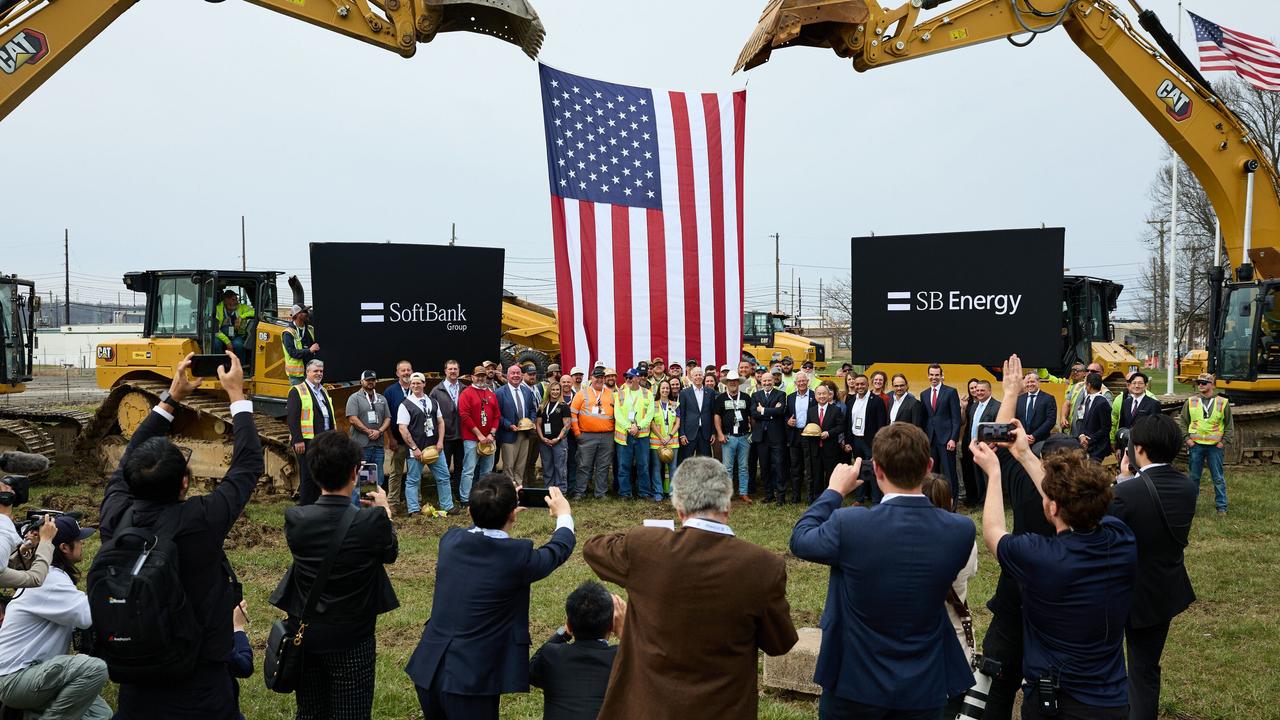
The site, being developed by SoftBank on a decommissioned Cold War-era uranium enrichment plant on federal land, would consume power equivalent to roughly 8 million U.S. households annually
1
. The U.S. government is helping provide electrical power through a partnership with Japan, with Commerce Secretary Howard Lutnick holding final approval authority2
. Microsoft, Google, and other companies have also submitted bids to use the AI data center, though SoftBank and government officials are leaning toward OpenAI as the main tenant given Nvidia's financial backing2
.
Source: NYT
The announcement triggered immediate reaction in debt markets, with Nvidia's five-year credit default swaps surging to a record 82 basis points on Monday, marking the largest single-day intraday increase since active trading began in November 2025
3
. Credit default swaps function as insurance against bond issuer defaults, and the spike reflects investor concern about systemic financial risks embedded in AI infrastructure deals where the chipmaker underwrites customers who buy its chips3
.The Nvidia OpenAI deal exemplifies a pattern critics describe as circular financing: Nvidia takes equity stakes in or guarantees debt for customers like OpenAI and CoreWeave, which then spend the money on Nvidia hardware, creating a loop that can inflate demand beyond underlying end-user appetite
3
. "While Nvidia's investments and partnerships reinforce confidence in long-term AI buildouts, investors remain concerned about circular financing," said Gary Tan, a portfolio manager at Allspring Global Investments3
. Billy Leung, an investment strategist at Global X Management, noted the guarantee serves "as much a reminder of funding strain in the AI buildout as it is a demand signal"3
.Jensen Huang has consistently rejected circular financing criticisms, arguing Nvidia's stakes represent a small percentage of what partners ultimately raise elsewhere. "The idea that it is circular is, it's ridiculous," Huang said in January regarding the CoreWeave investment
3
. The company's ability to structure such deals stems from its nearly $5 trillion market valuation and 75% profit margin, making it one of few companies with financial wherewithal to backstop projects of this magnitude4
.
Source: Axios
Nvidia announced more than $540 billion in AI infrastructure deals in 2026 alone, excluding the potential OpenAI arrangement
3
. The company also revealed a partnership with Safe Superintelligence, the lab founded by OpenAI co-founder Ilya Sutskever, providing access to the Vera Rubin platform and increasing the startup's compute capacity by an order of magnitude4
. The deal offers rare validation for the stealthy AI startup, with Nvidia gaining "rare access into the company's closely guarded research"4
.Related Stories
The OpenAI data center project fits within broader AI financing trends where startups access compute capacity they cannot afford independently through elaborate arrangements with chipmakers, cloud providers, and governments
2
. From 2019 through 2023, Microsoft invested more than $13 billion in OpenAI, which then funneled most of those billions back to Microsoft for cloud-computing power2
. Anthropic structured similar agreements with Google and Amazon, while recently announcing a $5 billion investment from AMD paired with commitments to purchase tens of billions in AMD hardware2
.Both the IMF and Bank for International Settlements have flagged circular AI financing as a systemic downside risk
3
. Big Tech's off-balance-sheet AI commitments have been estimated at approximately $1.65 trillion, making guarantees rather than headline borrowing the critical metric for tracking exposure3
. Nvidia's first quarter fiscal 2027 filing caps total lease-guarantee exposure at $3.5 billion, meaning a $250 billion commitment would run roughly 71 times its current disclosed guarantee book5
. The Ohio site talks remain unsettled, with people familiar noting the deal could still fall apart5
. Nvidia shares fell nearly 5% to $196.51 on Monday, erasing approximately $250 billion in market value3
.Summarized by
Navi
[1]
[3]
02 Feb 2026•Business and Economy

06 Oct 2025•Business and Economy

22 Sept 2025•Business and Economy

1
Technology

2
Policy and Regulation

3
Policy and Regulation