Nvidia unveils self-driving AI technology to challenge Tesla in autonomous vehicle industry


14 Sources
[1]
I tested Nvidia's Tesla Full Self-Driving competitor -- Tesla should be worried
It's a beautiful, cloudless day in San Francisco, and I'm sitting in the passenger seat of a Mercedes-Benz CLA sedan. The driver, Lucas, has his hands on the steering wheel, but it's really just for show: the car is essentially driving itself. The vehicle is using Nvidia's new point-to-point Level
[2]
Tesla CEO Musk brushes off Nvidia self-driving competition as 5 or 6 years away
Tesla CEO Elon Musk said Tuesday that it will take several years before Nvidia's new autonomous vehicle models pose serious competition to the company's Full Self-Driving (FSD) technology. During the CES conference in Las Vegas on Tuesday, Nvidia CEO Jensen Huang announced Alpamayo, a family of
[3]
Nvidia unveils 'reasoning' AI technology for self-driving cars
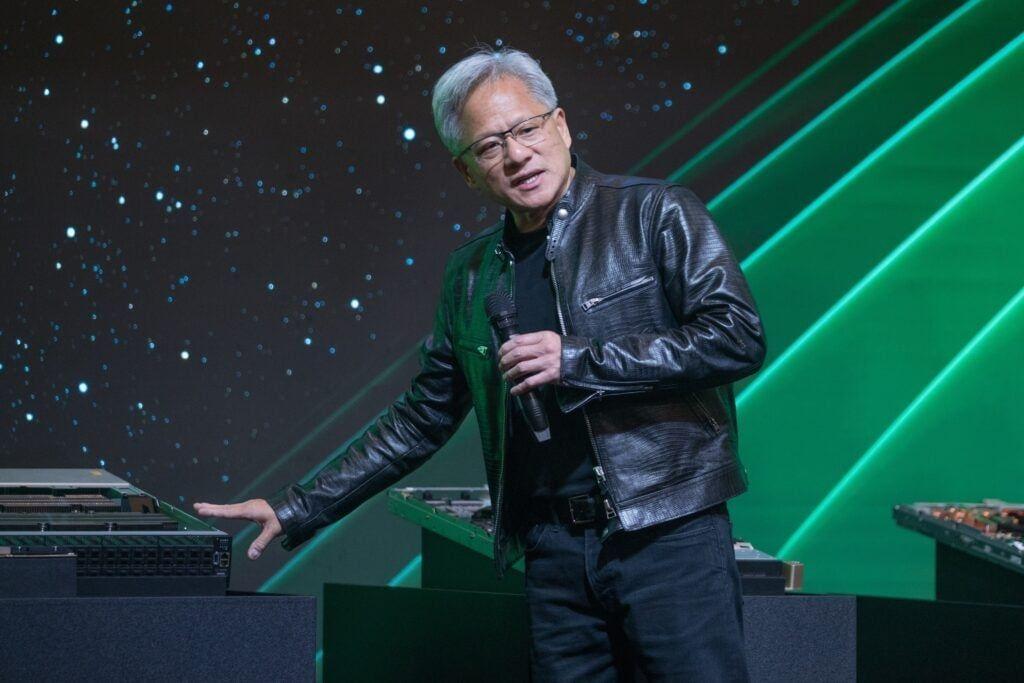
The vehicle will be released in the US in the coming months before being rolled out in Europe and Asia. Wearing his trademark black leather jacket, Huang told an audience of hundreds that the project has taught Nvidia "an enormous amount" about how to help partners build robotic systems. Analysts
[4]
Nvidia plans to test a robotaxi service in 2027 in self-driving push
Nvidia is building out an automotive tech business. Pictured here are its autonomous vehicle test cars at the company's auto garage in Santa Clara, California, on June 5, 2023. Nvidia on Monday unveiled plans to test a robotaxi service with a partner as soon as 2027, highlighting the chipmaker's
[5]
Nvidia is putting its AI muscle behind autonomous vehicles
Nvidia is everywhere. Its logo has become the watermark of modern computing. It sits under AI-era compute, cloud infrastructure, PC graphics, and the industrial automation that's quietly remaking factories. So why wouldn't it want to take the wheel in the global autonomous vehicle push, too? But
[6]

Elon Musk: Nvidia's Self-Driving Tech Is Still Years From Challenging Tesla - Decrypt
Musk argues legacy automakers face long delays in integrating cameras and AI hardware at scale. Tesla CEO Elon Musk said Nvidia's latest autonomous driving software will not pose serious competitive pressure on Tesla for several years. Nvidia showed off its new self-driving technology at CES 2026
[7]

Nvidia unveils open-source AI for autonomous driving, ships in Mercedes-Benz CLA in Q1 2026
Nvidia (NVDA) held its CES 2026 keynote today, and as expected, Jensen Huang dropped a massive amount of news on the autonomous driving front. The biggest takeaway? Nvidia is moving beyond just "perceiving" the road to "reasoning" about it with a new family of open-source models called Alpamayo,
[8]

Nvidia, Tesla chase same self-driving goal via varying paths
Nvidia CEO Jensen Huang unveiled the company's autonomous driving technology at CES, sparking an indirect exchange with Tesla's Elon Musk. The discussion highlights the competition and differing approaches in the race for self-driving car dominance, with both companies acknowledging the long road
[9]

Jensen Huang Says Tesla FSD Is '100% State-Of-The-Art,' Explains How Nvidia's Alpamayo Is Different - NVIDIA (NASDAQ:NVDA)
Nvidia Corp (NASDAQ:NVDA) CEO Jensen Huang has hailed the progress made by Tesla Inc.'s (NASDAQ:TSLA) Full Self-Driving (FSD) system, saying that the Elon Musk-led EV giant's approach was "hard to criticize." FSD Is State-Of-The-Art, Says Jensen Huang Huang, in an interview with Bloomberg's Ed
[10]
Elon Musk Says Tesla's Planned $10B Spend On Nvidia Hardware Would Be Double If Not For This Reason, Laments Lack Of AI Investments In Auto Industry - Tesla (NASDAQ:TSLA)
Tesla Inc. (NASDAQ:TSLA) CEO Elon Musk stated on Monday that the EV maker would have had to spend twice as much on buying AI hardware from Nvidia Corp. (NASDAQ:NVDA) to train its systems if it weren't for the company's AI4 chipset. Musk Touts $10 Billion Nvidia Spending Musk also shared that
[11]
Nvidia Takes On Robotaxis With Chips, Software And Big Ambitions - NVIDIA (NASDAQ:NVDA)
Nvidia Corp. (NASDAQ:NVDA) is intensifying its push into autonomous driving, signaling ambitions to play a central role in the robotaxi market and directly challenge Tesla Inc.'s (NASDAQ:TSLA) long-term autonomy strategy. Nvidia Targets Level 4 Robotaxis by 2027 At CES 2026 on Monday, Nvidia said
[12]
Elon Musk Says Nvidia's Alpamayo Technology Could Be 'Competitive' With Tesla's FSD In Next '5 Or 6 Years' - Tesla (NASDAQ:TSLA)
EV giant Tesla Inc.'s (NASDAQ:TSLA) CEO Elon Musk shared that Nvidia Corp's (NASDAQ:NVDA) autonomous driving technology could be a competitor to Tesla's Full Self-Driving (FSD) technology in the future. Tesla FSD Vs Alpamayo Following the unveiling of Nvidia's Alpamayo technology at the Consumer
[13]
Elon Musk Says Nvidia's Next-Gen Rubin Chips Won't Be Operational At Scale Soon As Tesla Works On In-House AI Hardware - Tesla (NASDAQ:TSLA)
Tesla Inc. (NASDAQ:TSLA) CEO Elon Musk says that Nvidia Corp's (NASDAQ:NVDA) new chipset would take some time before it can be scaled. Nvidia's Rubin Chip On Monday, influencer Sawyer Merritt shared a video that detailed Nvidia's new Vera Rubin chips' capabilities, showcased at the Consumer
[14]
Elon Musk Says It Is 'Super Hard' To Solve Distribution As Nvidia Announces Competitor To Tesla FSD, But Adds 'Honestly Hope They Succeed' - Tesla (NASDAQ:TSLA)
Tesla Inc. (NASDAQ:TSLA) CEO Elon Musk says that the most puzzling aspect of self-driving technology is to solve distribution, as Nvidia Corp (NASDAQ:NVDA) unveiled autonomous driving technology at the Consumer Electronics Show (CES) 2026. Check out the current price of TSLA here. Distribution Is
Share
Copy Link
Nvidia demonstrated its new point-to-point Level 2 driver-assist system in San Francisco, positioning itself as a Tesla Full Self-Driving competitor. The chipmaker announced Alpamayo, a family of open AI models with reasoning capabilities, and plans to launch a Level 4 robotaxi service by 2027. Despite automotive revenue representing just 1.2 percent of total sales, Nvidia is betting billions on autonomy.
Nvidia Challenges Tesla with Advanced Self-Driving AI Technology
Nvidia has entered the autonomous vehicle industry with a comprehensive self-driving system that directly competes with Tesla's Full Self-Driving technology. During a demonstration in San Francisco, the chipmaker showcased its new point-to-point Level 2 driver-assist system navigating chaotic city streets, handling traffic signals, four-way stops, double-parked cars, and unprotected left turns with confidence
1
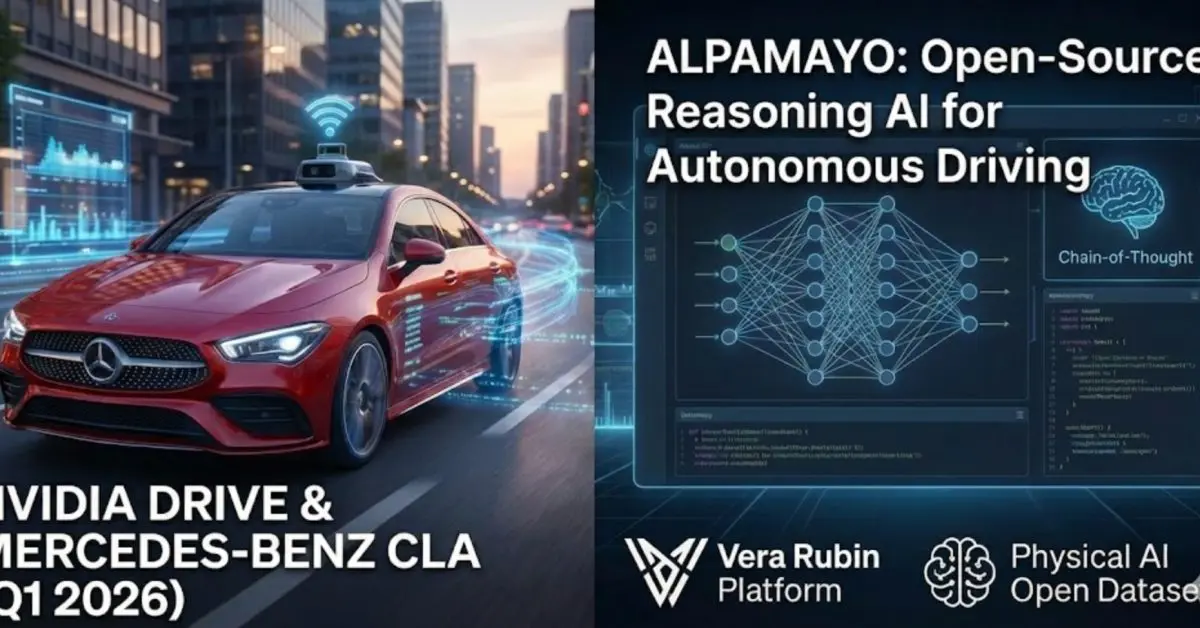
. The Mercedes-Benz CLA sedan, powered by Nvidia's AI technology, successfully maneuvered through complex scenarios involving delivery trucks, cyclists, pedestrians, and even Waymo robotaxis.At CES in Las Vegas, Jensen Huang unveiled Alpamayo, a family of open AI models designed specifically for autonomous development
2
. The reasoning AI technology represents what Huang calls "the ChatGPT moment for physical AI," enabling vehicles to think through rare scenarios and explain their driving decisions3
. The underlying code is now available on Hugging Face, where autonomous vehicle researchers can access and retrain the model for free3
.
Source: Electrek
Nvidia's Automotive Business Expansion and Ambitious Roadmap
Despite Nvidia's automotive business generating only $592 million in the third quarter—representing just 1.2 percent of the company's total $51.2 billion revenue—the chipmaker has invested billions over more than a decade to build a full-stack solution
1
. Xinzhou Wu, head of Nvidia's automotive division, outlined an aggressive roadmap that includes releasing Level 2 highway and urban driving capabilities, including automated lane changes and traffic signal recognition, in the first half of 20261
.
Source: Benzinga
The company plans to launch advanced driver-assistance systems with point-to-point navigation under driver supervision, expanding urban capabilities to include autonomous parking by year's end
1
. By the end of 2026, Nvidia's L2++ system will encompass the entirety of the United States, Wu said. The technology stack includes the Drive AGX system-on-chip, similar to Tesla's Full Self-Driving chip, running the safety-certified DriveOS operating system built on Blackwell GPU architecture capable of delivering 1,000 trillions of operations per second1
.Level 4 Robotaxi Service and Industry Partnerships
Nvidia announced plans to test a Level 4 robotaxi service with a partner as soon as 2027, marking its push into fully autonomous vehicles capable of driving without human intervention in pre-defined regions
4
. The company declined to name its partner or specify where the service would operate, though Wu indicated they would "start with a limited availability" to establish their footing4
. By 2028, Nvidia predicts its self-driving tech will be in personally owned autonomous vehicles1
.Mercedes-Benz has emerged as Nvidia's first major automotive partner, with the all-new CLA model set to feature the Drive AV software. The partnership, over four years in development, will launch in the U.S. by the end of the first quarter, followed by European and Asian markets
5
. The system runs a "hybrid stack" pairing an end-to-end model with a classical stack already deployed in Mercedes vehicles in Europe, with a safety monitor choosing the safer trajectory5
. Nvidia also works with automakers including Jaguar Land Rover and Lucid Motors, and announced a robotaxi partnership with Uber in October1
.Related Stories


Tesla's Response and Market Implications
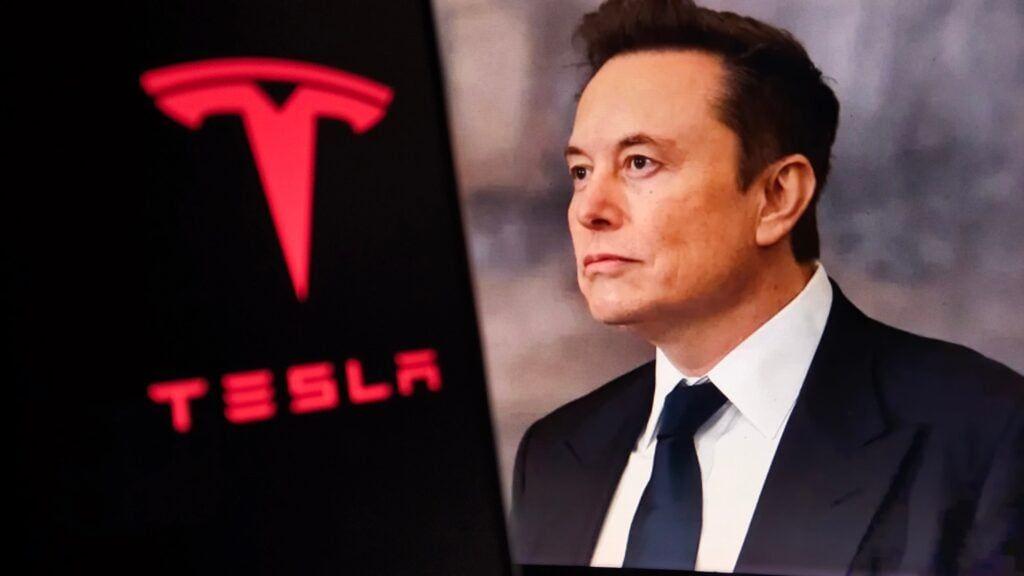
Elon Musk dismissed Nvidia's self-driving technology as a competitive threat, stating it would take "5 or 6 years, but probably longer" before legacy car companies design cameras and AI chips into their vehicles at scale
2
. Musk argued that self-driving technology needs many more years to become much safer than human drivers. However, the competitive dynamic is complex: Tesla remains one of Nvidia's biggest customers, using tens of thousands of AI chips to train its models, representing billions of dollars in AI infrastructure1
.
Source: Benzinga
Analysts suggest Nvidia's approach positions it as a platform provider rather than a direct competitor. "Alpamayo represents a profound shift for Nvidia, moving from being primarily a compute to a platform provider for physical AI ecosystems," said Paolo Pescatore, analyst at PP Foresight
3
. The company's strategy focuses on supplying chips, simulation software, and training infrastructure that automakers can integrate without betting everything on a robotaxi moonshot5
. Car makers can use the Drive AGX Thor automotive computer, costing about $3,500 per chip, to reduce research and development costs and accelerate time to market4
. Jensen Huang's vision is clear: "Our vision is that someday, every single car, every single truck, will be autonomous"3
. As robotics becomes Nvidia's second most important growth category after artificial intelligence, the company's full-stack approach to physical AI could reshape how the industry develops autonomous capabilities4
.References
Summarized by

Navi
Related Stories
Recent Highlights



Recent Highlights
Today's Top Stories






Don’t drown in AI news. We cut through the noise - filtering, ranking and summarizing the most important AI news, breakthroughs and research daily. Follow topics that matter to you and stay ahead.


