Nvidia launches Alpamayo open AI models to bring human-like reasoning to autonomous vehicles


10 Sources
[1]
Nvidia launches Alpamayo, open AI models that allow autonomous vehicles to 'think like a human' | TechCrunch
At CES 2026, Nvidia launched Alpamayo, a new family of open-source AI models, simulation tools, and datasets for training physical robots and vehicles that are designed to help usher autonomous vehicles reason through complex driving situations. "The ChatGPT moment for physical AI is here - when
[2]
Nvidia Debuts New AI Tools for Autonomous Vehicles, Robots
Nvidia Corp., aiming to extend the reach of its technology, announcedBloomberg Terminal a group of AI models and tools designed to speed the development of autonomous vehicles and power a new generation of robots. The company unveiled a vehicle platform called Alpamayo that allows cars to "reason"
[3]
Nvidia's Alpamayo AI platform for autonomous cars will debut in the new Mercedes-Benz CLA
Serving tech enthusiasts for over 25 years. TechSpot means tech analysis and advice you can trust. The big picture: Nvidia CEO Jensen Huang's keynote at CES 2026 focused primarily on the company's AI hardware business, including the upcoming Vera Rubin chip. However, he also delivered a surprise
[4]
CES 2026: NVIDIA launches Alpamayo 1 for autonomous vehicles
The announcement spans agentic AI, physical AI, robotics, autonomous vehicles, and biomedical research. NVIDIA says the combined release gives developers one of the most comprehensive open AI toolkits currently available. For autonomous vehicles, NVIDIA introduced Alpamayo, a new family of open
[5]

Nvidia unveils open-source AI models for next-gen self-driving vehicles
Alpamayo integrates open models, simulation frameworks and data sets for automotive developers to build on. Nvidia has unveiled a family of open-source AI models targeting next-generation reasoning-based autonomous vehicles (AV). 'Alpamayo' is touted to be the industry's first chain-of-thought
[6]

Nvidia at CES: Alpamayo signals the real arrival of physical AI - SiliconANGLE
Nvidia at CES: Alpamayo signals the real arrival of physical AI At CES 2026, Nvidia Corp. announced Alpamayo, a new open family of AI models, simulation tools and datasets aimed at one of the hardest problems in technology: making autonomous vehicles safe in the real world, not just in demos. On
[7]

Nvidia Unveils Alpamayo AI: 'Chat-GPT Moment' For Cars - NVIDIA (NASDAQ:NVDA)
At CES 2026 on Monday, NVIDIA Corp. (NASDAQ:NVDA) unveiled a shift in autonomous vehicle (AV) development with the release of the open-source Alpamayo family. NVDA stock is moving. See the chart and price action here. Previous self-driving systems relied on separate modules for "seeing"
[8]

Nvidia Previews AI-Powered Cars With Ability to 'Reason' | PYMNTS.com
According to a report Monday (Jan. 5) from Bloomberg News, the tech giant has introduced a platform called Alpamayo that lets cars "reason" in the real world, as CEO Jensen Huang said during a presentation at the CES trade show in Las Vegas. The company says potential users can retrain the
[9]

Nvidia reveals Alpamayo, world's first 'thinking' model for autonomous driving (NVDA:NASDAQ)
Nvidia (NVDA) CEO Jensen Huang unveiled Alpamayo, a family of open models built for autonomous driving, during his keynote address at CES 2026 in Las Vegas on Monday. "Today, we are introducing Alpamayo, the world's first thinking model for autonomous driving," Huang said. "Not Alpamayo provides
[10]

NVIDIA unveils open-source AI models to speed safe autonomous driving
Image: NVIDIA NVIDIA unveiled a new family of open-source artificial intelligence models, simulation tools and datasets aimed at accelerating the development of safer, reasoning-based autonomous vehicles, as competition intensifies to deploy higher levels of self-driving technology. Announced at
Share
Copy Link
Nvidia unveiled Alpamayo at CES 2026, a family of open-source AI models designed to help autonomous vehicles reason through complex driving situations. The platform includes a 10-billion-parameter model, simulation tools, and over 1,700 hours of driving data. Mercedes-Benz CLA will be the first vehicle to feature the technology, launching in Q1 2026.
Nvidia Introduces Alpamayo at CES 2026
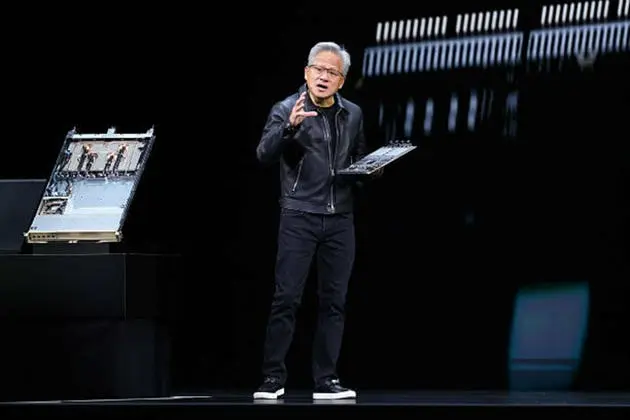
Nvidia has launched Alpamayo, a comprehensive family of open-source AI models aimed at transforming how autonomous vehicles navigate complex driving situations. Announced by CEO Jensen Huang at CES 2026, the platform marks what the company calls "the ChatGPT moment for physical AI" - when machines begin to understand, reason, and act in the real world
1
. The release brings together simulation tools, datasets, and AI models specifically designed for reasoning-based autonomous vehicles, offering developers one of the most comprehensive open toolkits currently available4
.
Source: Seeking Alpha
Chain-of-Thought Reasoning Powers Next-Gen Self-Driving Vehicles
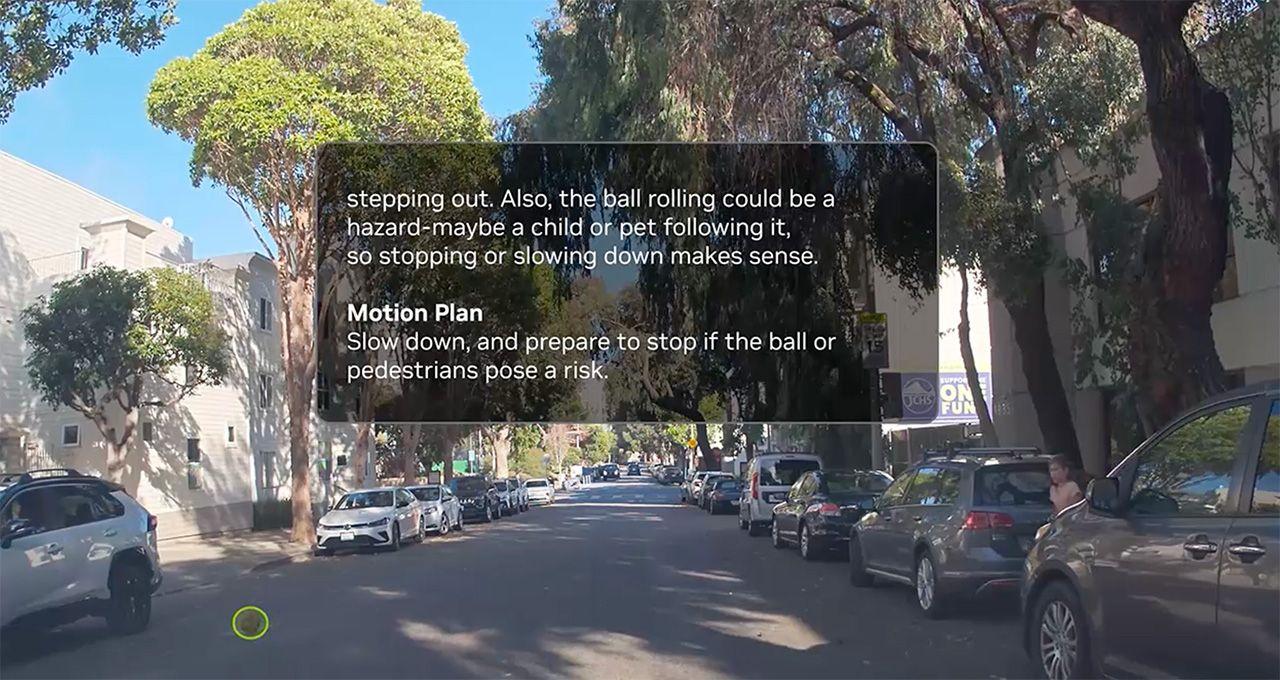
At the core of the platform sits Alpamayo 1, a 10-billion-parameter chain-of-thought vision language action model that enables autonomous vehicles to think more like humans when confronting unfamiliar scenarios
1
. Built for Level 4 autonomy, the system breaks down problems into steps, reasons through every possibility, and selects the safest path - similar to how a human driver would approach a traffic light outage at a busy intersection1
. This human-like reasoning capability allows the system to handle edge cases without previous experience, addressing one of the most persistent challenges in autonomous driving development.
Source: TechSpot
The vision language action model not only controls steering, brakes, and acceleration but also applies judgment to autonomous driving decisions based on sensor input
3
. Built on Nvidia's Cosmos Reason AI model, Alpamayo R1 allows humans to decode and understand why an autonomous vehicle made a specific decision in any scenario, bringing transparency to the decision-making process3
.Open-Source Framework and Extensive Datasets
Alpamayo 1's underlying code is available on Hugging Face, enabling developers to fine-tune the model into smaller, faster versions for vehicle development or use it to train simpler driving systems
1
. Rather than running directly in vehicles, the system serves as large-scale teacher models that developers can use to refine their autonomous vehicle stacks5
. Ali Kani, Nvidia's vice president of automotive, explained that developers can use Cosmos to generate synthetic data and then train and test their Alpamayo-based AV applications on combinations of real and synthetic datasets1
.Nvidia is releasing Physical AI Open Datasets with more than 1,700 hours of driving data collected across a wide range of geographies and conditions, covering rare and complex real-world scenarios
1
. The company also launched AlpaSim, an open-source simulation framework available on GitHub that recreates real-world driving conditions - from sensors to traffic - allowing developers to safely test systems at scale1
. The simulation framework supports closed-loop training and evaluation across varied environments and edge cases4
.
Source: TechCrunch
Related Stories
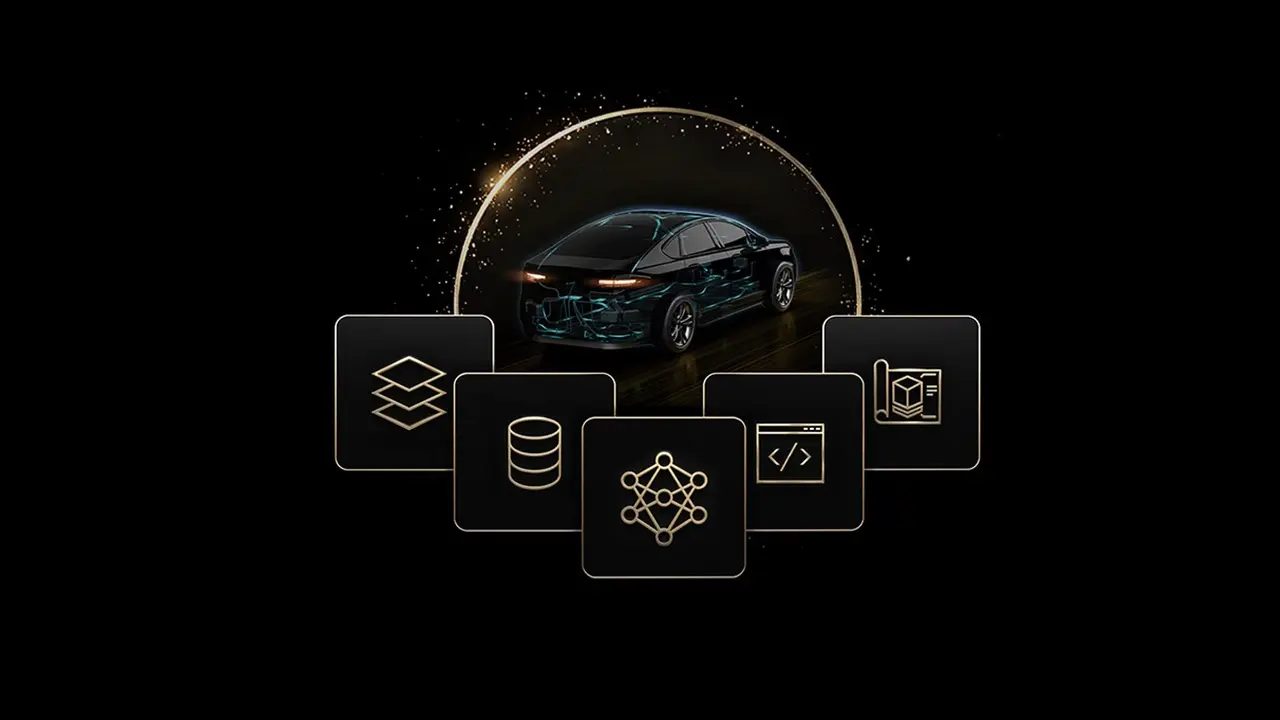
Mercedes-Benz CLA to Feature Alpamayo Technology
The first passenger car to feature Alpamayo will be the next-generation Mercedes-Benz CLA, scheduled to hit US roads in the first quarter of 2026 with Nvidia's Level 2++ driver-assistance features
3
. Europe will follow in the second quarter, with an Asia introduction coming in the second half of the year, Huang announced . The two-door coupe recently earned a 5-star Euro NCAP rating, scoring 94 percent for adult protection, 89 for child safety, and 93 for pedestrian protection3
.Nvidia is building on its work with Mercedes-Benz to develop vehicles capable of hands-free driving on highways that can also navigate through cities . The company announced it is working with robotaxi operators with hopes that the software stack would be adopted for AV use as early as 2027
5
. Huang expressed ambitious long-term goals, stating "we imagine that someday a billion cars on the road will all be autonomous" .Broader Physical AI Portfolio and Market Implications
Alpamayo is part of Nvidia's expanded portfolio that includes open models from several product families: Nemotron for agentic AI, Cosmos for physical AI, Isaac GR00T for robots, and Clara for healthcare and life sciences
4
. Huang also highlighted Drive Hyperion - Nvidia's open, modular, Level-4-ready AI platform adopted by several automotive suppliers, including Aeva, AUMOVIO, Astemo, Arbe, Bosch, Hesai, Magna, OmniVision, Quanta, Sony, and ZF3
.Goldman Sachs predicted that the robotaxis' ride share market in North America will grow at a compound annual rate of around 90 percent from 2025 to 2030, which could push the gross profit for the US AV market to around $3.5 billion
5
. This market potential underscores why Nvidia is positioning autonomous vehicles as a critical growth area alongside AI and robotics. The timing of the announcement is notable, coming shortly after Alphabet's Waymo suffered a setback when a massive power outage in San Francisco halted several of its vehicles5
.References
Summarized by

Navi
[1]
[3]
[4]
[5]
Related Stories
NVIDIA Unveils Alpamayo-R1: First Open-Source Reasoning AI Model for Autonomous Driving Research
01 Dec 2025•Technology
Nvidia unveils Rubin platform and physical AI models, igniting Wall Street optimism for future
06 Jan 2026•Technology
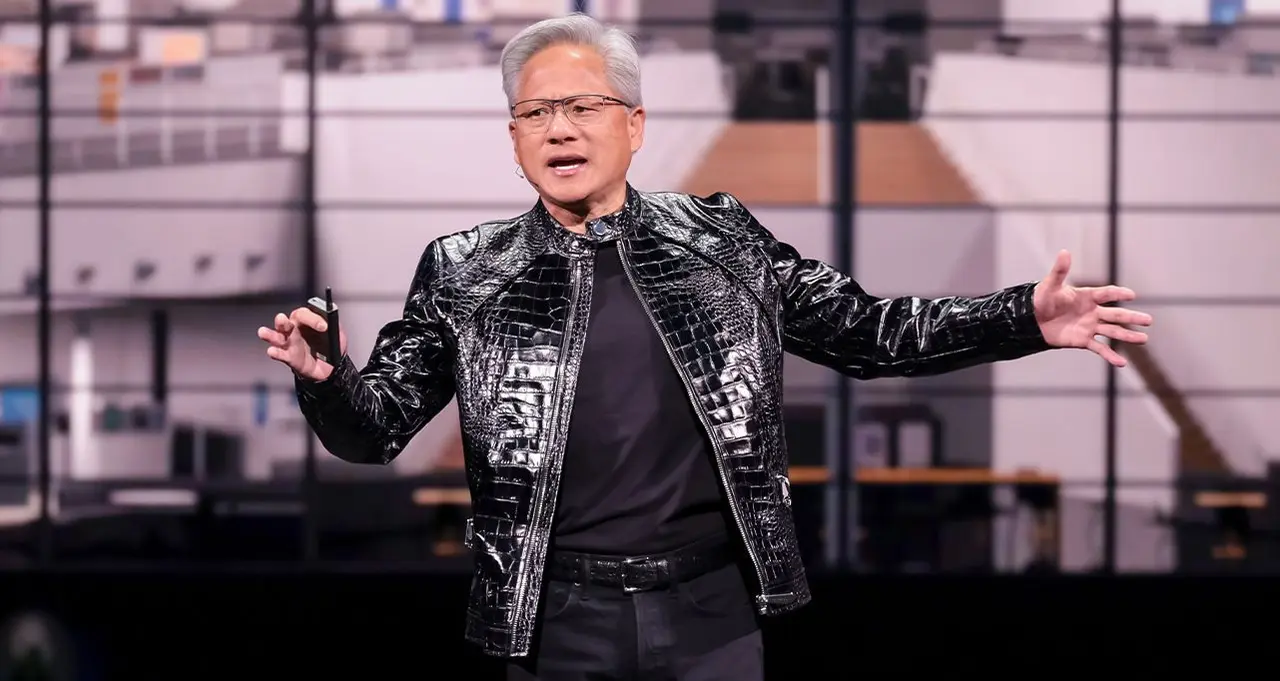
Nvidia Expands AI Partnerships for Next-Generation Autonomous Vehicles
07 Jan 2025•Technology

Recent Highlights



Recent Highlights
Today's Top Stories






Don’t drown in AI news. We cut through the noise - filtering, ranking and summarizing the most important AI news, breakthroughs and research daily. Follow topics that matter to you and stay ahead.


